.avif)


.png)
.png)


The Practical Advantages of Full-Service Design Over Interior Design Alone
From layout feasibility to DOB approvals, full-service design handles what interior design can’t. Here’s why NYC homeowners benefit from one integrated team.
February 11, 2026
|
MIN.jpeg)
The Practical Advantages of Full-Service Design Over Interior Design Alone
The smartest NYC renovations begin with feasibility, not finishes.
Table of contents
- Understanding the Scope: Interior Design vs Full-Service Design
- Common Scenarios Where Full-Service Design Excels
- FAQs About Interior Design Within Design-Build Renovations In NYC
Selecting materials and finishes is one of the most enjoyable parts of a NYC apartment renovation, though it works best as a later step than as the starting point. Transforming a home in New York City reaches well past finishes, furniture, and a refreshed layout, and many owners begin believing interior design alone can carry a full transformation. Interior designers shape the look and feel of a space, and that styling is one part of a larger equation. When a building carries aging infrastructure, intricate approval processes, and the hidden surprises common to NYC apartments, those structural realities determine what is possible.
A full-service design-build partner like Gallery KBNY addresses them directly. Unifying interior design, architectural planning, engineering, permitting, and construction under one roof bridges what looks beautiful in concept and what works inside a NYC apartment. Aligning design and construction from the start reduces surprises and improves efficiency, producing homes that function as well as they look. The sections below clarify how full-service design differs from interior design alone, and why that distinction matters for NYC homeowners.
.jpg)
Understanding the Scope: Interior Design vs Full-Service Design
Before comparing the two approaches, let’s clarify what interior design actually includes and where full-service design begins.
Traditional Interior Design Definition
Traditional interior design focuses on the visual layer of the home. The work typically covers materials and finishes, color palettes, furnishings, lighting fixtures, and stylistic details. These elements shape how a space feels while relying on the existing layout, infrastructure, and structural constraints of the apartment. One distinction worth noting is that an interior designer shapes the design, while decorating the space is the role of an interior decorator.
Full Service Design Build Definition
Full-service design expands the scope well beyond aesthetics. The approach combines interior design with architecture, engineering, construction planning, permitting, and build execution under one team for the whole project. That integration grounds the design in what is structurally and mechanically feasible from day one. Layout changes, mechanical upgrades, and structural systems are evaluated alongside interior styling, so the final plan supports both form and function. That clarity at the outset becomes the foundation for everything that follows, bringing streamlined project management, clearer communication, budget control, and the ability to tailor a home in ways interior design alone cannot reach.
- Separate The Real From The Fake: How To Distinguish True Design-Build Expertise For NYC Apartment Renovations
Streamlined Project Management And Single Point of Accountability
A single point of contact is among the benefits we emphasize most. In traditional renovation paths, managing separate designers, contractors, and vendors often leads to conflicting timelines and unclear responsibility. A full-service design-build team removes that complexity, unifying every phase under one touch point for the entire project. With one team accountable throughout, communication stays clear, decisions move quickly, and misalignment delays fall away. For homeowners, that means fewer moving parts and a renovation that holds its schedule with far less effort.
.jpg)
Cost Efficiency And Budget Optimization
Separating design and construction can push costs upward through multiple markups, duplicated work, or structural issues that force a redesign. Full-service design-build removes these inefficiencies. Holistic pricing is delivered up front, materials run through consolidated trade channels, and our in-house architect accounts for structural conflicts early to prevent change orders. The budget lands more accurately, with fewer financial surprises.
- Cost Considerations: NYC Apartment Renovation Costs In 2026: Costs Per SF
Design Integration: When Structure Meets Style
Interior design decisions carry only as much flexibility as the infrastructure behind them. A lighting plan, custom millwork, or a new layout each depends on electrical capacity, plumbing routes, and structural feasibility. With full-service design, architects, designers, and builders collaborate from day one, so creative ideas stay grounded in what is technically possible. That alignment opens more ambitious transformations, from reimagined layouts to level flooring and custom lighting that interior design alone cannot execute.
- More On Flooring: Leveling Floors During A NYC Renovation: Design & Cost Implications
Customization Capabilities And Design Flexibility
Interior design refreshes a space within its current shape, while full-service design-build can reshape it. With structural modifications, layout changes, and mechanical upgrades all on one team, a home can be tailored to how its owners truly live. That might mean adding a home office that doubles as a guest bedroom, expanding a kitchen to suit your cooking habits, or building custom storage into unexpected corners, each supported by the ability to physically realize the design.
MIN.jpg)
Common Scenarios Where Full-Service Design Excels
Many renovations look straightforward on the surface, while the examples below show where integrating design and construction makes the difference.
Kitchen Renovations Requiring Layout Changes
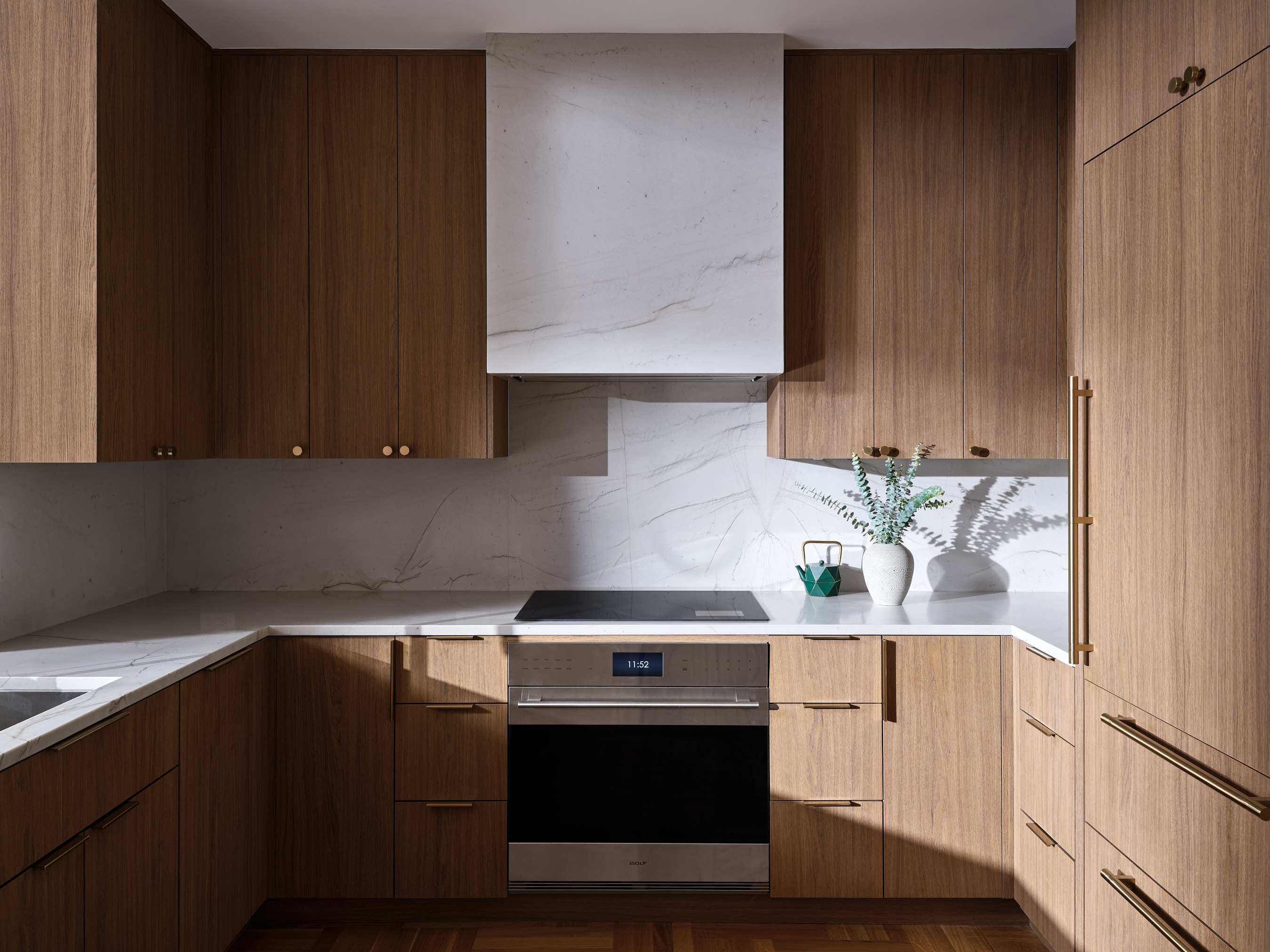
Kitchens are the most structurally complex rooms to renovate in a NYC apartment. Moving appliances, adding an island, or improving workflow requires rerouting plumbing, upgrading electrical capacity, and confirming proper ventilation, all of which reach past surface-level design. A full-service team aligns the creative layout with the mechanical realities behind the walls, so the functionality and aesthetics come together without compliance or feasibility issues mid-project.
Bathroom Upgrades With Code-Required Modifications
Pre-war and post-war NYC bathrooms often carry aging plumbing stacks, tight footprints, and strict waterproofing requirements. Drain locations, ventilation mandates, and DOB wet-over-dry rules all govern what is possible, beyond the reach of styling alone. A full-service approach integrates design with the necessary mechanical and waterproofing work, so the space looks elevated while meeting code, structural, and building management requirements.
- View Our Work: Gallery KBNY Bathroom Renovation Portfolio
Creating Open Floor Plans Through Structural Wall Removal
Opening up a living room, expanding a kitchen, or improving natural light often calls for removing or modifying a structural wall, which involves engineering calculations, building approvals, and DOB filings. A full-service team coordinates structural engineering with design intent from the start, so the new layout is both architecturally sound and visually cohesive. The result is a more efficient transformation with far less risk of delays or rework.
Custom Storage And Built-Ins Requiring Precision Construction
Custom millwork, integrated cabinetry, and built-in storage call for far more than aesthetic planning. Proper execution depends on on-site measurement, carpentry expertise, electrical coordination, and a clear read of the spatial constraints. Full-service design-build keeps designers, fabricators, and installers working together from the outset, creating storage that fits seamlessly into the architecture.
- Consider All Angles: The Truth About Luxury Kitchen Cabinets Costs: What You’re Really Paying For
Pre-War Renovations That Require More Than Design Alone
Whether you are updating a home for aging in place or preserving a historic pre-war co-op, these projects ask for more than aesthetic direction. Accessibility upgrades such as wider doorways, reinforced walls, reworked showers, and improved lighting require structural planning, plumbing and electrical updates, and precise construction coordination. Historic properties add aging infrastructure, hidden structural issues, and strict co-op or LPC requirements, and a full-service team handles the technical and aesthetic sides together, so safety, modernization, and preservation work in unison.
Gallery KBNY's Full-Service Design Advantage
Gallery KBNY unifies architecture, design, project management, and construction into one coordinated process built for NYC homes. Early feasibility checks, clear pricing, and integrated communication keep a project aligned from concept to completion. For homeowners, that delivers a smoother renovation and a home that performs as well as it looks.
Looking to elevate your New York City home with more than baseline interior design? Contact us today to schedule a consultation or explore our portfolio of NYC renovations.
Gallery KBNY is a full-service design-build firm featured in The New York Times, specializing in the architecture, interior design, and renovation of apartments, co-ops, condominiums, townhomes, and lofts across Manhattan and Brooklyn. Our integrated team of architects, designers, contractors, and project managers manages every phase from board approvals and DOB permitting through design and construction. A founding partner is involved in every project, start to finish. Because architecture, design, permitting, and construction are coordinated under one roof, the process remains streamlined, accountable, and transparent from start to finish. Our work has also appeared in Forbes, Architectural Digest, and Inc., and is backed by 100+ five-star client reviews.
[#faq]Frequently Asked Questions About Interior Design Within Design-Build Renovations In NYC[#faq]
Can I hire an interior designer and a separate general contractor instead of a full-service firm?
That path works well for cosmetic projects that leave the layout and systems untouched, where the designer handles the look and the contractor executes a defined scope. It grows harder as a project adds structural, mechanical, or permitting complexity, since responsibility then sits across firms that price and schedule independently. A full-service firm consolidates that coordination, which tends to matter most on layout changes and gut-level work.
Does full-service design cost more than hiring an interior designer plus a contractor?
The headline fee is not always higher, and the total cost often compares favorably once the full picture is in view. Separate engagements can carry multiple markups, duplicated effort, and redesigns when a concept meets an infrastructure limit late. A full-service model prices the project as a whole up front and catches structural conflicts early, which protects the budget against the change orders that tend to surface mid-build.
Who carries liability and stamps the drawings in a full-service engagement?
A registered architect or engineer on the team produces and stamps the drawings that require it, and the licensed, insured contractor carries the construction. Housing both within one firm means the professional accountable for feasibility is the same group executing the work, so responsibility stays clear rather than divided across parties the homeowner has to reconcile.
How is feasibility assessed before the design is finalized?
Early in the process, the team reviews the existing conditions, the building's systems, and the alteration agreement against the design intent, flagging structural, mechanical, and approval considerations before drawings are locked. This buildability review is where layout ambitions are tested against electrical capacity, plumbing routes, and load paths, so the final plan reflects what the apartment can actually support.
Can I bring my own interior designer or decorator into a design-build project?
Yes, and it is common at the high end. An outside designer or decorator can shape the aesthetic direction while the firm's architects and builders carry feasibility, permitting, and construction. Clear coordination from the start keeps the styling aligned with what the structure and systems allow, so the two sides reinforce each other.
At what scope does interior design alone stop being enough?
Interior design carries a project well when the work stays within the existing layout and systems. Once a renovation moves walls, relocates a kitchen or bath, alters mechanicals, or requires DOB filings, the project needs the architecture, engineering, and construction coordination that full-service design provides. The dividing line is whether the vision depends on changing the space itself rather than dressing it.
Manhattan Design-Build
Evaluate Your Manhattan Apartment
Before You Buy
Buying an apartment you plan to renovate? A founding partner walks it with you during the contract period and maps the scope, cost, and timeline, so you know exactly what you're taking on before you sign.
As seen in
Pre-Purchase Assessment
Walk the apartment with us first and understand the full scope, cost, and timeline before you close.
or call us directly
let’s
Design-Build
together