.avif)


.png)
.png)


Cost Comparison: Buying A Turnkey Apartment VS Renovating A Fixer Upper In Manhattan
Breaking down the pros and cons between buying a turnkey apartment versus a fixer upper in Manhattan, plus a real life comparison from the UWS.
December 9, 2025
|
Cost Comparison: Buying A Turnkey Apartment VS Renovating A Fixer Upper In Manhattan
Buying in NYC but stuck between a move-in ready turnkey apartment and a fixer upper with higher ROI potential? This article will make that key decision much more clear.
Table of contents
- Factors To Consider When Renovating A Fixer Upper apartment in NYC
- Cost Comparison: A Real Life Comparison Of A Turnkey Apartment vs. Fixer Upper Apartment In Manhattan’s Upper West Side
- Buying A Turnkey Apartment Or Renovating A Fixer Upper: Which Is The Better Value?
- Evaluating Your Budget and Lifestyle Preferences
- How We Help Turn That Fixer-Upper Into Your Dream Home
- Frequently Asked Questions About Buying A Turnkey Apartment vs. Renovating A Fixer Upper In Manhattan
When property hunting in NYC, buyers are typically confronted with the age-old dilemma - do you pay up for a turnkey apartment that is move-in ready or search for a more competitively priced fixer upper that requires a renovation?
There are pros and cons to both options but they ultimately boil down to costs vs convenience. While move-in ready properties typically command higher per square foot purchase prices than their dated counterparts, proper due diligence and planning is key to making sure your fixer bupper does not go from a project where you are unlocking value to a senseless money pit.
In this blog we highlight key factors to keep in mind when considering the renovation of a fixer upper and also provide a real life case study of two apartments.
.webp)
[#Factors]Factors To Consider When Renovating A Fixer Upper apartment in NYC[#Factors]
Time & Planning
Planning a renovation in a NYC co-op or condo takes time. Between the need to satisfy the buildings alteration agreement requirements, obtain management and board approval, and ultimately file and obtain permits from the Department of Buildings, the formalities themselves can take 3-5 months. However, if planned properly, all of your design and pre-construction planning can be achieved during this timeline as well. Some portions of the planning timeline can take place prior to closing on the property, however at least half of the timeline will take place after closing. Keep these timelines in mind as they will impact your carry costs.
Living Arrangements
Living inside a property in the midst of a gut renovation is ill-advised and oftentimes not feasible. An average gut renovation of an 1,800 sq ft apartment can take 5-6 months - during this time you will need to account for other living arrangements. Make sure to factor these costs into your overall budget calculation.
Building Imposed Costs
All co-ops and condos will impose costs ranging from security deposits to penalties for going over allotted time limits on a renovation. Some buildings may impose a significant percentage of the total construction cost. Although the security deposit is refundable upon completion of your renovation, a large security deposit requirement can put further strain on liquidity.
Other Units in the Building
The selling price of other units of similar square footage, number of bedrooms and bathrooms, and condition is the most ideal way to gauge the resale value of your apartment. Ideally if you can find a renovated unit in the same line that was recently sold then that should give you a good sense of what your units after repair value (ARV) is. This is also a good way to identify your maximum renovation budget. With that said, it is important to consider other factors as well, such as year of when the apartment was old, what floor the apartment is on relative to yours, or whether there were other circumstances that may have impacted that sales price. For example, 2 units of exact square footage in the same building on Central Park West may have very different values just based where the windows of the respective apartments face.
[#Cost-Comparison]Cost Comparison: A Real Life Comparison Of A Turnkey Apartment vs. Fixer Upper Apartment In Manhattan’s Upper West Side[#Cost-Comparison]
To help us determine a baseline cost difference between a fixer upper and turnkey apartment in NYC, let’s draw a direct comparison between two units currently on the market from the same pre-war co-op building. One of the units is ready to move-in and the other is a fixer upper that warrants a full renovation.
.webp)
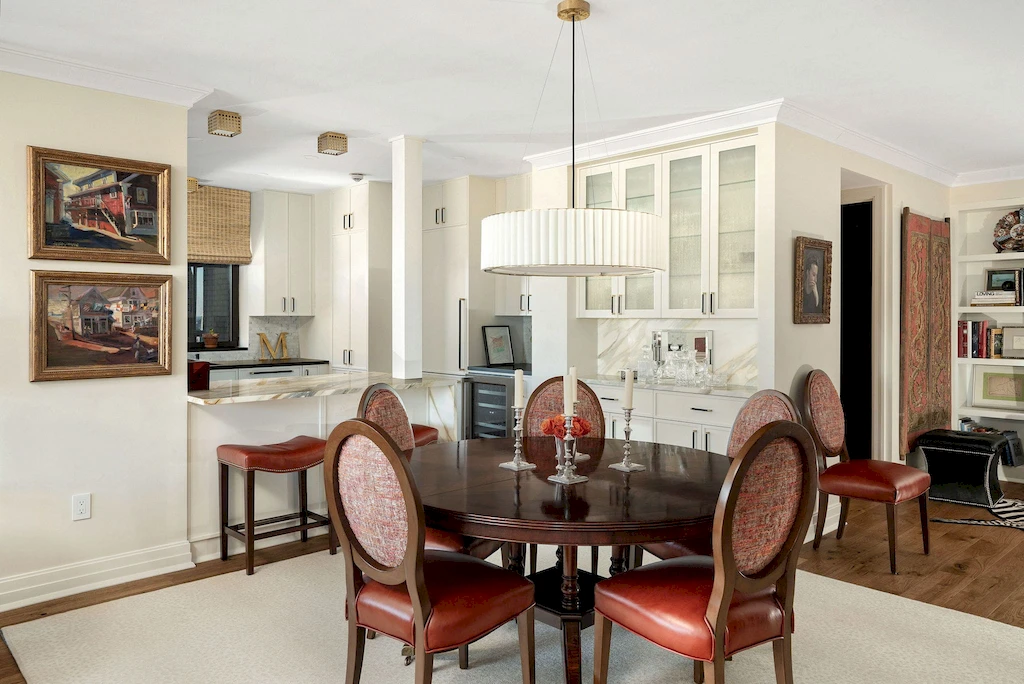
90 Riverside Drive, Apt 10B. New York, NY
- Status: Turnkey, move-in ready
- Market Price: $6.5M ($2,500/sq ft)
- Size: 3 Bedrooms, 3.5 Baths (Approx. 2,600 Sq Ft)
- Cost To Renovate: $0
- Total Cost Upon Move-In: $6.5M
- Adjustments with respect to unit 7B: 10B is 300 sq ft larger and 3 floors higher compared to unit 7B. Adjusted value of 10B is $5.5M (3% increase in cost for being 3 floors higher plus $750,000 increase due to being 300 sq ft larger in size)
.webp)
90 Riverside Drive, Apt 7B. New York, NY
- Status: Pre-war estate conditioned apartment
- Market Price: $2.8M | ($1217/sq ft)
- Size: 3 Bedrooms, 3 Baths (Approx. 2,300 Sq Ft)
- Timeline: 9 months (4 months planning, 5 months construction)
- Cost To Renovate: Using current luxury renovation pricing of $700–$1,000 per square foot, the estimated renovation cost to bring the apartment to the condition of 10B is approximately: $1.61M–$2.30M (≈ $468–$660/sf to bring to condition of 10B)
- Total Purchase + Renovation Cost: $4.41M–$5.1M (≈ $1,917–$2,217/sf)
- Carry Costs: Approximately $120,000
- Total Cost Upon Move In: $4.53M–$5.22M (≈ $1,969–$2,269/sq ft)
- Unlocked Value of Renovating vs Buying Similar Turnkey Unit: Compared to a similar turnkey apartment priced around $6.5M, renovating unlocks approximately $1.28M–$1.97M in value, depending on final scope and finishes.
Considering a Renovation in NYC?
Click to schedule a consultation with one of the principle partners at Gallery, who will hear out your renovation plans and let you know the best way to proceed - whether we end up working together or not.
Schedule Your Consultation
[#Buying]Buying A Turnkey Apartment Or Renovating A Fixer Upper: Which Is The Better Value?[#Buying]
Around 30% More For A Turnkey Apartment Than A Fixer Upper
In our comparison, the turnkey apartment is roughly 20%–30% higher than the fixer upper after renovation and carry costs ($6.5M vs. $4.53M–$5.22M), before accounting for additional 1% per floor (on avg).
Post-Reno, Fixer Upper Still Costs Less
Even after applying a nearly one million dollar renovation to the fixer upper, the total cost upon move-in is roughly $1.28M–$1.97M less than the turnkey option.
90 Riverside Drive, Upper West Side
Two units. Same pre-war co-op building. One move-in ready, one estate condition. Here's how the numbers actually compare.
| Turnkey: Apt 10B Move-in ready |
Fixer Upper: Apt 7B Estate condition |
|
|---|---|---|
| Purchase Price | $6,500,000 $2,500/sq ft |
$2,800,000 $1,217/sq ft |
| Size | 3BR / 3.5BA, ~2,600 sq ft | 3BR / 3BA, ~2,300 sq ft |
| Renovation Cost | $0 | $1.61M–$2.30M Luxury finish, $700–$1,000/sq ft |
| Carry Costs | $0 | ~$120,000 Mortgage + maintenance during reno |
| Timeline to Move-In | Immediate | ~9 months 4 mo. planning + 5 mo. construction |
| Total All-In Cost | $6,500,000 | $4.53M–$5.22M |
90 Riverside Drive case study. Renovation costs based on 2025–2026 NYC luxury market pricing. Gallery KBNY active project data.
[#Evaluating]Evaluating Your Budget and Lifestyle Preferences[#Evaluating]
While there may be more value in renovating a fixer upper apartment in Manhattan than buying a turnkey option, the decision ultimately comes down to personal budget constraints and lifestyle preferences. If you’re on the fence, consider the following questions before closing any deal.
Are You On The Clock?
If your move-in timeline is firm, either due to an expected addition to the family or desire to be settled before the school season starts, opting for a turnkey so you can move in immediately may be worth the added costs and settled floor-plan if the alternative fixer upper option cannot be planned and renovated within the required timeline. In our experience however, most clients opt for the fixer upper when faced with cost benefits of renovating the fixer upper.
Is Personalization Essential?
If you’re not on the clock and have flexibility to move in around 6-12 months after purchase, you’re giving yourself the option to fully customize the space via renovation. This means rearranging the floor-plan for your ideal design flow, adjusting rooms to your personal needs, and creating a Manhattan dream home exactly how you’ve always imagined.
Will You Be Reselling?
While many buyers may stay the long haul, others buy with intent to sell. If profit is your prerogative, consider that most turnkey apartments have already maximized resale value and chances you’ll gain value on your initial purchase down the line is unlikely. On the other hand, buying a fixer upper and investing in a fully-customized renovation immediately provides an opportunity to maximize your ROI. For instance, if someone buys our fixer upper above, they'll likely be able to resell that property for significantly more than the $4.0M they invested in full.
How Much Effort Can You Apply?
For buyers less concerned about cost and more restricted by time, consider not every home renovation requires full attention. If you’re hesitant to buy a fixer upper because you don’t want to manage a full-on NYC renovation, finding a reputable all-inclusive design-build firm who will handle the renovation from start to finish can offer the peace of mind needed to ensure new buyers can be hands-off as needed throughout the entire renovation process.
[#Conclusion]How We Help Turn That Fixer-Upper Into Your Dream Home[#Conclusion]
When comparing costs between buying a turnkey apartment in Manhattan versus costs of buying a fixer upper apartment in Manhattan, long-term value favors the fixer upper. However, there are certainly circumstances that may sway your decision for the move-in ready option.
If you’re in the market for a new apartment in NYC and have intentions to renovate upon purchase, consider Gallery. We are a New York Times-featured design-build firm in New York City with a full-service approach to residential renovations in Manhattan and Brooklyn that includes everything from interior design and architecture services to filing permits and construction management. We’re experts in renovating pre-war homes, apartment combinations in NYC, room additions, brownstone renovations, loft restorations and everything in between.
View our full portfolio of New York City renovation before and afters, learn more about Gallery KBNY, or simply contact us today to find out why our full-service approach makes most sense when choosing a home renovation contractor in NYC.
Gallery KBNY is a full-service design-build firm featured in The New York Times, specializing in the architecture, interior design, and renovation of apartments, co-ops, condominiums, townhomes, and lofts across Manhattan and Brooklyn. Our integrated team of architects, designers, contractors, and project managers manages every phase from board approvals and DOB permitting through design and construction. A founding partner is involved in every project, start to finish. Because architecture, design, permitting, and construction are coordinated under one roof, the process remains streamlined, accountable, and transparent from start to finish. Our work has also appeared in Forbes, Architectural Digest, and Inc., and is backed by 100+ five-star client reviews.
[#FAQ]Frequently Asked Questions About Buying A Turnkey Apartment vs. Renovating A Fixer Upper In Manhattan[#FAQ]
Is It Cheaper To Buy A Turnkey Apartment Or Renovate A Fixer Upper In Manhattan?
In most cases, renovating a fixer upper in Manhattan comes out significantly cheaper than buying a comparable turnkey apartment, even after factoring in full renovation and carry costs. In the real life comparison profiled in this article, the fixer upper totaled $4.53M to $5.22M all in versus $6.5M for a comparable turnkey unit in the same building, representing a savings of roughly $1.28M to $1.97M. That said, the math depends heavily on the scope of renovation required and the level of finishes chosen. For a full breakdown of what renovation work costs on a per square foot basis, read NYC Apartment Renovation Costs Per Square Foot.
How Long Does It Take To Renovate A Fixer Upper Apartment In Manhattan Before Move In?
For a full gut renovation of a three bedroom apartment in Manhattan, the total timeline from purchase to move in typically runs around nine months, approximately four months of planning, approvals, and permitting, followed by five months of construction. That window needs to be factored into your budget and living arrangements from the start, since occupying the unit during an active gut renovation is generally not feasible. For a detailed look at what drives timeline length, read How Long Does A Full Apartment Renovation In NYC Take?
What Costs Beyond Construction Should I Budget For When Renovating A Fixer Upper?
Beyond the renovation itself, buyers should plan for carry costs, which are the ongoing expenses of maintaining the property while construction is underway, including mortgage payments, maintenance fees, and the cost of temporary housing. In the comparison in this article, carry costs added approximately $120,000 to the total. Buildings also commonly require security deposits, and some impose financial penalties if the renovation exceeds the allotted time window. For more on how building imposed requirements affect renovation budgets, read What To Know About Renovation Approvals And Permitting In NYC.
How Do I Estimate The After Repair Value Of A Fixer Upper Apartment?
The most reliable way to gauge after repair value (ARV) is to find recently sold renovated units of similar square footage, bedroom count, and condition within the same building or a comparable line. Keep in mind that factors like floor height, window exposure, and the timing of prior sales can cause meaningful price differences even between identical units in the same building. Nailing down ARV early is also the most practical way to establish a maximum renovation budget before committing to a purchase.
What Does It Cost Per Square Foot To Renovate A Fixer Upper Apartment In Manhattan?
Renovation costs in Manhattan vary based on scope and finish level. Upper mid tier full apartment renovations typically run $550–$650 per square foot, while luxury renovations generally start around $700 and can reach $1,000 per square foot depending on finishes, layout changes, and site conditions. For an estate condition fixer upper requiring a full gut renovation, expect to land toward the higher end of those ranges. For a granular breakdown of what each tier includes, read What Does A Gut Renovation Cost In NYC?
Is Renovating A Fixer Upper Worth It If I Plan To Resell?
Yes. Buying a fixer upper and renovating it is generally one of the more reliable ways to maximize resale value in Manhattan. Turnkey apartments have already had that value captured by the seller, meaning appreciation potential after purchase is more limited. A fixer upper purchased below market and renovated to a high standard creates immediate equity, particularly in buildings where comparable renovated units are selling at a meaningful premium. For more on the value renovation creates on resale, read Gut Renovations In New York City 101.
What If I Don't Have Time To Manage A Full NYC Renovation?
A full Manhattan renovation does not have to mean a full time personal commitment. Working with a design build firm that handles every aspect of the project, from architectural plans and board approvals to material selection, permitting, and construction management, allows buyers to be largely hands off throughout the process. For buyers weighing this option, read Why A Design Build Firm Is The Best Method For An NYC Apartment Renovation, and for a complete look at how the process works from start to finish, read our design build process overview.
How Long Does The Planning And Approval Phase Take Before Construction Can Begin?
For a full renovation in a Manhattan co-op or condo, the pre construction planning phase, which covers satisfying the building's alteration agreement, obtaining board and management approval, and securing permits from the NYC Department of Buildings, typically takes three to five months. Some of this groundwork can begin before closing, but the majority takes place after the purchase is complete. Planning ahead for this window is important since it directly impacts carry costs and move in timing. For everything the approval process involves, read What To Know About Renovating A Co Op In NYC.
let’s
Design-Build
together