

.png)
.png)


Pre-Purchase Renovation Assessment for Manhattan Apartments
Walk the apartment with us before you sign. Before you commit to a co-op or condo that needs work, get a realistic view of what the renovation will actually cost, how long it will take, and whether your vision is feasible, directly from the firm that will actually execute your vision.
NYT-Featured Manhattan Renovation Firm


.avif)
What Is a Pre-Purchase Renovation Assessment?
A Gallery KBNY pre-purchase renovation assessment is a pre-offer or pre-contract walkthrough of an apartment or townhome, conducted by our firm and led by one of our principals or partners. The assessment evaluates three things: the true scope of work required to achieve the buyer's vision, the realistic cost and timeline to execute it, and the property-specific constraints that will shape the project. The goal is to replace assumption with evidence before you commit to one of the largest financial decisions of your life.
It is not a home inspection. A home inspector evaluates whether the apartment is habitable. A pre-purchase renovation assessment evaluates what it will cost to make the apartment what you want it to be. For most Manhattan buyers purchasing estate-condition or dated pre-war units, that is the question that actually matters.
Every Gallery KBNY pre-purchase assessment is led by one of our principals or partners. The same people who would run the project if you proceed are the people who walk the property with you before you make an offer. Our business is built on earning the trust of prospective clients long before a contract is signed, by providing honest, in-depth, objective insight into what a renovation will actually require, so you can make a fully informed decision about whether, when, and how to move forward. That is why we do not charge for the assessment. We believe that when we provide real value, genuine guidance, and evidence-backed clarity, the natural decision for many buyers is to work with us should they choose to proceed with the renovation. That is the trade we are willing to make.
Why this matters in Manhattan: In most real estate markets, renovation cost is a function of square footage and visible condition. In Manhattan, cost is a function of nuance: the specific, often mundane, easy-to-dismiss details that quietly shape every budget and every timeline. The alteration agreement that dictates what is permitted, the actual (not assumed) electrical amperage, whether window replacement is frame-to-frame or brick-to-brick, whether a PTAC installation triggers asbestos abatement and plumbing branch-line replacement. None of these are side notes. In Manhattan, and especially in older co-ops and pre-war buildings, they are often the project. (For a deeper look, see our case-study essay on why nuance wins in NYC renovation planning, or our guide to 6 things to do first to de-risk a NYC renovation.)
Alteration Agreement Review
The alteration agreement is the governing document that dictates what is permitted, what is required, and what is restricted in any renovation in the building. It varies materially from building to building. We review the agreement before the walkthrough to understand the specific insurance thresholds, permitted working hours, duration penalties, and building-imposed scope items (riser replacement, waterproofing assemblies, soundproofing underlayment, window specifications) that will directly shape the budget. Two identical apartments in different buildings can carry meaningfully different renovation costs solely because of differences in their alteration agreements.
Infrastructure & Concealed Conditions Assessment
We evaluate every system, not just every room. Electrical service amperage (many pre-war units run on 40–70 amps; a modern renovation with central air, in-floor heating, and a high-end kitchen can require 150–200+). Plumbing condition and riser access. HVAC strategy: pre-war apartments rarely have existing chases, so the question is not whether chase space is available but how central air and ductwork will be designed, concealed, and integrated without sacrificing ceiling height. We also assess the probability of concealed conditions standard in Manhattan's pre-war stock: asbestos-wrapped pipe insulation, cloth wiring inside concealed runs, cast iron waste lines nearing failure, and structural elements inside walls proposed for demolition. An experienced eye knows what to anticipate, based on building age, construction, and a deep reference library of comparable projects in similar buildings.
Design Feasibility Review
Can the apartment actually become what you're imagining? Can the kitchen be relocated? Can a bathroom be added without violating wet-over-dry restrictions? Can central air be installed in a way that preserves ceiling height and respects the architectural character of the space? Can the layout you're envisioning be achieved within the budget you're willing to spend? We translate the buyer's vision into a specific scope and evaluate it against the physical and regulatory constraints of the apartment. If something isn't feasible, we say so before you sign.
Realistic Cost & Allowance Framework + Timeline Mapping
We build a realistic cost range from the specifics of the apartment, accounting for the building's alteration agreement requirements, the apartment's infrastructure condition, code compliance obligations, and genuine finish allowances that provide real design flexibility during the formal design phase. Artificially low allowances create a false sense of affordability and then force the client into subpar finishes or trigger change orders when they select the materials they actually want. We don't do that. We price for the project you're actually going to build.
The total timeline for a Manhattan gut renovation is almost always longer than buyers assume because the pre-construction phase is invisible until you're in it. We map the sequence explicitly: 12–16 weeks for design and architectural plans, 8–12 weeks for board approval and alteration agreement execution, 6–8 weeks for DOB permits (often concurrent with board approval), and 16–30 weeks for construction depending on scope. Total consultation-to-move-in: typically 10–12 months.
How the Assessment Works
The assessment is designed to fit into the buyer's decision window, before an offer or before a contract is signed. The on-site walkthrough takes a single day. A comprehensive written assessment is typically delivered within 24 hours. That assessment produces tight cost ranges, realistic timeline ranges, a clear read on layout feasibility, the specific building conditions that will need to be navigated, and the strategic tradeoffs that will shape the project. Almost every Manhattan renovation comes down to a series of tradeoffs, and the right ones are only obvious once the full picture is in view. The full process typically completes within five to ten business days.
.avif)
Step 01: Pre-Walkthrough Document Review
Before the walkthrough, we review the building's alteration agreement, house rules, and any available historical renovation documentation. We also send a detailed questionnaire ahead to the building's superintendent or managing agent covering the items that determine what is actually possible in the apartment: gas and electrical service capacity and where power would come from if an upgrade is needed, water and plumbing riser conditions, current summer work rules, the building's renovation queue and projected start-window, and even elevator dimensions. Elevator dimensions sound incidental until they dictate whether a single-slab stone countertop can be delivered intact or whether seams have to be designed into the plan. These details shape design decisions, so we surface them ahead of the walkthrough.
Step 02: On-Site Walkthrough With a Founding Partner
A principal or partner walks the property with you, typically for 60 to 90 minutes on site. We insist that the building's superintendent or resident manager be present for the walkthrough whenever possible; where that isn't possible, the questionnaire we sent ahead has already captured the information that conversation would have surfaced. On site, we evaluate scope, infrastructure, concealed-condition risk, design feasibility, and the building-specific constraints that will shape what the project actually looks like. The walkthrough is the moment the full picture comes into focus.
.avif)
.avif)
Step 03: Written Assessment Summary & Working Consultation
Within 24 hours of the walkthrough, you receive a comprehensive written assessment covering tight cost ranges, realistic timeline ranges, layout and design feasibility, the specific building conditions that will need to be navigated, and most importantly, the strategic tradeoffs that will shape the project. Most Manhattan renovations come down to a series of tradeoffs. Is it worth remediating asbestos in a particular run to preserve ceiling height, or is the more efficient path to route around it? Does the buyer's preferred appliance package justify an electrical service upgrade, or should the appliance specification be adjusted to live within the apartment's existing capacity?
The written assessment is only the start. Once you have had time to review it, we sit down together (in person or over video) for a working consultation to walk through what every finding actually means, what each tradeoff looks like in practice, and to answer whatever questions the document raises. That conversation is where the assessment translates into decision-making.
2026 Manhattan Renovation Cost Benchmarks
The numbers below reflect current labor, material, and regulatory conditions in Manhattan and Northern Brooklyn, drawn from Gallery KBNY's active project data. Every pre-purchase assessment produces a project-specific cost range, and these benchmarks are where that range begins.
- Upper mid-tier gut renovation: $400–$550 per square foot. Variables: building age, infrastructure condition, scope complexity.
- Luxury gut renovation: $550–$850+ per square foot. Variables: custom millwork, premium stone, integrated HVAC, design density, bespoke metalwork, and fully integrated smart systems at the top of the range.
- Pre-war gut renovation: $600+ per square foot. Variables: infrastructure replacement, plaster restoration, concealed conditions, and building requirements.
- Co-op soft costs: $25,000–$75,000+. Board fees, deposits, permits; varies by building.
- Asbestos abatement (if found): $8,000–$40,000+. Extent and location dependent; required by NYC law.
Cost ranges are estimates based on 2026 NYC market conditions. Final scope and pricing are determined through formal pre-construction planning. Figures do not include furniture, fixtures, or appliances unless specified.

The Estate-Condition Paradox
One insight emerges consistently from our pre-purchase assessments: a "somewhat dated" pre-war apartment often costs nearly the same to renovate as an estate-condition one in the same building. The reason is that a buyer who wants modern kitchen appliances, central air, code-compliant electrical, and contemporary bathrooms will almost always end up redoing the same infrastructure in both cases, because partial updates from the 1990s or 2000s rarely meet the requirements of what the buyer actually wants in 2026.
The implication is counterintuitive. If you're going to renovate anyway, an estate-condition apartment is frequently the better all-in value: lower purchase price, comparable renovation cost, and the opportunity to execute a fully coordinated design rather than inherit the compromises of someone else's partial renovation. This is the kind of strategic clarity a pre-purchase assessment produces and it is exactly the kind of reframing that cannot be generated from a listing, a square-footage multiplier, or an inspection report.
Editorial Insight: A Client Perspective
"I'm very grateful to Alex from KBNY for his honest and realistic assessment of an estate apartment I was considering. He took the time to view the property and didn't sugarcoat the gut renovation, providing a clear picture of the costs and time involved. His upfront approach, knowing that it might risk losing my business, was invaluable in informing my decision on whether or not to move forward with the purchase."
Lisa Steinman, Central Park West pre-war co-op renovation
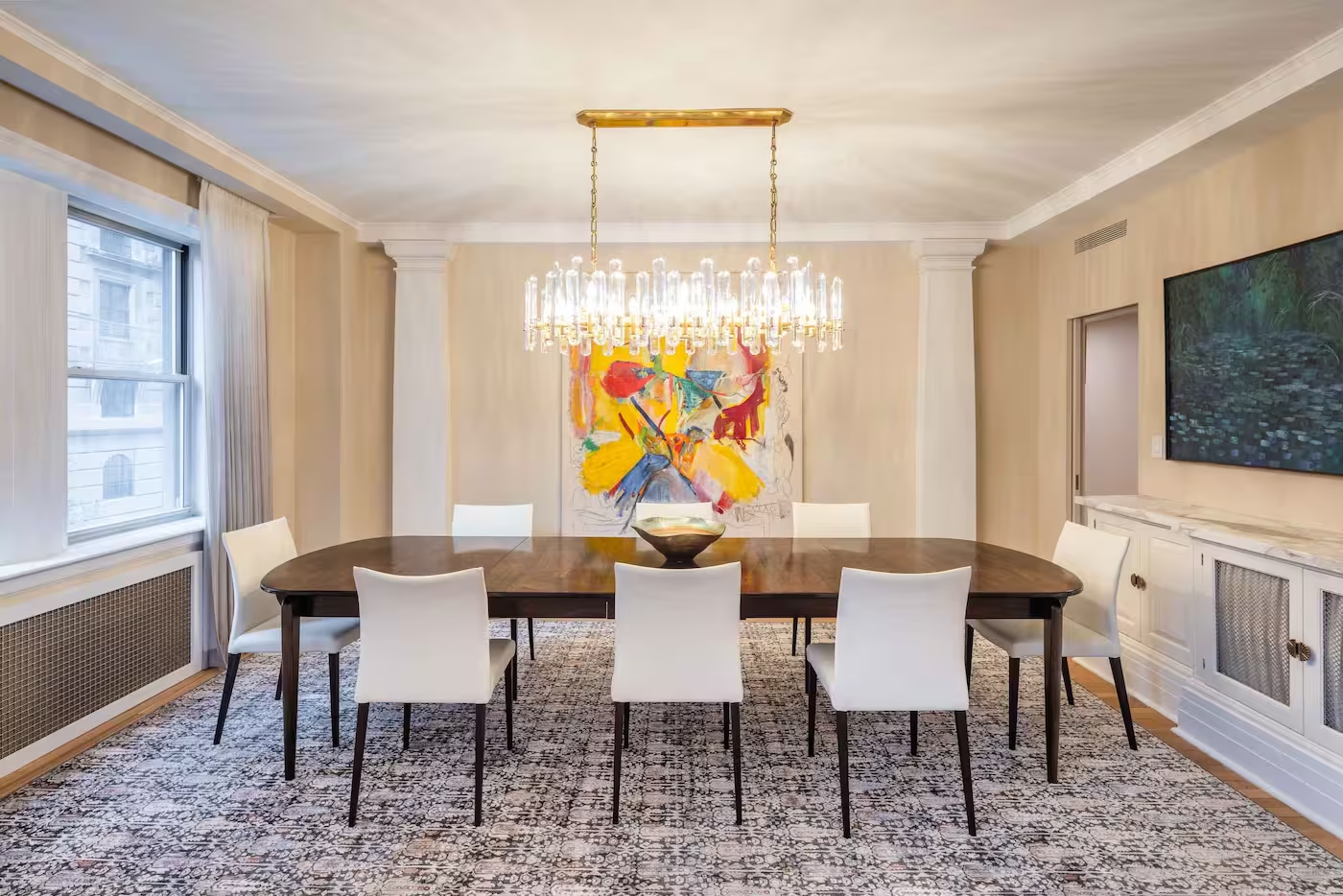
Upper West Side Client
Testimonials & Reviews
Job description
PROJECT DATE
RATING

RELATIONSHIP
We used Gallery KBNY to re-design our kitchen and other rooms. Avi Zikry's design was amazing. His vision enabled us to create a whole new look and a better functioning space. That was a year ago, and we are very happy with the results. I highly recommend him. View full renovation: https://www.gallerykbny.com/our-work/manhattan-apartment-renovation-91-central-park-west
...read moreJob description
PROJECT DATE
RATING
RELATIONSHIP
Worked with the Gallery Team to do a full gut renovation of our home. As a young family we wanted a more modern and open layout but needed a practical and functional layout which the Gallery Team worked with us to design. They were very helpful through the entire process and worked with us each step of the way with great responsiveness and care for our project. They were helpful but not pushy through the design process and efficient through the construction process. They maintained open lines of dialogue and we are very happy with the way our home turned out. Thank you Gallery!
...read moreView Renovation BEFORE & AFTERs
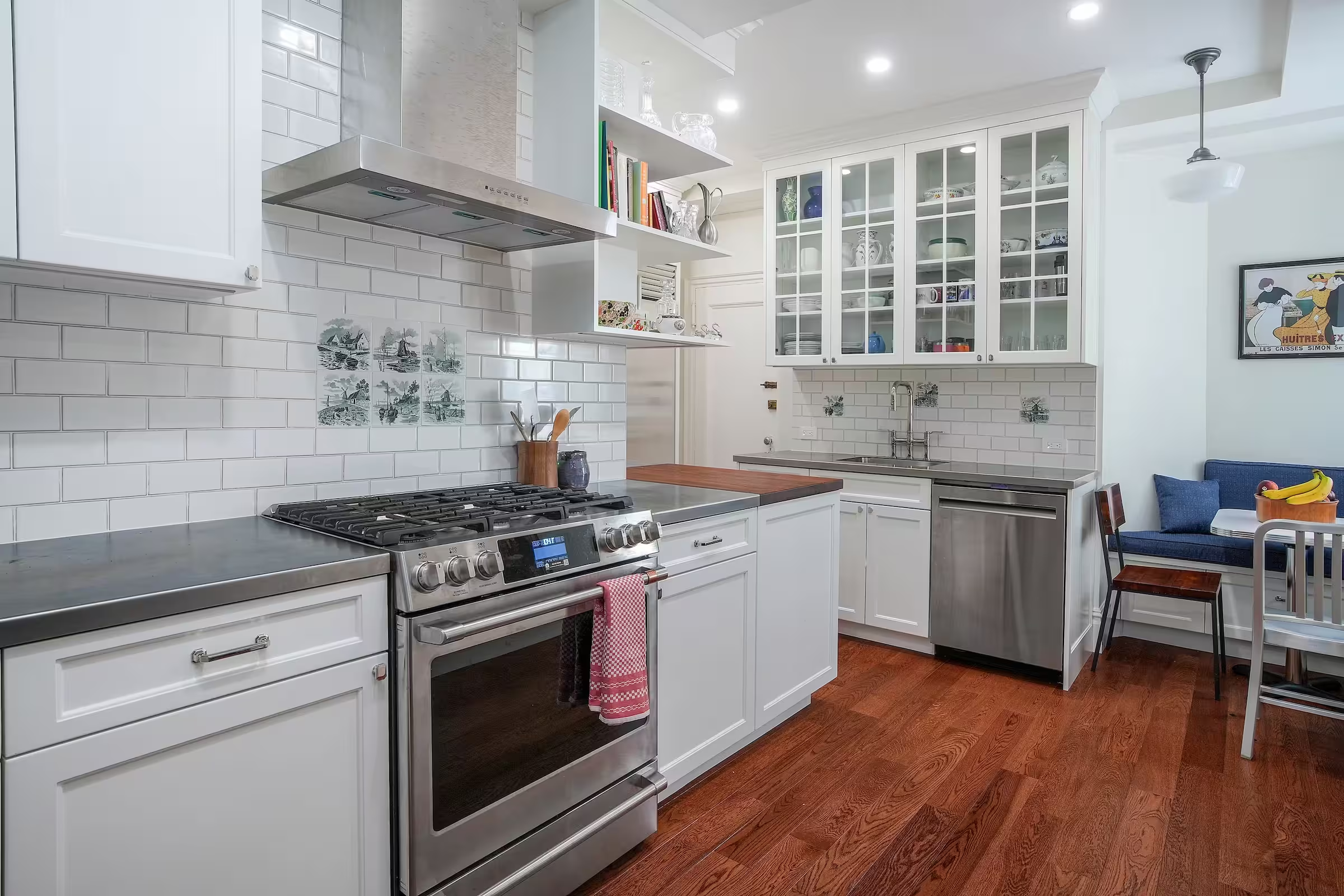
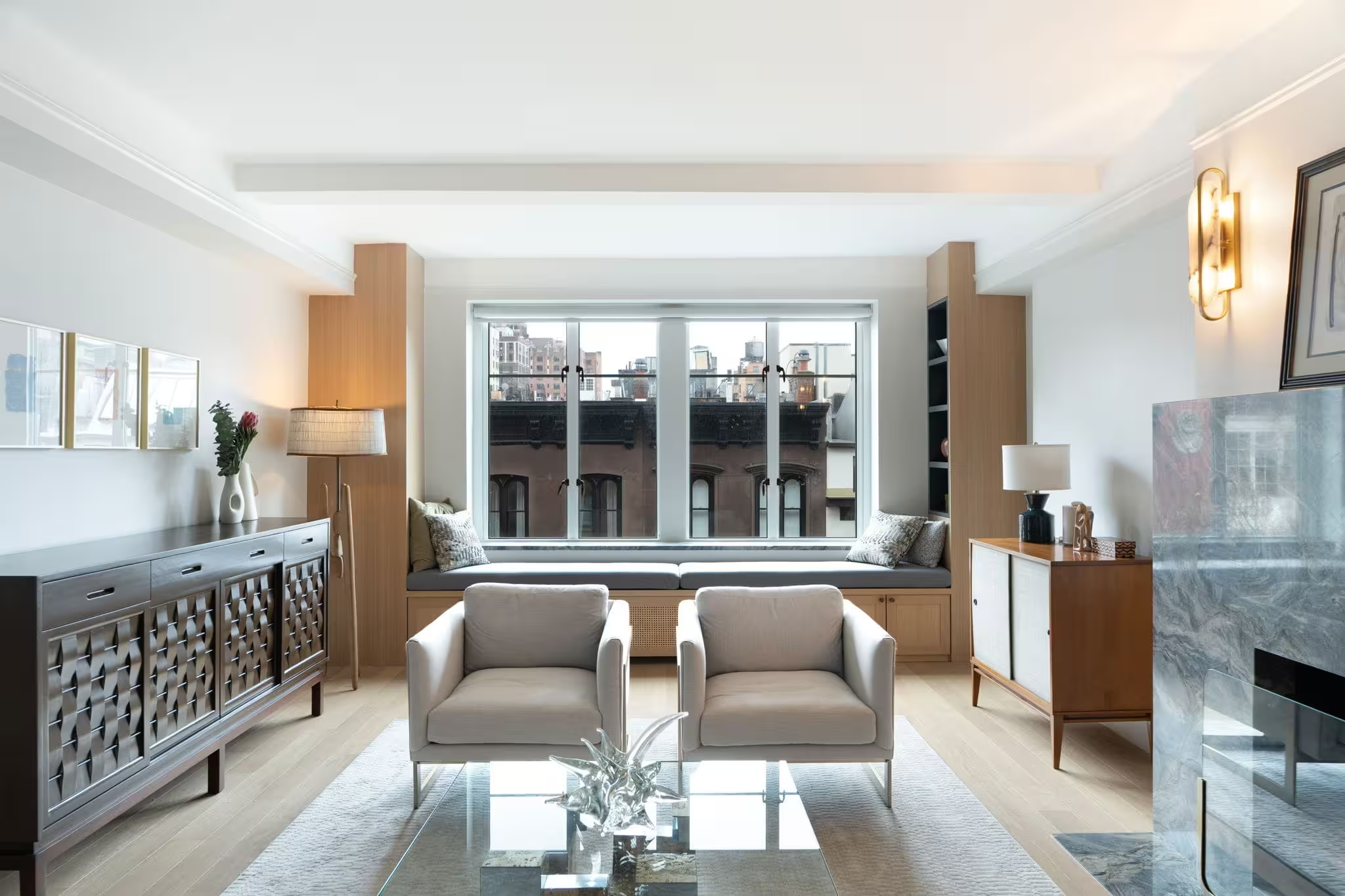
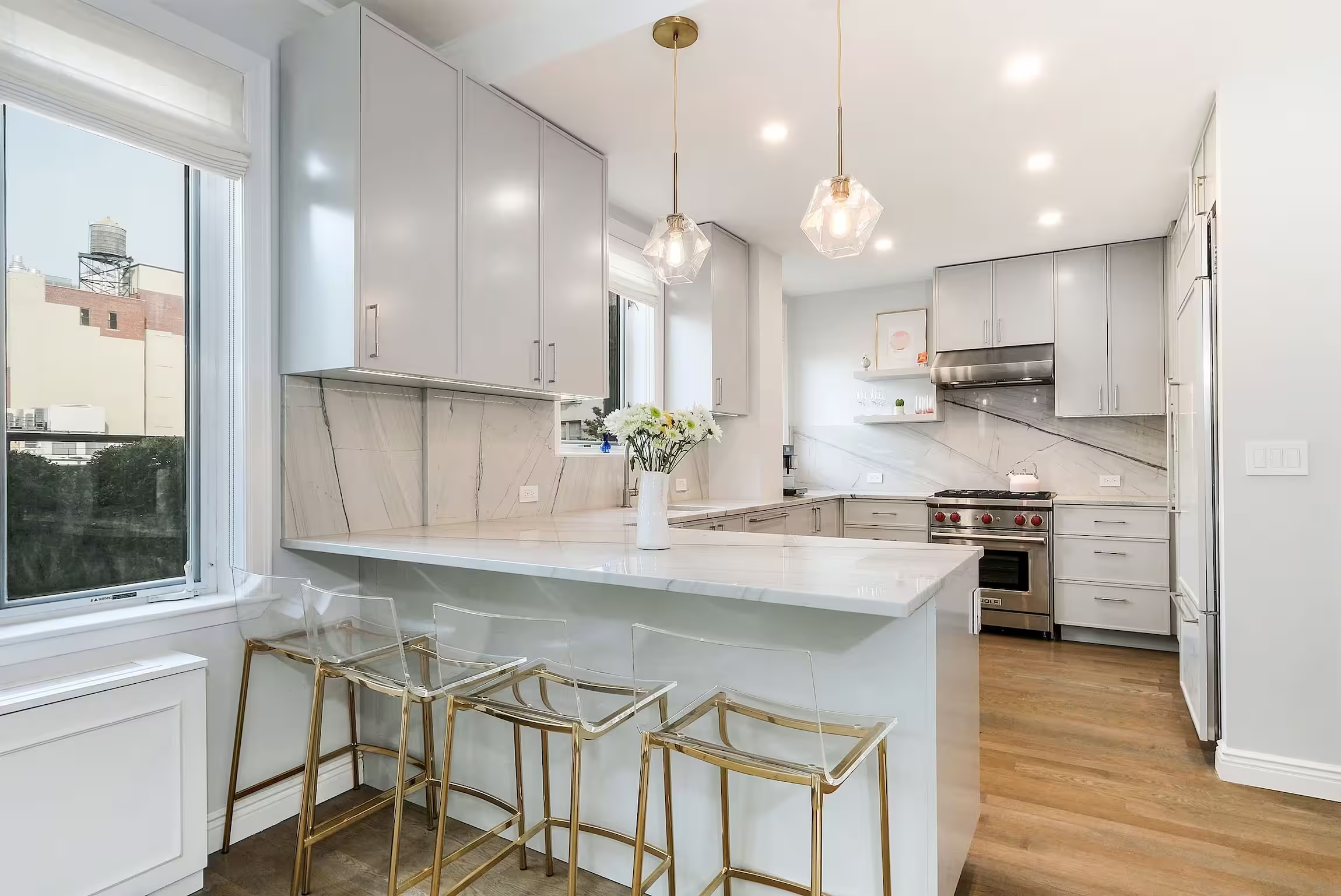
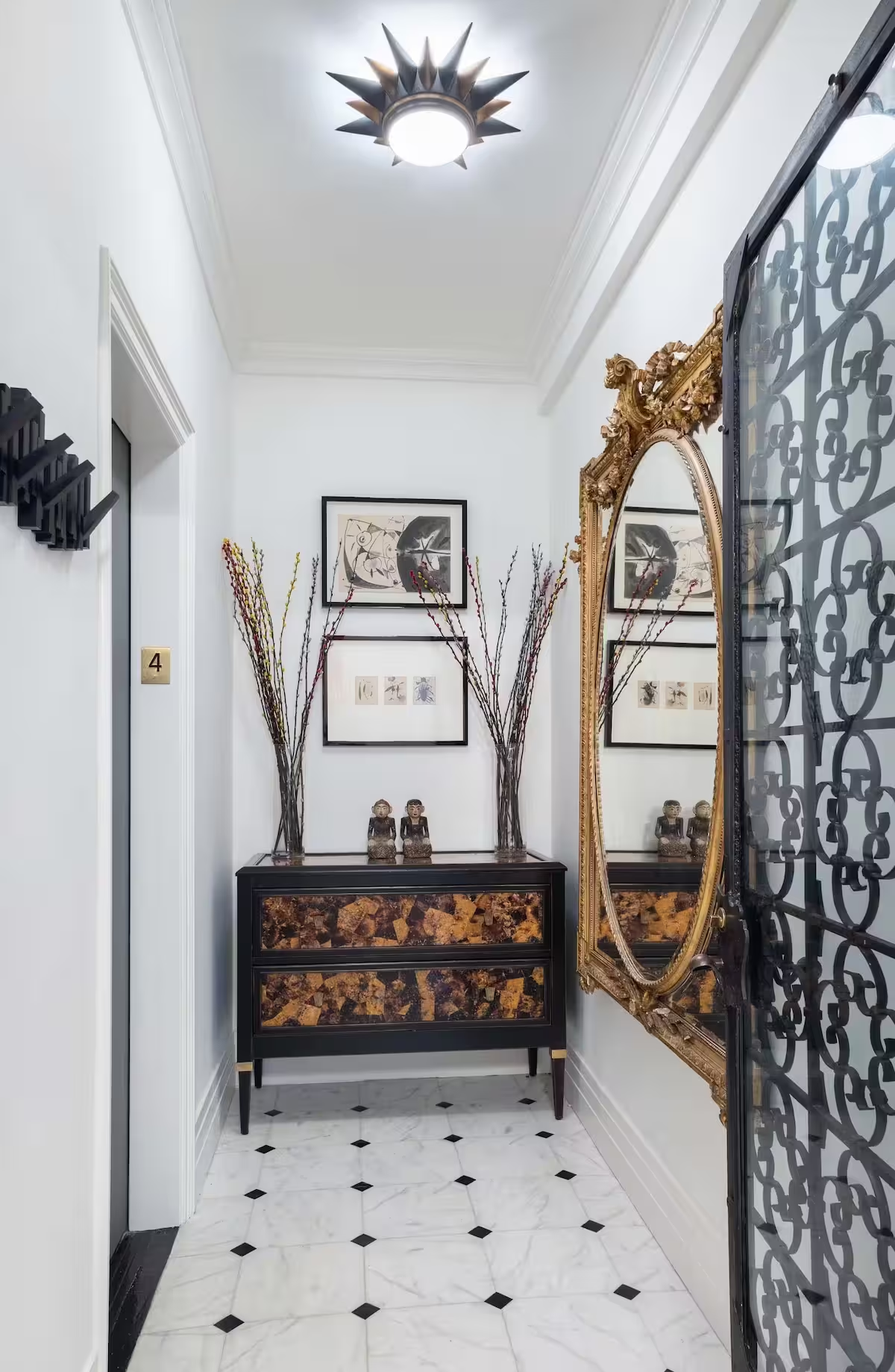
Gallery KBNY has completed renovations across every type of Manhattan apartment, including estate-condition pre-war co-ops on Fifth Avenue and Central Park West, condos in Tribeca and the West Village, combinations on the Upper East Side, and lofts in Soho. Each project started with the same diligence process we use for pre-purchase assessments. Below are two representative projects, plus a third in our portfolio: 308 East 79th Street, a pre-war Upper East Side gut renovation at $690K (mid to upper mid-tier finish), demonstrating the cost variability within the pre-war category.
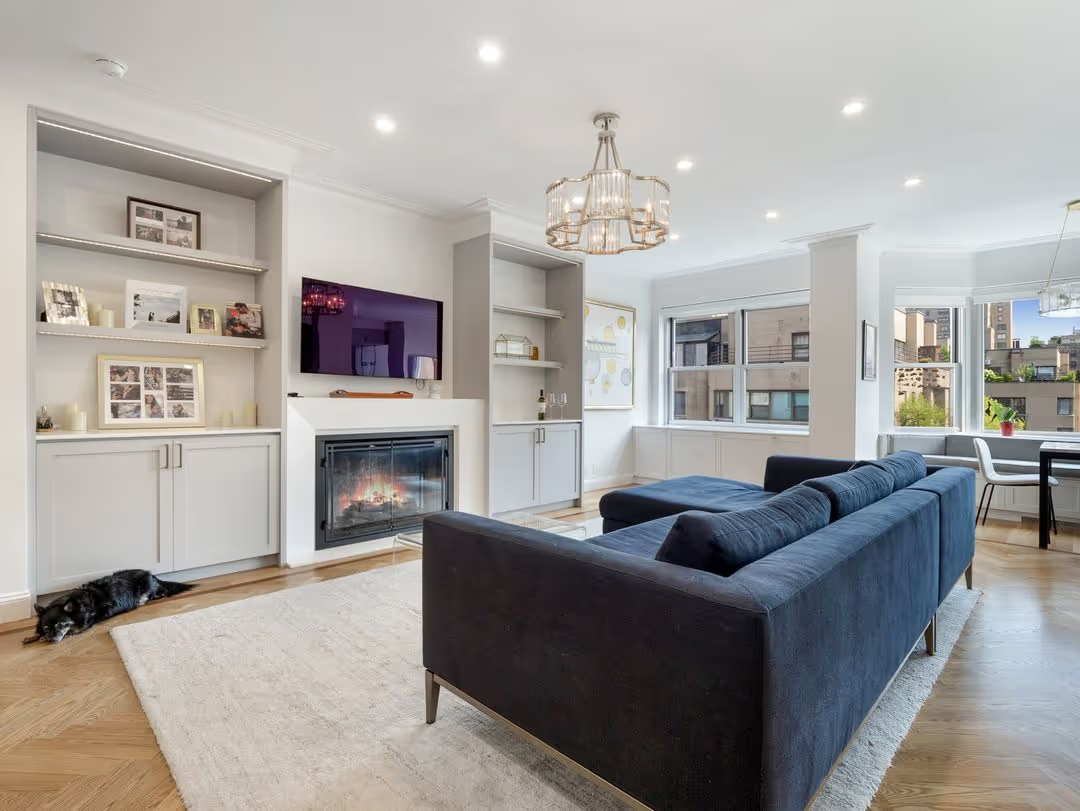
1035 Fifth Avenue: Carnegie Hill Pre-War Co-op
Project value: $2.2M · Scope: Full gut, 4,000 sq ft · Finish level: $550/sq ft
An estate-condition pre-war co-op requiring complete infrastructure replacement. Scope included full electrical rewiring, new plumbing branches, central air installation, gut kitchen and bathroom renovation, new flooring throughout, and skim-coating of every wall and ceiling. The pre-construction planning phase identified every major infrastructure condition before demolition, which is how the project was delivered on budget with zero change orders from concealed conditions.

425 East 58th Street: Sutton Place Post-War Co-op
Project value: $950K · Scope: Full gut, 1,800 sq ft · Finish level: $528/sq ft
A post-war co-op in need of full renovation. Lower per-square-foot cost than a comparable pre-war unit because post-war construction typically carries fewer concealed conditions (minimal asbestos, newer electrical infrastructure, simpler plumbing). This is the kind of value differential a pre-purchase assessment surfaces before you choose between two apartments, and it materially affects which one is actually the better buy.
Frequently Asked Questions
Should I involve a renovation firm before making an offer on a Manhattan apartment?
Yes. Walking the apartment with an experienced design-build firm before going under contract, or during the contract period, is one of the most valuable steps in the buying process for any property that requires significant work. A pre-purchase assessment evaluates renovation feasibility, identifies infrastructure constraints and concealed risks, and produces a realistic cost and timeline range. This prevents incorrect assumptions from driving one of the largest financial decisions of your life.
What does a Gallery KBNY pre-purchase assessment cost?
There is no charge. Gallery KBNY does not bill for pre-purchase renovation assessments. We believe that if we provide real, objective value and genuine guidance to a prospective client early, the natural decision for many is to work with us when they move forward with the renovation. That is the trade we are willing to make, and it is consistent with how we build relationships with the clients we ultimately work with.
How accurate are renovation cost estimates before buying an apartment?
They can be accurate within a meaningful range when they account for the building's alteration agreement requirements, existing infrastructure conditions, code compliance items, and realistic finish allowances. Estimates based solely on square footage and a brief walkthrough, without reviewing the alteration agreement or assessing concealed conditions, are often incomplete by $50,000–$200,000+ on a gut renovation. A proper pre-purchase assessment closes that gap.
How long does the assessment take from start to finish?
The full process typically completes within five to ten business days. Document review is completed before the walkthrough; the on-site walkthrough is 60–90 minutes; the written assessment is delivered within 24 hours of the walkthrough, followed by a working consultation once you've had time to review it. The process is designed to fit inside a standard contract diligence window.
What are the most common surprises when renovating a Manhattan apartment?
Insufficient electrical amperage (where an upgrade is possible at all; some buildings don't have the physical capacity to accommodate one, and where they do, the cost depends heavily on where the power needs to come from), asbestos in concealed locations (abatement runs $8,000–$40,000+), building-required scope items not anticipated in the original budget (branch plumbing replacement, soundproofing, window specifications), and building-wide infrastructure work that coincides with your renovation timeline. A proper pre-purchase assessment anticipates these during planning rather than discovering them during construction.
How long does it actually take to renovate a Manhattan apartment?
For a full gut renovation: 10–12 months from initial consultation to move-in. That includes 4–6 months of pre-construction (design, board approval, DOB permitting) and 5–6 months of construction. Timelines are longer in co-ops due to board approval and restricted work hours (typically 9 AM–4 PM weekdays). Many buyers underestimate the pre-construction phase, which is where the project's budget and scope are actually defined.
Are co-op renovations more restrictive than condo renovations?
Generally, yes. Co-ops typically involve stricter alteration agreements, more extensive board review, higher contractor insurance requirements, more restrictive work hours, and in some buildings daily penalties for construction that exceeds a permitted duration. Condos are usually more flexible, though they still require managing agent notification and compliance with house rules. Both require DOB permits for significant renovation work.
How much does a gut renovation cost in a Manhattan co-op?
In 2026, a full gut renovation in a Manhattan co-op typically costs $400–$550 per square foot for upper mid-tier finishes and $550–$850+ per square foot for luxury renovations, with pre-war gut renovations generally starting around $600 per square foot. Recent Gallery KBNY projects include a 4,000 sq ft pre-war gut at 1035 Fifth Avenue for $2.2M ($550/sq ft), an 1,800 sq ft post-war gut at 425 East 58th Street for $950,000 (~$528/sq ft), and a pre-war gut at 308 East 79th Street for $690,000 at mid to upper mid-tier finish.
Do you conduct assessments for apartments in Northern Brooklyn?
Yes. Gallery KBNY operates across Manhattan and Northern Brooklyn, in neighborhoods including Brooklyn Heights, Cobble Hill, Boerum Hill, Carroll Gardens, Park Slope, DUMBO, Williamsburg, and Greenpoint. Pre-purchase assessments are conducted for co-ops, condos, townhomes, lofts, and brownstones in both boroughs. Northern Brooklyn buildings have their own regulatory and structural considerations, particularly older brownstones and converted industrial lofts, which we account for in the assessment.
Should I plan a renovation before closing on a Manhattan apartment?
Yes. Many Manhattan buyers begin planning during the contract period, before ownership transfers. This allows you to evaluate renovation feasibility before completing the purchase, prepare architectural plans for the co-op alteration agreement, and begin the board approval process shortly after closing. Early planning can compress the time between closing and construction start by 2–3 months, reducing carrying costs significantly.
Walk the Apartment With Us Before You Sign
A founding partner leads every project, from the first walkthrough through the final punch list. If you're evaluating a Manhattan or Northern Brooklyn apartment that needs work, schedule a pre-purchase renovation assessment during your contract period and get a clear, realistic view of what you're buying into before you commit. We conduct pre-purchase renovation assessments during the contract period, typically within five to ten business days.
Gallery KBNY operates across Manhattan and Northern Brooklyn, including Brooklyn Heights, Cobble Hill, Boerum Hill, Carroll Gardens, Park Slope, DUMBO, Williamsburg, and Greenpoint. Pre-purchase assessments are conducted for co-ops, condos, townhomes, lofts, and brownstones in both boroughs.
Ready to walk the apartment? Schedule Your Pre-Purchase Assessment or call 718.690.3840. Learn more about Gallery KBNY's process.
let’s
Design-Build
together
.avif)