.avif)


.png)
.png)


The 1 Thing To Know Before Opening Up A Load-Bearing Wall In Your NYC Apartment
Opening up that wall without proper planning might be a big mistake.
April 22, 2026
|
The 1 Thing To Know Before Opening Up A Load-Bearing Wall In Your NYC Apartment
The one thing to know before removing a load-bearing wall in your NYC kitchen and the major issues that can follow without proper planning.
Table of Contents
- The One Thing You Need to Know
- The Potential Domino Effect
- Why You Need A Full-Service Renovation Partner
- FAQs About Opening Up A Load-Bearing Wall In An NYC Apartment
The wall between the kitchen and the living room is the first thing many NYC buyers want gone. An open plan promises more daylight and a clear sightline from the range to the windows, and the appeal is easy to understand. One question settles the entire project before any demolition starts: is that wall holding the building up?
A cosmetic refresh carries little risk. Removing a load-bearing wall sits in a different category of decision, because it carries the weight of the floors above and the systems threaded through the structure. The spatial reward is real, and so are the obligations that arrive once a structural wall is in play. What follows covers the factors worth weighing before a renovation of this scope, along with the single one that governs whether it succeeds.

[#1]The One Thing You Need to Know[#1]
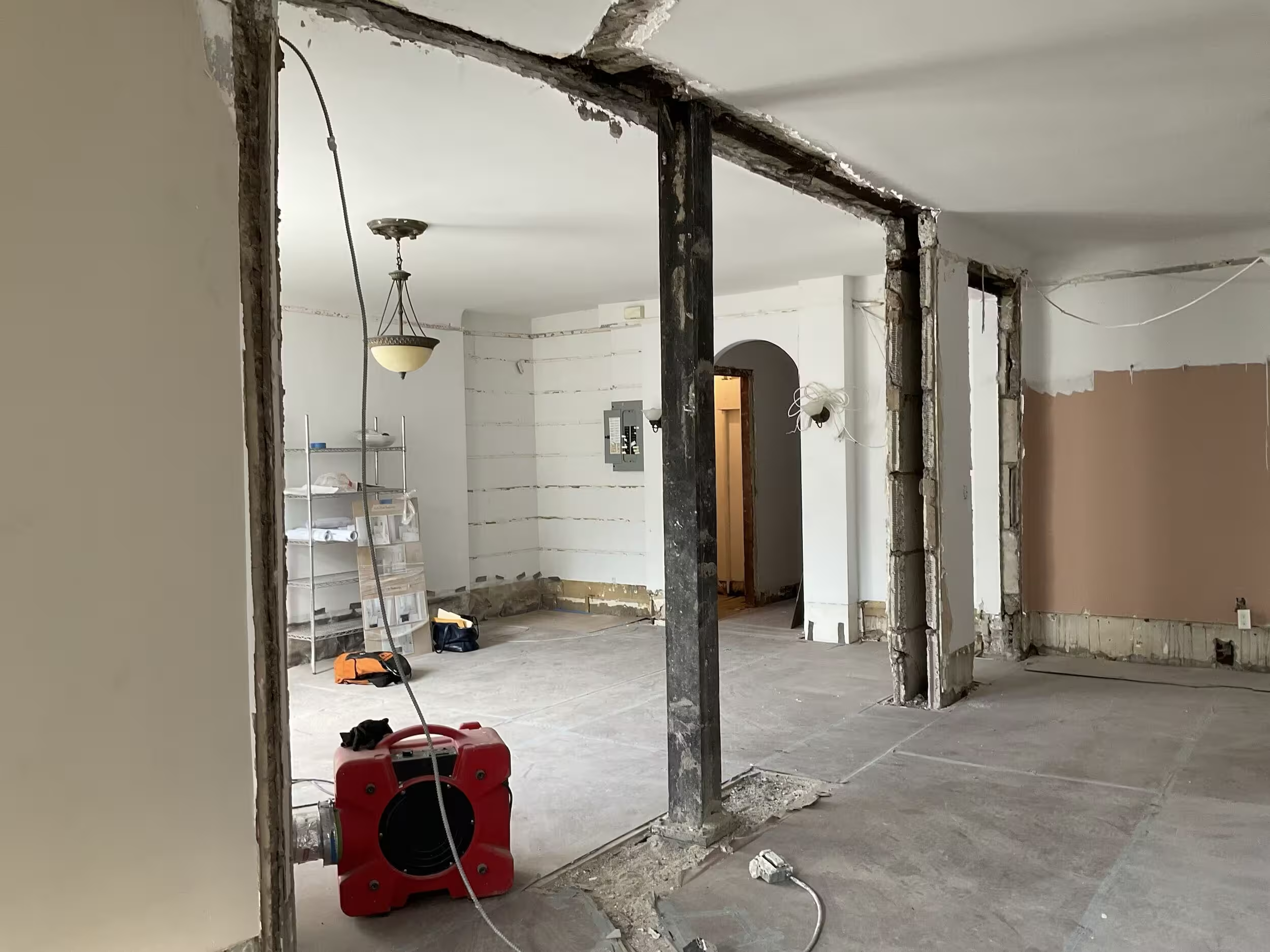
Removing a load-bearing wall is a structural decision before it becomes an aesthetic one. These walls carry real weight, with the floors above resting on them and mechanical runs often passing straight through. Take one out without a proper plan and the consequences surface over time: a sagging floor, a door that no longer sits square in its frame, cracked finishes as the structure settles, and in the worst case a genuine loss of structural integrity. NYC adds its own layer, where a small miscalculation during construction can trigger a violation and a stop-work order that halts the job without warning.
Here is the one thing to know: the load has to go somewhere. Before a single stud comes out, a structural engineer determines how the weight travels today and designs the beam or column that will carry it once the wall is gone. Every later decision in the renovation rests on getting that right.
Structural Engineering
How The Load Gets Carried Once The Wall Is Gone
The weight a load-bearing wall holds has to land somewhere else once the wall comes out. A structural engineer specifies which member carries it, and that choice drives both the clear span and how much ceiling height the opening keeps.
Steel Wide-Flange Beam
Span
Longest clear spans, full kitchen or combined-room widths
Ceiling Height
Can sit flush within the floor depth to preserve height, or drop where depth is limited
Best Suited For
Wide openings and heavy load coming from several floors above
Engineered Lumber Beam (LVL)
Span
Moderate spans
Ceiling Height
Usually drops slightly below the ceiling line, and it moves easily through an occupied building
Best Suited For
Smaller openings where a full steel section is not required
Flitch Beam
Span
Moderate to long spans
Ceiling Height
Slimmer profile than lumber alone at the same capacity, with a steel plate bonded between wood
Best Suited For
Openings where wood alone falls short of the load but full steel runs heavier than needed
Posts Or Columns
Span
Used when one beam cannot clear the full width on its own
Ceiling Height
Keeps full ceiling height while placing a vertical element within the opening
Best Suited For
Very wide spans, or floors above that cannot be re-supported by a single beam
Source: Gallery KBNY structural coordination on NYC pre-war and post-war renovations.
.avif)
[#2]The Potential Domino Effect[#2]
One wall rarely stays one decision. Beyond reshaping the kitchen, the work reaches the structure, the hidden systems behind the plaster, the building approvals, and sometimes the units next door. With a proactive plan in place, the project keeps its footing and the budget holds.
Scope Comparison
Partition Wall vs. Load-Bearing Wall: What The Project Requires
Source: Gallery KBNY renovation scoping across NYC co-op and condo projects.
Structural Shifts Reach Past The Kitchen
A load-bearing wall supports several parts of an apartment well beyond the kitchen. Remove or alter it without proper reinforcement and misalignment can travel through the home, showing up as a floor that begins to sag or finishes that crack as the load finds a new route. Older pre-war homes carry an added wrinkle, since work done over the decades without proper oversight can leave effects that are still present today, which is often what brings owners to a post like this one. In the most serious cases the consequences extend past the apartment itself and into neighboring units.
Plumbing And Electrical Behind The Wall
Many NYC apartments run essential plumbing and electrical through their load-bearing walls. Opening one of these walls can mean rerouting a gas line or reconfiguring the water and electrical runs behind it, each of which has to satisfy strict city code. Conditions like outdated wiring or brittle pipe come to light once the wall is open, and catching them before demolition keeps a manageable task from becoming an expensive delay.
Approvals And Permits
Co-op and condo boards, together with the NYC Department of Buildings, hold firm rules for structural change. Altering a load-bearing wall almost always calls for a stamped architectural plan and engineering approval, followed by the city permits that authorize the work, all of which a design-build firm like Gallery handles on your behalf. Skip those steps and the project can run into stop-work orders and fines that stall it indefinitely. Securing every approval before construction starts keeps a NYC renovation on schedule and moving smoothly.
NYC Renovation Process
The Approval Pathway For Removing A Load-Bearing Wall
Structural Assessment
A structural engineer confirms whether the wall carries load and maps how weight currently travels to the building frame.
Engineering Design
The engineer sizes the permanent beam or column that will carry the load and specifies the temporary shoring for demolition.
Architectural Coordination
A registered architect folds the structural design into a complete alteration drawing set ready for filing.
Board Review
The co-op or condo board, often through its own engineer, reviews the plans under the building alteration agreement.
DOB Filing And Permit
Stamped plans are filed with the Department of Buildings, and the permit is issued before any demolition begins.
Shored Demolition
The wall comes out under temporary support so the floors above stay fully carried throughout the work.
Load Transfer And Sign-Off
The permanent beam or column is installed, the load is transferred onto it, and the work is inspected for close-out.
Source: Gallery KBNY design-build project process, NYC co-op and condo renovations.
%20Gallery%20KBNY.avif)
[#3]Why You Need A Full-Service Renovation Partner[#3]
In a city where many buildings are a century or more old, surprises behind the plaster are common and the risk of removing the wrong element runs high. Each building brings its own set of conditions, so even a straightforward project can prove more involved than it first appears, especially once what sits behind the wall comes into view.
This is where seasoned expertise earns its place. A design-build team experienced in NYC apartments protects the schedule against costly delay and keeps the kitchen renovation aligned with the result you set out to achieve, free of the surprises that derail even a strong floor plan.
Considering an apartment renovation in New York City? View our portfolio of NYC apartment renovation before and afters, learn more about Gallery, or contact us today.
We are a New York Times-featured design-build firm in New York City with a full-service approach to renovations in Manhattan and Brooklyn that includes everything from interior design and architecture services to filing permits and construction management. We’re experts in pre-war apartment renovations, apartment combinations, room creations, full gut renovations and all that falls in between. Let us bring your dream home to life.
Gallery KBNY is a full-service design-build firm featured in The New York Times, specializing in the architecture, interior design, and renovation of apartments, co-ops, condominiums, townhomes, and lofts across Manhattan and Brooklyn. Our integrated team of architects, designers, contractors, and project managers manages every phase from board approvals and DOB permitting through design and construction. A founding partner is involved in every project, start to finish. Because architecture, design, permitting, and construction are coordinated under one roof, the process remains streamlined, accountable, and transparent from start to finish. Our work has also appeared in Forbes, Architectural Digest, and Inc., and is backed by 100+ five-star client reviews.
[#FAQ]Frequently Asked Questions About Opening Up A Load-Bearing Wall In An NYC Apartment[#FAQ]
How do you confirm a wall is actually load-bearing in a pre-war building when the original drawings are unavailable?
Original construction drawings for many pre-war buildings are incomplete or missing, so the determination relies on physical investigation rather than paperwork alone. A structural engineer reviews whatever DOB records and building department filings exist, then reads the framing direction and wall thickness against what sits in the floors above and below. Where doubt remains, a small exploratory opening confirms how the load travels before any design assumptions are locked in. Treating the wall as load-bearing until proven otherwise is the conservative standard most reputable firms hold to.
Does the co-op or condo board's structural review add requirements beyond what the DOB asks for?
It often does. The Department of Buildings sets the legal baseline, while many boards apply a stricter private standard through the alteration agreement and a review by the building's own engineer. That can mean additional structural backup, restrictions on work hours and methods that affect neighbors, proof of contractor insurance at specified limits, and in some buildings an escrow or completion deposit. Building these board conditions into the plan early keeps approval from becoming the bottleneck once construction is ready to begin.
Can the wall be partially opened, such as a widened pass-through, instead of removed entirely, and does that reduce the structural scope?
A partial opening is often a sound option, and it still engages the same structural discipline. Any opening in a load-bearing wall transfers the load above it onto a header or beam, so an engineer sizes that member whether the opening is a doorway or the full width of the room. A narrower opening can call for a lighter beam and simpler shoring, which sometimes trims cost and time, though it rarely removes the engineering and filing requirements altogether. The right scope usually comes down to how much sightline and flow you want set against what the structure allows.
Will removing the wall cost me ceiling height?
Not necessarily. Where the floor framing has enough depth, an engineer can specify a beam that sits flush within that depth, leaving the ceiling line unbroken across the new opening. When the available depth is tight or the span is long, the beam may drop below the ceiling, and that drop can be detailed cleanly as a soffit or a defined transition between rooms. In pre-war buildings with generous slab-to-slab heights, a flush installation is frequently achievable, which is one reason the structural approach is worth settling early in design.
If I am combining two apartments, does the wall between them change the structural picture?
Combinations raise the stakes because the wall between two units is frequently a primary structural or party wall, and in many buildings it also performs an acoustic and fire-separation role between residences. Opening it calls for engineering that addresses the new load path along with the fire-rating and sound-isolation requirements a single-apartment project would not face. Boards tend to scrutinize combination work closely, and the alteration agreement often carries combination-specific conditions. Scoping the wall correctly at the feasibility stage protects both the budget and the board timeline.
Does a landmarked building or a location in a historic district add another layer of review?
Interior structural work in a landmarked building usually falls outside Landmarks Preservation Commission jurisdiction, since the LPC focuses on exterior and designated interior features. The practical complication is the building stock itself, because landmarked and historic-district properties tend to be older, with framing and conditions that demand careful structural assessment. Where a designated interior or a facade element is involved, LPC review enters the picture and is best identified at the outset so the approval sequence can account for it.
Manhattan Design-Build
Evaluate Your Manhattan Apartment
Before You Buy
Buying an apartment you plan to renovate? A founding partner walks it with you during the contract period and maps the scope, cost, and timeline, so you know exactly what you're taking on before you sign.
As seen in
Pre-Purchase Assessment
Walk the apartment with us first and understand the full scope, cost, and timeline before you close.
or call us directly
let’s
Design-Build
together