.avif)


.png)
.png)


How to Choose a Renovation Contractor on the Upper East Side: The 2026 Guide for Co-op, Condo & Townhouse Owners
The 2026 guide to vetting Upper East Side renovation contractors for co-ops, condos, and townhouses. Compare delivery models, evaluation criteria, and neighborhood-specific risks.
May 6, 2026
|
How to Choose a Renovation Contractor on the Upper East Side: The 2026 Guide for Co-op, Condo & Townhouse Owners
A Manhattan design-build principal's framework for evaluating Upper East Side contractors across co-ops, condos, and townhouses.
TABLE OF CONTENTS
- TL;DR | The Short Answer
- The Nine Criteria That Actually Predict Outcomes
- Design-Build vs Design-Bid-Build vs Architect-Led: Which Model Fits the Upper East Side?
- Upper East Side Sub-Neighborhood Realitie
- Recent Upper East Side Renovations
- Frequently Asked Questions
The Upper East Side is one of the most demanding renovation environments in New York. Pre-war co-ops with original infrastructure, conservative boards with rigorous approval processes, building engineers who scrutinize every submission, Landmarks-affected sub-districts, and townhouses with structural complexity. The success of a renovation in this environment is directly tied to the team you work with.
If you've renovated before, you already know the shape of the problem. Disconnected teams, an architect on one contract, a designer on another, a contractor on a third, often produce change orders, delays, and a client who ends up coordinating between firms that are pointing at one another. If this is your first renovation, the question is more fundamental: do you hire an architect first, a contractor first, or a design-build firm that handles both? The answer depends on the scope of your project and the model that gives you the most accountability for the time and money you are about to commit. For owners in the buying process, our pre-purchase renovation assessment covers what to look for before the contract is signed.
This guide is the framework we recommend to anyone vetting a renovation contractor on the Upper East Side in 2026. It covers the criteria that actually predict outcomes, the trade-offs between delivery models, and the building-stock realities of every UES sub-neighborhood. Whether you ultimately need a full-service apartment renovation in Manhattan or a more targeted scope, the framework applies.
[#1]TL;DR | The Short Answer[#1]
If you are renovating on the Upper East Side and want the one-paragraph version of this guide:
Hire a design-build firm with integrated in-house design and architectural coordination, a principal who is personally accountable to your project, a fixed-price contract, a sub-5% change-order rate on past projects, and verifiable Manhattan co-op and condo experience. Verify their experience with references from your sub-neighborhood. Do not optimize on price, optimize on certainty.
.webp)
[#2]The Nine Criteria That Actually Predict Outcomes[#2]
The criteria below come from twenty years of running renovations on the Upper East Side, including more than 70% completed with zero change orders. They are ordered by predictive power, and they apply whether or not you ultimately work with us.
| Criterion | What A Strong Firm Shows |
|---|---|
| 01Integrated Team | One team for design, construction, board, and city approvals, producing its own drawings and named on the DOB filings |
| 02Fixed Price & Change Orders | A fixed-price contract and a change-order rate under 5% of contract value across recent projects |
| 03Senior Accountability | A partner or senior principal personally owns the project, with deep Upper East Side experience |
| 04Specialization | A core focus on pre-war Manhattan apartment renovation rather than generalist breadth |
| 05Sub-Neighborhood Record | A pattern of first-pass board approvals in your specific sub-neighborhood |
| 06Pre-Construction Process | A defined, multi-step pre-construction process spanning weeks before any permit is pulled |
| 07Communication & Visibility | A proactive cadence and a live production calendar to track progress against the schedule |
| 08Finish-Level Execution | Millwork, plaster, and stonework performed in-house for consistent finish quality |
| 09Verifiable References | Recent references from comparable projects, plus sustained third-party recognition |
01 | Are design, construction, board approval, and city approvals all handled under one team?
This is the single highest-leverage filter on the Upper East Side. A renovation here is not just design and construction, it is also DOB permitting, co-op or condo board approval, building engineer review, Landmarks review where applicable, and a series of procedural and political handoffs that determine whether the project gets greenlit on the first submission or sits in limbo for months. The traditional model splits these phases across separate firms, with the homeowner serving as the connective tissue between architect, designer, contractor, and the building's approval bodies.
A design-build firm consolidates the design intent, the architectural coordination, the engineering handoffs, the DOB filings, the building approvals, and the construction under one team. There is one contract, one source of accountability, and one party responsible for resolving the inevitable issues that arise during a long renovation. Gallery KBNY operates this way, architects, designers, contractors, and project managers all under one roof, which is what allows the process to stay streamlined, accountable, and transparent from start to finish.
When evaluating any firm, ask whether they produce their own drawings or outsource to an external architect. Ask who is named on the DOB filings. Ask how design changes during construction are handled, internally, in real time, or through a multi-firm coordination process. The answers reveal how the firm is actually structured, regardless of how they describe themselves.
02 | Is the contract fixed-price, and what is the firm's change-order history?
Change orders are the single largest source of budget variance on Upper East Side renovations. They typically arise not from new scope the homeowner requested, but from conditions that should have been identified during pre-construction and were not. The discipline that prevents them is upfront diligence.
A useful diagnostic is the firm's change-order rate as a percentage of contract value across their last twenty projects. Rates below 5% indicate a firm that does the engineering, field verification, and subcontractor pricing before the contract is signed. Gallery's track record is zero change orders on more than 70% of projects, a benchmark we publish so clients can use it when evaluating any firm, including us. For deeper context on how to set a project up for that outcome, see our guide to strategic renovation planning.
A fixed-price contract with detailed scope is the structural mechanism that produces this outcome. It compels the firm to do the diligence work upfront, before construction begins, which is when finding a surprise still leaves room to plan around it.
03 | Who, specifically, is accountable to you?
On a $1M+ Upper East Side renovation, the most important question about the firm's structure is who personally owns your project, and how senior they are. There is a meaningful difference between working with a partner of the firm and working with a junior project manager who is still building their judgment in this market. Both staffing models exist, and both can produce good work, but in this industry, where the depth of experience often determines whether a project survives an unexpected building condition, a tense board meeting, or a subcontractor problem, senior accountability is what predicts good outcomes when something does not go as planned.
Gallery is structured so that a partner is directly involved in every project. The reason is operational, not promotional: the situations that make or break Manhattan renovations, a building engineer pushing back on a submission, a hidden condition discovered behind a wall, a sequencing decision that affects the next four weeks of work, require the kind of judgment that only comes from running dozens of these projects.
When evaluating any firm, ask who specifically will be on your project, what their seniority is, and how many years of Upper East Side experience they bring. A clear answer is itself a useful signal.
04 | What does the firm specialize in?
Core expertise matters more than generalist breadth on the Upper East Side. A firm that specializes in pre-war Manhattan renovations operates differently than a firm that takes on everything from kitchen refreshes in New Jersey to ground-up new construction. The specialist firm has built repeatable processes for the specific situations that come up here: navigating a Park Avenue board, sequencing a riser replacement, working within a six-hour weekday work-window, and coordinating with the building engineer and managing agent in the way each particular building expects.
Generalist firms can be excellent in their own right, but the operational pattern of an Upper East Side pre-war renovation is specific enough that depth in this category produces predictable outcomes that breadth cannot. The buildings reward firms that have already solved the problem you are about to encounter.
Ask any firm what their core focus is. What percentage of their work is Manhattan apartment renovation? What percentage is pre-war? How many projects have they completed in your sub-neighborhood? The answers reveal whether the firm has the operational depth your project will draw on.
.webp)
05 | Does the firm have a track record of getting renovations approved in your sub-neighborhood?
The most reliable signal of operational fluency on the Upper East Side is whether a firm consistently gets its projects approved in a timely fashion, and, just as importantly, whether the firm understands what will and will not work in a given building before the submission is made. Boards and managing agents have established expectations. Building engineers have specific concerns about acoustics, load, and the integrity of building systems. A firm that has worked in your sub-neighborhood, Carnegie Hill, Lenox Hill, Yorkville, Sutton Place, or Upper Carnegie Hill, will know what to propose, what to revise, and what to leave alone.
Ask for three references from your specific sub-neighborhood, ideally from buildings of comparable scale. Ask the references about the timing of board approvals: was the package approved on the first few rounds of review, or did it require resubmission and multiple revisions? First-pass approval is the signal of a firm that knew what would work before they submitted.
Ask the firm directly: in our building, or in buildings like ours, what have you proposed that the board approved, and what have you proposed that required revision? The texture of that answer reveals the depth of their experience in your specific corner of the Upper East Side.
06 | Does the firm have an internal pre-construction process, and how long does it take?
Pre-construction is where Upper East Side renovations are won or lost. It is the phase where the firm verifies field conditions, coordinates the architectural and engineering drawings, prices every subcontractor against a finalized scope, runs the submission package through the board, and identifies the surprises before construction begins. Done well, it produces predictable outcomes.
A serious firm should have a defined, multi-step pre-construction process and should be able to walk you through it. At Gallery, the process, The Gallery Way, runs fifteen distinct steps and typically takes 8 to 12 weeks before a single permit is pulled. The depth of that process is what produces the zero-change-order outcome on more than 70% of our projects.
When evaluating any firm, ask them to walk you through their pre-construction sequence. The level of detail in their answer is itself a useful indicator.
07 | How does the firm communicate, and does it provide schedule visibility?
Communication is what determines a client's experience over the seven to fourteen months of an Upper East Side renovation. The clients who feel most in control are the ones whose firms communicated proactively, set clear expectations, and gave them visibility into where the project was at any moment.
Schedule visibility is the most concrete version of this. At Gallery, every project receives a production calendar before construction begins, mapping each phase of the project against the timeline. The calendar is a live reference point throughout the project, clients can see at any moment whether the project is on schedule or behind, and where the next milestones land. This kind of communication discipline is part of what we mean by white-glove renovation services: the calendar is what makes the difference between a client who is informed and a client who is surprised.
When evaluating any firm, ask how they communicate during the project, what their cadence is, and whether they provide a production schedule against which progress can be tracked. The answer tells you what your day-to-day experience will look like for the better part of a year.
08 | What does the firm's portfolio actually look like at the finish level?
Portfolio images can show beautiful results that came together in any number of ways. The diagnostic question is whether the firm executes the finish work itself, the millwork, the plaster, the stonework, or coordinates external subcontractors. Both models exist; the integrated model tends to produce more consistent results because the firm has internalized the craft and can resolve issues directly.
Visit a completed project if the firm will arrange it. Bring a trusted second set of eyes if you have one. Walk the millwork. Open the cabinets. Inspect the plaster shadow lines. The finish level is where the difference between a $450 per square foot renovation and a $650 per square foot renovation actually lives, and where craftsmanship is most visible.
09 | Are the references and reviews verifiable, recent, and from comparable projects?
References and reviews are most useful when they come from comparable projects (scale, building type, sub-neighborhood) and recent work that reflects the firm's current operational state. Sustained third-party recognition adds another layer of signal, Gallery has been featured in The New York Times and maintains a 5.0 rating across more than 100 client reviews, which we mention here because consistency over time is the meaningful version of the metric.
Ask for three references from projects completed in the last 18 months. The most diagnostic questions are: would you hire this firm again, what surprised you (positively or negatively), and how did the firm handle the one thing that did not go as planned? The third question is the one that reveals how a firm operates when the project tests them.
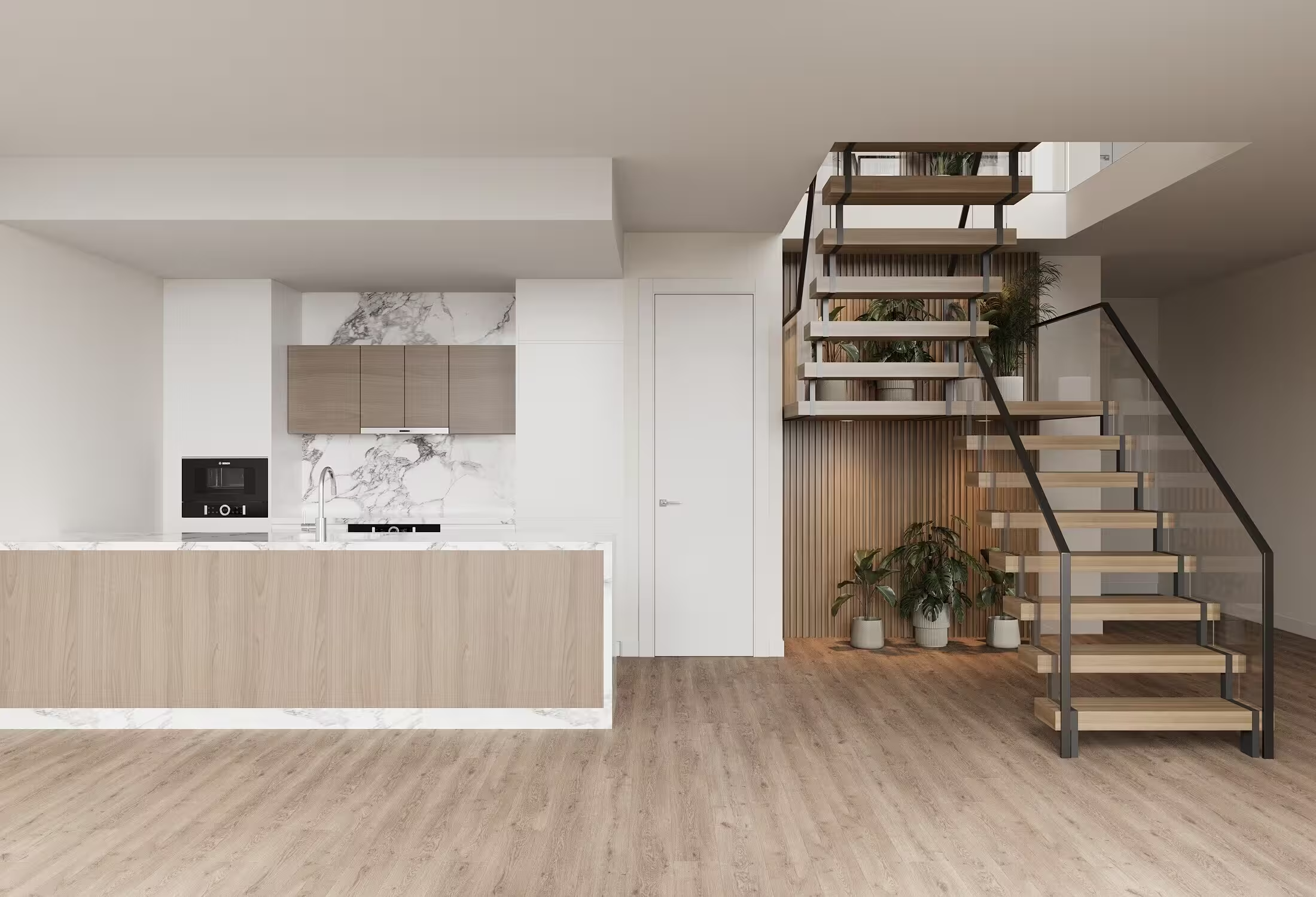
[#3]Design-Build vs Design-Bid-Build vs Architect-Led: Which Model Fits the Upper East Side?[#3]
There are three primary delivery models for a Manhattan apartment renovation. Each has a place. None is universally right. Below is the trade-off matrix specifically for Upper East Side projects, where co-op approval timelines, building-stock complexity, and finish-level expectations narrow the field.
Design-Build
Integrated team, one contract
Design-Bid-Build
Separate architect plus general contractor
Architect-Led
Architect hires the GC on the owner's behalf
For most Upper East Side co-op and condo renovations in the $500K to $2M range, the design-build model with integrated in-house design and construction is the highest-certainty path. The trade-off is that you are committing to one firm's design vision and execution capability, which is why the diligence on the criteria above matters more in this model, not less. For a deeper look at what these projects typically cost, see our co-op gut renovation cost guide.
[#4]Upper East Side Sub-Neighborhood Realities[#4]
Upper East Side covers a forty-block range with five distinct sub-neighborhoods, each with its own building stock, board culture, and renovation realities. The right firm for a Carnegie Hill pre-war is not necessarily the right firm for a Yorkville white-brick. Below is what we have learned running projects in each.
| Sub-Neighborhood | Building Stock | Renovation Reality |
|---|---|---|
| Carnegie Hill | 1920s and 1930s pre-war co-ops by Candela, Carpenter, and Roth | Full infrastructure work is typical even in dated units, under rigorous boards and approved-vendor rules |
| Lenox Hill | Mixed: pre-war co-ops, post-war condos, and townhouses | Townhouses run as small architectural commissions with DOB Alt-1 and Landmarks; condos follow building rules |
| Yorkville | Post-war and white-brick buildings | Simpler structure, though stricter work-windows and acoustic monitoring extend the timeline |
| Sutton Place | Pre-war River-view co-ops | Conservative boards that prize discretion, where reputation and staff coordination carry real weight |
| Upper Carnegie Hill | Buildings within the Carnegie Hill Historic District | LPC review can add 60 to 90 days, so Landmarks experience is essential to scope and sequence the work |
Carnegie Hill
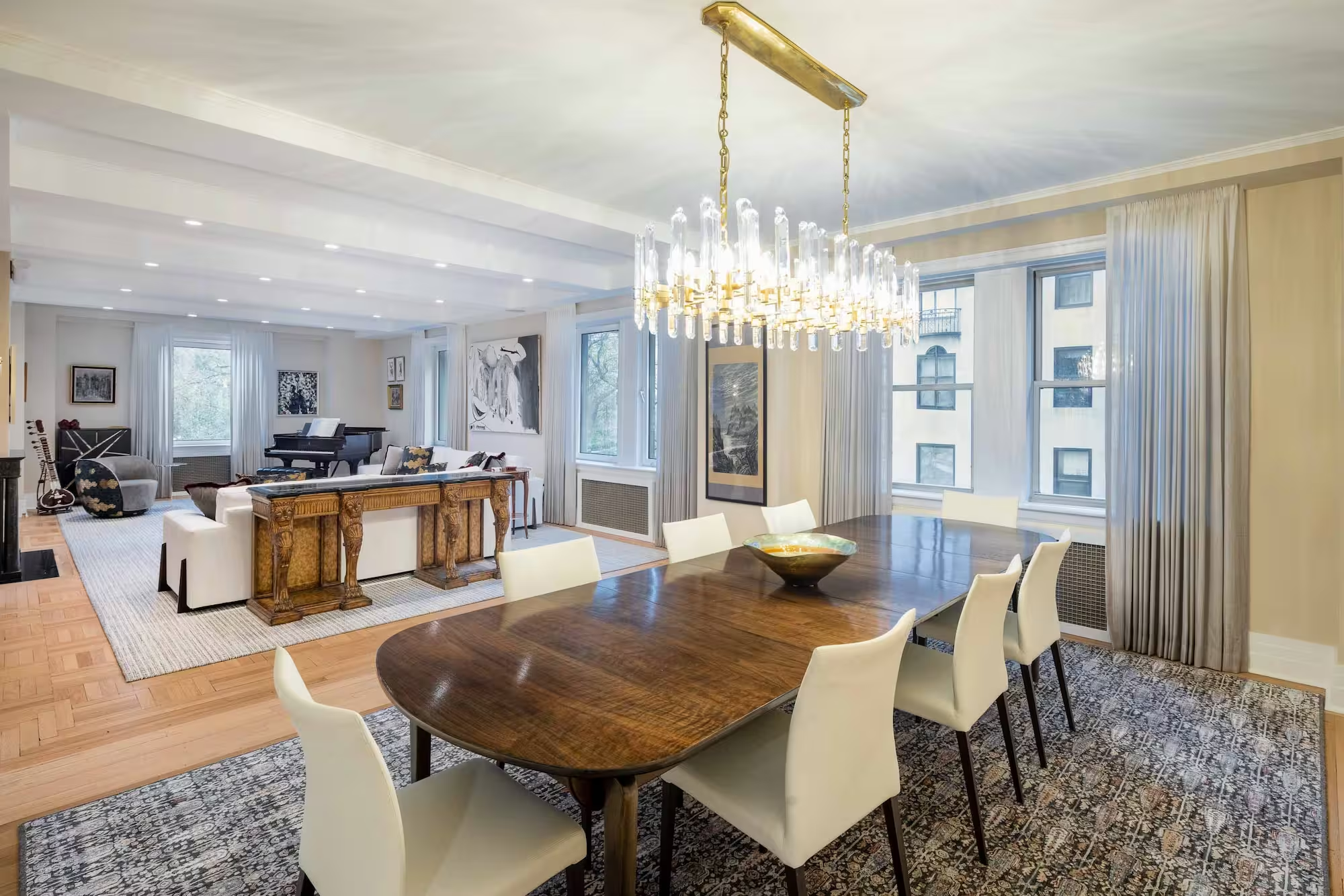
Carnegie Hill (roughly 86th to 96th, between Fifth and Lexington) is the densest concentration of pre-war cooperatives on the Upper East Side. Building stock is dominated by 1920s and 1930s elevator buildings, Rosario Candela, J.E.R. Carpenter, Emery Roth, with original layouts that almost universally need re-planning to accommodate modern living. Riser stacks are old, plaster is original, and most apartments have not been touched since a kitchen-and-bath refresh in the 1990s.
The renovation reality: even an apartment described by the broker as somewhat dated typically needs full infrastructure work. New plumbing risers, new electrical panels, asbestos abatement in original plaster, and HVAC systems that did not exist when the building was constructed. The cost delta between renovating a somewhat dated Carnegie Hill apartment and an estate-condition apartment in the same building is often 10 to 15%, not the 40% buyers expect. Estate-condition units are frequently the better all-in value because the gut is already a foregone conclusion. See our deeper analysis of estate-condition pre-war renovation costs for the full breakdown.
Buildings in Carnegie Hill are among the most rigorous in Manhattan to renovate within. Some operate under summer rules that compress the work calendar; some require window replacement as part of the renovation scope; some mandate the use of specific approved vendors for trades like plumbing or electrical. The reviewing architects and engineers retained by these buildings are typically rigorous in their review of submission packages, and approval timelines reflect that depth. Choose a firm that has multiple recently completed projects in this area, that is the most reliable evidence of operational fluency with the buildings here.
Lenox Hill
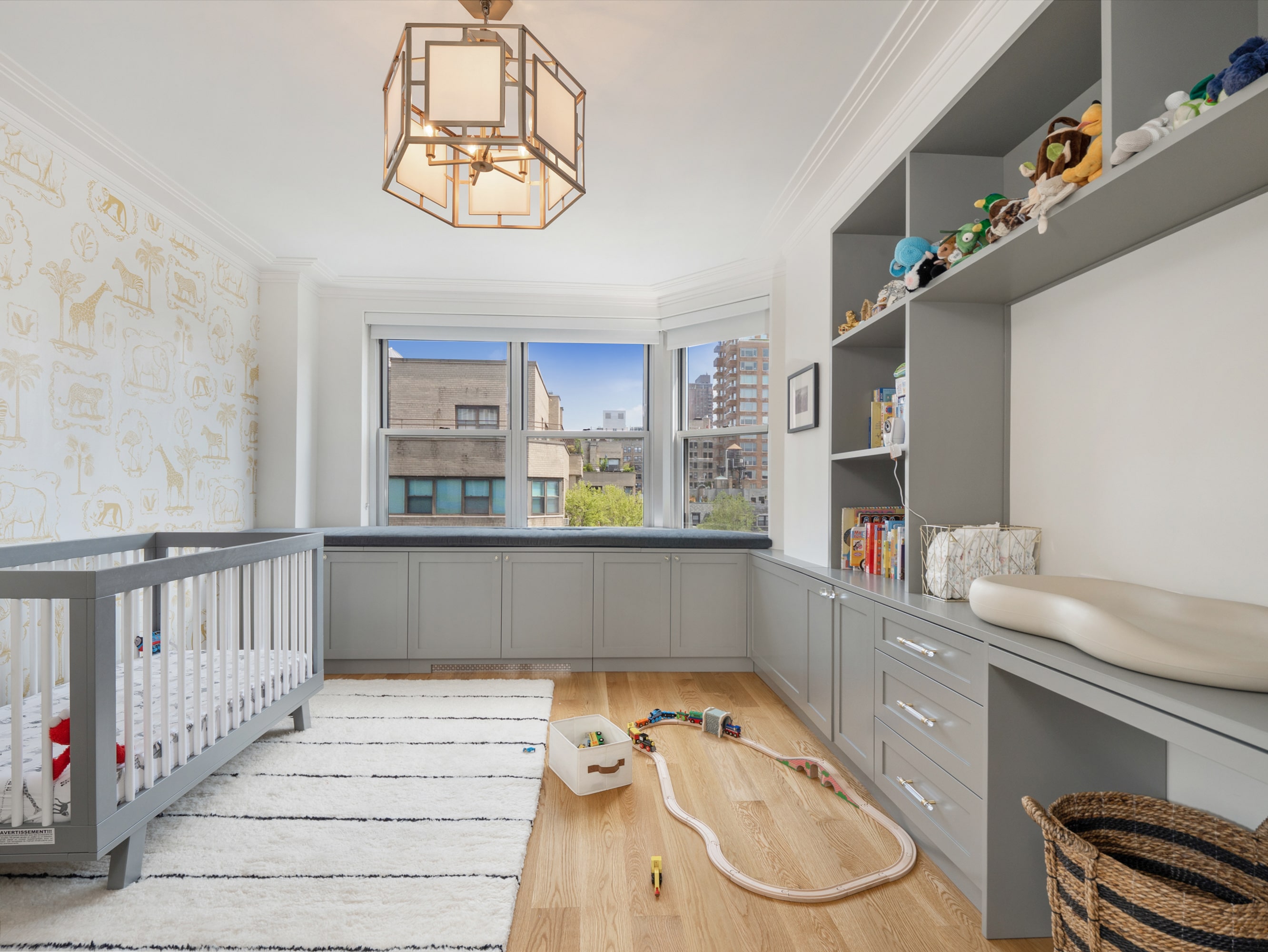
Lenox Hill (60th to 77th, between Fifth and Third) is the Upper East Side's mixed-stock zone, pre-war co-ops on Park and Fifth, post-war condos on Third and Lex, and some of the most coveted single-family townhouses in the city. The renovation playbook differs by typology.
For townhouses, the complexity is structural: party walls, multiple floor systems, original mechanicals, and frequent Landmarks oversight on the façade. A Lenox Hill Manhattan townhome renovation is functionally a small architectural commission with construction attached. The firm should have specific townhouse experience, in-house design and architectural coordination capability comfortable with DOB Alt-1 filings, and ideally a Landmarks track record. For pre-war co-ops on Park, the same Carnegie Hill rigor applies. For Third Avenue post-war condos, the constraint is usually the building's own renovation rules rather than the unit's complexity.
-min.jpg)
Yorkville
Yorkville (77th to 96th, east of Third) is the Upper East Side's post-war and white-brick zone. Building stock is younger, layouts are typically more rectilinear, and structural complexity is lower than the pre-war stock to the west. The renovation reality is simpler, but the building rules are not.
White-brick condos and post-war co-ops in Yorkville often have stricter renovation work-windows than the pre-war buildings, because the buildings were designed for higher-density occupancy and the acoustic transmission between units is less forgiving. Boards may compress weekday work hours, prohibit weekend work entirely, or require third-party acoustic monitoring. A firm without recent Yorkville experience will under-budget the timeline impact of those restrictions.
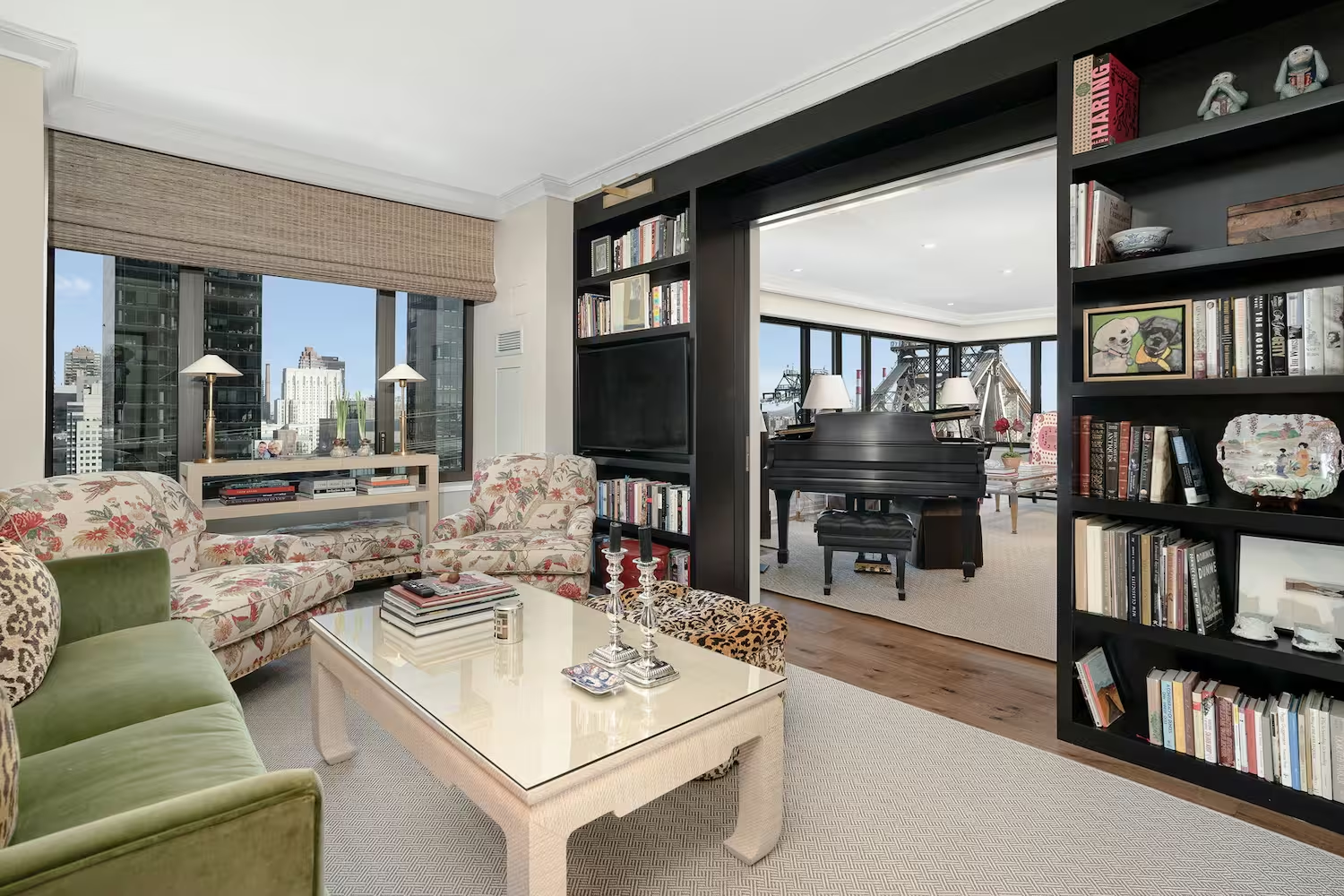
Sutton Place
Sutton Place (53rd to 59th, east of First) is a small, idiosyncratic enclave, pre-war co-ops with River views, conservative boards, and renovation cultures that prize discretion. Buildings here often have multi-decade staff tenure and institutional memory of which firms have caused problems on past jobs. Reputation precedes the proposal.
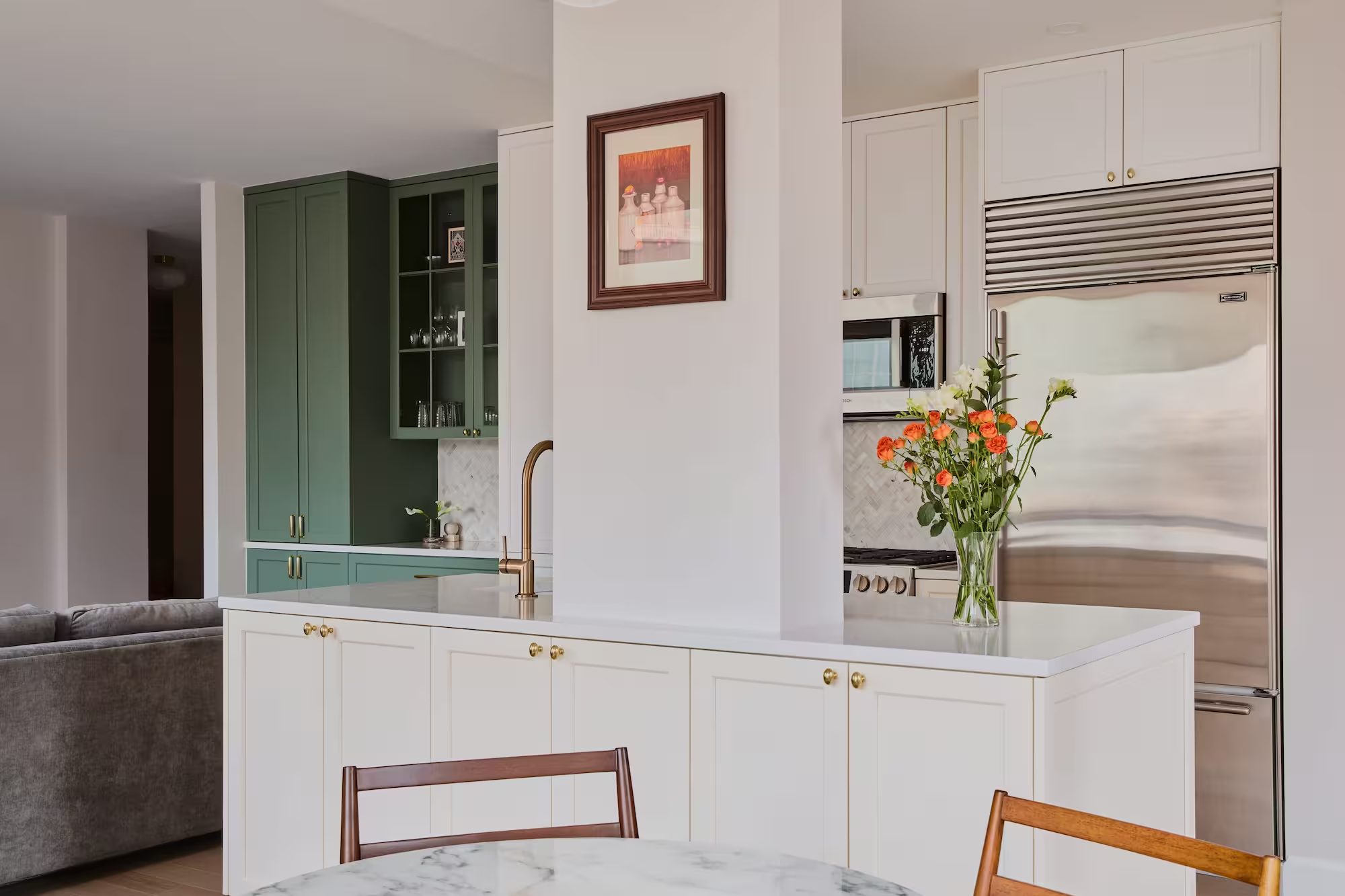
The 425 East 58th Street project in our portfolio (an 1,800 sq ft renovation at approximately $528 per sq ft) is representative, a post-war Sutton Place co-op where the building alteration requirements, the additional work imposed by the building, and the coordination with longtime building staff mattered as much as the renovation scope itself.
.jpg)
Upper Carnegie Hill
The northern reach of Carnegie Hill (96th up to about 106th, west of Lex) sits in the Carnegie Hill Historic District. Renovations here may trigger Landmarks Preservation Commission review for any work that affects the façade or visible exterior elements. Even interior work in landmarked buildings requires careful permitting if it touches anything that could be construed as character-defining.
Choose a firm with Landmarks experience. The LPC review timeline can add 60 to 90 days to a project, and a firm without prior LPC submissions will not know how to scope, price, or sequence around that delay.
Considering a Renovation in NYC?
Click to schedule a consultation with one of the principle partners at Gallery, who will hear out your renovation plans and let you know the best way to proceed - whether we end up working together or not.
Schedule Your Consultation
[#5]Recent Upper East Side Renovations[#5]
These projects span the Upper East Side cost, scale, and complexity range, and represent the integrated design-build approach this guide describes.
1035 Fifth Avenue, Carnegie Hill
$2.2M / approximately $550 per sq ft / 4,000 sq ft / pre-war Fifth Avenue co-op
A full pre-war gut renovation in one of Carnegie Hill's marquee Fifth Avenue cooperatives. Original 1925 layout reconfigured to a contemporary plan; new infrastructure throughout (plumbing risers, electrical, HVAC); custom millwork and plaster work executed in-house. Alteration agreement approved on first board review. View our full renovation of 1035 Fifth Avenue.

425 East 58th Street, Sutton Place
$950K / approximately $528 per sq ft / 1,800 sq ft / pre-war Sutton Place co-op
A complete gut renovation of a pre-war Sutton Place residence with River exposure. Scope included full kitchen and bath rebuilds, custom built-ins throughout, and re-planning of the original layout to open the public rooms to the view. Coordinated with longtime building staff to maintain hallway protection protocols across a 6-month construction window. View our full renovation of 425 East 58th Street.
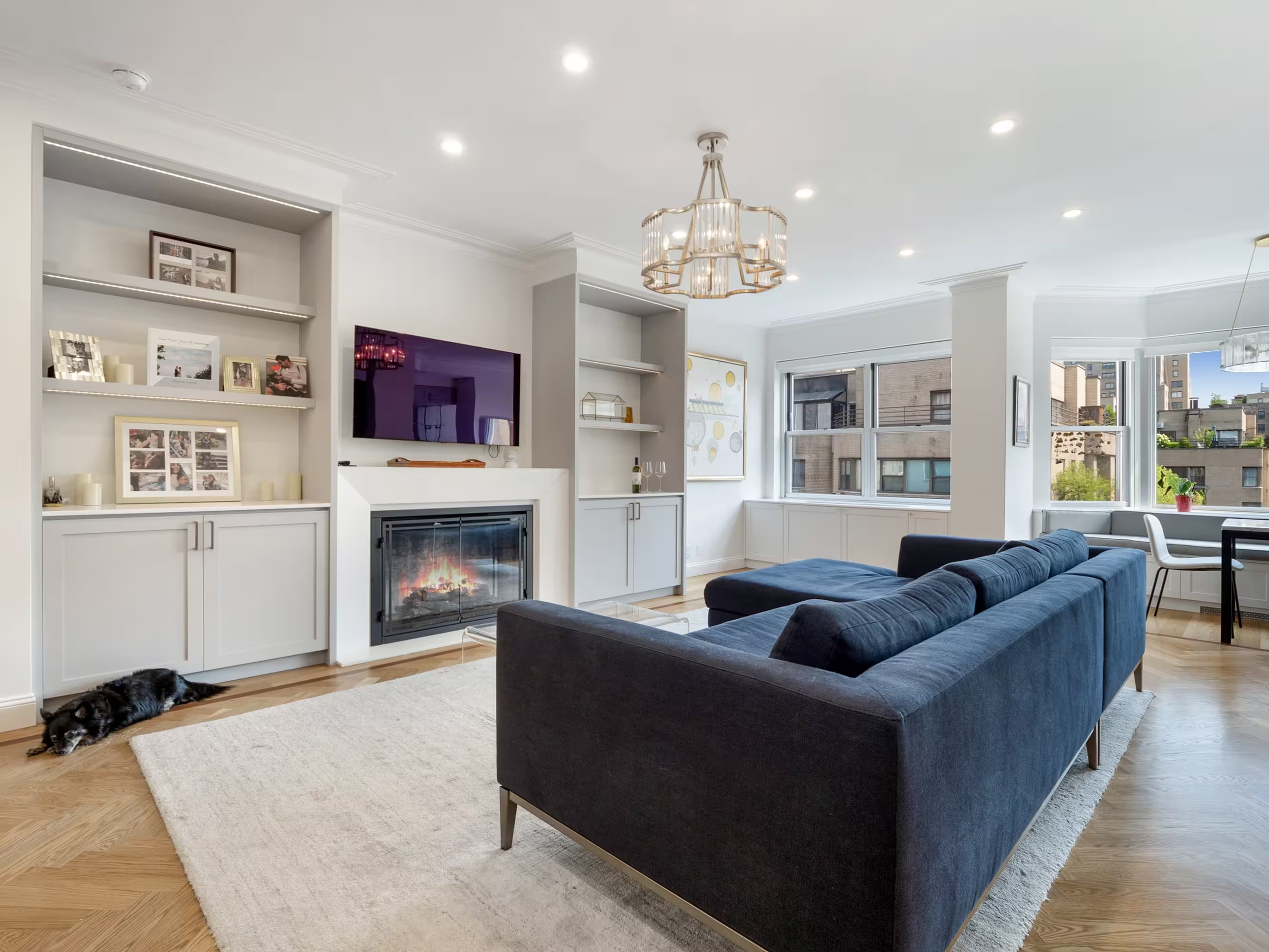
8 East 83rd Street, Carnegie Hill
Full condo renovation / 1,800 sq ft / 4-month duration / estate-condition sponsor unit, post-war Carnegie Hill condominium
A complete interior renovation of a Carnegie Hill condominium one block from Central Park, delivered for a young family in their forever home. Scope included two bathrooms, kitchen, flooring, lighting, and extensive custom millwork, including a built-in entertainment unit, banquette seating with integrated storage beneath the living-room window, and herringbone wood floors transitioning to straight-plank in the kitchen via a custom blended floor design. Completed in four months. View our full renovation of 8 East 83rd Street.
.jpg)
308 East 79th Street, Upper East Side
$690K / mid- and upper-mid-tier scope / Upper East Side co-op
A targeted renovation in an East 79th Street co-op, kitchen, primary suite, and dining room reconfigurations. Representative of the upper mid-tier ($450 to $550 per sq ft) cost range for owners renovating in a building that requires the full pre-war infrastructure rebuild. View our full renovation of 308 East 79th Street.
Gallery KBNY is a full-service design-build firm featured in The New York Times, specializing in the architecture, interior design, and renovation of apartments, co-ops, condominiums, townhomes, and lofts across Manhattan and Brooklyn. Our integrated team of architects, designers, contractors, and project managers manages every phase from board approvals and DOB permitting through design and construction. A founding partner is involved in every project, start to finish. Because architecture, design, permitting, and construction are coordinated under one roof, the process remains streamlined, accountable, and transparent from start to finish. Our work has also appeared in Forbes, Architectural Digest, and Inc., and is backed by 100+ five-star client reviews.
Frequently Asked Questions
How do I find a good renovation contractor on the Upper East Side?
Start with verifiable co-op and condo experience on the Upper East Side. Ask the firm for a portfolio of completed UES projects, ideally with examples in your sub-neighborhood and at a comparable scale to your renovation. The portfolio is the most direct evidence of whether the firm has worked through the building approval, design, and construction realities specific to this part of Manhattan, and whether the work they produce matches the level of finish you are looking for.
What should I ask a contractor before hiring them in NYC?
Ask four questions and listen for clarity in the answers: (1) What does your firm specialize in, and what percentage of your work is Manhattan apartment renovation? (2) Who specifically will be accountable to me on this project, and how senior are they? (3) How do you handle board approvals and DOB permitting, internally, or through outside parties? (4) How will you communicate during the project, and what schedule visibility will I have? A firm that answers all four with specifics is operating at the level your project requires.
For a sizable apartment renovation, do I need a separate architect, designer, and contractor?
For sizable projects that touch most or all of an apartment, full renovations, gut renovations, or any work involving layout changes, infrastructure, and significant finish work, the most accountable approach is to work with a team that handles every phase. A design-build firm consolidates the architecture, interior design, board approvals, DOB permitting, and construction under one contract, with one team responsible for the outcome. The traditional alternative, hiring an architect, a designer, and a contractor as three separate firms, can work, but it places the burden of coordination on the homeowner and tends to introduce friction at every handoff. For a project of meaningful scope, the integrated model gives you fewer points of failure.
How should I evaluate a firm's pre-construction process before signing a contract?
A serious firm should be able to walk you through their pre-construction sequence in detail, what they do in weeks one through twelve, who is involved at each stage, what deliverables you receive, and how the scope, drawings, and pricing converge into a fixed-price contract. Ask specifically how the firm handles field verification, subcontractor pricing, board submission preparation, and the resolution of conditions that disagree with the original drawings. The depth of the answer is itself a measure of operational maturity.
How do change orders work on a fixed-price contract, and what should I expect?
On a properly executed fixed-price contract, change orders should be rare and limited to scope changes the homeowner requests after the contract is signed, adding a feature, upgrading a finish, or modifying the program. They should not be the result of conditions the firm could have identified during pre-construction. When evaluating a firm, ask for their change-order rate as a percentage of contract value across their last twenty projects, and ask for examples of how they have handled mid-project surprises. The pattern of those answers reveals the firm's actual diligence.
How long does a full Upper East Side renovation take, and what drives the timeline?
A typical Upper East Side full apartment renovation runs 8 to 12 months from contract signing to completion: 12 to 16 weeks of pre-construction (drawings, board submission and approval, DOB permitting), followed by 5 to 9 months of construction. The variables that drive the timeline are the building's approval process, the work-window restrictions imposed by the building, the scope of infrastructure work (risers, electrical, HVAC), and any Landmarks review where applicable. Pre-war buildings and stricter boards extend the schedule; condominium buildings with simpler approval processes compress it.
Why are Upper East Side renovations more expensive than other Manhattan neighborhoods?
Three reasons: pre-war building stock requires more infrastructure work (new risers, full electrical replacement, asbestos abatement); UES co-op buildings have rigorous approval processes that lengthen design and submission time; and finish-level expectations are higher, with most projects falling in the $450 to $550 per sq ft (upper mid-tier) or $550 to $650+ per sq ft (luxury) ranges. Buildings here also frequently impose additional requirements on the renovation, mandated vendors, scope additions like window replacement, or specific protective measures, that contribute to the all-in cost.
When does it make sense to hire an architect separately rather than a design-build firm?
When the project has complex programmatic design that warrants an extended architectural process, a townhouse renovation with structural moves, a multi-floor combination, or a project where the design vision needs to be developed independently of construction pricing. In those cases, the design-bid-build model (separate architect plus general contractor) or an architect-led model can be appropriate. See our breakdown of architect cost for NYC apartments for a sense of what that path involves. For most Upper East Side apartment renovations in the $500,000 to $2,000,000 range, the integrated design-build model gives you a single point of accountability across design, approvals, and construction, which tends to produce more predictable outcomes on this kind of project.
What permits and approvals does an Upper East Side co-op renovation actually require?
Most apartment renovations require a DOB Alt-2 or Alt-1 filing, Alt-2 for non-structural work, Alt-1 for layout changes that affect egress or use. All co-op renovations also require building approval through the co-op board's defined process before work can begin. See our guide to the NYC co-op alteration agreement for the document and process. Many buildings require review of the submission package by the building's retained architect or engineer, and the depth of that review varies significantly by building. Apartments in landmarked sub-districts may additionally require Landmarks Preservation Commission review for any work affecting protected exterior elements.
Manhattan & Brooklyn Design-Build
Evaluating a Manhattan Apartment
Before You Buy?
Buying an apartment you plan to renovate? A founding partner walks it with you during the contract period and maps the scope, cost, and timeline, so you know exactly what you're taking on before you sign.
As seen in
Pre-Purchase Assessment
Walk the apartment with us first and understand the full scope, cost, and timeline before you close.
or call us directly
let’s
Design-Build
together