.avif)


.png)
.png)


The Impact and Value of Layered Lighting in a Manhattan Apartment Renovation
Layered lighting defines a high-end Manhattan renovation. Gallery KBNY explains ambient, task, accent, and decorative layers plus dimming logic.
April 23, 2026
|

The Impact and Value of Layered Lighting in a Manhattan Apartment Renovation
In a Manhattan renovation, the value of layered lighting is not that it is brighter; it is that it is controllable, flattering, and architectural.
Layered lighting is the practice of designing an interior around multiple, independently controlled sources of light (ambient, task, accent, and decorative) rather than a single overhead fixture. In a high-end Manhattan apartment renovation, this illuminated interior design consideration is one of the most consequential design decisions an owner will make. Lighting shapes how a room feels at 8am, 6pm, and at midnight. It is the difference between an apartment that photographs well and one that genuinely lives well.
In our work across Manhattan co-ops, condos, townhouses, and lofts, layered lighting is consistently one of the quietest drivers of perceived quality. Clients rarely enter a finished space and say, "the lighting plan is excellent." What they say is that the apartment feels calm. Considered. Warm without being dim. Alert without being harsh. That feeling is almost always the result of layering, which is always executed at the design and architecture stage, not the decorator stage.
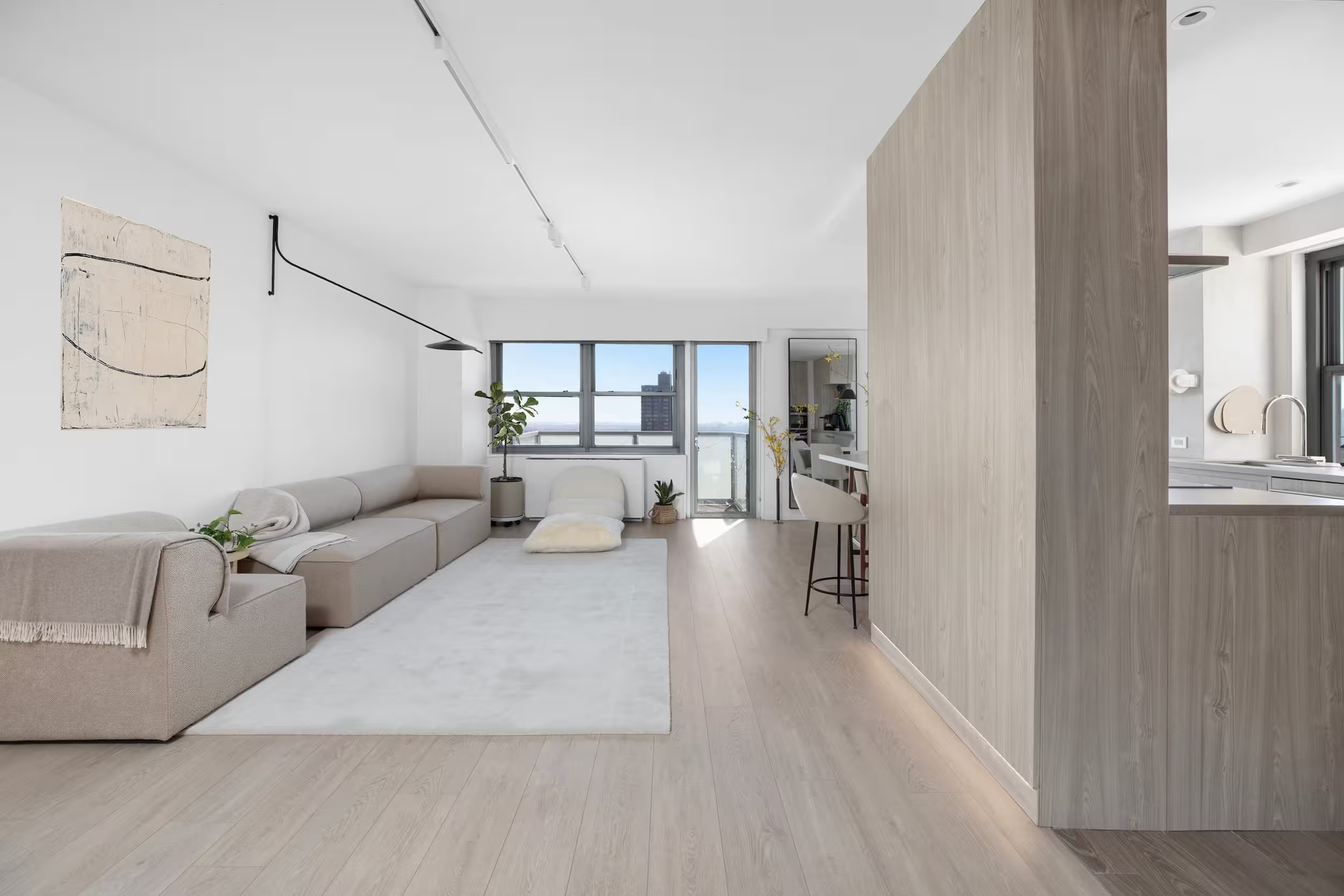
TABLE OF CONTENTS
- The Four Layers of a High-End Lighting Plan
- Ambient Lighting: The Base Volume
- A Walkthrough From Our Design Team
- Where Layered Lighting Has the Biggest Impact
- Dimming, Switching, and Scene Control
- NYC-Specific Considerations: Pre-War, Landmark, and Co-Op
- Frequently Asked Questions
Lighting is one of the disciplines that benefits most from that integrated renovation model, because a strong lighting plan has to be considered when planning architecture, millwork, electrical, and controls, all decisions typically made by four different parties in a traditional renovation.
[#1]The Four Layers of a High-End Lighting Plan[#1]
Practical insight: In a Manhattan renovation, the value of layered lighting is not that it's brighter, it's that it's controllable, flattering, and architectural. A single ceiling fixture cannot do any of those three things alone.
Why Layered Lighting Matters in a Manhattan Renovation
Manhattan apartments present a specific set of lighting challenges that make layering more valuable here than in almost any other residential context. Pre-war buildings tend to have deep floor plates with limited natural light. Post-war and newer condos often have expansive glass that demands careful contrast management in the evening. Townhouses frequently have tall, narrow volumes where a single fixture will always leave parts of the room underlit.
In each of these conditions, a single central fixture (no matter how beautiful) cannot resolve the room. It can only light one layer. Everything else falls flat.
Layered lighting solves this by treating light the way we treat material: as something composed. Ambient light sets the overall volume. Task light makes the space functional. Accent light reveals the architecture, millwork, and art. Decorative fixtures introduce character. Each of those jobs belongs on its own circuit, on its own dimmer, with its own logic.
The value created by that layering compounds across the lifetime of the apartment. It is the difference between a renovation that impresses at handover and one that continues to feel intentional ten years later.
The Four Layers
Layered Lighting: Components at a Glance
Every high-end Manhattan lighting plan draws from four distinct layers. Each serves a different purpose, and each belongs on its own switch or scene.
| Layer | Primary Purpose | Example Fixtures | Typical Placement |
|---|---|---|---|
| Ambient | Overall fill; establishes room volume | Recessed downlights, cove LED, indirect wash | Ceiling plane, perimeter coves |
| Task | Directional light for specific function | Under-cabinet strips, island pendants, vanity sconces, reading lights | Work surfaces, beside beds, over mirrors |
| Accent | Reveals architecture, art, and materials | Toe-kick LED, cove on textured walls, picture lights, wall washers | Base of cabinetry, top of brick, framed art |
| Decorative | Statement fixtures; character and style | Chandeliers, sculptural pendants, table lamps | Dining, entry, living room focal points |
Each layer works in combination with the others. A complete lighting plan includes all four, independently controlled.
[#2]Ambient Lighting: The Base Volume[#2]
Ambient lighting is the soft, diffuse fill that establishes the overall brightness of a room. In a renovated Manhattan apartment, ambient light rarely comes from one source, the light comes from several, working together: recessed downlights on wide spacing, cove lighting along the perimeter of a ceiling, or indirect wash from concealed LED strips behind architectural elements.
Done well, ambient lighting is something you feel rather than see. The room is bright enough to read, cook, or host in, but no single fixture is doing the heavy lifting.
Task Lighting: Function on the Work Surface
Task lighting is precise, directional light that serves a specific function. The most common examples in a Manhattan renovation are under-cabinet lighting in the kitchen, pendants over an island, reading sconces in a primary bedroom, and vanity lighting in a bathroom.
The design mistake we correct most often is clients treating task lighting as interchangeable with ambient. A single pendant over an island may be beautiful, but it cannot cook dinner for you. Separately controlled pendants, combined with under-cabinet strips on their own switch, resolve the room functionally and visually at the same time.
Accent Lighting: What Makes the Architecture Visible
Accent lighting is the layer most often missing from renovations executed without a dedicated lighting plan. It is the light that reveals the architecture and the materials: art lighting on a gallery wall, picture lights on framed pieces, wall washers grazing a textured surface, cove lighting illuminating the top of exposed brick, toe-kick lighting grazing a stone floor.
This is the layer that produces the sense that a room has been considered. Without it, even beautiful finishes read flat.
Decorative Lighting: The Jewelry
Decorative lighting includes the statement fixtures a client tends to fall in love with first: the chandelier over the dining table, the sculptural pendant in an entry, a pair of ceramic table lamps in a living room. These fixtures are intentionally expressive, and they are an important part of a finished interior.
The critical point is that decorative fixtures should not be asked to do the work of the other three layers. When they are (which is the default in most apartments before we renovate them) the room never quite resolves.
[#3]A Walkthrough From Our Design Team[#3]
Because layered lighting is easier to understand in a real room than on a page, we filmed a short walkthrough with Michael, one of our designers, inside our own office, which happens to feature several of the techniques we specify regularly for clients.
In roughly a minute, the video covers three of the most commonly specified accent-lighting moves in our Manhattan work:
These three examples, taken together, demonstrate the point made throughout this article: none of these sources are doing the work of a main ceiling fixture. They are additive. They are the layers that most often separate a competent renovation from a truly considered one.
Michael, Senior Designer at Gallery KBNY, walks through three layered-lighting techniques in our Manhattan office: toe-kick, cove, and illuminated millwork.
[#4]Where Layered Lighting Has the Biggest Impact[#4]
-min.jpeg)
The Kitchen
No room benefits more from layered lighting than a Manhattan kitchen. A typical high-end Gallery KBNY kitchen includes ambient downlights, task lighting under the upper cabinets, decorative pendants above the island, accent lighting inside glass-front cabinetry, and often toe-kick lighting along the base of the cabinetry, each on its own switch or scene. The result is a room that can read as bright and social at a dinner party, or quiet and intimate late at night, without ever being re-lamped.

The Primary Bathroom
Primary bathrooms in high-end Manhattan apartments are increasingly designed as private retreats rather than utilitarian rooms. Layered lighting is central to that shift. Vanity lighting handles task. Recessed downlights handle ambient. Toe-kick or cove lighting handles the late-night navigation that the primary layer should never have to do. The bathroom becomes usable at every hour without ever feeling harsh.
The Living and Dining Rooms
In living and dining rooms, the most important role of layered lighting is to support how the room is actually used, enhancing reading, conversation, entertaining, television, late-evening wind-down. A single overhead source can support none of these well. A combination of decorative fixtures, accent lighting on art and architecture, and carefully dimmed ambient fill supports all of them.

Millwork, Vanities and Display
Integrated millwork (bookcases, bar cabinetry, curio cases, display niches) is one of the highest-return places to add accent lighting. Illuminated glass shelves, backlit stone, and internal cabinet lighting transform a millwork run from storage into an architectural feature. As with every other layer, each of these sources should be on its own switch.
Room by Room
Where Each Layer Shows Up
How the four layers of lighting translate into the rooms where they matter most, based on Gallery KBNY’s work across Manhattan apartments and townhouses.
| Room | Ambient | Task | Accent | Decorative |
|---|---|---|---|---|
| Kitchen | Recessed downlights | Under-cabinet + pendants | Toe-kick, glass-cabinet interior | Island pendants (dual role) |
| Primary Bathroom | Recessed downlights | Vanity sconces | Toe-kick, cove, LED niche | Decorative sconce or pendant |
| Living Room | Dimmed recessed or cove | Reading lamps | Picture lights, wall washers | Chandelier, table lamps |
| Dining Room | Lightly dimmed ambient | Not typically required | Art lighting, sideboard | Statement chandelier |
| Millwork / Display | Shared with adjacent room | Not applicable | Illuminated glass shelves, backlit stone | Not applicable |
Based on Gallery KBNY project data. Each layer on its own switch or scene allows the room to read differently at different times of day.
[#5]Dimming, Switching, and Scene Control[#5]
A lighting plan is only as good as the controls behind it. The most common mistake we inherit from previous renovations is not the fixtures themselves, but rather the fact that every light in a room has been bundled onto one or two switches, which defeats the entire point of layering.
On our projects, we typically specify Lutron or equivalent scene control for the primary living spaces. A single keypad replaces a bank of switches and allows the client to recall pre-programmed scenes: "Morning," "Entertaining," "Evening," "Off." Each scene adjusts the dimming level and the combination of active layers.
The practical consequence is significant. The same kitchen reads as a bright, functional morning space at 7am, a warm entertaining space at 7pm, and a calm, dim hallway-adjacent glow at 11pm, all without anyone consciously thinking about lighting.
A second consideration is color temperature. For residential layering in a Manhattan apartment, we typically specify 2700K for decorative and ambient layers, and 3000K for task where a cooler, more functional tone is appropriate. A minimum CRI of 90 is standard across all layers so that finishes, stone, wood, and art render accurately.
[#6]NYC-Specific Considerations: Pre-War, Landmark, and Co-Op[#6]
A layered lighting plan in Manhattan has to contend with three constraints that do not typically apply elsewhere.
Pre-War Electrical Capacity
Many pre-war apartments are still served by undersized electrical panels. A true layered lighting plan, combined with modern kitchens and bathrooms, frequently requires a panel upgrade. This is not optional, it's part of the real cost of executing the plan properly, and it belongs in the pre-construction budget rather than as a surprise during rough-in.
Landmark and Exterior Fixtures
In landmarked buildings, any fixture visible from the street, including window-adjacent accent lighting and exterior sconces in townhouses, may fall under LPC review. This rarely changes the lighting plan in a meaningful way, but it does affect scheduling, and it is one more reason to resolve lighting design at the architecture stage rather than the punch-list stage.
Co-Op Approvals and Wiring
Co-op boards review electrical scope as part of the alteration agreement, and some buildings have specific requirements around wiring methods, shared circuits, and panel work. An integrated design-build firm that manages board approvals in-house can anticipate these requirements before plans are submitted, which protects both the design intent and the project timeline.
Gallery KBNY is a full-service design-build firm featured in The New York Times, specializing in the architecture, interior design, and renovation of apartments, co-ops, condominiums, townhomes, and lofts across Manhattan and Brooklyn. Our integrated team of architects, designers, contractors, and project managers manages every phase from board approvals and DOB permitting through design and construction. A founding partner is involved in every project, start to finish. Because architecture, design, permitting, and construction are coordinated under one roof, the process remains streamlined, accountable, and transparent from start to finish. Our work has also appeared in Forbes, Architectural Digest, and Inc., and is backed by 100+ five-star client reviews.
[#7]Frequently Asked Questions[#7]
What is layered lighting in an apartment renovation?
Layered lighting is the design practice of combining multiple, independently controlled sources of light (ambient, task, accent, and decorative) so that a room can be lit in different ways for different uses. In a Manhattan apartment renovation, it is the standard approach for any high-end project because a single ceiling fixture cannot resolve the full range of lighting needs in a modern interior.
What are the four layers of lighting?
The four layers are ambient (overall fill that establishes the volume of the room), task (focused light for specific activities like cooking or reading), accent (light that reveals architecture, art, and materials), and decorative (expressive fixtures that contribute to the character of the room). A complete lighting plan includes all four.
How many lighting circuits should a high-end NYC kitchen have?
A well-designed high-end kitchen in a Manhattan renovation typically includes 3 to 5 separately switched lighting zones: ambient downlights, under-cabinet task lighting, decorative island pendants, accent or cabinet-interior lighting, and often toe-kick lighting. Each layer on its own switch or scene is what allows the kitchen to read differently at different times of day.
What is cove lighting and when should it be used?
Cove lighting is indirect lighting concealed within an architectural detail at the top of a wall or ceiling, typically using LED strip. It is ideal for ambient fill and for revealing textured surfaces (exposed brick, textured plaster, coffered ceilings) without introducing any visible fixtures. It is one of the most common accent-layer moves in our Manhattan work.
What is toe-kick lighting and why is it becoming popular?
Toe-kick lighting is concealed linear LED placed at the base of cabinetry that grazes the floor. It serves two purposes: it provides low-level navigation light at night, and it visually lifts the cabinetry off the floor, which reads as architectural and considered. It has become a standard accent-layer specification in high-end NYC kitchens and primary bathrooms.
Do I need a panel upgrade for a layered lighting plan?
In many pre-war Manhattan buildings, yes. A true layered plan, especially combined with a modern kitchen, modern HVAC, and primary-bathroom fixtures, frequently exceeds the capacity of the original panel. This should be evaluated early in pre-construction so that the panel upgrade is budgeted and scheduled alongside the rest of the renovation rather than discovered during rough-in.
let’s
Design-Build
together