.avif)


.png)
.png)


What Affects The Timeline Of A NYC Renovation Most?
Six variables drive every NYC renovation timeline and most homeowners only discover them after the schedule has already slipped.
February 15, 2026
|
-min.jpeg)
What Affects The Timeline Of A NYC Renovation Most?
Scope, approvals, procurement, building rules, six variables drive every NYC renovation timeline. Learn what to plan for before your project starts.
Table of Contents
- Scope Of Work
- Architectural Plans And Engineering
- Building Review Process
- Building Rules And Logistics
- Procurement And Lead Times
- Decision-Making During The Project
- What This Looks Like In Practice
- What This Looks Like At Gallery KBNY
- Frequently Asked Questions About NYC Renovation Timelines
Every client who walks through a renovation wants the same thing: a realistic answer to "how long is this going to take?" And every honest contractor will respond the same: “That depends.”
That’s not dodging the question, that’s simply the nature of the beast. Understanding what your renovation timeline depends on is one of the most useful pieces of info you can know before starting a renovation in New York City. The variables that drive your timeline are specific, knowable, and in many cases, actually pretty manageable. The problem is most homeowners only discover them mid-project (often, at no fault of their own).
Here is a clear-eyed breakdown of what actually moves the timeline needle, and why some factors deserve a lot more attention than they typically get.
The six variables that drive every NYC renovation timeline
Two of these are within the homeowner's control, two belong to the building, and two sit somewhere in between. Knowing which is which is the difference between a project that finishes when expected and one that drifts by months.
Scope of Work
Decorative refresh versus full gut. The single largest delta in the entire framework.
Architectural Plans + Engineering
An incomplete set does not pause the timeline. It resets it.
Building Review Process
Two to three weeks in one building, four to six months in another. The variable most underestimated.
Building Rules + Logistics
8am to 4pm work windows, holiday blackouts, and renovation duration caps shape the construction schedule.
Procurement + Lead Times
Eight to sixteen week lead times on custom millwork, stone, and specialty equipment. Often longer.
Decision-Making Speed
A late tile change during design costs hours. The same change after waterproofing costs weeks.
How to read. Variables homeowners control directly are the leverage points. Variables the building controls are the planning constraints. The two shared variables are where an experienced design-build firm earns its keep, because they touch both sides of the project.
Scope Of Work
This is the most fundamental driver of your timeline, and is worth understanding precisely. A decorative renovation (IE: finishes, millwork, lighting updates, cosmetic refreshes) moves considerably faster than a full home gut renovation project involving plumbing relocations, HVAC installation, or structural changes.
The moment walls, plumbing lines, or electrical systems enter the scope, timelines extend for reasons that go beyond construction hours. Plumbing relocations require engineering review. Custom HVAC additions require equipment specifications, load calculations, and in many buildings, specialized board approval documentation. Custom millwork needs time to be sourced and built to size. Layout changes require architectural coordination. Each of these adds layers of design, documentation, and review that a purely decorative renovation simply does not require.
The practical takeaway: be precise about what your renovation actually involves before forming any timeline expectations. A kitchen refresh and a kitchen gut renovation are not the same project, and their timelines are not in the same ballpark.
Architectural Plans And Engineering
Projects requiring architectural drawings, engineering review, or Department of Buildings filings naturally take longer than those that do not. In New York City, the threshold for when these are required is lower than most people expect.
Even when DOB permits are not technically required, most co-ops and condos mandate professionally prepared drawings and engineering sign-off before they will even schedule a board review. That means the architectural phase is not optional on the majority of meaningful renovations, regardless of whether the city requires it. A set of drawings that satisfies both your building's reviewing architect and the DOB takes time to produce correctly, and an incomplete or non-compliant set does not pause the timeline, but resets it altogether. Shivers
Working with a firm that has in-house architecture means drawings, engineering coordination, and construction documentation are produced in parallel rather than sequentially, which is one of the most reliable ways to compress the pre-construction phase. Read more about In-Depth Co-Op Board Approval Process For Complex NYC Renovations & What to Expect.
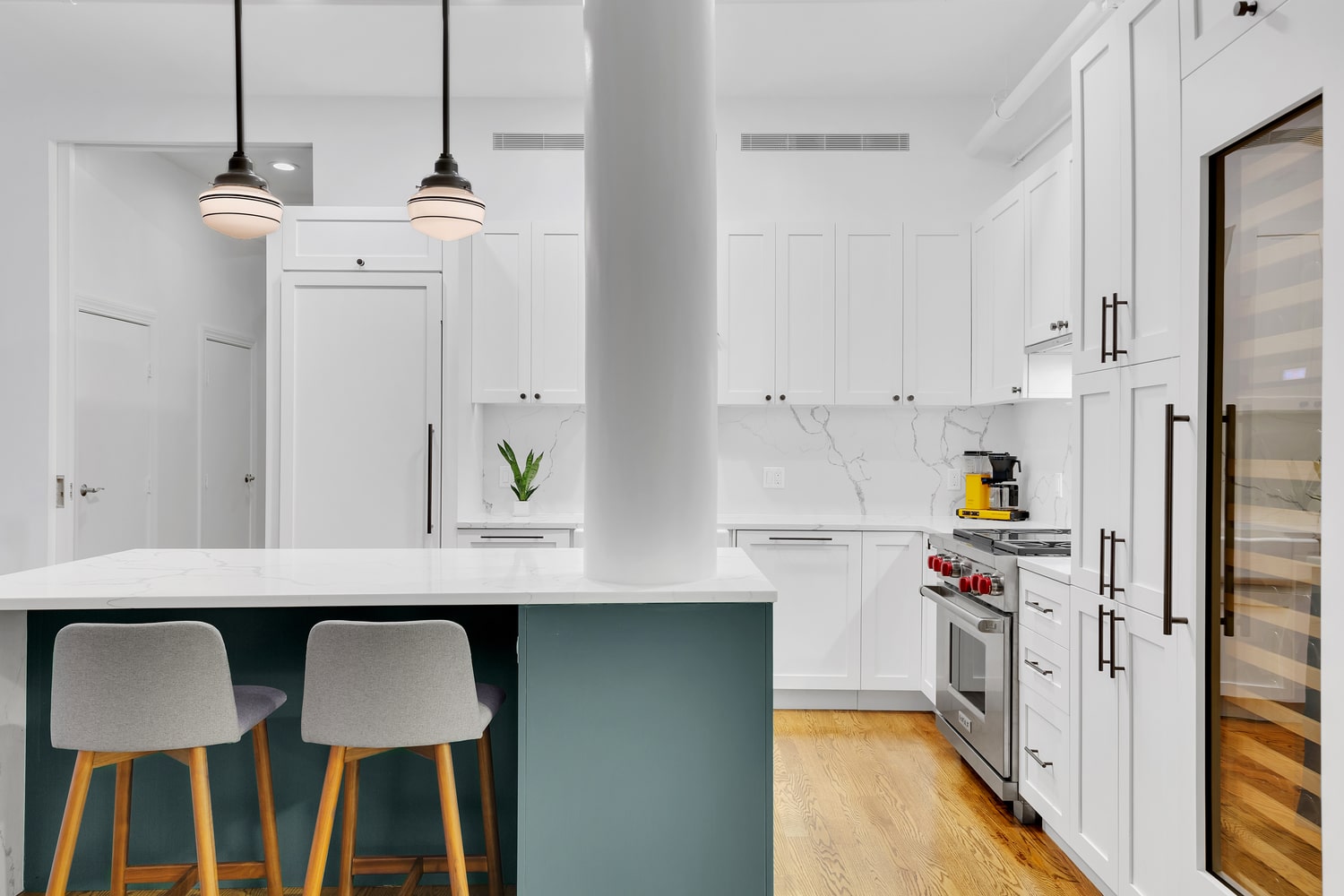
Building Review Process
This is the variable most homeowners underestimate, and the one that causes the most frustration. The responsiveness of the managing agent, building engineer, and reviewing architect varies enormously from building to building, and it is entirely outside your control once a submission is in.
Some buildings review packages in two to three weeks. Others take months, require multiple rounds of comments, and schedule reviews only at monthly board meetings. Miss a submission cut-off by a day and you are waiting another cycle. A first-round approval is rare, so budget for at least one revision round as a baseline assumption, not a worst-case scenario.
The only real defense here is a complete, well-prepared submission package that anticipates likely objections before the board sees it. Every inconsistency, missing document, or ambiguous scope item is an invitation for another comment round. A full-service team that has navigated hundreds of co-op and condo submissions knows what each building's reviewing architect tends to flag and prepares accordingly.
Building Rules And Logistics
Once approvals are in hand and construction begins, the building's operational rules become the timeline variable. Work-hour restrictions directly cap how many productive hours are available per day. For instance, most Manhattan co-ops limit construction to weekdays between roughly 8am and 4pm or 5pm. That matters on a full gut renovation where multiple trades need to coordinate in sequence.
Beyond daily hours, holiday blackouts, elevator reservation windows, and renovation duration caps all shape the construction schedule in ways that need to be planned for upfront. Some buildings cap the total number of months a renovation can run. If your construction timeline bumps against that cap, you need to know it before you start, not three months in when you’re nearing the finish line.
A contractor who has worked extensively in New York City co-ops and condos builds these constraints into the schedule from day one rather than discovering them as they come up.

Procurement And Lead Times
This one catches people off guard more often than almost anything else. Custom millwork, stone slabs, specialty fixtures, and HVAC equipment do not ship in days or weeks. Lead times of eight to sixteen weeks are common. For certain custom cabinetry manufacturers or imported stone, the wait can stretch considerably longer.
The renovation that is otherwise finished and waiting on a custom vanity or a backordered appliance panel is a remarkably common situation, and an entirely avoidable one. These items need to be identified, specified, and ordered during the approval and pre-construction phase, not after demolition starts. By the time your walls are framed, your long-lead orders should already be weeks into their production queue.
At Gallery, procurement planning starts at the design phase and runs in parallel with board submissions. The goal is for materials to arrive during construction, not after it.
Long-lead items and what they actually take to arrive
Custom finishes do not ship in days. They ship in months. A renovation that is otherwise finished and waiting on a backordered appliance panel or a custom vanity is an avoidable situation, but only when procurement is scoped during design rather than after demolition.
until demo
How to read. Lead times vary by manufacturer, season, and global supply conditions. Ranges shown reflect typical Gallery KBNY procurement experience across recent Manhattan projects. The takeaway is structural, not seasonal: every category here needs to be specified, sourced, and ordered during pre-construction, not after walls come down.
Considering a Renovation in NYC?
Click to schedule a consultation with one of the principle partners at Gallery, who will hear out your renovation plans and let you know the best way to proceed - whether we end up working together or not.
Schedule Your Consultation
Decision-Making During The Project
The last major timeline variable is the one most directly in the homeowner's hands. Delayed selections, revised design directions, and late-stage changes (particularly after construction is underway) almost always extend timelines, and frequently add cost.
This is not a criticism. Renovations involve dozens of decisions, many of which only feel concrete when you are standing in the actual space rather than reviewing a rendering. But the further into construction a change occurs, the more it disrupts the sequencing of trades, procurement schedules, and completion dates. A change to a tile selection during the design phase costs time to resolve. The same change after demolition and waterproofing are complete costs time, money, and potentially already-completed work.
The most effective mitigation is front-loading decisions as much as possible. Finishes, fixtures, and layout details that are resolved during design (rather than deferred to construction) give the project far more momentum and predictability once the build phase begins.
-min.JPG)
What This Looks Like In Practice
Two projects to illustrate the range:
- A full gut renovation in a prewar co-op with HVAC work and custom millwork throughout (the kind of project that touches every system and every surface) typically requires the full four to six months of planning and approvals, followed by five to six months of construction. Call it ten to twelve months from start to move-in as a realistic expectation.
- A renovation in a newer condo with fewer alterations, lighter building review requirements, and no structural changes may compress the planning phase meaningfully. But construction on a full renovation still commonly runs several months, and the procurement and decision-making variables still apply regardless of building type.
Two projects, two timelines, same six variables
The same framework can produce a five-month project or a twelve-month one. The variables do not change. The way they stack does.
How to read. Both projects share the same six timeline variables. The difference is scope, building type, board process, and procurement complexity, all stacked. Neither timeline is "right." Either one is realistic for the project conditions involved.
The honest answer to "how long will this take" is always project-specific. What a good contractor can do is map out those variables clearly at the outset, so your timeline expectation is built on the actual conditions of your project, not on an optimistic average.
What This Looks Like At Gallery KBNY
We’re a New York Times-featured design-build firm in New York City with a full-service approach to residential renovations in Manhattan and Brooklyn that includes everything from interior design and architecture services to filing permits and construction management. We’re experts in renovating pre-war homes, kitchens, bathrooms, flooring, sourcing custom pieces, building entirely new rooms (or even balconies), millwork, and all that falls in between.
Our process is specifically designed to surface the timeline variables that matter for your specific project, building type, scope, procurement requirements, and board process, before the project is priced, not after it starts.
Considering a renovation in New York City? View our full portfolio of New York City renovation before and afters, learn more about Gallery KBNY, or simply contact us today.
Gallery KBNY is a full-service design-build firm featured in The New York Times, specializing in the architecture, interior design, and renovation of apartments, co-ops, condominiums, townhomes, and lofts across Manhattan and Brooklyn. Our integrated team of architects, designers, contractors, and project managers manages every phase from board approvals and DOB permitting through design and construction. A founding partner is involved in every project, start to finish. Because architecture, design, permitting, and construction are coordinated under one roof, the process remains streamlined, accountable, and transparent from start to finish. Our work has also appeared in Forbes, Architectural Digest, and Inc., and is backed by 100+ five-star client reviews.
Frequently Asked Questions About NYC Renovation Timelines
What Affects The Timeline Of A NYC Apartment Renovation Most?
The six primary drivers of renovation timeline in New York City are scope of work, architectural and engineering requirements, building review process, building logistics and work-hour restrictions, procurement and lead times for custom materials, and decision-making speed during the project. Of these, the building review process and procurement lead times are the most commonly underestimated by homeowners planning their first renovation.
The same change costs more at every step you defer it
A tile selection swap is a fifteen-minute decision during design. After demolition and waterproofing are complete, the same swap can mean removed work, reordered material, and reshuffled trade sequencing. The change itself is identical. The cost of making it is not.
Design
Selections still on the table
Approval
Package submitted, awaiting comments
Early Construction
Demolition done, rough trades active
Late Construction
Waterproofing or finishes installed
How to read. Bar heights are illustrative of relative cost in time, dollars, and disruption. The same change made at four different points in the project produces four different outcomes. Front-loading selections during design is the single most reliable way to keep construction predictable.
How Long Does A Full Gut Renovation Take In NYC?
A full gut renovation of a New York City apartment typically takes ten to twelve months from the start of planning to move-in. This includes four to six months of planning, design, and approvals, followed by five to six months of construction for an average-sized two-bedroom apartment. Projects involving HVAC installation, structural changes, or complex co-op board approval processes tend toward the longer end of this range.
Why Do NYC Co-Op Renovations Take Longer Than Condo Renovations?
Co-op renovations typically involve a more rigorous approval process than condo renovations. Co-op boards have broad discretion over renovation applications, often require review by the building's architect or engineer, and schedule reviews at monthly board meetings, meaning a missed submission cut-off adds weeks to the timeline. Condo renovations generally require management company approval but involve less board discretion and fewer documentation requirements.
What Are Long-lead Items In A Renovation And How Do They Affect The Timeline?
Long-lead items are materials or products with extended manufacturing or delivery timelines, typically custom cabinetry, stone countertops, specialty tile, high-end appliances, and custom millwork. These items often require eight to sixteen weeks or longer from order to delivery. If they are not ordered during the approval and pre-construction phase, they can extend a renovation's completion date by months even after construction is otherwise finished.
How Do Building Work-Hour Restrictions Affect A NYC Renovation Timeline?
Most Manhattan co-ops and condos limit construction to weekday hours, typically between 8am and 4pm or 5pm. This caps the number of productive hours available per day and extends the total number of days required to complete a given scope of work. Holiday blackouts, elevator reservation windows, and building-imposed renovation duration caps can further constrain the schedule and need to be planned for before construction begins.
Can Late Design Changes Delay A NYC Renovation?
Yes, and they frequently do. Design changes made after construction has started, particularly changes that affect work already completed, such as tile selections after waterproofing, or layout changes after framing, disrupt trade sequencing, procurement schedules, and completion dates. Front-loading decisions during the design phase is the most effective way to maintain construction momentum and protect the overall timeline.
What Is A Design-Build Firm And How Does It Affect Renovation Timeline?
A design-build firm manages architecture, interior design, permitting, board approvals, and construction under a single contract. Because the design and construction teams are the same team, documentation is produced in parallel, procurement planning begins at the design phase, and there are no handoffs between separate parties that create delays. For NYC apartment renovations, this integrated model typically compresses the pre-construction phase compared to the traditional design-bid-build approach. Gallery KBNY handles all co-op board submissions, DOB filings, and trade coordination in-house.
How Much Does A Full Apartment Renovation Cost In NYC?
Costs vary significantly based on scope, building type, and finish level. A full gut renovation of a NYC apartment typically starts in the mid-six figures and can range considerably higher depending on size and complexity. A reputable full-service renovation contractor should be able to provide realistic cost ranges during an initial consultation before any commitment is made.
Manhattan Design-Build
Evaluate Your Manhattan Apartment
Before You Buy
Buying an apartment you plan to renovate? A founding partner walks it with you during the contract period and maps the scope, cost, and timeline, so you know exactly what you're taking on before you sign.
As seen in
Pre-Purchase Assessment
Walk the apartment with us first and understand the full scope, cost, and timeline before you close.
or call us directly
let’s
Design-Build
together

.avif)