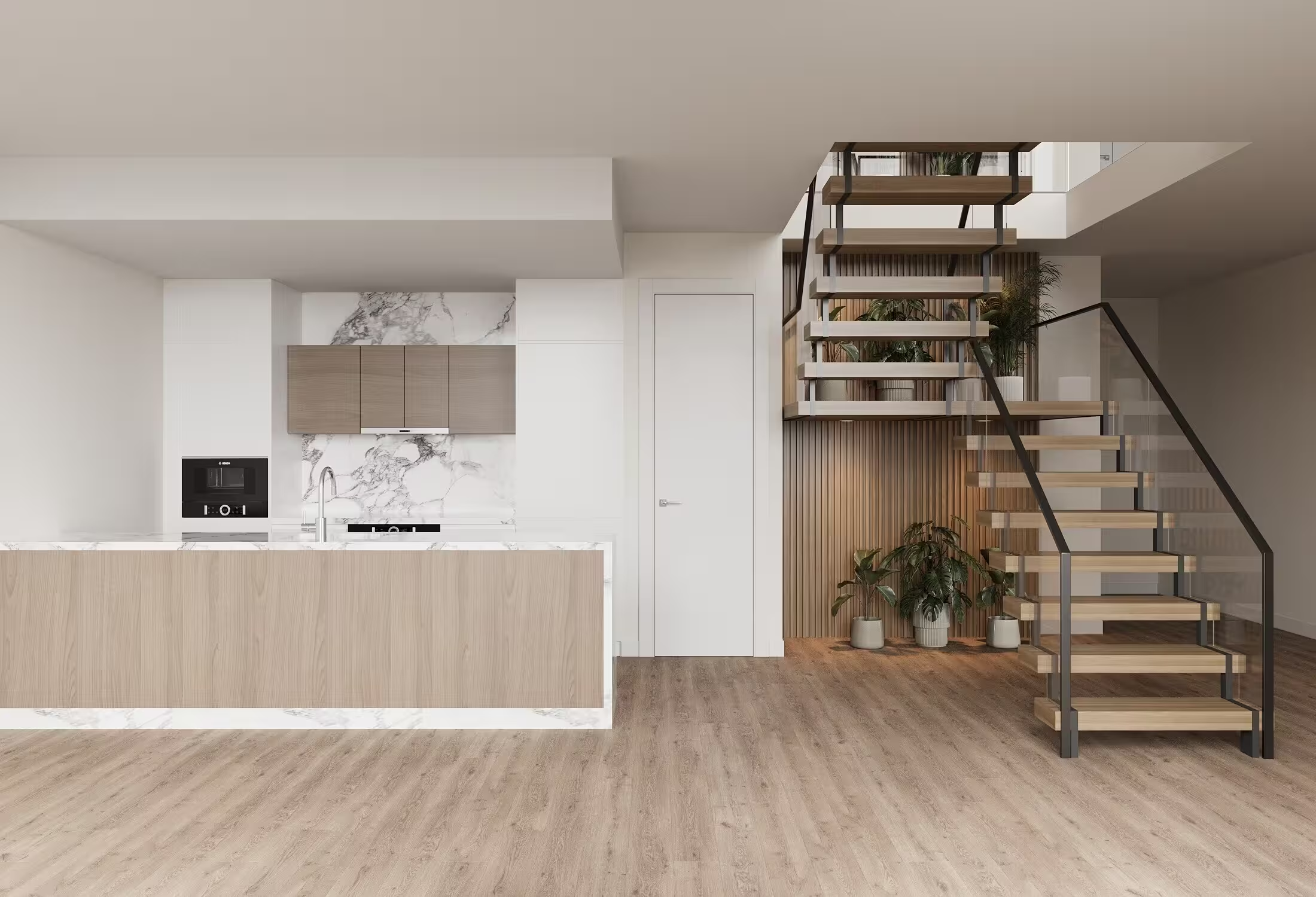
.avif)


.png)
.png)


Our Favorite Co-Op Renovations In Manhattan
Six favorite Manhattan co-op and condo renovations from Gallery KBNY, plus how our full-service design-build team manages co-op board approvals, engineers, and DOB filings
October 30, 2025
|

Our Favorite Co-Op Renovations In Manhattan
Co-op renovations in Manhattan require vision and precision. See how our design-build process transforms homes from Fifth Avenue to Sutton Place.
Table of contents
- Italian Renaissance Palazzo Transformation | 1035 5th Avenue
- Upper West Side Pre-War Co-Op Renovation | 801 West End Ave
- Chelsea Co-Op Renovation | 107 W 25th St
- Sutton Place Co-Op Renovation At The Sovereign | 425 East 58th St
- Manhattan Condo Renovation At The Chelsea Mercantile | 252 Seventh Ave
- NYC Condo Renovation In Carnegie Hill | 8 East 83rd
- The Gallery KBNY Difference
- FAQs About Co-Op Renovations In Manhattan
Renovating a co-op in Manhattan rewards patience. A strong design still has to clear board approvals and the building’s engineers before it becomes a finished home, and a full-service design-build approach is the most direct way through. With design and construction under one roof, permits and board reviews stay coordinated with the trades, from the first drawing to the final finish.
The projects below are a few favorites from across the borough. Each one met a different co-op or condo challenge, from a 4,000-square-foot pre-war home on Fifth Avenue to a post-war gut renovation in Sutton Place, and each shows how an integrated team keeps a demanding project on course.
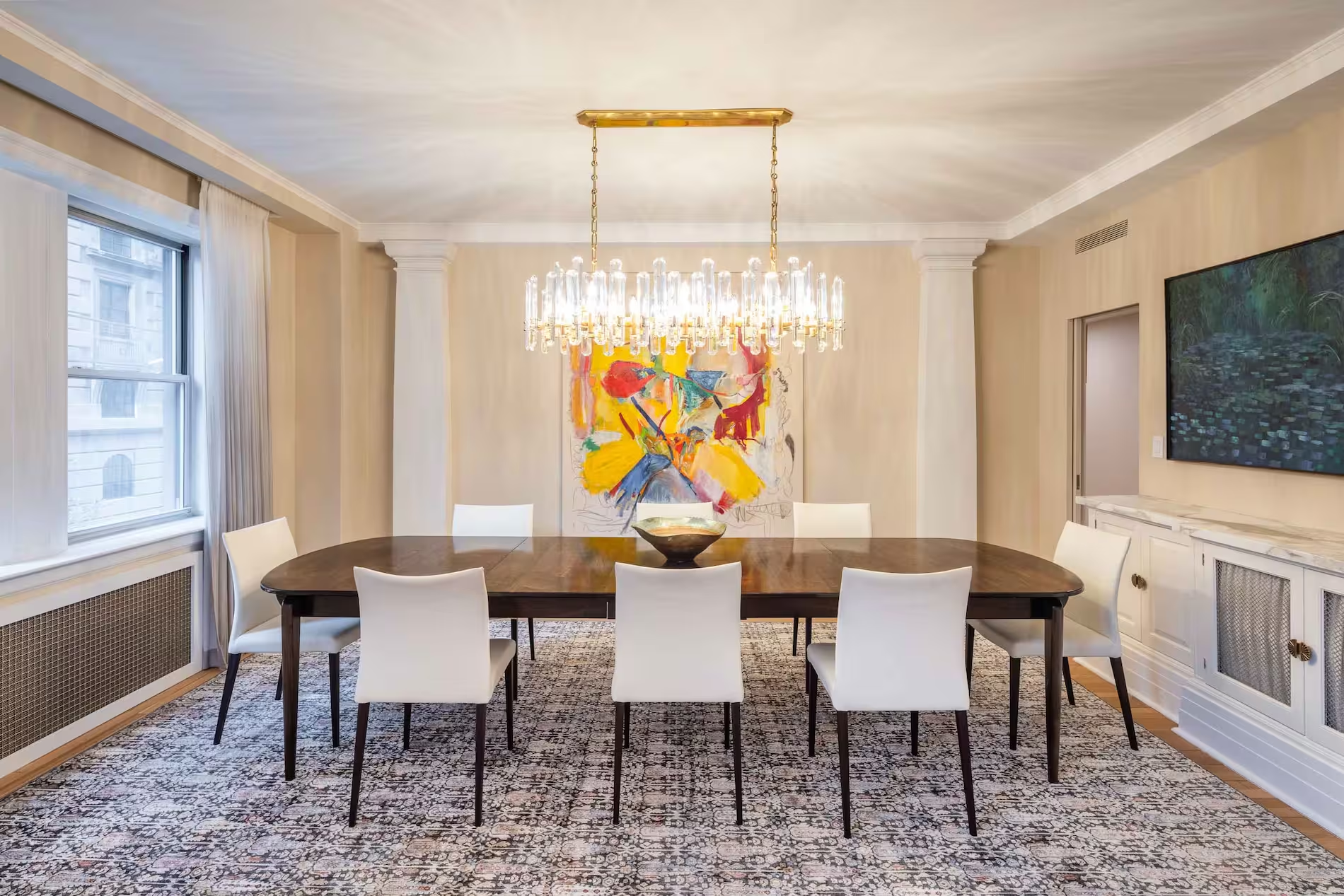
[#1]Italian Renaissance Palazzo Transformation | 1035 5th Avenue[#1]
Overlooking Central Park from one of Manhattan’s most distinguished addresses, this 4,000-square-foot pre-war co-op at 1035 Fifth Avenue had gone more than fifty years without an update. Our client turned to Gallery for a full overhaul that honored the home’s Italian Renaissance architecture while bringing it up to modern living. The plan preserved the original architectural details and polished marble accents, and it added a full bathroom and a powder room.

.avif)
Renovating in 1035 5th Ave carries real technical demand. Fifth Avenue co-ops hold strict renovation requirements, so each design choice and construction step moved through several rounds of review with respect for the property’s history. Our team built custom trims and millwork to match the original finishes and restored the parquet flooring, then rewired much of the home while keeping its pre-war character intact.
.avif)
The finished residence reads as timeless and renewed at once, the product of careful craftsmanship and a close read of what makes these historic Manhattan spaces work. View our full co-op renovation at 1035 5th Avenue.
.avif)
[#2]Upper West Side Pre-War Co-Op Renovation | 801 West End Ave[#2]
Just off Broadway, this combined pre-war co-op on the Upper West Side went to a pair of busy NYC professionals who wanted a modern family home without losing its architectural character. Gallery led a full-scale renovation that paired timeless design with everyday use, a hallmark of our Manhattan co-op work.
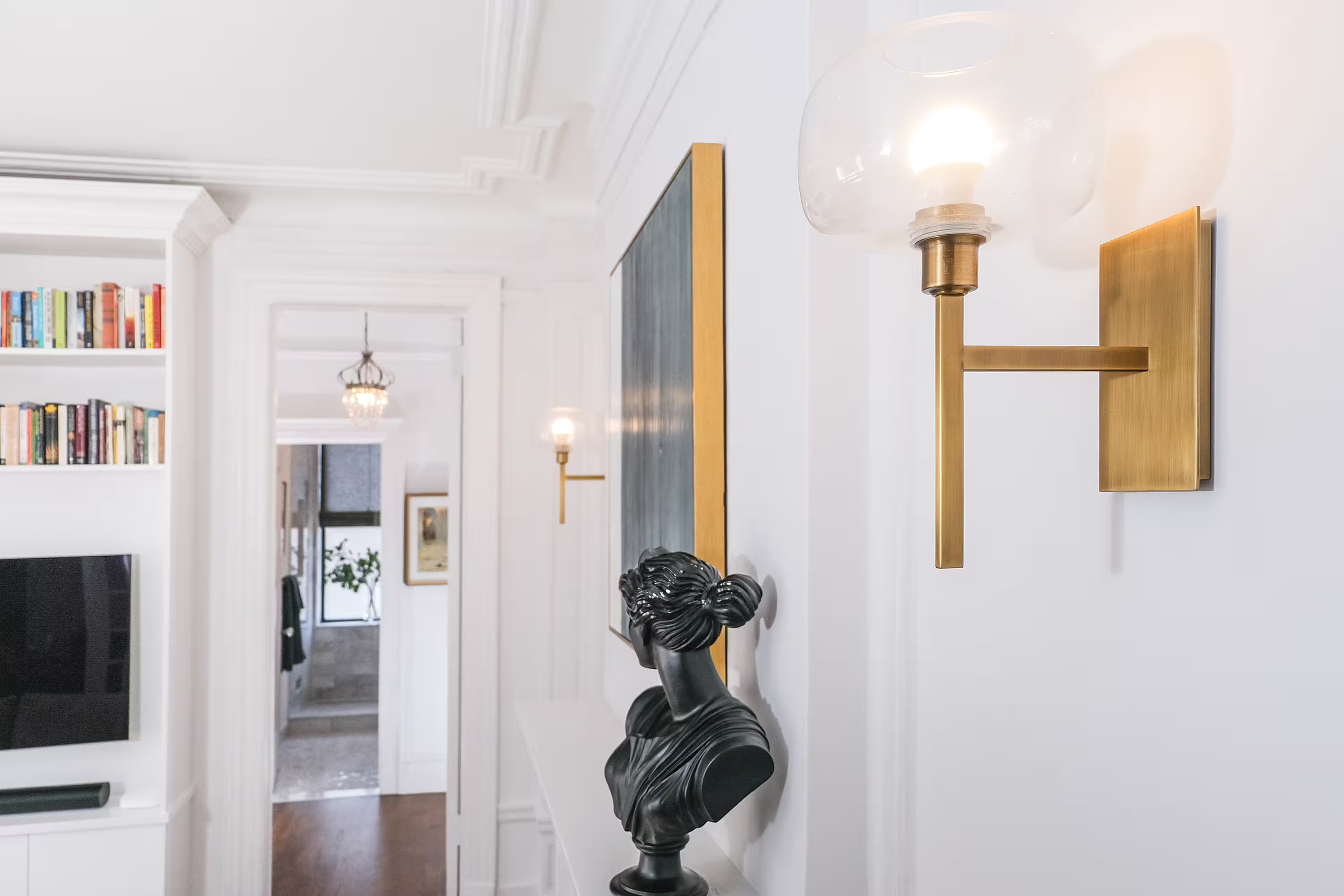
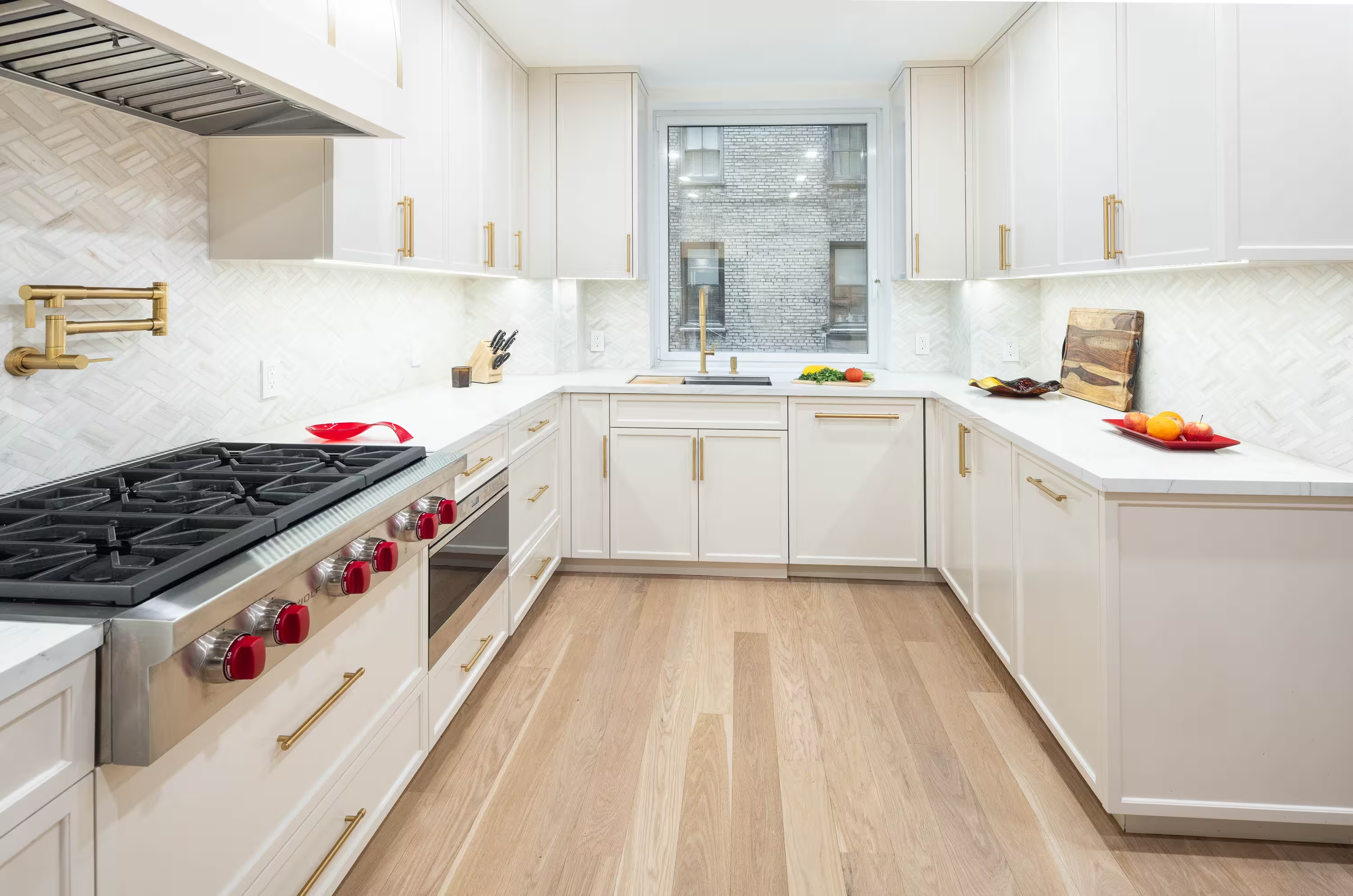
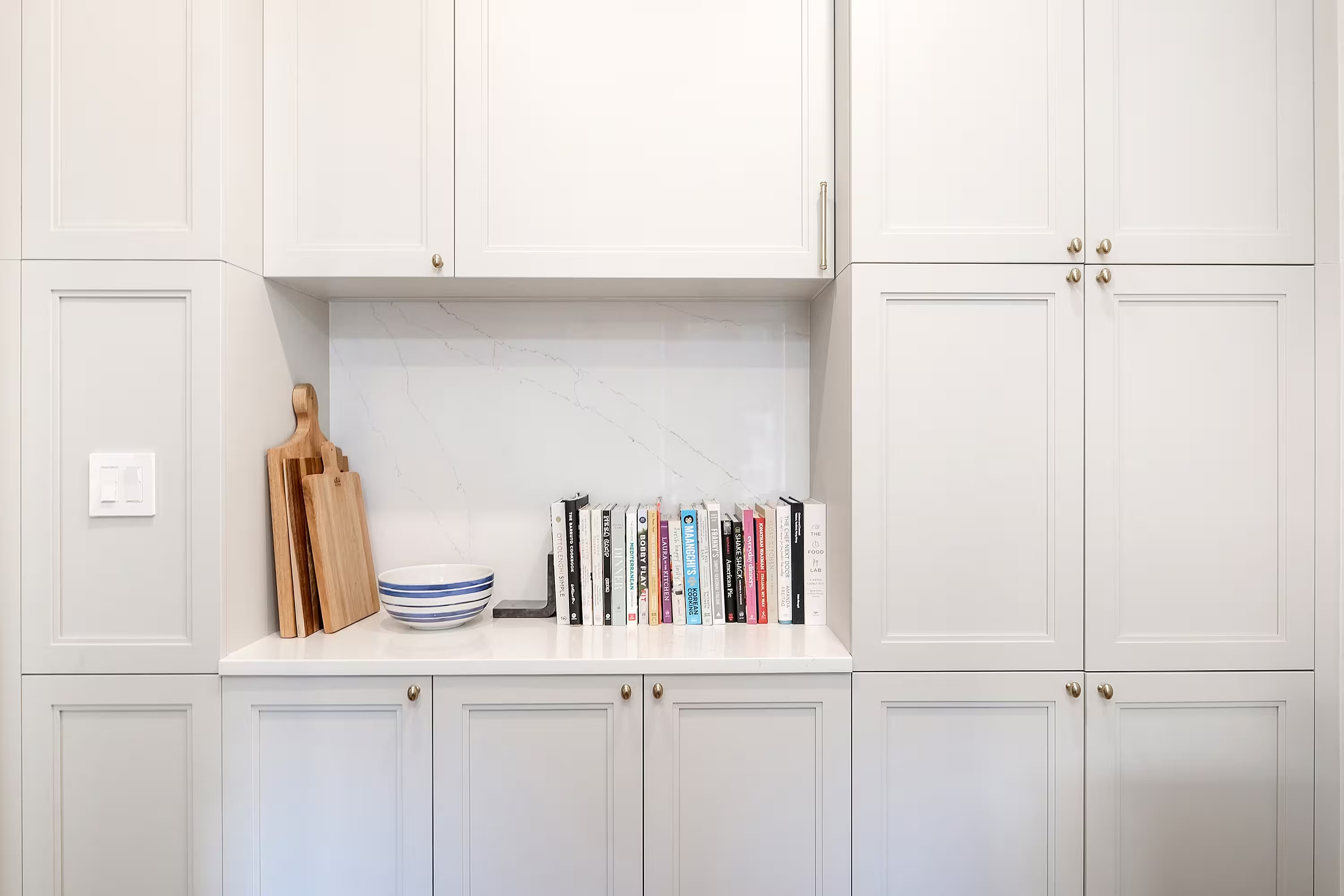
The centerpiece is a custom kitchen with two-toned Miralis cabinetry and quartz countertops over a clean subway-tile backsplash. New hardwood flooring grounds the apartment, and custom closets add storage while keeping the flow organized.

.avif)

Gallery managed every part of the project, from board approvals and permit coordination through construction and final finishing. The result is a bright, functional home tailored to modern family life and rooted in the historic character of the Upper West Side. View our full co-op renovation at 801 West End Avenue.
.jpg)
[#3]Chelsea Co-Op Renovation | 107 W 25th St[#3]
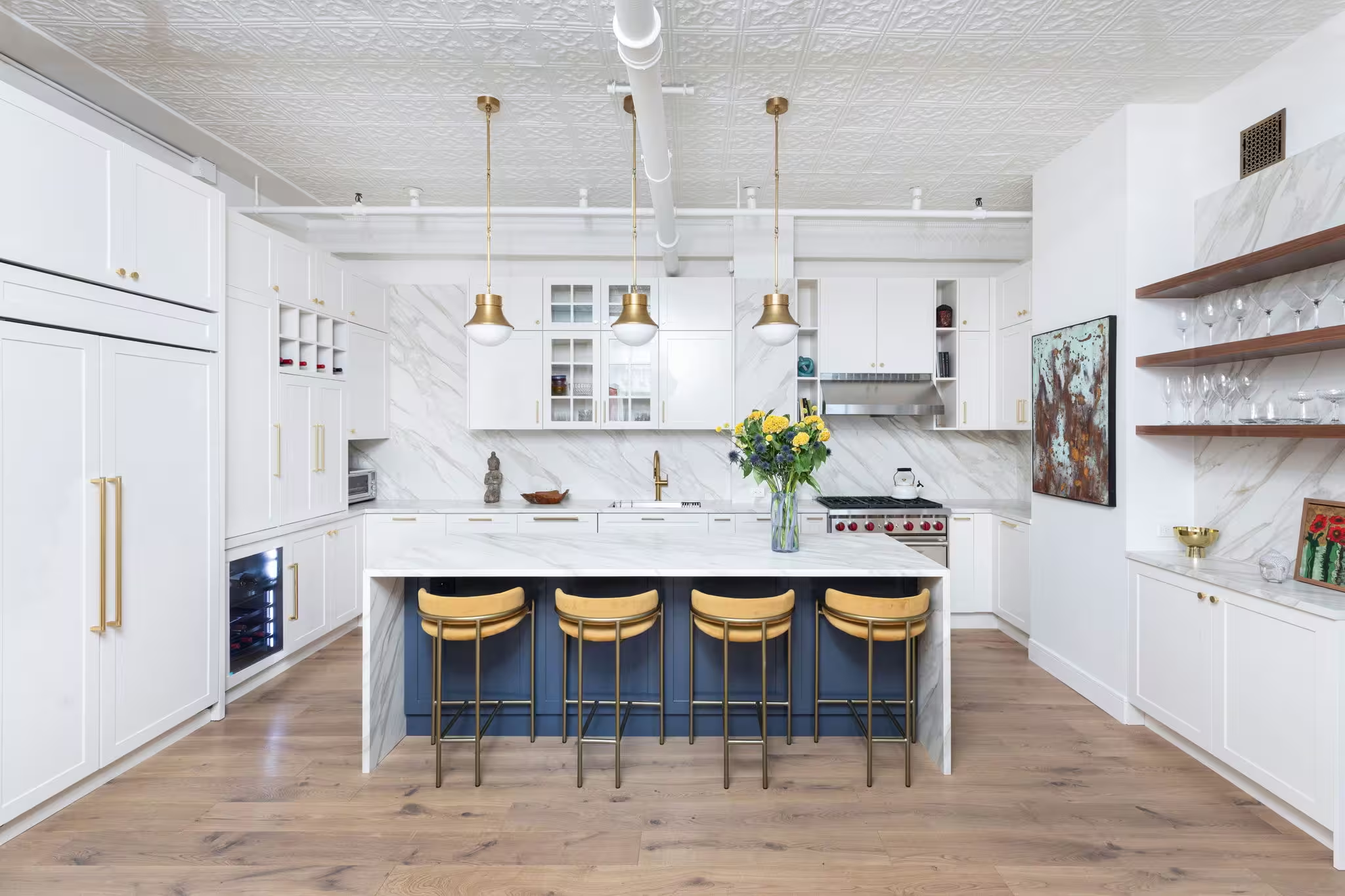
Set in a former sewing-machine factory turned boutique co-op between Madison Square Park and the Chelsea gallery district, this 1,300-square-foot home needed a full rework for a growing family. Gallery reimagined the flow to turn a two-bedroom apartment into a balanced three-bedroom, two-bath home that suited the family’s needs while honoring the building’s industrial character.
.jpg)
.jpg)
To open a more livable plan, the team framed new walls within the existing footprint for a third bedroom and added a second full bathroom, then reconfigured the kitchen for better storage. Custom millwork and a concealed charging station bring everyday function, with built-in laundry storage tucked in, alongside upgrades such as a full HVAC system and new flooring. The kitchen now centers on a Neolith Calacatta Gold Silk island slab, with Sub-Zero and Wolf appliances and cabinetry tailored to every inch.
.jpg)
.avif)
The result is a bright, well-balanced home where every inch works harder. View our full Chelsea Co-Op Renovation at 107 W 25th St.
MIN%20(1).avif)
[#4]Sutton Place Co-Op Renovation At The Sovereign | 425 East 58th St[#4]
For one of our many renovations at The Sovereign in Sutton Place at 425 East 58th, Gallery worked with a retired couple ready to embrace city living after years tied to a Provincetown vacation home. They wanted a timeless NYC residence in their traditional style, with comfort and function for the new chapter. The clients stayed close to the design process, shaping a space that felt elegant and personal throughout.
MIN.jpg)
MIN.jpg)
The project began as a full gut of the 1,800-square-foot post-war co-op, opening the kitchen for better flow and light while every bathroom gained new fixtures and finishes, with a note of personality through distinctive wallpaper. Gallery added millwork and custom details across the home, including built-in bookcases and a custom bar, to bridge traditional and contemporary design. A waterfall marble countertop anchors the kitchen, and clever cabinetry turned an immovable gas pipe into an architectural highlight.
MIN.avif)
MIN.jpg)
MIN.jpg)
Updates reached the private elevator landing as well, where fresh flooring and lighting, along with new wallpaper, ease the transition into the home. The result is a warm, polished apartment built on close collaboration and Gallery’s full-service expertise. View our full Sutton Place Co-Op Renovation At 425 East 58th Street.
Considering a Renovation in NYC?
Click to schedule a consultation with one of the principle partners at Gallery, who will hear out your renovation plans and let you know the best way to proceed - whether we end up working together or not.
Schedule Your Consultation
.jpg)
[#5]Manhattan Condo Renovation At The Chelsea Mercantile | 252 Seventh Ave[#5]
Inside the iconic Chelsea Mercantile, this spacious pre-war condo had previously combined two units. Gallery reshaped it into a sophisticated family home for a couple with three young children who wanted an open layout that kept the building’s character.
.jpg)
The team reworked the flow, removing one of the two original kitchens and expanding the main living area into a bright, continuous gathering space. The new kitchen anchors the home with fingerprint-resistant FENIX cabinetry and a three-inch-thick Armani Silver marble island, paired with Wolf appliances that include a retractable downdraft vent, which Avi demonstrates below.
Structural work met design throughout. Uneven floors found during demolition were leveled before 4,400 square feet of Riva White Pearl engineered flooring went in, chosen for its seamless look and quiet tone. Three bathrooms were rebuilt from the ground up, with touches ranging from a freestanding tub on a raised platform to iridescent tile and brass-black fixtures.
.jpg)
.jpg)
.jpg)
Behind the walls, a new breaker panel and relocated plumbing, with upgraded electrical, future-proof the home while keeping its pre-war character. View our full condo renovation at 252 Seventh Avenue.
%20(1).avif)
[#6]NYC Condo Renovation In Carnegie Hill | 8 East 83rd[#6]
Steps from Central Park, this 1,800-square-foot Carnegie Hill condo was reimagined for a young family ready to turn a dated sponsor unit into a warm, modern home. With every surface and system due for renewal, Gallery brought the estate-condition property to a fully functional state where each detail earns its place.
A main priority was reworking the layout for light and storage, both essential for parents with a small child. A custom entertainment wall anchors the living space, pairing open display with discreet storage below, while a built-in window banquette doubles as a hidden storage nook and a reading perch. The outcome is a calm, clutter-free room ready for play and entertaining alike.
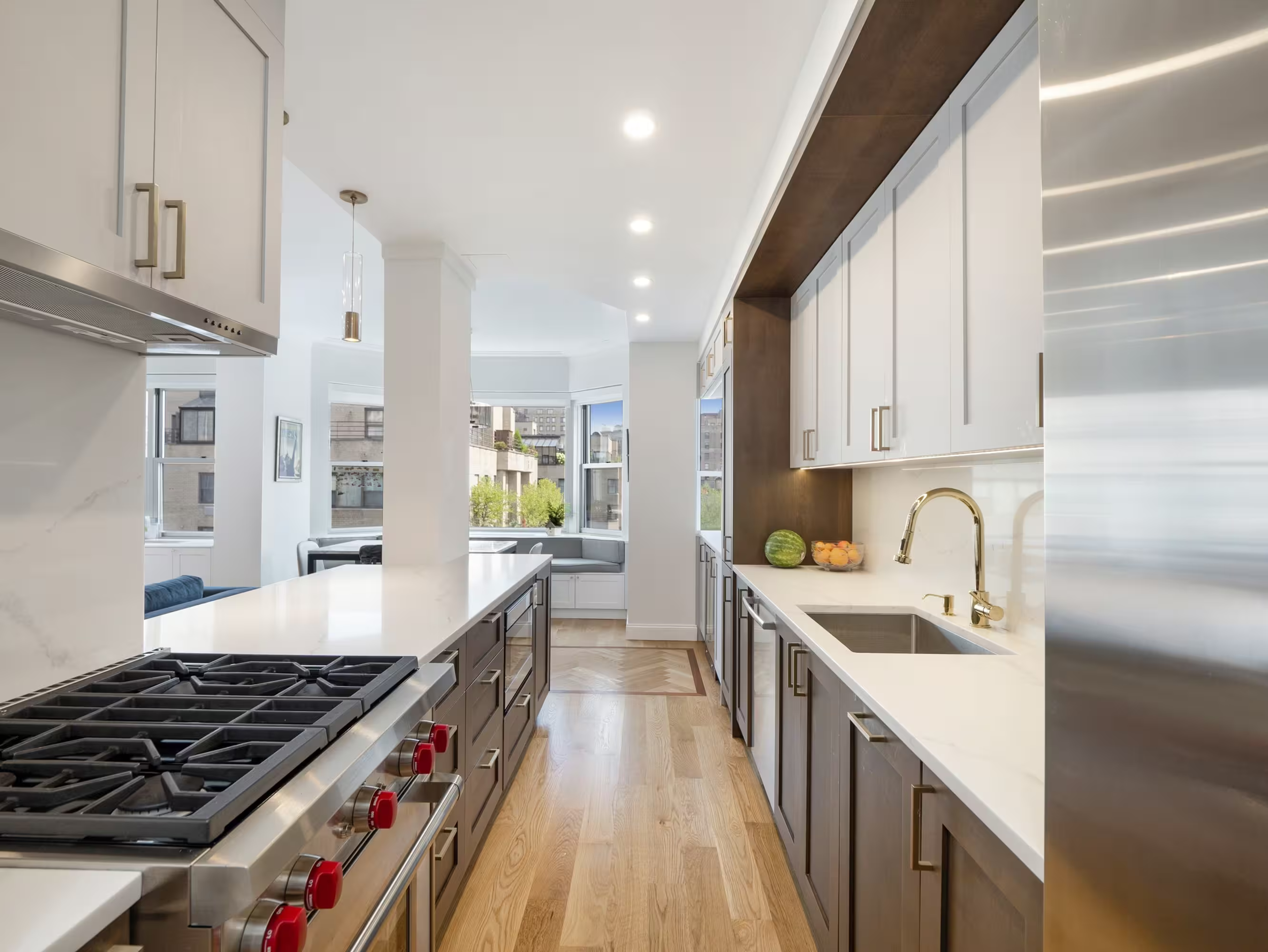
In the kitchen, careful craftsmanship sets the tone. Herringbone wood floors from the living area shift into straight planks underfoot for visual balance, while rich wood paneling frames soft off-white and chestnut cabinetry and a continuous quartz backsplash ties it together.
-min.jpg)
Throughout the home, practical elegance drives every decision. Two redesigned bathrooms echo each other with wood vanities, bold marble floors, and refined accent tile, while the child’s bedroom introduces playful color and built-in flexibility to grow with the family.
.avif)
Finished with plaster crown molding and recessed lighting, plus crystal hardware around a mirrored bar niche, the Carnegie Hill home delivers modern comfort with restraint. View our full condo renovation at 8 East 83rd Street.
MIN.jpg)
[#7]The Gallery KBNY Difference: Full-Service Design-Build[#7]
Every Manhattan co-op renovation here follows the same integrated design-build process, built to manage complex approvals and anticipate board and engineering requirements, aligning each detail from concept to completion.
A Seamless, All-in-One Process
Each project, from Fifth Avenue to the Upper West Side, shows how a full-service approach simplifies one of the most demanding renovation environments in the country. Holding design and construction under one roof in NoMad keeps the drawings and documentation consistent with what gets built. That continuity removes the disconnect that appears when separate firms handle different phases, which matters most when co-op boards and review architects expect precision and accountability.
Expertise In Approvals & Permits
In NYC, even the best-designed co-op renovation stalls without the right paperwork. Our project liaisons manage every layer of the co-op approval process for clients, from preparing alteration agreements and load letters to coordinating with the building’s reviewing engineer and board architect, and with the DOB.
Years of experience have shown us where contention tends to arise, whether structural changes, mechanical noise, waterproofing, or electrical loads, so we resolve those points before they escalate. That foresight keeps projects moving through approvals while protecting both the design intent and the timeline.
Design That Balances Heritage And Modern Life
Co-op buildings across Manhattan carry distinct architectural legacies, from pre-war detailing to post-war layouts that favor utility over flow. Our design philosophy works with those differences, preserving craftsmanship where it counts and reimagining dated layouts for contemporary living. We treat each space as a link between preservation and progress, respecting the bones of the building while adding the modern materials and systems that make daily life better.
Client Experience At The Center
Co-op renovations in Manhattan call for coordination well beyond the client, reaching boards, management, supers, and neighbors. Clients most often point to our communication and organization as what sets us apart. We carry the daily coordination and scheduling, along with the documentation, so homeowners can stay focused on the result. From the first meeting to final sign-off, one dedicated team manages every channel of communication for clarity at each step.
From Concept to Completion
At Gallery, every Manhattan co-op renovation is a creative and technical journey at once. Our team stays involved from early feasibility studies and architectural drawings through DOB filings, construction, and final finishes. That continuity cuts miscommunication and speeds approvals while keeping craftsmanship steady. The outcome is a process as deliberate as the design, where board requirements are met and building integrity holds while each client’s vision becomes a home that lasts.
Considering A Co-Op Or Condo Renovation In NYC?
View our portfolio of NYC co-op renovation before afters, learn more about Gallery, or simply contact us.
We are a New York Times-featured design-build firm in New York City with a full-service approach to residential renovations, covering interior design and architecture, building management and board approval, and construction management. We renovate pre-war homes and full kitchens and baths, handle flooring and custom millwork, and build new rooms when a plan calls for it. Let Gallery bring your home to life.
Gallery KBNY is a full-service design-build firm featured in The New York Times, specializing in the architecture, interior design, and renovation of apartments, co-ops, condominiums, townhomes, and lofts across Manhattan and Brooklyn. Our integrated team of architects, designers, contractors, and project managers manages every phase from board approvals and DOB permitting through design and construction. A founding partner is involved in every project, start to finish. Because architecture, design, permitting, and construction are coordinated under one roof, the process remains streamlined, accountable, and transparent from start to finish. Our work has also appeared in Forbes, Architectural Digest, and Inc., and is backed by 100+ five-star client reviews.
[#FAQ]Frequently Asked Questions About Co-Op Renovations In Manhattan[#FAQ]
What makes renovating a Manhattan co-op different from other renovations?
A Manhattan co-op renovation rewards patience, because a strong design still has to clear board approvals and the building's engineers before it becomes a finished home. Fifth Avenue and other prestigious co-ops hold strict renovation requirements, so each design choice and construction step can move through several rounds of review. The building's own reviewing engineer and board architect scrutinize the plans alongside the board itself, which raises the bar for precision and documentation well above a typical project. A design-build approach is the most direct way through, since keeping design and construction under one roof holds the permits and board reviews coordinated with the trades from the first drawing to the final finish.
What does the co-op board approval process involve?
Co-op approval is a multi-layered process that runs in parallel with design. It centers on the alteration agreement, supported by load letters and coordination with the building's reviewing engineer, its board architect, and the DOB. A dedicated project liaison typically manages each of these layers, preparing the documentation the board and its consultants require and shepherding the plan through review. Because the approval can return revisions before it clears, the planning phase runs longer than in a condo. Preparing a complete, well-documented submission package up front is what keeps the approval moving and the construction schedule intact.
What are the common points of contention in a co-op approval?
Experience across many co-op projects points to a recurring set of issues where board review tends to focus: structural changes, mechanical noise, waterproofing, and electrical loads. Each touches the wider building rather than the single unit, which is exactly why boards and their engineers examine them closely. The reliable approach is to identify these points early and resolve them before they escalate into an approval obstacle. Addressing the structural, acoustic, waterproofing, and load questions in the design, with the documentation to support them, is what keeps a plan moving through review while protecting both the design intent and the timeline.
What is a load letter, and why does a co-op need one?
A load letter documents the demands a renovation will place on the building's shared systems, particularly the electrical and structural load the new work adds. Co-op boards and their reviewing engineers rely on it to confirm that the renovation will not overtax the building's infrastructure or affect neighboring units. It is one of the standard components of a co-op submission, alongside the alteration agreement and the architectural plans. Preparing the load letter accurately, in coordination with the building's engineer, is part of what allows the board to approve the scope with confidence.
Who reviews a co-op renovation beyond the board?
A co-op renovation passes through more sets of eyes than the board alone. The building's reviewing engineer evaluates the technical and structural aspects of the plan, the board architect assesses the design against the building's standards, and the DOB reviews the filing for code compliance. Each of these parties expects precision and accountability, which is why the drawings and documentation have to be consistent and complete. Coordinating with the engineer and the board architect early, rather than presenting them a plan for the first time at submission, is what keeps the review from returning avoidable revisions.
How does a design-build approach help with co-op renovations?
Holding design and construction under one roof keeps the drawings and documentation consistent with what actually gets built, which matters most in the demanding co-op environment. That continuity removes the disconnect that appears when separate firms handle different phases, a disconnect that co-op boards and reviewing architects are quick to catch when they expect precision and accountability. A single team also carries the approval work, from alteration agreements and load letters to coordination with the building's engineer and the DOB, and resolves the contention points before they escalate. The result is a process that meets board requirements while protecting the design and the timeline together.
Can original pre-war detail be preserved in a co-op renovation?
Yes, and preserving it is often central to the project. In a Fifth Avenue pre-war co-op that had gone decades without an update, the work preserved the original architectural details and marble accents while bringing the home up to modern living, including custom trims and millwork built to match the original finishes and restored parquet flooring. Systems can be modernized alongside the preservation, such as rewiring much of a home while keeping its pre-war character intact. The balance of restoring the craftsmanship that gives these homes their value and introducing contemporary materials and systems is precisely the work a co-op renovation calls for.
What kinds of co-op and condo renovations are possible in Manhattan?
The range spans targeted reworks to full transformations. A full gut can preserve original detail while modernizing systems and layout, as in a 4,000-square-foot pre-war home taken down to a clean slate with a bathroom and powder room added. Reconfiguring a layout within the existing footprint can turn a two-bedroom into a balanced three-bedroom with a second bath. Combining two units into one is possible with structural planning, opening the living area and reworking the kitchen across the enlarged footprint. Estate-condition sponsor units can be brought to a fully functional, modern state. Each of these is achievable with a plan shaped to the building's rules and the approvals it triggers.
Manhattan Design-Build
Evaluate Your Manhattan Apartment
Before You Buy
Buying an apartment you plan to renovate? A founding partner walks it with you during the contract period and maps the scope, cost, and timeline, so you know exactly what you're taking on before you sign.
As seen in
Pre-Purchase Assessment
Walk the apartment with us first and understand the full scope, cost, and timeline before you close.
or call us directly
let’s
Design-Build
together