.avif)


.png)
.png)


Benefits Of Combined Design & Architecture Planning For Your Apartment Renovation
Learn how combining design and architecture streamlines your NYC renovation, eliminates friction, and ensures cohesive, buildable results from start to finish.
October 27, 2025
|
%252520Gallery%252520KBNY.jpeg)
Benefits Of Combined Design & Architecture Planning For Your Apartment Renovation
What if your renovation could move faster, require less work on your end, and look more cohesive...all by design?
Table of contents
- Streamlined Communication And Single Point of Contact
- Cohesive Design Vision From Concept to Completion
- Cost Efficiency And Budget Optimization
- Faster Project Timeline And Reduced Delays
- Enhanced Problem-Solving With Creative Solutions
- Technology Integration With Modern Project Management
- Frequently Asked Questions About Full-Service Renovations In NYC
Anyone who has researched a NYC apartment renovation, or taken one on, knows that overhauling a home here is a significant undertaking. Whether you are gut renovating a pre-war co-op on Park Avenue for modern convenience or retrofitting a Riverside Drive condo around a more personal aesthetic, the moving parts call for careful planning, technical expertise, and patience. When success depends on coordinating multiple professionals, managing the timeline, and holding a budget steady, that combined work asks for a true specialist.
Many of our clients first considered the traditional route of hiring separate architects and designers. They then found our integrated design-build model, an all-inclusive approach that combines design and architecture into one streamlined solution for the complexities of a NYC renovation.
| Benefit | What It Delivers | The Friction It Removes |
|---|---|---|
| Streamlined Communication | One firm guides design, structure, and budget through a single point of contact from day one | Telephone tag across architects, designers, engineers, and contractors |
| Cohesive Design Vision | Design and architecture align from the outset, so form and function support each other | A designer's layout that conflicts with an architect's structure |
| Cost Efficiency | Services consolidate under one structure for holistic budget management and early savings | Overlapping fees, duplicated effort, and incentives toward higher-priced options |
| Faster Timeline | Design and construction run in parallel, with decisions made in real time | Stalled handoffs waiting on revised drawings, refiled permits, or clarifications |
| Enhanced Problem-Solving | Built-in checks merge design creativity with architectural practicality | Solutions that conflict, stall, or never surface across separate teams |
| Technology Integration | 3D modeling, BIM coordination, and project-management tools work in harmony | Disconnected tools and mid-project surprises |
The sections below explain how the design-build model differs from hiring separate specialists, along with the advantages of combining design and architectural services into a single process.
.avif)
[#1]Streamlined Communication And Single Point of Contact[#1]
Traditional renovations work, though they are demanding to coordinate, especially when you manage the project yourself. Getting architects, designers, engineers, and contractors to align across separate schedules toward one design goal can unravel quickly. A plan that once felt feasible turns into constant telephone tag, where a single miscue leads to costly mistakes or design compromises, and you end up carrying more work than you expected.
A full-service design-build team removes those friction points and lifts that weight. One firm manages the entire conversation, guiding interior design, structural requirements, and budget realities while keeping everyone aligned. A single point of contact from day one, fluent in both the aesthetic and technical sides of your vision, brings fewer delays and clearer decisions under shared accountability.
[#2]Cohesive Design Vision From Concept to Completion[#2]
When separate design and architecture teams work independently, even a well-intentioned collaboration can create tension between form and function. A designer might envision an open layout that conflicts with load-bearing walls, or an architect might prioritize structure at the expense of flow, a dynamic we explore in our blog Why Every NYC Architect Should Build Their Own Home At Least Once. Reconciling either one tends to fall to the owner.
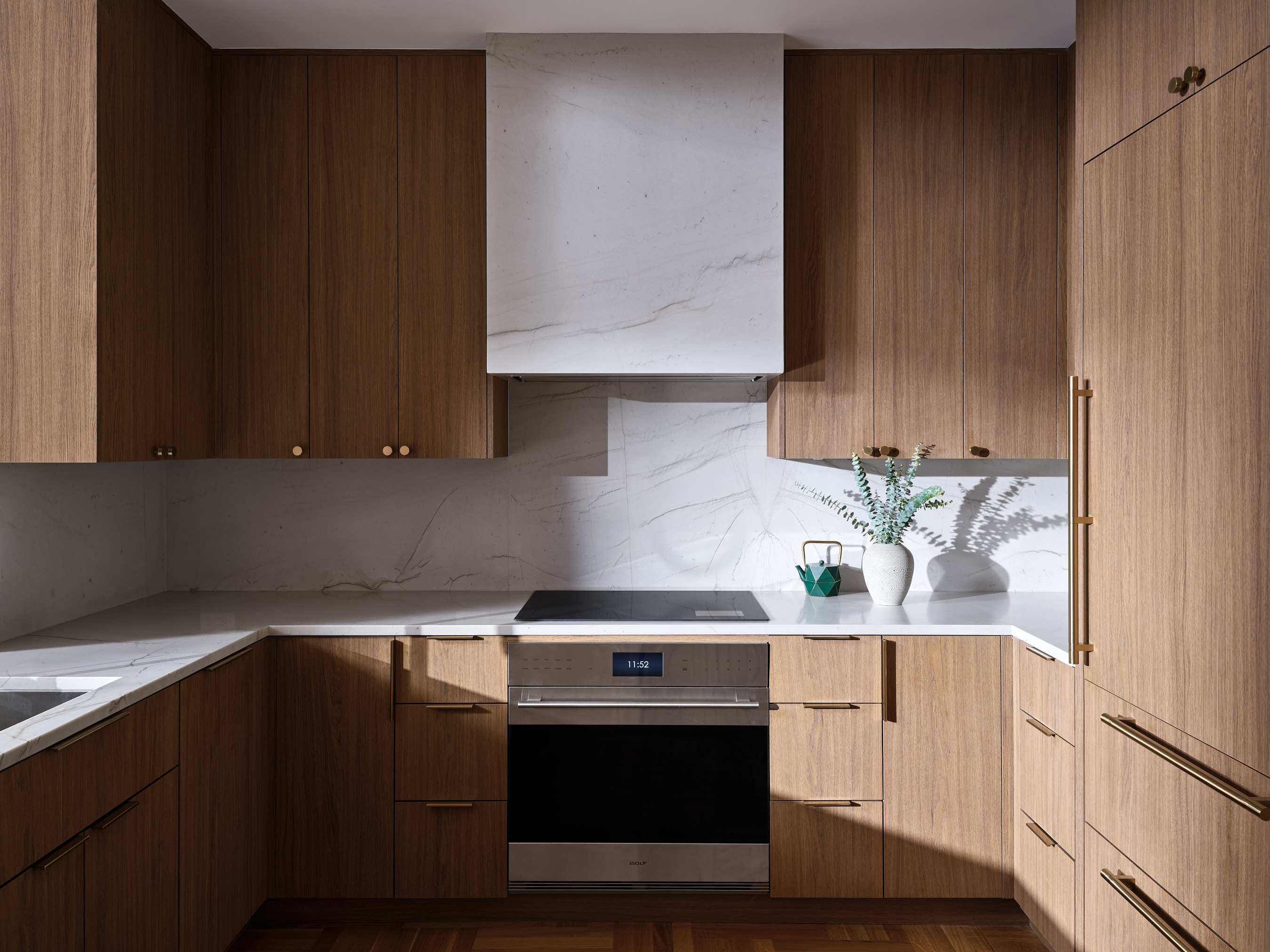
An integrated process closes those gaps. The design-build team collaborates from the outset, aligning the vision with reality and finding architectural solutions that advance the design goals rather than limit them. Each expert stays engaged throughout, supporting the project in their own way to keep the original goals intact. In NYC apartments, where every square foot carries weight, that steady synergy makes a measurable difference, producing a space that feels intentional and cohesive from kitchen millwork to lighting layout.
-min.jpg)
[#3]Cost Efficiency And Budget Optimization[#3]
Fragmented teams can create overlapping fees, duplicated effort, and surprise costs. Separate designers and architects often price work independently, and without shared oversight, the budget can drift off track. Certain pricing models can also favor higher costs, since a fee tied to a percentage of material or design cost carries a built-in pull toward pricier selections.
A design-build model consolidates services under one structure for holistic cost management. Because the firm handles both design and execution, it identifies savings early through efficient layout planning, smarter material sourcing, and established vendor relationships. The firm carries no incentive beyond executing well and making sure you are happy with the result.
[#4]Faster Project Timeline And Reduced Delays[#4]
Every additional handoff in a NYC renovation adds time. When design, architecture, and construction operate separately, progress pauses between phases, whether waiting for drawings to be revised, permits to be refiled, or details to be clarified. Those gaps accumulate and can mean missed deadlines. With a unified design-build team, planning moves in parallel rather than in sequence. The design and construction teams collaborate in real time, so decisions come faster and problems are solved before they affect progress. City permitting benefits as well, since the documentation is prepared with both the architectural and interior requirements in mind.
-min.avif)
[#5]Enhanced Problem-Solving With Creative Solutions[#5]
In NYC’s dense housing stock, design and structural challenges are inevitable. This often means dealing with low ceilings, uneven floors, odd column placements, or strict co-op restrictions. When specialists work separately, solutions can conflict or stall in discussion - or worse case, they’re never even considered.
An integrated design and architecture team, however, has built-in checks and balances and thrives on collaboration. By merging design creativity with architectural practicality, your project is more likely to find innovative solutions that meet both functional and aesthetic goals. That could mean rerouting HVAC to preserve millwork, engineering custom cabinetry around structural beams, or transforming awkward corners into purposeful storage.
For more insights into how Gallery handles such situations tactfully, read our in-depth blogs on Leveling Floors During A NYC Renovation: Design & Cost Implications and Why Custom HVAC Solutions Are Essential for Pre-War Renovations in New York City.
[#6]Technology Integration With Modern Project Management[#6]
Modern renovations call for more than sketches and spreadsheets. At Gallery, we use 3D modeling to guide our renderings, BIM coordination to sync the technical work across specialists, and project-management tools like BuilderTrend so clients see every aspect of their project in real time. Because design and architecture sit with one team, these tools work in harmony, holding transparency and precision throughout a renovation while guiding design expectations. You can give timely feedback on concepts and understand cost and schedule implications instantly, all through a single platform. The outcome is better-informed decisions and fewer mid-project surprises.
- See For Yourself: Render To Reality - How Our Rendering Process Helps Clients Visualize Their NYC Renovation
| Factor | Separate Architect & Designer | Integrated Design-Build |
|---|---|---|
| Points Of Contact | Multiple parties on different schedules | One firm guiding the entire conversation |
| Project Coordination | Owner often manages the handoffs | Coordination handled in-house across phases |
| Design & Structure | Form and function can conflict | Aligned from the first meeting |
| Pricing & Budget | Independent fees and possible cost incentives | Holistic budget with early cost-saving |
| Schedule | Progress pauses between phases | Design and construction move in parallel |
| Technology | Disconnected tools across firms | 3D modeling, BIM, and tracking in one platform |
Beyond The Benefits
Combining design and architecture under one roof transforms an overwhelming process into an intuitive, creative collaboration. Through our design-build renovation model, every phase—from concept to construction—moves with efficiency, precision, and purpose. At Gallery, our integrated approach to apartment renovation planning gives clients a single partner who manages every detail, making sure your vision is executed seamlessly and your investment is protected.
Ready to begin your renovation journey? Contact us to discover how a truly full-service design-build approach redefines what’s possible in your NYC home.
We are NYC's premier full-service design-build firm with a comprehensive renovation process that caters to our clients. We’re experts in pre-war apartment renovations, apartment combinations, room creations, full gut renovations and all that falls in between. Let us bring your dream home to life.
Gallery KBNY is a full-service design-build firm featured in The New York Times, specializing in the architecture, interior design, and renovation of apartments, co-ops, condominiums, townhomes, and lofts across Manhattan and Brooklyn. Our integrated team of architects, designers, contractors, and project managers manages every phase from board approvals and DOB permitting through design and construction. A founding partner is involved in every project, start to finish. Because architecture, design, permitting, and construction are coordinated under one roof, the process remains streamlined, accountable, and transparent from start to finish. Our work has also appeared in Forbes, Architectural Digest, and Inc., and is backed by 100+ five-star client reviews.
[#faq]Frequently Asked Questions About Full-Service Renovations In NYC[#faq]
Does an integrated design-build model cost more or less than hiring a separate architect and designer?
The total cost is often more favorable under an integrated model, even when the headline fee looks similar. Separate engagements can carry independent markups, duplicated effort, and pricing structures tied to a percentage of design or material cost, which can nudge selections upward. A design-build firm prices the work as one engagement and identifies savings early through efficient layouts, sourcing, and established vendor relationships, with no incentive beyond delivering to the agreed budget.
How does BIM coordination prevent costly clashes in a pre-war apartment?
Building information modeling brings the architectural, structural, and mechanical layers into one coordinated model, so conflicts like a duct running through a beam or a fixture landing on a riser are caught on screen rather than mid-demolition. In a pre-war apartment, where existing conditions are irregular and surprises are common, that early clash detection protects both the budget and the schedule. The model also keeps the design and engineering teams working from a single source of truth.
Who holds professional liability and stamps the drawings in an integrated design-build firm?
A registered architect or engineer within the firm produces and stamps the drawings that require it, and the licensed, insured construction side carries the build. Housing both under one roof means the party accountable for buildability is the same group executing the work, so responsibility stays clear rather than divided across firms the owner has to reconcile. The board package and filings are prepared by that same team.
Can I bring my own architect or interior designer into a design-build project?
Yes, and it is common at the high end. An outside architect or designer can shape the vision while the firm carries feasibility, coordination, permitting, and construction. The cleanest arrangement defines early who owns each decision, so the integrated team can keep the design intent intact while grounding it in what the building and budget allow.
How does combining design and architecture speed up DOB permitting and board approval?
When one team prepares the documentation, the filing set reflects both the architectural and interior requirements from the start, which reduces the back-and-forth that slows separate submissions. Drawings do not wait on a handoff between firms, and the board package draws on the same coordinated set. Preparing approvals in parallel with design keeps the city and building review off the critical path.
What happens when the design vision and the building's structure conflict?
Within an integrated team, that tension surfaces early and gets resolved on paper, since the designer and the architect are in the same conversation from the outset. A load-bearing wall that limits an open layout, for instance, prompts a structural solution that preserves the design intent rather than a late compromise. The aim is architectural answers that advance the design rather than constrain it.
Manhattan Design-Build
Evaluate Your Manhattan Apartment
Before You Buy
Buying an apartment you plan to renovate? A founding partner walks it with you during the contract period and maps the scope, cost, and timeline, so you know exactly what you're taking on before you sign.
As seen in
Pre-Purchase Assessment
Walk the apartment with us first and understand the full scope, cost, and timeline before you close.
or call us directly
let’s
Design-Build
together