.avif)


.png)
.png)


NYC Neighborhood Spotlight: Our Favorite Upper West Side Renovations
Leaning towards an Upper West Side renovation and wondering whether a design-build firm makes sense? See how we applied our full-service approach to NYC renovations on these choice UWS Manhattan properties.
February 27, 2026
|

NYC Neighborhood Spotlight: Our Favorite Upper West Side Renovations
Get up close and personal with some of our favorite Upper West Side renovations.
TABLE OF CONTENTS
- What Makes Renovating on the Upper West Side Different
- Upper West Side Co-Op Renovation | 119 West 82nd Street
- Pre-War Co-Op Renovation | 801 West End Ave
- Classic 8 Pre-War Apartment Renovation | 255 West 108th
- Condo Renovation | 59 W 71st
- Apartment Renovation | 91 Central Park West
- Condo Renovation At The Coronado | 155 West 70th Street
- Co-Op Renovation | 140 West End Ave
- Apartment Combination | 30 West 60th
- Pre-War Co-Op Gut Renovation | 180 East 79th Street
- Luxury Condo Renovation | Riverside Blvd
The Upper West Side is one of the most renovation-active neighborhoods in Manhattan, and one of the most technically demanding. The housing stock is dense with pre-war co-ops in classic 6, 7, and 8 configurations, many of them in buildings with detailed alteration agreements and boards that take the process seriously. Landmarked buildings along Central Park West, Riverside Drive, and West End Avenue add LPC considerations to exterior scopes. And the age of the buildings, the majority constructed before 1940, means that most full gut renovations surface the usual pre-war conditions: cloth wiring, original plumbing, and plaster walls that need careful handling.
We work on the Upper West Side regularly. The projects below cover the full range of what renovation looks like in this neighborhood, from classic 8 pre-war gut renovations near Broadway to apartment combinations in Columbus Circle to luxury condo upgrades along Riverside Boulevard. Each project had its own set of constraints specific to the building and the client. What follows is a closer look at each one.
| Property | Building Type | Renovation Type | Key Scope |
|---|---|---|---|
| 801 West End AveUpper West Side | Pre-war co-op | Full renovation | Classically-inspired interior refresh, updated floors, custom millwork, gut kitchen and two bathrooms, full cloth wiring replacement |
| 255 West 108th StNear Straus Park | Pre-war co-op (Classic 8) | Full apartment renovation | Complete overhaul of kitchen, bathrooms, closets, and home office; new flooring throughout; pre-war character preserved and enhanced |
| 59 West 71st StUpper West Side | Condo | Full gut renovation | Dream renovation after years of incremental updates; full design-build scope including Murphy bed with custom millwork for office and guest room combination |
| 91 Central Park West1929 Schwartz & Gross building | Pre-war co-op | Full renovation | Commercial-quality kitchen with stainless steel counters and European white oak flooring, enhanced home office, layout reconfiguration to address challenging existing floor plan |
| 155 West 70th StThe Coronado, Lincoln Square | Condo (post-war) | Full renovation | Mid-century modern redesign for young family; reconfigured kitchen and bathrooms; engineered oak flooring; fixer-upper converted to family forever home |
| 140 West End AveLincoln Towers | Post-war co-op | Kitchen, bath, flooring | Full kitchen renovation, bathroom, flooring, and closet renovation; complete board approval management and permit procurement for busy professional family |
| 30 West 60th StColumbus Circle | Co-op | Apartment combination | Horizontal combination of two adjacent one-bedroom units; uniform floor and ceiling heights throughout; full kitchen renovation in mid-century Scandinavian design |
| 180 East 79th StUpper East Side / UWS border | Pre-war co-op | Full gut renovation | Open living room, hallway closets, full gut of two bathrooms and kitchen, new oak flooring throughout; merged multiple design styles into cohesive open layout |
| Riverside BoulevardUpper West Side | Luxury condo (newer) | Aesthetic renovation | Full kitchen renovation with custom bar, three bathroom renovations, office with custom millwork; bold design for young family; no gut required given newer building condition |
[#what]What Makes Renovating on the Upper West Side Different[#what]
Before getting into the individual projects, it is worth naming the specific conditions that show up repeatedly in UWS renovation work, because they shape the scope, the timeline, and the budget in ways that are distinct to this neighborhood.
Pre-War Co-Op Boards
The UWS has a high concentration of pre-war co-op buildings, and those boards are among the more detailed in the city when it comes to alteration agreement requirements. Many require board-approved architects, signed neighbor notifications, specific work-hour restrictions, freight elevator scheduling, and construction damage deposits before an alteration agreement is issued. A contractor who has not worked in these buildings before will lose weeks learning the process. We have managed board submissions and alteration agreements in buildings across the neighborhood and know how to prepare a submission that moves through review cleanly.
Classic Layouts and Their Constraints
Pre-war classic 8 and classic 6 floor plans were designed for a different way of living. Servants' quarters, formal dining rooms, and galley kitchens are common configurations that clients want to reconfigure for contemporary use. Moving walls, relocating kitchens, and opening layouts in these apartments often triggers structural engineering, MEP coordination, and wet-over-dry considerations that do not come up in newer buildings. The original character of the space, including ceiling heights, original molding profiles, herringbone floors, and plaster detail work, is usually worth preserving where possible, and doing that well requires a different kind of attention than a standard gut renovation.
Cloth Wiring
Buildings constructed before roughly 1950 often still have cloth-insulated wiring that is both a fire hazard and completely inadequate for a modern renovation's electrical load. Full replacement is standard in any gut renovation in a pre-war UWS building. Depending on the apartment's size and the distance from the riser, the rewire adds $15,000 to $40,000 to the scope. It is not optional and should be budgeted for from the start.
Landmark Districts
Several corridors on the Upper West Side fall within NYC landmark historic districts, including stretches of Central Park West, Riverside Drive, and West End Avenue. Interior renovations in these buildings proceed normally under DOB permits. Any exterior work, including window replacements that change profile or material, facade repairs, and rooftop additions, requires LPC review. For most residential renovation clients, landmark status has minimal practical impact unless the scope includes exterior changes.
| Building Type | Common Renovation Scope | Board & Approval Dynamics | Typical Cost Range |
|---|---|---|---|
| Featured Project 119 West 82nd Street 1900 Pre-War Brownstone Co-Op Triplex | Full gut renovation of a 3,000 sq ft triplex spanning the parlor, garden, and cellar levels, reimagining the layout into a cohesive, family-oriented home with refined finishes and a distinct identity on each floor. Completed in 10 months | Co-op alteration agreement, board approval, architectural drawings, and DOB filings handled entirely in-house by Gallery's design-build team, from initial design through construction close-out | $550–$1,000+ per sq ft range for this scope and finish level, consistent with full gut Pre-War Co-Op renovations on the Upper West Side View Full Case Study → |
| Pre-War Co-Op Built pre-1940. Classic 6, 7, 8 layouts | Full gut renovations, kitchen and bath overhauls, electrical upgrades (cloth wiring replacement), window restoration, custom millwork to complement original architectural detail | Among the most detailed alteration agreement requirements in NYC. Many UWS pre-war co-op boards require board-approved architects, specific work-hour windows, and signed neighbor notifications before work begins | $550–$1,000+ per sq ft depending on scope and finish level. Cloth wiring replacement adds $15,000–$40,000 to most full gut scopes |
| Post-War Co-Op 1940s–1970s. Lincoln Towers, Park West Village | Kitchen and bath renovations, flooring replacement, electrical upgrades, apartment combinations where adjacent units are available | Alteration agreements are typically less detailed than pre-war co-ops but vary by building. Lincoln Towers and similar complexes have their own management requirements. Apartment combinations require structural engineering sign-off and board approval | $300–$600 per sq ft for moderate remodels. Apartment combinations add structural and MEP coordination cost on top of base renovation scope |
| Condo Various eras. The Coronado, Riverside Blvd | Kitchen renovations, bathroom upgrades, flooring, millwork, smart home integration. Newer condos often require aesthetic upgrades rather than systems replacement | Condo boards are typically less restrictive than co-op boards. Alteration agreements are simpler and review timelines shorter. DOB permits still required for all structural and MEP work | $200–$550 per sq ft for targeted renovation. Full gut of a newer condo runs $450–$700 per sq ft depending on finish level |
| Landmark District Buildings Riverside Drive, Central Park West, West End Ave | All renovation types, with exterior work subject to LPC review. Interior scopes proceed under standard DOB permits with no LPC involvement in most cases | LPC review required for any exterior work visible from the street. Interior renovations typically receive a Certificate of No Effect and proceed normally. Buildings in historic districts along CPW and Riverside Drive are subject to specific LPC design guidelines | Interior renovation cost same as building type above. LPC submissions for exterior work add $10,000–$30,000 in professional fees and 4–16 weeks to the pre-construction timeline |

[#1]Upper West Side Co-Op Renovation | 119 West 82nd Street[#1]
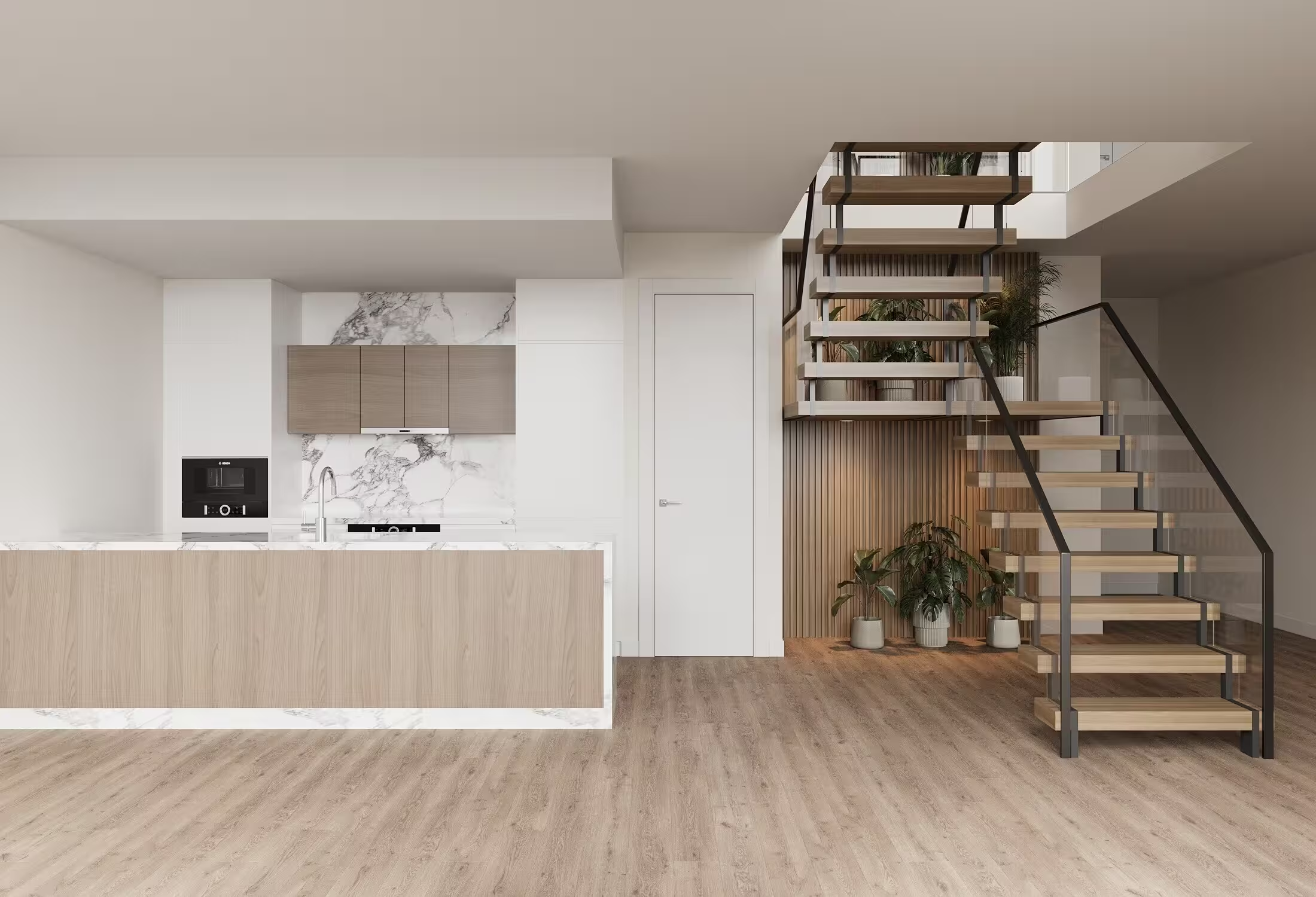
This pre-war brownstone triplex near West 82nd Street came to us as a livable but dated co-op that a family of busy professionals had recently purchased as their forever home, with a layout that no longer matched how they actually lived. The combination of a beautiful 1900s shell worth preserving and a footprint that needed real reconfiguration across all three levels is exactly the kind of brief that defines UWS pre-war renovation work.
We executed a ten-month, full gut renovation spanning the parlor, garden, and cellar levels with a transitional, modern aesthetic that let the building's original character carry through rather than compete with it. The staircase was partially rebuilt and the garden level reconfigured to create a larger master bathroom and walk-in closet. The kitchen was opened up and outfitted with custom cabinetry and a waterfall-edge quartzite island, while an Italian marble fireplace was installed with its remnants repurposed for vanity counters and window sills elsewhere in the home. Flooring was replaced throughout, and the radiators were updated from bulky baseboard units to slim, modern alternatives, a scope item that's easy to overlook but essential to living comfortably in a home this age. View the full Upper West Side renovation before and after.
[#1]UPPER WEST SIDE PRE-WAR CO-OP RENOVATION | 801 WEST END AVE[#1]
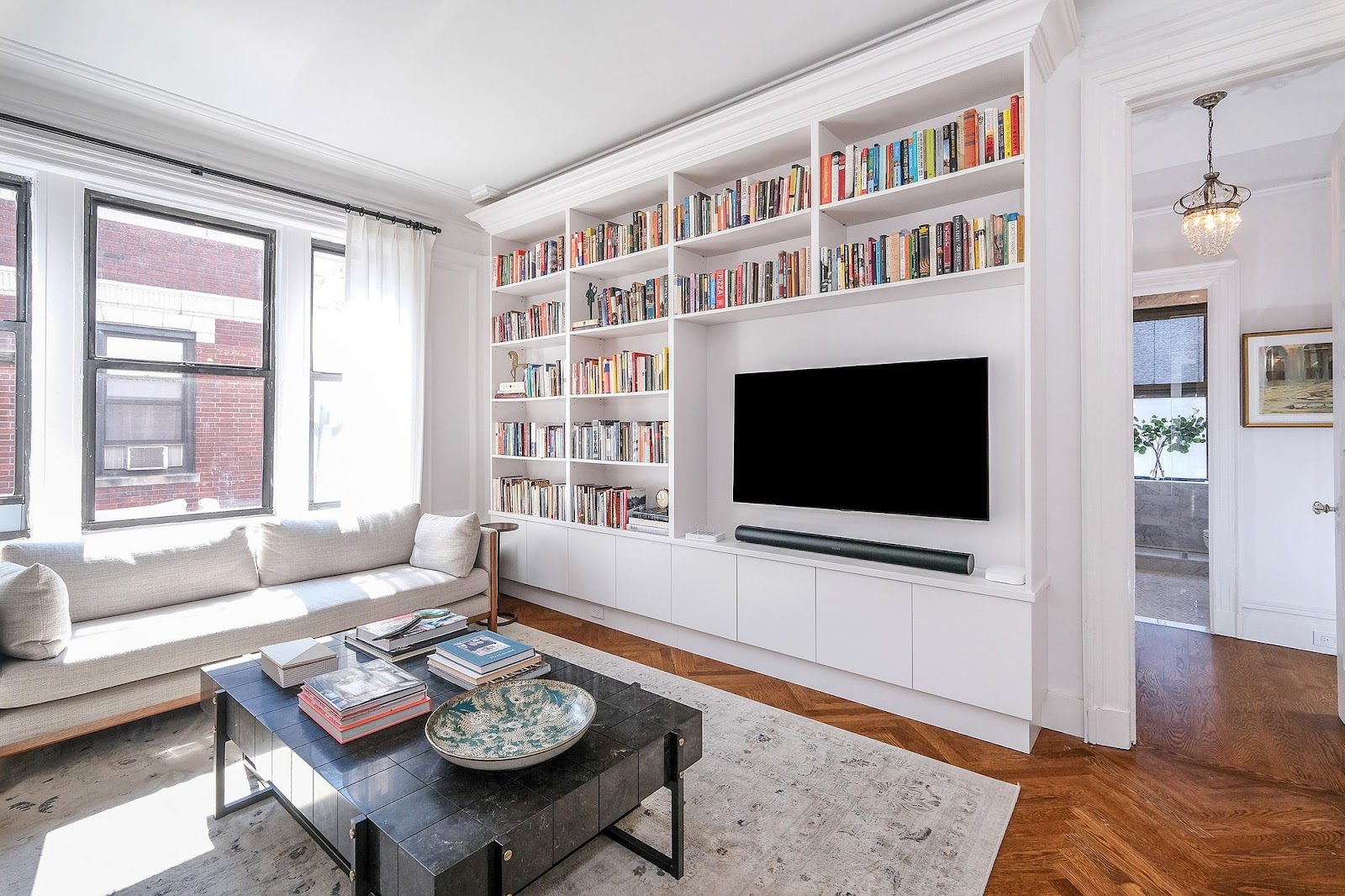
This co-op renovation near Broadway came to us as a dated pre-war space that a family had recently purchased with the intention of bringing it up to current standards without losing its historic character. The combination of original architectural details worth preserving and systems that needed full replacement is exactly the kind of brief that defines UWS pre-war renovation work.
We renovated the entire apartment with a classically-inspired interior that complemented rather than fought the building's architecture. The kitchen and both bathrooms received full gut renovations. Custom millwork was designed to integrate with the original molding profiles and ceiling heights rather than introduce a competing aesthetic. New hardwood floors were installed throughout. And the cloth wiring, which was original to the building, was fully replaced, a non-negotiable scope item in any pre-war gut renovation. View the full Upper West Side renovation before and after.
[#2]MANHATTAN CLASSIC 8 PRE-WAR APARTMENT RENOVATION | 255 WEST 108TH[#2]
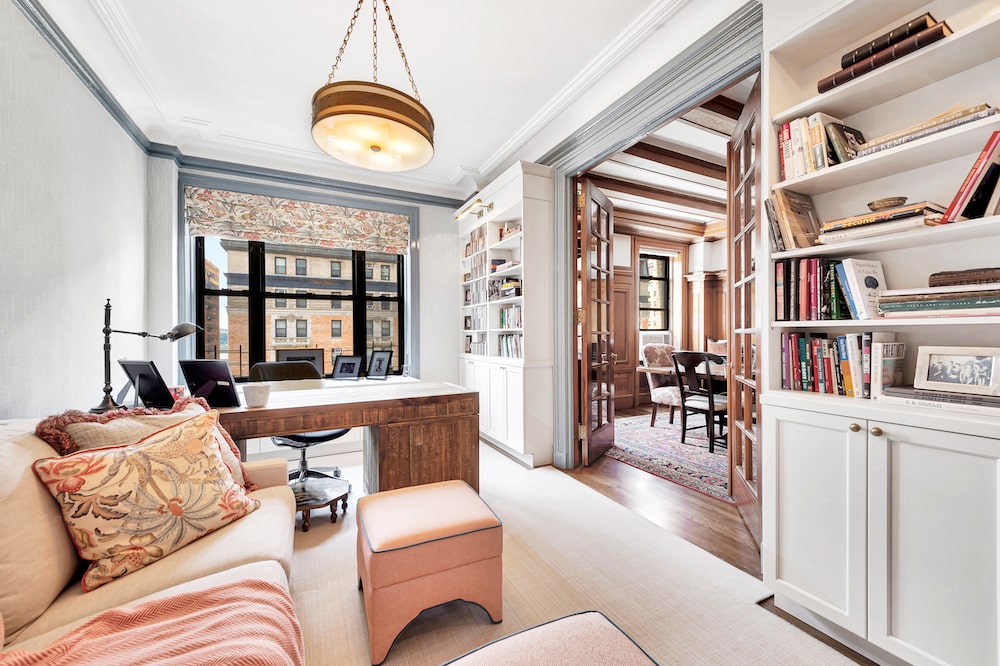
The Classic 8 layout is one of the defining residential configurations of the Upper West Side, and renovating one well requires understanding what to change and what to leave alone. For this apartment near Straus Park, the goal was a complete overhaul of the working spaces, including the kitchen, bathrooms, closets, and home office, while maintaining and enhancing the pre-war character that made the apartment worth buying in the first place.
The pre-war detail work, including original molding profiles, ceiling heights, and hardwood floors, was restored and refinished rather than replaced. The kitchen and bathrooms were gut renovated with finishes selected to feel at home in a pre-war building rather than incongruous with it. New flooring was installed in areas where the original was beyond refinishing. The result is an apartment that reads as original and intentional rather than renovated. View the full Upper West Side pre-war apartment renovation before and after.

[#3]UPPER WEST SIDE CONDO RENOVATION | 59 W 71ST[#3]
This client had lived in her Upper West Side apartment for years and had made various smaller updates along the way, none of which fully addressed what the apartment could be. After going through our pre-planning process, which mapped out the full scope, the design direction, and a transparent budget, she committed to the comprehensive renovation she had been working toward.
The renovation covered the full apartment. One of the signature design decisions was a custom Murphy bed with integrated millwork in what had been a spare room, converting it into a proper home office that doubles as a guest room on weekends, a configuration that maximizes function in NYC apartment square footage without sacrificing either use. View the full UWS condo renovation before and after.
[#4]Manhattan Apartment Renovation | 91 Central Park West[#4]
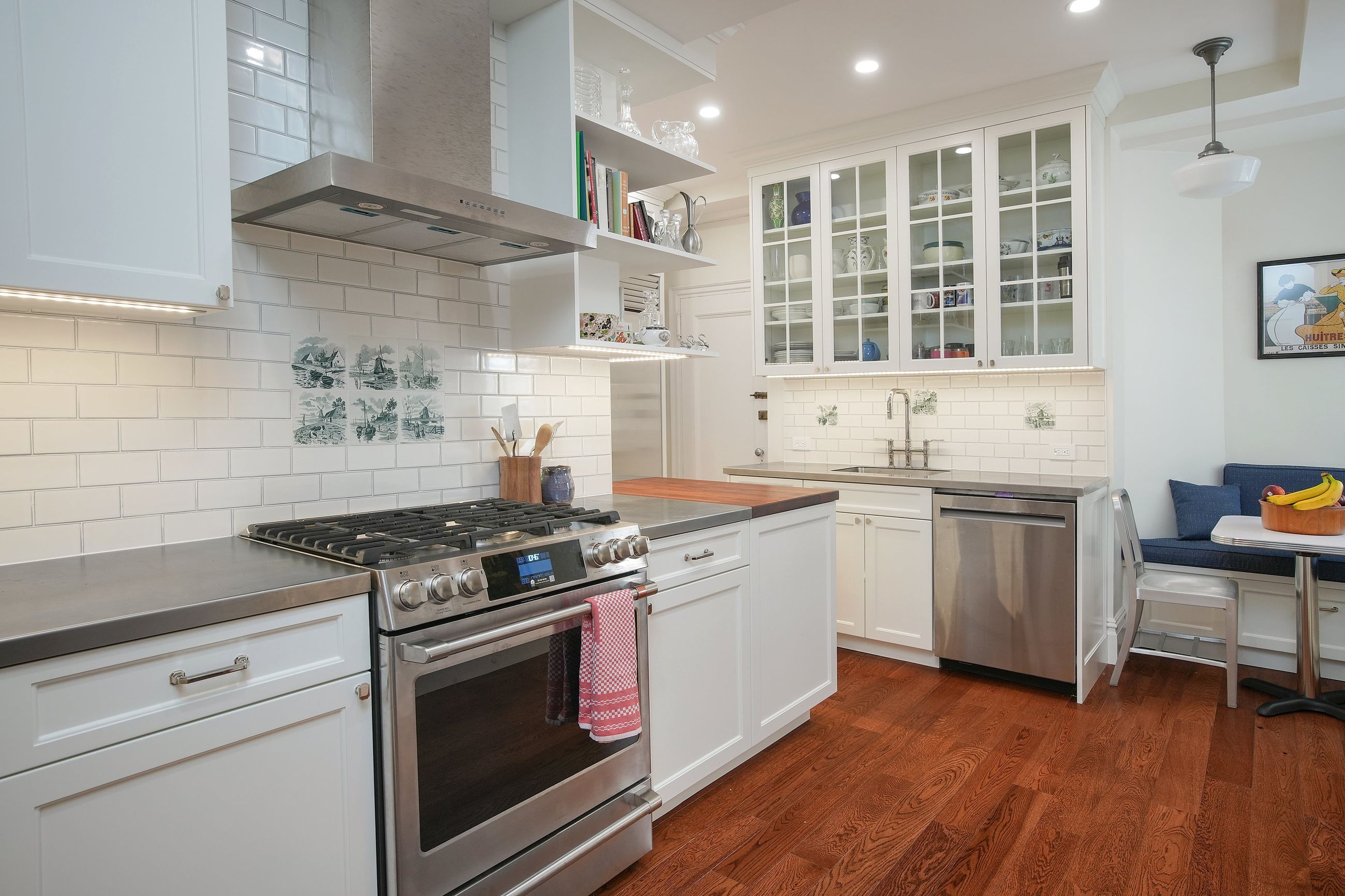
91 Central Park West was designed in 1929 by Schwartz and Gross, the architectural firm behind The Mark Hotel and many of the Neo-Renaissance residential buildings along Fifth Avenue, Park Avenue, and Central Park West. The building has a specific architectural character that the renovation needed to work with rather than against.
The client purchased the apartment in solid condition but with a layout that did not suit their needs. Cooking and baking are central to how they live, which made the kitchen the primary design challenge: we needed a space that could handle serious, high-frequency use while integrating architecturally with the rest of the apartment. The solution was a chef-grade kitchen using stainless steel counters and sink, integrated butcher block corners at the prep stations, and high-traffic European white oak flooring that handles commercial-level use without looking commercial. The home office was also redesigned to provide a proper, dedicated workspace. The layout reconfiguration required solving several constraint problems specific to the existing floor plan. View the full UWS apartment renovation before and after.
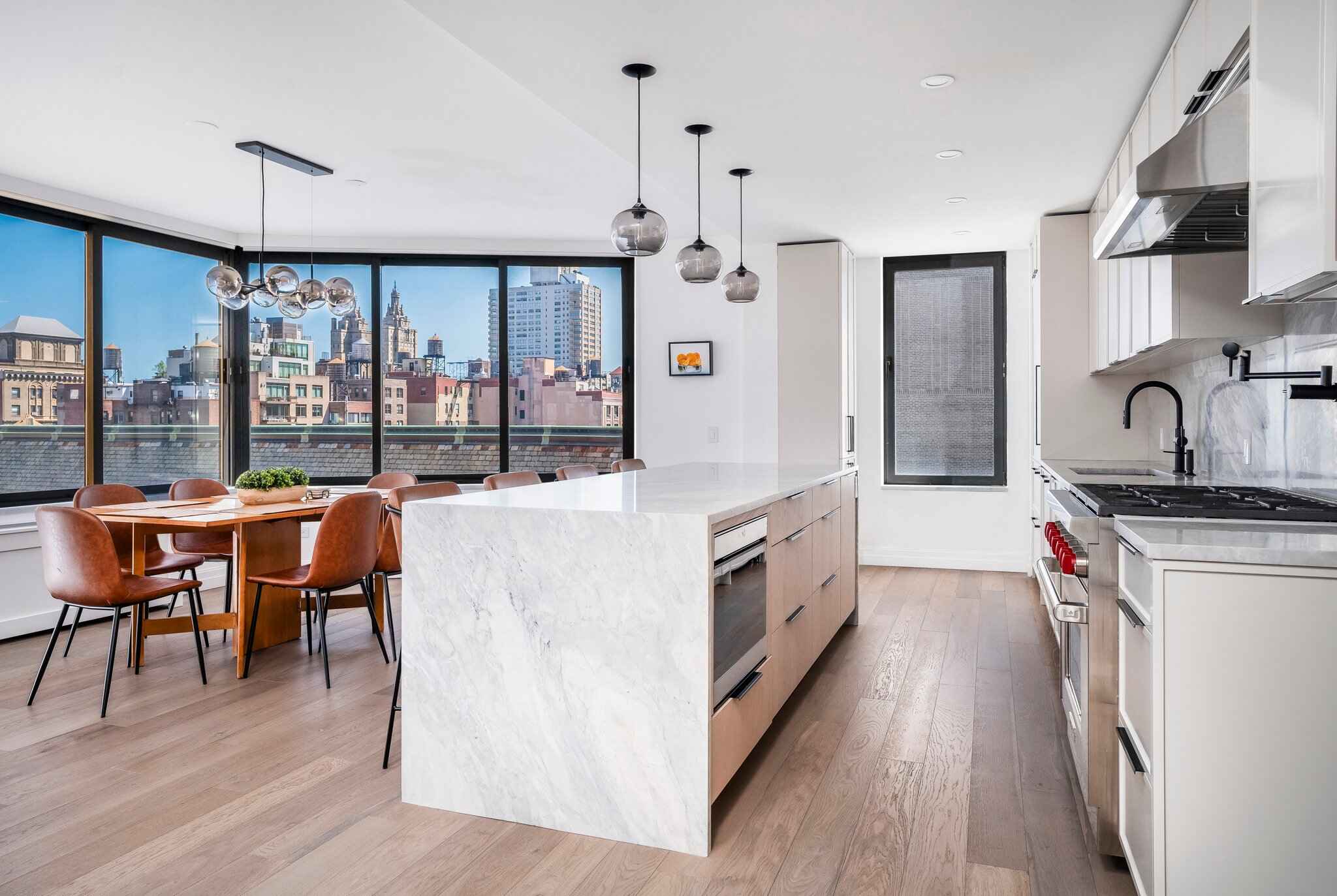
[#5]Lincoln Square Condo Renovation At The Coronado | 155 West 70th Street[#5]
The Coronado in Lincoln Square is a post-war building, which means the renovation brief was different from the pre-war co-op projects: the systems were in reasonable shape, and the client's priority was modernizing a 20-year-old aesthetic rather than replacing failing infrastructure.
The clients were a young family, and the brief had two requirements: the renovation needed to work for how they live now, and it needed to work as the family grows. The design direction was mid-century modern, using clean lines and functional layouts that age well and do not read as trend-driven. The kitchen and bathrooms were reconfigured rather than simply refinished. Engineered oak flooring, specified for its scratch resistance and dimensional stability, replaced the existing flooring throughout. The result is a condo that reads like a deliberate design choice rather than a fixer-upper renovation. View the full Lincoln Square condo renovation before and after.
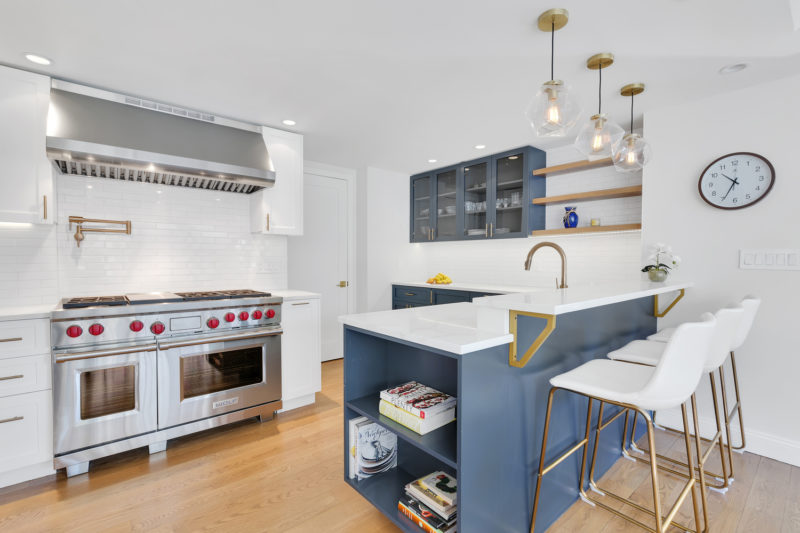
[#6]MANHATTAN CO-OP RENOVATION | 140 WEST END AVE[#6]
This renovation in Lincoln Towers was driven by two clients with full professional schedules and children at home, which meant the process needed to be managed without requiring constant attention from them. That is the scenario where the design-build model delivers most clearly: one team managing board approval, permit procurement, design, procurement, and construction from start to finish, with the clients consulted on design decisions and informed on progress rather than coordinating between separate firms.
The scope covered the kitchen, bathroom, flooring, and closets, a targeted renovation rather than a full gut. The board submission and alteration agreement process at Lincoln Towers was managed entirely by our team. The project came in on schedule and within the quoted budget. View the full Upper West Side co-op renovation before and after.
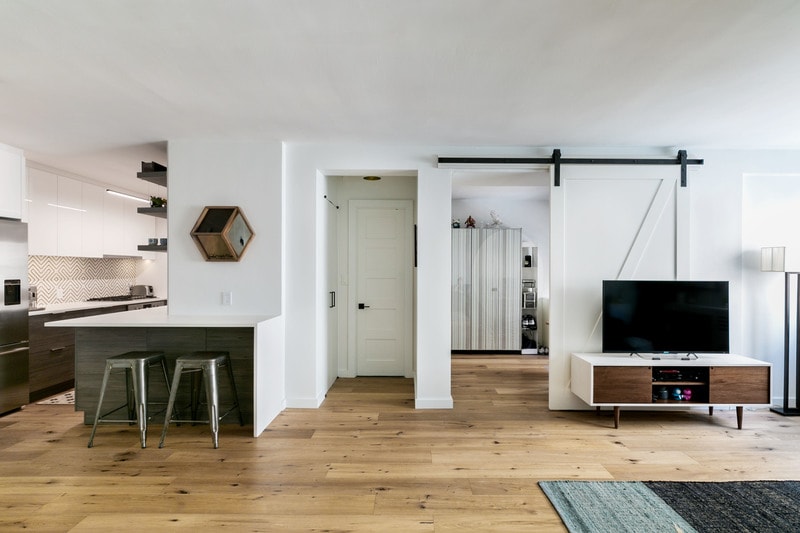
[#7]APARTMENT COMBINATION IN UPPER WEST SIDE MANHATTAN | 30 WEST 60TH[#7]
Apartment combinations are one of the more technically demanding renovation types in NYC, and this Columbus Circle project is a good example of why. The scope involved combining an existing one-bedroom unit with a newly purchased one-bedroom next door, a horizontal combination that required structural engineering sign-off, DOB filing, and careful coordination to achieve uniform floor and ceiling heights across both units.
Achieving level transitions between two apartments that were not originally designed to connect requires opening both units and addressing the structural, MEP, and finish conditions in each. The electrical systems had to be integrated and brought to a unified standard. The kitchen received a full renovation in a mid-century Scandinavian design that fits the building's post-war character. New floors, doors, and paint completed the scope. View the full Upper West Side apartment combination before and after.

[#8]Upper West Side Pre-War Co-Op Gut Renovation | 180 East 79th Street[#8]
This gut renovation required reconciling several distinct design influences that the clients brought to the brief into a single, cohesive apartment. The challenge with a mixed-influence brief is avoiding an interior that reads as indecisive rather than intentional. The solution was to identify the elements each style had in common, and build the apartment around those shared qualities rather than alternating between competing aesthetics.
The living room was opened up to improve flow and light. New closets were built into the hallway. Both bathrooms and the kitchen received full gut renovations. New oak flooring was installed throughout. The final result is an apartment with a clear point of view that does not announce its renovation. View the full Upper West Side co-op renovation before and after.
.jpg)
[#9]Upper West Side Luxury Condo Renovation | Riverside Blvd[#9]
This Riverside Boulevard condo is a newer building, which shaped the brief significantly. The systems were current, the bones were sound, and what the clients wanted was a renovation that matched the level of the building and their own design ambitions. A full gut was not required. What was required was a level of design execution and material selection that a cosmetic renovation alone cannot deliver.
The kitchen received a complete renovation, including a custom bar area built just off the kitchen entry with a marble mosaic backsplash, brass inlay, and Art Deco detailing that references the neighborhood's architectural history. Three bathrooms were renovated. A home office with custom millwork was added. The design throughout is bold and intentional, built for a young family that wanted the space to reflect how they actually live rather than default to safe choices. View the full Upper West Side co-op renovation before and after.
Considering a Renovation in NYC?
Click to schedule a consultation with one of the principle partners at Gallery, who will hear out your renovation plans and let you know the best way to proceed - whether we end up working together or not.
Schedule Your Consultation
Planning a Renovation on the Upper West Side
The Upper West Side rewards renovation when it is done with an understanding of what makes these buildings specific: the original architecture worth preserving, the systems that need updating, and the board processes that have to be navigated correctly before work begins. Getting any one of those wrong adds cost and time to a project that was otherwise well-planned.
If you are planning a renovation in a UWS co-op or condo, or evaluating a property with an eye toward renovation, we are happy to walk through what the scope would realistically involve. Our pre-purchase renovation assessment gives buyers a clear picture of costs, timeline, and constraints before they close, which is the most useful point in the process to have that information.
We are a New York Times-featured design-build firm in New York City with a full-service approach to residential renovations in Manhattan and Brooklyn that includes everything from interior design and architecture services to construction and construction management. That's why we're different from other renovations and remodel firms in NYC. We’re experts in renovating full interiors, kitchens, bathrooms, flooring, millwork, and all that falls in between. Let’s design-build together.
Gallery KBNY is a full-service design-build firm featured in The New York Times, specializing in the architecture, interior design, and renovation of apartments, co-ops, condominiums, townhomes, and lofts across Manhattan and Brooklyn. Our integrated team of architects, designers, contractors, and project managers manages every phase from board approvals and DOB permitting through design and construction. A founding partner is involved in every project, start to finish. Because architecture, design, permitting, and construction are coordinated under one roof, the process remains streamlined, accountable, and transparent from start to finish. Our work has also appeared in Forbes, Architectural Digest, and Inc., and is backed by 100+ five-star client reviews.
[#FAQ]Frequently Asked Questions[#FAQ]
My UWS co-op board requires a board-approved architect. Can I still use Gallery's in-house design team?
Yes. Several UWS co-op buildings require that the architect of record be on the building's pre-approved list, but this does not preclude working with a design-build firm. In practice, we coordinate with board-approved architects on the permit and alteration agreement filings while our design team leads the interior architecture and construction. The board's requirement covers the DOB filing and alteration agreement documentation, not the renovation's design authorship. We have navigated this arrangement in multiple UWS co-op buildings and it adds no meaningful friction to the project.
Our Classic 8 has a wet column running through the middle of the apartment. How much does that limit kitchen relocation options?
Significantly, but not completely. The wet column position defines where you can run new drain lines without cutting the slab or dropping the ceiling in the unit below, both of which require structural engineering sign-off and in some buildings are prohibited under the alteration agreement. A kitchen that stays within roughly four feet of the existing drain stack is typically feasible with standard plumbing work. Beyond that, you are looking at either a pressure test, a long horizontal drain run with a grinder pump, or a conversation with your managing agent about what the building will permit. We scope this constraint in the first walkthrough before finalizing any kitchen layout.
The building at 91 Central Park West has a notorious board. What made getting the renovation approved there different from a standard UWS co-op submission?
Buildings designed by Schwartz and Gross along CPW tend to have boards that are protective of the original architectural character, which means the alteration agreement review focuses on how the renovation will interact with the building's common areas, corridors, and facade as much as on the apartment itself. For 91 Central Park West specifically, the submission documentation needed to address corridor protection during construction, freight elevator scheduling given the building's active residential occupancy, and finish specifications for any work touching original plaster or hardwood in the apartment. The content of the submission matters as much as the completeness of it. A thorough, well-organized submission that demonstrates the contractor understands the building's character moves through review faster than a technically complete submission that reads as unfamiliar with the property.
We are buying a pre-war co-op on West End Avenue and the previous owner did work without permits. What does that mean for our renovation?
It means your pre-construction process needs to include a full existing conditions audit before you file anything with the DOB. Unpermitted work creates two problems: the DOB may require you to legalize the prior work as part of your new filing, which can mean opening walls to verify what was done, and the co-op board may require evidence that the unit is in code-compliant condition before they will issue an alteration agreement for new work. The worst version of this scenario is discovering mid-renovation that the prior work involved relocated plumbing or structural changes that were done incorrectly. We do an on-site conditions assessment before finalizing any scope on a property with a history of unpermitted work.
Our UWS pre-war building has a wet-over-dry restriction. The bathroom we want to relocate currently sits above a bedroom in the unit below. Is there a path forward?
There is, but it requires making a specific case to the board rather than simply filing for the relocation. The argument that tends to work is demonstrating that the proposed location has equivalent or better waterproofing than the existing position, combined with a structural engineer's letter confirming that the drain configuration meets current code and will not create a greater risk of water intrusion than the current setup. Some boards will also consider the track record of the unit: if the existing wet area has never generated a complaint from the neighbor below, that precedent supports the argument. We prepare this documentation as part of the alteration agreement submission when wet-over-dry is in play. Approval is not guaranteed, but a well-prepared case succeeds more often than not.
The Coronado has specific finish requirements in its alteration agreement. How do those affect material selection for a condo renovation there?
The Coronado's alteration agreement, like many Lincoln Square condos, specifies flooring impact isolation requirements, typically a minimum IIC rating, that constrain which underlayment and finish floor combinations are permissible. This matters most when a client wants a hard surface floor over a living space below. The IIC requirement does not rule out hardwood or engineered wood, but it does rule out some thinner floating floor systems and requires a specific underlayment that the building's engineer has pre-approved. Beyond flooring, the alteration agreement sets the parameters for work hours, elevator scheduling, and the scope of what requires engineering sign-off. We review the alteration agreement in full before finalizing material specifications on any condo renovation in a building with active requirements like The Coronado.
Manhattan Design-Build
Evaluate Your Manhattan Apartment
Before You Buy
Buying an apartment you plan to renovate? A founding partner walks it with you during the contract period and maps the scope, cost, and timeline, so you know exactly what you're taking on before you sign.
As seen in
Pre-Purchase Assessment
Walk the apartment with us first and understand the full scope, cost, and timeline before you close.
or call us directly
let’s
Design-Build
together