.avif)


.png)
.png)


How Much Does a Loft Renovation Cost in Tribeca? (2026 Guide)
Industrial bones, modern living. Gallery breaks down the real cost of renovating a Tribeca loft in 2026, from HVAC retrofits and plumbing routing to custom millwork and board approvals.
March 19, 2026
|
%2520Gallery%2520KBNY.avif)
How Much Does a Loft Renovation Cost in Tribeca? (2026 Guide)
What does a loft renovation cost in Tribeca? Gallery KBNY breaks down 2026 pricing from $450–$650+/sq ft, loft-specific challenges, timelines, and what drives renovation budgets in converted warehouse buildings.
A full loft renovation in Tribeca typically costs $450 to $650+ per square foot in 2026, depending on the condition of the building’s infrastructure, the complexity of the layout, and the level of finishes. For a 2,000-square-foot loft, that translates to approximately $900,000 to $1,300,000+.
What distinguishes Tribeca loft renovations from standard Manhattan apartment projects is not just scale or aesthetics—it is the underlying structure of the building itself. These homes are former industrial spaces, and that origin continues to shape everything from plumbing feasibility to HVAC strategy to overall construction cost.
We have completed loft renovations throughout Tribeca, including projects at 466 Washington Street, 335 Greenwich Street, 145 Hudson Street, 73 Worth Street, 477 Broome Street, and many other lofts across Tribeca. The insights in this guide are based on those projects and similar work across Manhattan loft buildings.
Renovation Guide · Tribeca
If You're Planning a
Tribeca Loft Renovation,
Here's What You Should Know First
- Typical Cost: $450–$650+ per square foot
- 2,000 Sq Ft Loft: $900,000–$1.3M+ depending on scope
- Biggest Cost Drivers: HVAC installation, long-distance plumbing routing, full MEP replacement
- Most Overlooked Constraint: plumbing feasibility, as many layouts require routing across the entire loft
- Timeline: typically 9–16 months from design through construction
- Building Impact: board dynamics can influence timeline as much as construction
- Contingency: 10–20% recommended, can be reduced significantly with proper pre-construction due diligence and planning.
Practical insight: In Tribeca loft renovations, infrastructure (not finishes) is what most often determines cost, feasibility, and timeline. The earlier plumbing, HVAC, and building constraints are evaluated, the more predictable the project becomes.
Table of Contents
- What Makes Tribeca Loft Renovations Unique
- Loft Renovation Cost Per Square Foot: Tribeca in 2026
- Cost Breakdown by Room and System
- Loft-Specific Costs Most Guides Overlook
- Timeline for a Tribeca Loft Renovation
- Co-Op vs. Condo Loft: How Building Type Affects Budget
- Choosing the Right Design-Build Firm
- FAQs About Loft Renovation Costs In Tribeca
[#1]What Makes Tribeca Loft Renovations Different[#1]
Tribeca loft renovations are fundamentally different because these buildings were never designed for residential living. As a result, the infrastructure that supports kitchens, bathrooms, climate control, and electrical systems often does not align with how modern homeowners expect to use the space.
This is not an edge case, it's a consistent pattern we see across Tribeca loft projects.
Plumbing Often Requires Long-Distance Routing
In many Tribeca lofts, original plumbing locations reflect commercial or early conversion layouts rather than modern residential planning. As a result, adding or relocating kitchens and bathrooms frequently requires extending plumbing across significantly longer distances than in conventional apartments.
We encounter this condition regularly.
At our 73 Worth Street project, for example, the original layout did not include a conveniently located guest bathroom near the main entertaining areas. From a design standpoint, adding one was straightforward. From an infrastructure standpoint, it required carrying plumbing across nearly the full length of the loft.
That level of routing introduces additional labor, coordination, and floor assembly considerations—and it is one of the most common hidden cost drivers in loft renovations.
Practical insight: This is why we evaluate plumbing feasibility early in the design process, often before layout decisions are finalized. In Tribeca lofts, where you can place a bathroom is often as important as where you want to place it.
Structural Column Grids Define the Layout
Most Tribeca lofts contain cast iron or steel columns on a fixed grid. These cannot be moved, which means the architecture must be designed around them.
We treat this not as a limitation, but as a design framework. Kitchens, millwork, and circulation are often organized in relation to the column grid, allowing the structure to become part of the visual language of the space.
Ceiling Height Increases Both Design Opportunity and Cost
Ceiling heights of 10–14 feet are common in Tribeca lofts. While this creates a sense of volume and light that defines the space, it also increases construction scope.
Higher ceilings affect:
- HVAC distribution strategy
- Lighting design and fixture selection
- Paint and finish quantities
- Acoustic performance
This is one of the reasons loft renovations do not necessarily become cheaper per square foot as size increases.
Mechanical Systems Often Require Full Replacement
In many loft renovations, existing electrical, plumbing, and HVAC systems are no longer adequate for modern use. We frequently see:
- Undersized electrical service
- Outdated plumbing infrastructure
- Little or no central air
As a result, full MEP replacement is often required - not optional, which is a major contributor to overall cost.
Open Plans Require Intentional Acoustic Design
Lofts are defined by open space, but modern living requires separation between bedrooms, offices, and entertaining areas.
We often incorporate acoustic insulation, strategic partitioning, and careful material selection to balance openness with privacy. This is especially important in family residences, where sound control becomes a daily quality-of-life factor.
Preserving Character Is a Real Construction Scope
Exposed brick, timber beams, and cast iron columns are not simply aesthetic features—they require restoration.
We regularly scope:
- Brick cleaning and repointing
- Beam refinishing
- Column restoration
These elements are central to the value of the space, but they should be understood as part of the construction budget, not decorative add-ons.
%20Gallery%20KBNY.JPG)
[#2]Loft Renovation Cost Per Square Foot: Tribeca in 2026[#2]
A gut renovation in a Tribeca loft costs between $450 and $550 per square foot for upper mid-tier finishes, or $550 to $650+ per square foot for luxury renovations with custom millwork, premium appliances, and high-end stone and tile. These ranges include all labor and materials but do not include building-specific soft costs or professional design fees. Here’s how those numbers translate for typical Tribeca loft sizes:
Renovation Costs · Tribeca
Estimated Cost by Loft Size & Finish Tier
Gallery KBNY · Estimates based on Tribeca market conditions · 2026
Why Tribeca Lofts Cost More Per Square Foot Than Standard Apartments
The larger footprints might suggest economies of scale, but loft renovations involve higher ceilings requiring more material per linear foot, full MEP replacement, acoustic treatment, custom millwork around column grids, and character element restoration. These factors offset per-square-foot savings from larger spaces.
[#3]Cost Breakdown by Room and System[#3]
In a Tribeca loft, budget allocation differs from a standard apartment renovation because the project typically includes larger open areas, greater HVAC complexity, and more extensive infrastructure work.
%20(1).avif)
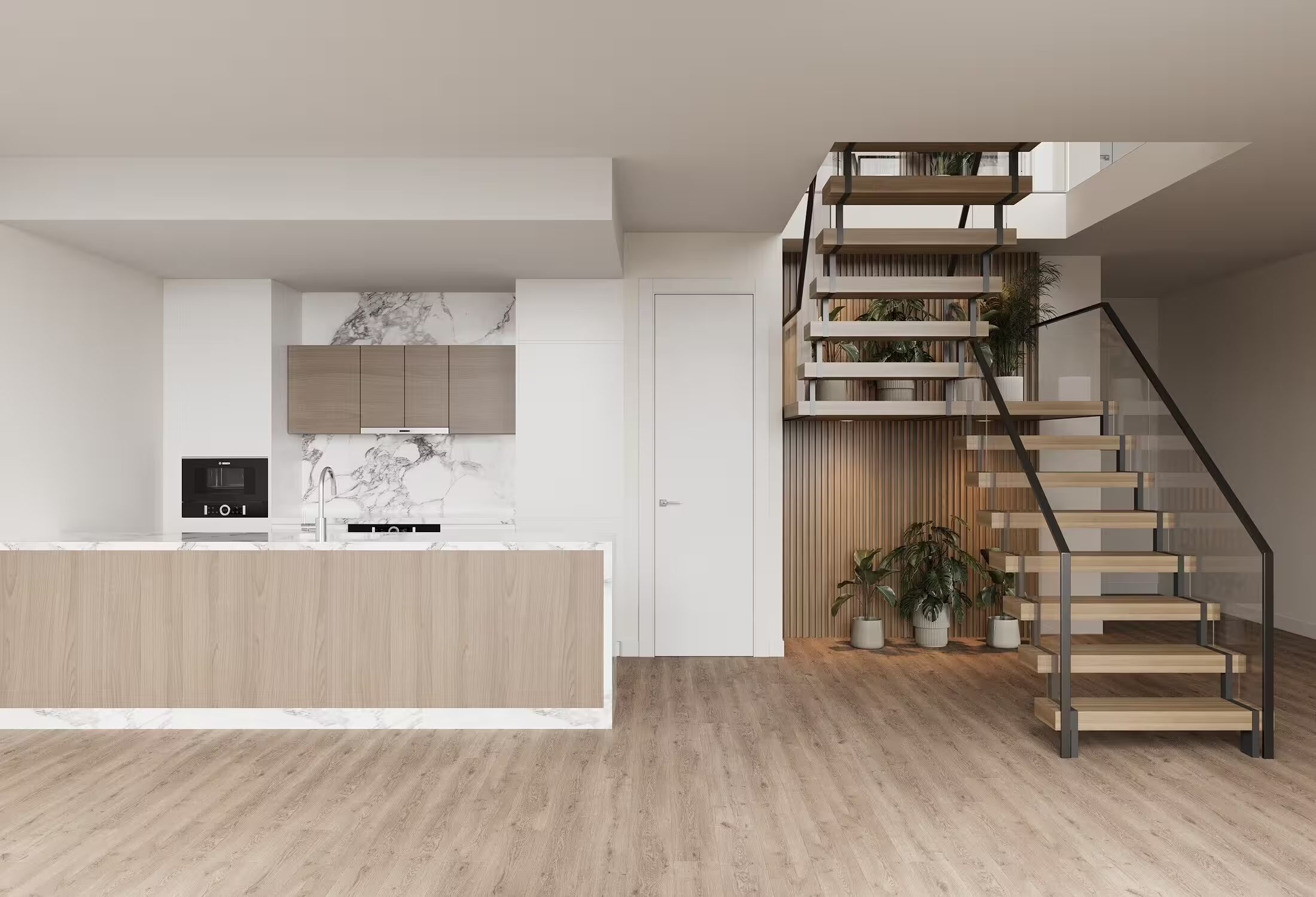
Kitchen ($90,000–$140,000+)
A kitchen renovation in a Tribeca loft typically ranges from $90,000 to $140,000+, depending on size, appliance package, millwork complexity, and ventilation requirements. Loft kitchens are often larger than conventional Manhattan apartment kitchens and are frequently designed as centerpiece spaces within the overall open plan.
Upper mid-tier scopes may include custom or semi-custom cabinetry, high-quality appliances, stone countertops, tile or slab backsplash, upgraded lighting, and associated mechanical work. Luxury scopes often incorporate fully custom millwork, integrated panel-ready appliances, premium stone fabrication, architectural lighting, and more demanding ventilation coordination.
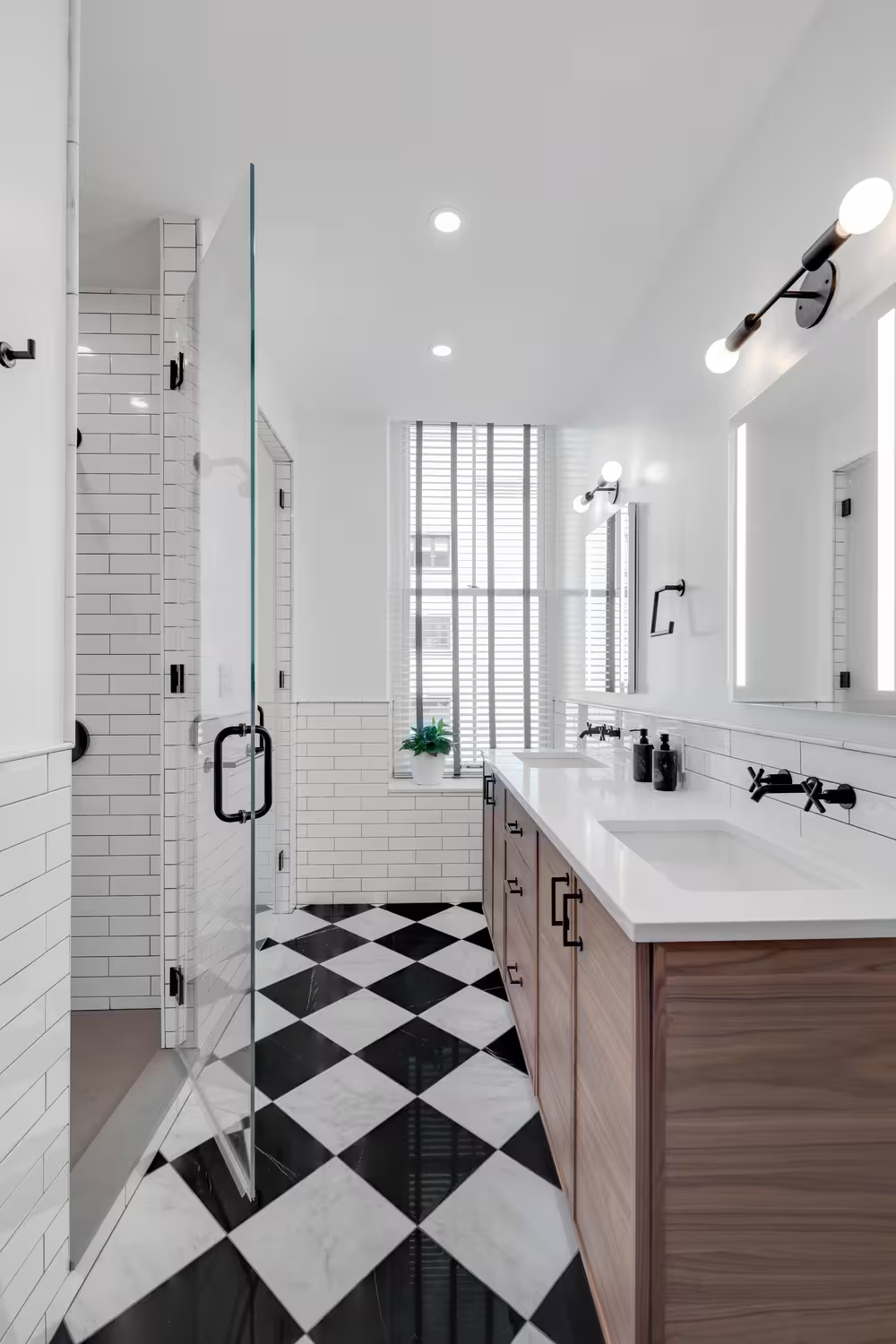
Bathrooms ($50,000–$75,000+ each)
Bathrooms in Tribeca lofts often function more like private suites than purely utilitarian rooms. A primary bathroom renovation commonly falls between $50,000 and $75,000+, depending on layout, waterproofing, tile scope, fixtures, stone, glazing, and custom vanity work.
Where new bathrooms are added, plumbing routing becomes a major cost factor. Moving wet spaces farther from risers often requires more infrastructure, more coordination, and occasionally built-up floor areas to maintain proper drainage pitch.
%20Gallery%20KBNY.avif)
Open Living / Dining Areas ($45,000–$130,000+)
The main living space in a loft may span 500 to 1,000+ square feet, making it one of the most architecturally significant parts of the project. Budget typically covers demolition, framing where required, electrical upgrades, flooring, lighting, finish work, millwork, and often acoustic improvements.
Costs vary widely depending on whether the space remains open and minimal or incorporates extensive custom cabinetry, integrated storage, specialty plaster or paint finishes, and architectural lighting composition.
%20Gallery%20KBNY.avif)
Bedrooms ($22,000–$50,000+ each)
Creating bedrooms in a loft is rarely as simple as partitioning space. Proper layout, acoustic insulation, closet planning, lighting, and integration with the overall architecture all influence cost. A typical bedroom renovation generally ranges from $22,000 to $50,000+, with the upper end reflecting more bespoke design, built-ins, and greater acoustic treatment.
Full MEP Replacement ($80,000–$200,000+)
In many Tribeca loft renovations, replacing the mechanical, electrical, and plumbing systems is one of the single largest budget categories. This can include:
- Service and panel upgrades
- Complete rewiring
- New plumbing supply and waste lines
- HVAC installation or major reconfiguration
- Integration of controls and concealed systems
HVAC is often the most significant loft-specific cost driver. Installing central air in a large-volume space with limited existing infrastructure requires careful engineering and architectural coordination. Depending on loft size, system type, and condenser strategy, HVAC scope alone can materially affect both budget and timeline.
Gallery KBNY manages the board approvals and permitting process in-house for both co-op and condo loft renovations, which helps streamline pre-construction and reduce coordination risk

[#4]Loft-Specific Costs Most Owners Underestimate[#4]
Beyond the base construction budget, Tribeca loft renovations often include property-type-specific costs that are either understated or omitted in general renovation articles. For loft owners, these are often the categories that determine whether a budget feels realistic or unexpectedly strained once planning begins.
HVAC Retrofits
Installing air conditioning into a loft with tall ceilings and limited concealment options can be one of the most expensive system decisions in the project. Learn more about out custom HVAC process and when custom solutions are needed.
Acoustic Upgrades
Sound control in open industrial spaces often requires more insulation and detailing than owners initially expect. Learn more about our sound proofing process for NYC lofts.
Infastructure Corrections
Uneven subfloors, old riser conditions, undersized electrical service, and legacy plumbing routing frequently surface once demolition begins. Read more via Leveling Floors During A NYC Renovation: Design & Cost Implications.
Restoration of Original Elements
Brick cleaning, repointing, beam refinishing, column restoration, and related preservation work require skilled labor.
Freight and Delivery Logistics
Smaller loft buildings or buildings with limited service access can complicate deliveries, protection, and installation sequencing.
Custom Millwork
Lofts typically require larger-scale cabinetry and more tailored storage solutions to match proportion and layout.
A prudent contingency for a Tribeca loft renovation typically falls within 10–20% of the total construction budget, with pre-war buildings and infrastructure-intensive scopes warranting allocations at the higher end due to inherent unknowns behind walls and within building systems.
However, when a project is executed with rigorous pre-construction planning, detailed scope definition, and comprehensive due diligence—including thorough site investigation, consultant coordination, and permit strategy—cost overruns can be significantly minimized. In practice, this approach consistently yields far greater cost certainty.
At Gallery KBNY, this disciplined methodology has resulted in average cost overruns below 5%, reflecting a data-backed track record of precise budgeting, proactive risk mitigation, and controlled project execution across complex NYC renovations. Read how we deliver 70%+ of projects without change orders.
.jpg)
[#5]Timeline for a Tribeca Loft Renovation[#5]
A gut renovation in a Tribeca loft typically takes 9–16 months from initial consultation to move-in.
Project Timeline · Tribeca
Loft Renovation Phase Guide
⏱ Estimated Total: 43–78+ WeeksColumn grids and industrial infrastructure require detailed as-built surveys
Co-ops: formal alteration agreement; condos: managing agent review
Landmark buildings add 4–8 weeks for LPC application
Heavier demo: plaster, concrete, industrial systems; freight elevator coordination
Full HVAC from scratch adds significant time
Acoustic insulation for ceilings and partitions adds time
Custom millwork lead times of 8–12+ weeks; plan during design phase
Board walk-through (co-op) + DOB sign-off
Duration at a Glance
Gallery KBNY · Tribeca Loft Renovation Timeline · 2026
The biggest timeline variable is HVAC and MEP installation—installing complete mechanical systems from scratch takes significantly longer than upgrading existing systems. A design-build firm that coordinates design, permitting, and construction under one roof compresses the overall timeline by weeks. Read more on renovation timelines in NYC.
[#6]Condo vs. Co-Op Loft: How Building Type Affects Budget and Timeline[#6]
In Tribeca, two lofts with nearly identical layouts and renovation scopes can have completely different project timelines and approval experiences depending on the building.
This is something we see firsthand, and it often surprises clients.
Real Example: Two Worth Street Lofts
We gut renovated two lofts on Worth Street, less than a block apart. The scope of work was comparable in both projects.
One project moved through approvals efficiently. The submission was reviewed, feedback was practical, and the project proceeded without unusual delay.
The other was significantly more complex.
In that building, the board—led by a particularly cautious president—was reluctant to approve HVAC equipment on the roof, despite clear precedent within the building.
What followed was not a design problem, but a process challenge:
- We formally petitioned the board
- Worked closely with the client to structure the request
- Engaged an attorney specializing in co-op law
- Navigated multiple rounds of review
The approval was ultimately secured—but it required time, coordination, and persistence that had nothing to do with the architectural scope itself.
Key Insight: The Building Can Shape the Project as Much as the Design
This is one of the most important realities of Tribeca loft renovations:
The building’s governance can influence your project as much as the physical space.
Two apartments with the same layout, budget, and design intent can have very different outcomes depending on:
- Board posture
- Precedent interpretation
- Risk tolerance
- Internal dynamics
%20Gallery%20KBNY.avif)
Co-Op Lofts
Co-op renovations typically involve:
- Formal alteration agreements
- Architect or consultant review
- Stricter insurance requirements
- More structured approval timelines
This can add both time and administrative cost to the project.

Condo Lofts
Condo buildings are often more flexible, but still involve:
- Managing agent review
- House rules
- Insurance compliance
- Logistical coordination
In smaller boutique buildings, decision-making can still be highly subjective.
Why This Matters for Planning
From a budgeting and timeline perspective, building dynamics can affect:
- Pre-construction duration
- Consultant and legal costs
- HVAC feasibility
- Submission revisions
- Overall project risk
Practical insight: We advise clients to evaluate building conditions and board dynamics as early as possible—ideally before closing—especially when a full renovation is planned.
Practical insight #2: Much can be gained from requesting board meeting minutes and reviewing how prior alterations were handled by the board.

[#7]How To Choose The Right Design-Build Firm For A Tribeca Loft Renovation[#7]
Choosing the right team for a Tribeca loft renovation is not simply a matter of selecting a contractor—it is one of the most important decisions that will determine how efficiently your project moves, how well it is executed, and how successfully the design intent is realized.
In Tribeca lofts, where architecture, infrastructure, and building constraints are deeply interconnected, the most successful projects are typically led by integrated design-build teams with specific experience in converted industrial buildings.
This is a consistent pattern we see across projects: when architecture, engineering, approvals, and construction are fragmented across multiple parties, coordination gaps emerge—and those gaps almost always translate into delays, cost escalation, or compromised outcomes.
Experience in Tribeca Loft Buildings Is Not Optional
Renovating a Tribeca loft is fundamentally different from renovating a standard Manhattan apartment. Firms that primarily work in co-ops or newer condominiums often underestimate the complexity of:
- Structural column grids
- Long-distance plumbing routing
- HVAC installation in high-ceiling volumes
- Acoustic separation within open plans
- Restoration of original materials
We see this frequently when clients come to us after initial consultations elsewhere.
A qualified firm should be able to point to specific Tribeca or converted-warehouse projects, and explain—not just show—how they approached layout, infrastructure, and building constraints in each case.
Integrated Architecture, Design, and Construction Is Critical
In loft renovations, design decisions are inseparable from construction realities.
For example:
- Relocating a kitchen is a plumbing and structural decision—not just a layout preference
- HVAC strategy affects ceiling design, lighting, and millwork
- Column placement influences circulation, storage, and room proportions
When these decisions are handled by separate teams, misalignment is common.
This is why we consistently recommend a full-service design-build model, where architecture, interior design, permitting, and construction are managed under one coordinated team. It allows decisions to be evaluated holistically rather than sequentially.
%20Gallery%20KBNY.avif)
HVAC and MEP Capability Is a Primary Differentiator
One of the most significant differences between loft renovations and standard apartment renovations is the need to build mechanical systems—particularly HVAC—from the ground up.
In many Tribeca lofts, there is no existing system to upgrade.
We routinely see projects where HVAC is treated as a secondary scope and delegated late in the process. This often results in:
- Compromised ceiling heights
- Exposed or awkward duct routing
- Delayed installation
- Budget overruns
A qualified team should be able to design and coordinate HVAC strategy from the beginning, integrating it into the architecture rather than treating it as an afterthought.
Practical insight: HVAC is often one of the earliest decisions we resolve in loft projects—not one of the last.
Building Approvals and Process Management Matter as Much as Design
As discussed earlier, building dynamics can significantly influence a project.
In Tribeca, this may involve:
- Co-op alteration agreements
- Condo board or managing agent review
- DOB permit filings
- Landmarks Preservation Commission coordination (where applicable)
We have seen projects where approval—not construction—was the primary timeline driver.
A firm, like Gallery KBNY, that manages submissions, documentation, and coordination internally can reduce unnecessary review cycles and maintain momentum through pre-construction.
Proven Ability to Navigate Real-World Constraints
The strongest indicator of a qualified firm is not just the quality of finished images, but their ability to navigate complex conditions.
For example:
- Designing around immovable structural columns
- Routing plumbing across large open spans
- Negotiating board resistance to HVAC placement
- Integrating modern systems into historic structures
These are not theoretical challenges—they are conditions we encounter regularly in Tribeca loft renovations.
A capable team should be able to explain how they approach these issues before construction begins.
Why Many Tribeca Clients Choose a Design-Build Approach
For loft renovations, the design-build model offers a clear advantage:
- A single point of accountability
- Aligned decision-making across disciplines
- Fewer coordination gaps between consultants
- More predictable timelines and budgets
This becomes particularly important in loft projects, where architectural, mechanical, and regulatory decisions are tightly interdependent.
Gallery KBNY’s Approach to Tribeca Loft Renovations
Our in-house team (architects, designers, contractors, and project managers) with a founding partner involved in every project, manages the entire process from board approvals and permitting through construction.
We have completed loft renovations at 466 Washington, 335 Greenwich, 73 Worth, 477 Broome, 145 Hudson, along with numerous other lofts across Tribeca, and we apply that Tribeca-specific experience to every project we undertake.
Because architecture, infrastructure, approvals, and construction are coordinated under one roof, our clients benefit from a process that is more streamlined, more accountable, and ultimately more predictable.
Gallery KBNY is a full-service design-build firm featured in The New York Times, specializing in the architecture, interior design, and renovation of apartments, co-ops, condominiums, townhomes, and lofts across Manhattan and Brooklyn. Our integrated team of architects, designers, contractors, and project managers manages every phase from board approvals and DOB permitting through design and construction. A founding partner is involved in every project, start to finish. Because architecture, design, permitting, and construction are coordinated under one roof, the process remains streamlined, accountable, and transparent from start to finish. Our work has also appeared in Forbes, Architectural Digest, and Inc., and is backed by 100+ five-star client reviews.
[#8]Frequently Asked Questions On Loft Renovation Costs In Tribeca[#8]
How much does a loft renovation cost in Tribeca?
A loft renovation in Tribeca typically costs $450–$550 per square foot for upper mid-tier finishes and $550–$650+ per square foot for luxury renovations in 2026. For a 2,000 sq ft loft, that translates to $900,000–$1,100,000 at the upper mid-tier and $1,100,000–$1,300,000+ for luxury scopes. These ranges include labor and materials but not building soft costs or design fees.
How long does a Tribeca loft renovation take?
From consultation to move-in, 9–16 months. Pre-construction (design, board approval, permits): 3–5 months. Construction: 6–12 months. Landmark buildings add 4–8 weeks for LPC review. The biggest variable is HVAC installation—installing complete systems from scratch takes significantly longer than upgrading existing infrastructure.
What kind of central air can I install in a loft?
The best and most common type of HVAC systems in Tribeca lofts are minisplit systems. The light weight condensers and ductless units are ideal to maintain ceiling heights and concealment of any equipment.
Can I relocate the kitchen in a loft?
Kitchen relocations are often feasible in loft renovations, but they generally must remain within a reasonable proximity to the building’s plumbing risers. It is also important to evaluate the apartment’s electrical capacity and gas meter configuration in advance. This ensures that gas service can be relocated if permitted, or that there is sufficient electrical capacity to support an electric or induction range should a gas relocation not be possible.
Can I relocate the bathroom in a loft?
Bathroom relocations are often possible in loft renovations, but they typically must remain within a reasonable proximity to the building’s plumbing risers. When bathrooms are moved farther from these risers, the plumbing lines may require additional pitch to drain properly, which often necessitates raising the bathroom floor on a platform. This can result in a noticeable step-up condition within the space.
Can I preserve exposed brick and beams during a gut renovation?
Yes. Brick restoration (cleaning, repointing, sealing) costs $5,000–$15,000+ depending on wall area. Timber beam restoration (sanding, staining, sealing) runs $3,000–$12,000+. These costs are in addition to standard finishes but essential for maintaining the industrial character that makes Tribeca lofts desirable and valuable.
How do I find a contractor experienced in Tribeca loft renovations?
Look for a full-service design-build firm with in-house architects, documented loft renovation experience (Tribeca-specific before-and-afters), ability to manage HVAC installation from scratch, familiarity with LPC process, and insurance/board-approval experience for both co-op and condo buildings such as Gallery KBNY. A design-build model ensures one team handles design, approvals, and construction—critical when architectural and mechanical decisions are deeply interconnected.
Manhattan Design-Build
Evaluate Your Manhattan Apartment
Before You Buy
Buying an apartment you plan to renovate? A founding partner walks it with you during the contract period and maps the scope, cost, and timeline, so you know exactly what you're taking on before you sign.
As seen in
Pre-Purchase Assessment
Walk the apartment with us first and understand the full scope, cost, and timeline before you close.
or call us directly
let’s
Design-Build
together