.avif)


.png)
.png)


Can You Move A Gas Line During A NYC Renovation?
Relocating a kitchen in NYC? Here is what stays fixed, what your gas meter setup lets you move, and the pressure test and approvals a relocation requires.
June 23, 2026
|
Can You Move A Gas Line During A NYC Renovation?
Understand relocation limits, gas constraints, and required approvals.
TABLE OF CONTENTS
- The Part Of “You Can’t Move Gas” That Holds True
- What Your Meter Setup Allows
- The Gas System, Read Part By Part
- The Old Line, And Your Neighbors On The Riser
- Approvals, The Pressure Test, And Inspection
- Adding A Gas Dryer In A Pre-war Building
- When Induction Earns The Kitchen Instead
- Frequently Asked Questions About Moving Gas Lines
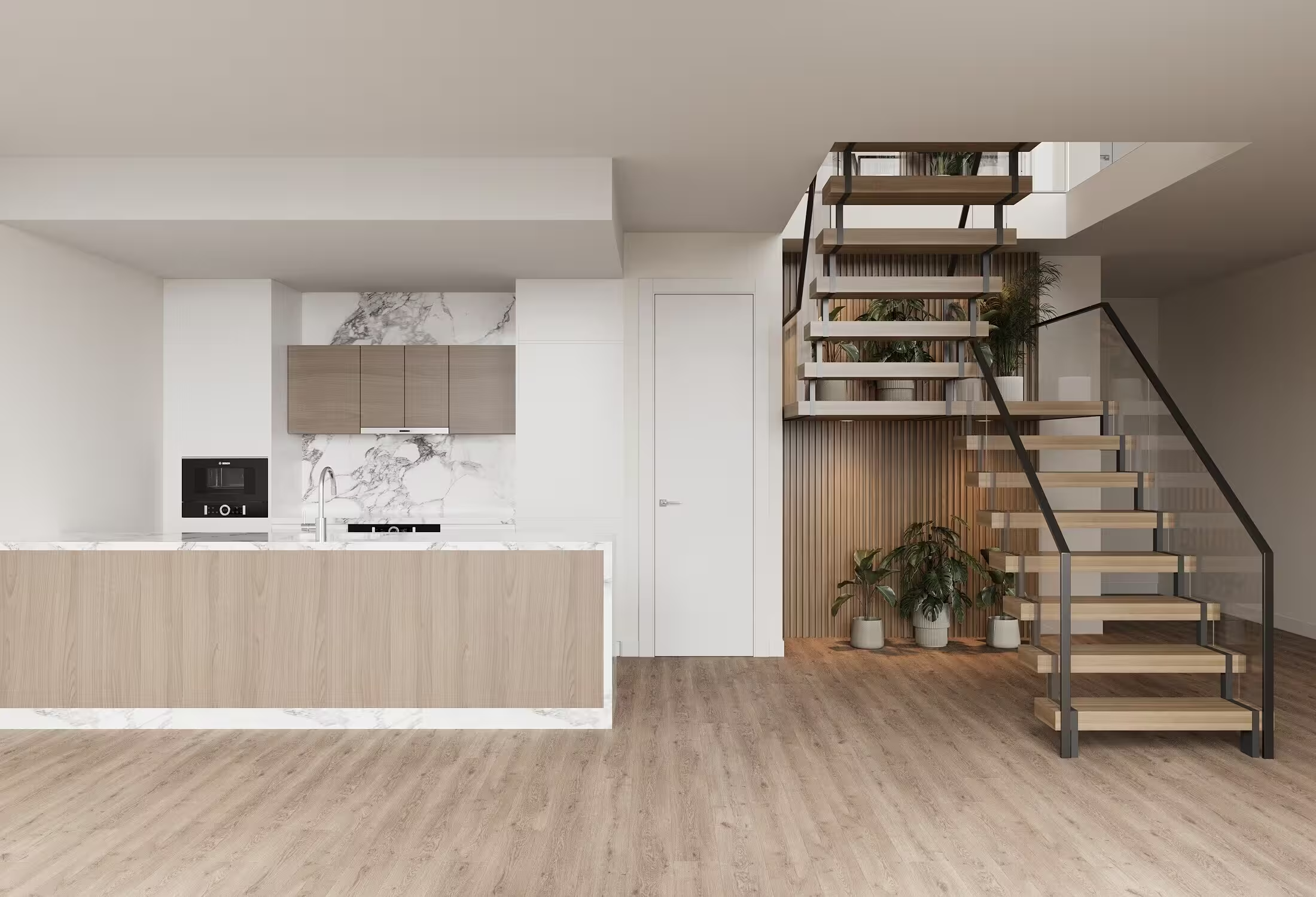
On a recent walkthrough of a pre-war co-op renovation in Carnegie Hill, the kitchen was set to move from one wall of the apartment to the other. The original gas meter sat inside the unit, where the old range had been, and the new layout placed the cooktop clear across the room. The owners asked the question that opens almost every kitchen relocation in Manhattan: can the gas come with it?
The answer is yes in most apartments, once a few conditions tied to your building’s gas setup are met. Those conditions trace back to a handful of components most owners never think about, and to where your gas is metered.
The Part Of “You Can’t Move Gas” That Holds True
Building staff and managing agents often tell owners that gas cannot be touched during a renovation. Two parts of the system genuinely stay fixed, and that guidance tends to stretch the rule over everything else.
The first fixed piece is the gas riser, the main vertical feed that climbs from the basement to serve every apartment stacked along it. Because the riser carries gas to all of those units, the building protects it and no renovation reroutes it.
The second is the gas valve, which in most apartments also stays where it is. The exception is an apartment with its own gas meter inside the unit, a setup found most often in some pre-war buildings, where the valve can travel with the range. In every other case the valve holds its position even as the range moves.
What actually moves in a typical project is the range, along with the new branch piping a licensed master plumber runs to reach it. The riser and valve hold their place while that new run does the work, which is what allows a kitchen to change position at all.

What Your Meter Setup Allows
Which rules apply to your kitchen comes down to where your gas is metered. Three setups cover nearly every apartment in Manhattan and Brooklyn, and each one allows a different amount of movement.
A Gas Meter Inside Your Apartment
This arrangement shows up most often in some pre-war buildings, where each unit carries its own meter within its walls. It gives you the widest latitude of the three. A master plumber can move both the gas valve and the range anywhere in the apartment, then pressure-test the new run back to the meter. The Department of Buildings inspects that relocated run and disregards any piping ahead of the meter.
A Shared Meter In The Basement
When gas is folded into your monthly maintenance, the building usually feeds your unit from a common meter in the basement, and your apartment has an in-unit valve rather than a meter of its own. The range can move here while the existing valve stays in place to anchor the work. New piping originates at that valve, and the pressure test spans the new run, from the relocated range connection back to the existing valve.
A Dedicated Meter In The Basement
Some buildings give each apartment its own meter but site it in the basement rather than inside the unit. You pay your own gas bill in this case, the same as with an in-unit meter, which is why the two are easy to mistake for each other. The rules here carry more nuance. Relocation remains technically feasible under the current gas rules, though the path involves judgment calls that are worth walking through with us before a layout is set.
Your gas bill is a useful first clue, though not a complete one. A bill you pay directly points to a dedicated meter, which may sit inside your apartment or down in the basement, and those two cases follow different rules. Gas bundled into your maintenance points to a shared basement meter. A master plumber confirms both the type and the location before any piping is designed.
.webp)
The Gas System, Read Part By Part
Picturing the gas line as a sequence that runs from the building toward your stove makes the rules easier to hold onto. At the bottom sits the riser, shared by the whole stack and off-limits to any single renovation. The meter marks where a dedicated feed is measured, and it doubles as the boundary of what the DOB will inspect on your project. Past that point sit the in-unit valve, the existing branch piping that fed the old range, and the new run a plumber builds toward the relocated kitchen, all of it on the apartment side of the system.
Naming each component clears up most of the confusion around gas. Conversations with your board and your plumber move faster once everyone is pointing at the same parts.
The Old Line, And Your Neighbors On The Riser
A relocation leaves the original branch piping behind, and what happens to that pipe depends on the meter question once again. With a meter inside the unit, the old branch can be capped and abandoned back to it, since the meter gives a clean point to trace the line to. A common-meter building works differently, because the existing valve has to remain in place and abandonment is limited to the run past that valve. Removing branch piping with nothing to trace it back to is the situation the rules are written to prevent.
One requirement holds across every project, and buildings enforce it closely. The work stays entirely within your own service and leaves every neighbor on the riser unaffected. Anything sitting behind the meter, or behind a shared valve, belongs to the building and to the apartments it feeds, so a relocation is designed to stop at that line.
Approvals, The Pressure Test, And Inspection
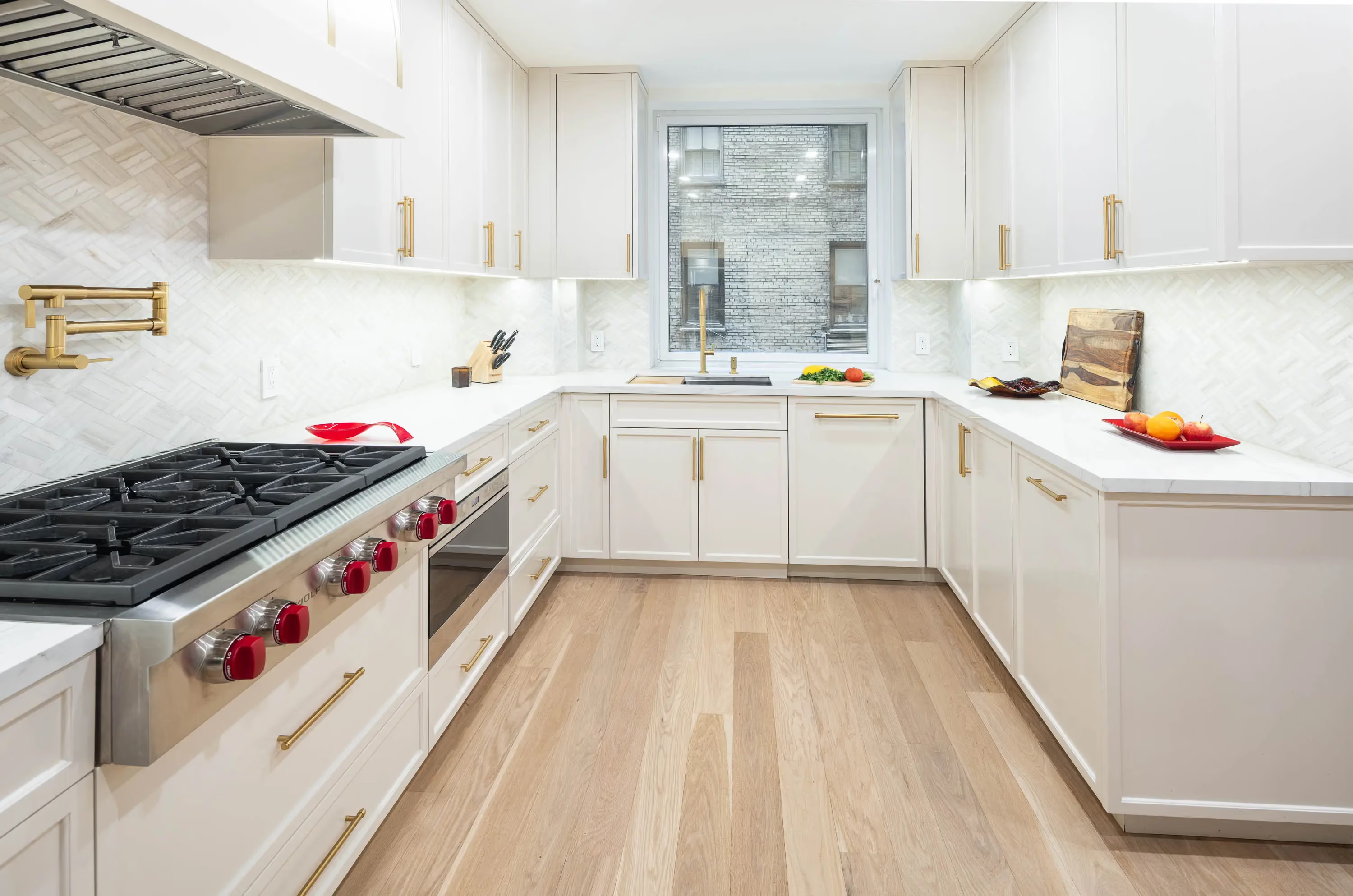
Every gas modification in NYC runs through a licensed master plumber and a DOB inspection, with a pressure test at the center and board sign-off layered on top in co-op and condo buildings. The pressure test is the heart of it. The plumber pressurizes the new run and shows that it holds with no leaks across the span the DOB cares about, from the relocated range connection back to the meter or the existing valve. Moving a range more than roughly two to four feet from its original spot is enough to trigger that test, which is why even a modest shift in a kitchen layout brings the full approval sequence into play.
At Gallery, we handle this for our clients. We confirm building policy before the layout is locked, coordinate the master plumber, and schedule the inspection so the kitchen is not waiting on gas at the end of the job.
Adding A Gas Dryer In A Pre-War Building
Kitchens are not the only place gas comes up in a renovation. In pre-war apartments where electrical capacity is tight, owners often turn to a gas dryer to keep laundry off an already-stretched panel. It is a sound way to preserve amperage for the rest of the apartment’s electrical demand.
The planning question that matters is whether the gas dryer is new or already there. Replacing a dryer that has long run on gas is straightforward. The harder case is a gas dryer where none existed, since it adds load to the building’s gas service, and ConEd has grown stricter about new gas loads in existing buildings. A request like that can open a wider review than owners expect, and in the wrong circumstances it puts the building’s gas service at risk during the approval.
This is where careful planning and due diligence earn their keep. Before a new gas appliance goes into a layout, we confirm what the building’s service can carry and how ConEd is likely to treat the request, so a single dryer never becomes the reason for a gas shutdown across the building.
%20Gallery%20KBNY.webp)
When Induction Earns The Kitchen Instead
Relocation is feasible in most buildings, and a handful of projects land in a place where an induction cooktop makes more sense than extending gas. Penthouses are the clearest example, where the distance from the riser lengthens every piping run and raises the cost. We walk through that trade-off in detail in our guide to Gas Stove Relocations in a penthouse renovation.
Induction needs adequate electrical capacity, so the decision often pairs with a panel upgrade already in the scope. When that upgrade is happening anyway, switching to induction removes the gas relocation question and delivers responsive, precise cooking. The right call depends on how you cook and on what the building allows, and we assess both before a kitchen layout is finalized.
Considering an apartment renovation in New York City? View our portfolio of NYC renovation before and afters, learn more about Gallery, or contact us to discuss your project.
We are a New York Times-featured design-build firm in New York City with a full-service approach to renovations in Manhattan and Brooklyn that includes everything from interior design and architecture services to filing permits and construction management. We specialize in pre-war apartment renovations, apartment combinations, full gut renovations, and all that falls in between.
Gallery KBNY is a full-service design-build firm featured in The New York Times, specializing in the architecture, interior design, and renovation of apartments, co-ops, condominiums, townhomes, and lofts across Manhattan and Brooklyn. Our integrated team of architects, designers, contractors, and project managers manages every phase from board approvals and DOB permitting through design and construction. A founding partner is involved in every project, start to finish. Because architecture, design, permitting, and construction are coordinated under one roof, the process remains streamlined, accountable, and transparent from start to finish. Our work has also appeared in Forbes, Architectural Digest, and Inc., and is backed by 100+ five-star client reviews.
[#7]Frequently Asked Questions About Moving Gas Lines While Renovating In NYC[#7]
Can I move my gas stove during a NYC apartment renovation?
In most buildings, yes. The riser that feeds the building stays fixed, and so does your gas valve in the majority of apartments, but the range itself and the branch piping that serves it can be relocated by a licensed master plumber. The new run is pressure-tested and inspected by the Department of Buildings before service is restored. The one setup that also lets the valve move is an apartment with its own gas meter inside the unit, most often found in pre-war buildings. Confirm your building’s policy first, since some co-op and condo boards add restrictions beyond DOB rules.
Can the gas valve be moved, or only the range?
In most apartments the valve stays put and only the range moves. The exception is an apartment with its own gas meter inside the unit, a setup common in some pre-war buildings, where a master plumber can relocate the valve along with the range. Where the meter sits in the basement, whether it is shared across the building or dedicated to your unit, the existing valve remains in place and the new piping runs from there to the relocated range.
What is the gas riser, and why can it not be moved?
The riser is the main vertical gas feed that climbs from the basement and serves every apartment stacked above it. Because it is shared infrastructure that other residents depend on, no individual renovation reroutes or modifies it. A relocation works entirely on the apartment side of the riser, downstream of your meter or valve.
How do I know which gas setup my apartment has?
Your gas bill is the first clue. Paying a gas bill directly means you have a dedicated meter, which may sit inside your apartment or down in the basement. Gas bundled into your monthly maintenance points to a shared meter in the basement and an in-unit valve. The location of a dedicated meter matters, since an in-unit meter lets the valve and range move anywhere, while a dedicated basement meter follows more nuanced rules. A master plumber confirms both the type and the location before any piping is designed.
What does the DOB pressure test actually check?
It confirms that the relocated gas run holds pressure with no leaks. The test spans the new piping, from the relocated range connection back to your meter or to the existing in-unit valve, depending on your setup. The Department of Buildings reviews that run only and does not concern itself with piping ahead of the meter or with the riser. A licensed master plumber performs the test and the DOB witnesses it.
Can the old gas line simply be removed?
It can be capped and abandoned, with one condition. The existing branch piping may be retired only when a meter or valve remains to trace the line back to. A unit with its own meter abandons the old branch back to that meter. In a common-meter building, the in-unit valve stays in place and abandonment is limited to the piping past that valve. This protects the integrity of the line for the rest of the building.
Will moving my gas line affect my neighbors?
A compliant relocation is designed so it does not. The work stays within your own service and stops at the meter or shared valve, leaving the riser and every other apartment on the line undisturbed. Buildings enforce this closely, and it is one of the reasons gas work is coordinated with management and inspected before service returns.
How far can a gas stove move before a pressure test is required?
Moving a range more than roughly two to four feet from its original location is generally enough to require a pressure test by a licensed master plumber. Because most kitchen relocations move the cooktop well beyond that, owners should plan for the full approval and inspection sequence whenever the range changes position.
Can I add a gas dryer in my pre-war apartment?
Often, yes, and it is a common way to keep laundry off a stretched electrical panel in a pre-war building. The key question is whether the dryer is replacing one that already ran on gas or adding gas load where none existed. A new gas load can prompt closer review from ConEd, which has tightened how it treats added gas demand in existing buildings. Careful planning here protects the whole building’s gas service, so this is a case worth reviewing with your design-build team before the appliance goes into the plan.
Is induction a sensible alternative to relocating gas?
For many kitchens, yes. Induction removes the gas relocation entirely and offers fast, precise heat control. It does require adequate electrical capacity, so it pairs naturally with a renovation that already includes a panel upgrade. The trade-off is most worth weighing in penthouses and other layouts where a long piping run to the riser raises the cost of extending gas.
Designing a Home That Goes Beyond Function?
Evaluate Your Manhattan Apartment
Before You Buy
Buying an apartment you plan to renovate? A founding partner walks it with you during the contract period and maps the scope, cost, and timeline, so you know exactly what you're taking on before you sign.
As seen in
Pre-Purchase Assessment
Walk the apartment with us first and understand the full scope, cost, and timeline before you close.
or call us directly
let’s
Design-Build
together

.avif)