.avif)


.png)
.png)


Should I Hire An Architect Or Interior Designer For My NYC Renovation?
Should you hire an architect or an interior designer for your NYC renovation? The right choice depends on your project scope, design goals, and building requirements.
May 23, 2026
|
%252520(2).jpeg)
Should I Hire An Architect Or Interior Designer For My NYC Renovation?
Architect or interior designer? Knowing who to hire—and when—can make all the difference in your NYC renovation.
TABLE OF CONTENTS
- Understanding The Role Of An Architect
- When To Choose An Interior Designer
- Where Architecture and Interior Design Intersect in NYC Renovations
- Factors To Consider When Making Your Decision
- How A Design-Build Firm Bridges The Gap
- Decision Framework: Who to Hire and When
- Real-World Renovation Success Via A Blended Approach
- FAQs About Choosing The Right Partner For Your NYC Renovation
Whether you need an architect or an interior designer for your NYC renovation depends on one thing: whether the project requires structural or layout changes that need DOB filing. Renovations that move walls, relocate plumbing, or modify the apartment's footprint require an architect. Renovations focused on finishes, millwork, lighting, and space planning are led by an interior designer.
Most full apartment renovations in NYC end up needing both, which is why a design-build firm structures architecture and interior design under one team from day one.
Below, we explain when each discipline is required, where their work intersects, and how a full-service design-build firm bridges the gap. The framework is drawn from Gallery's in-house architecture and interior design practice on co-op, condo, and townhouse renovations across Manhattan and Brooklyn.
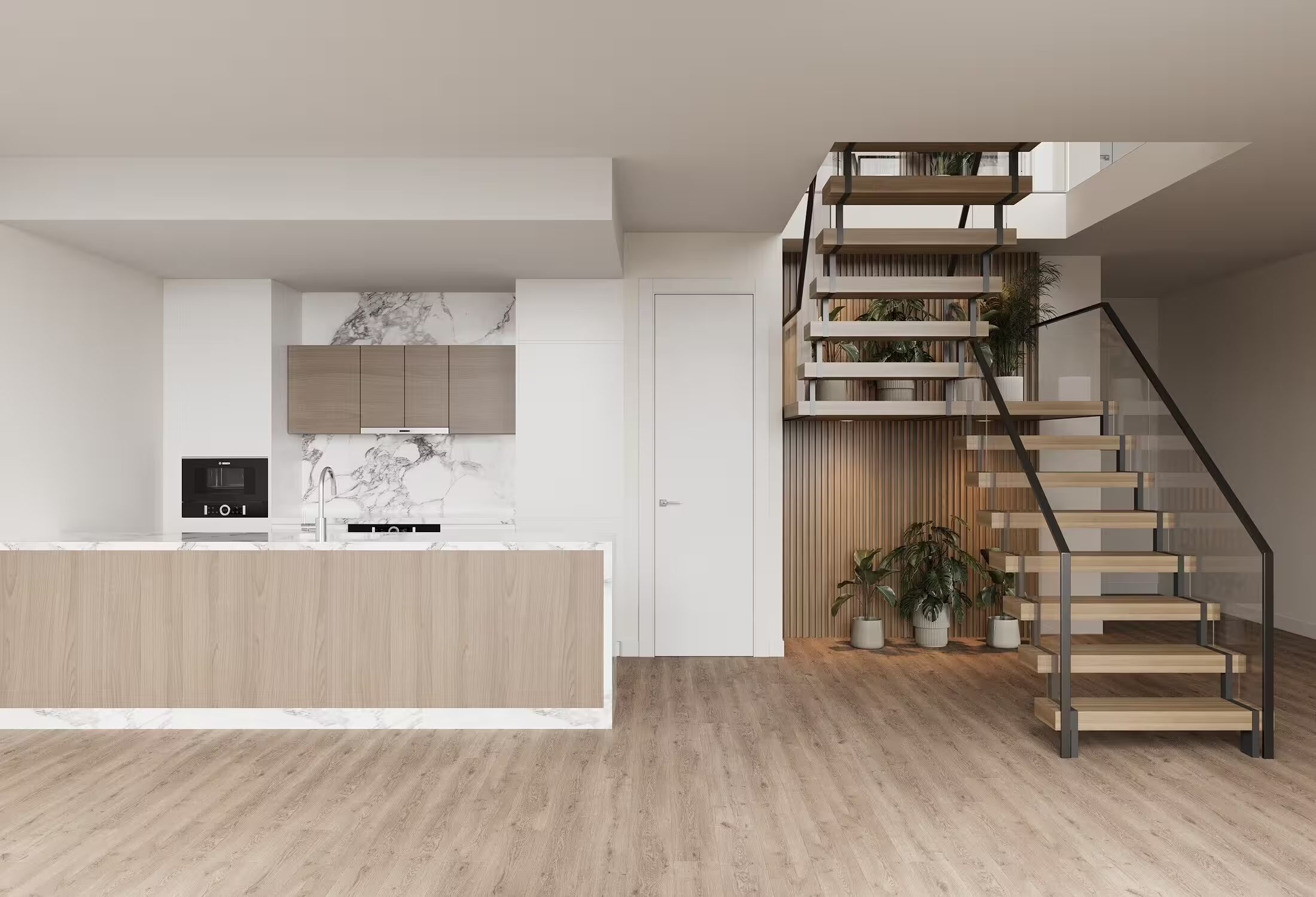
[#1]Understanding The Role Of An Architect[#1]
Is an architect needed for your upcoming apartment renovation in New York City? Let’s dig into this articulated role and weigh how the specific expertise might factor into your project.
What Types of Renovations Are Best For Architects?
Architects are required for your NYC renovation when the project involves structural changes, the movement walls, or layout changes that require building code compliance. There are other instances where architects are required - for example, some buildings require an architect for renovations that do not entail layout changes. These structural design experts draft detailed plans for your renovation, while also guaranteeing the project meets local building codes.
How Do Architects Work With Other Contractors?
In renovations driven by traditional general contractors, architects typically work with general contractors to bring their completed plans to life. In this case, traditional general contractors focus on managing the construction process, coordinating trades, and ensuring that the renovation aligns with the architect’s design. This setup can lead to effective project execution but requires clear communication between the architect and the contractor to prevent missteps.
For a deeper dive into architectural services in NYC, read What Kind Of Architect Is Best For Your NYC Renovation?
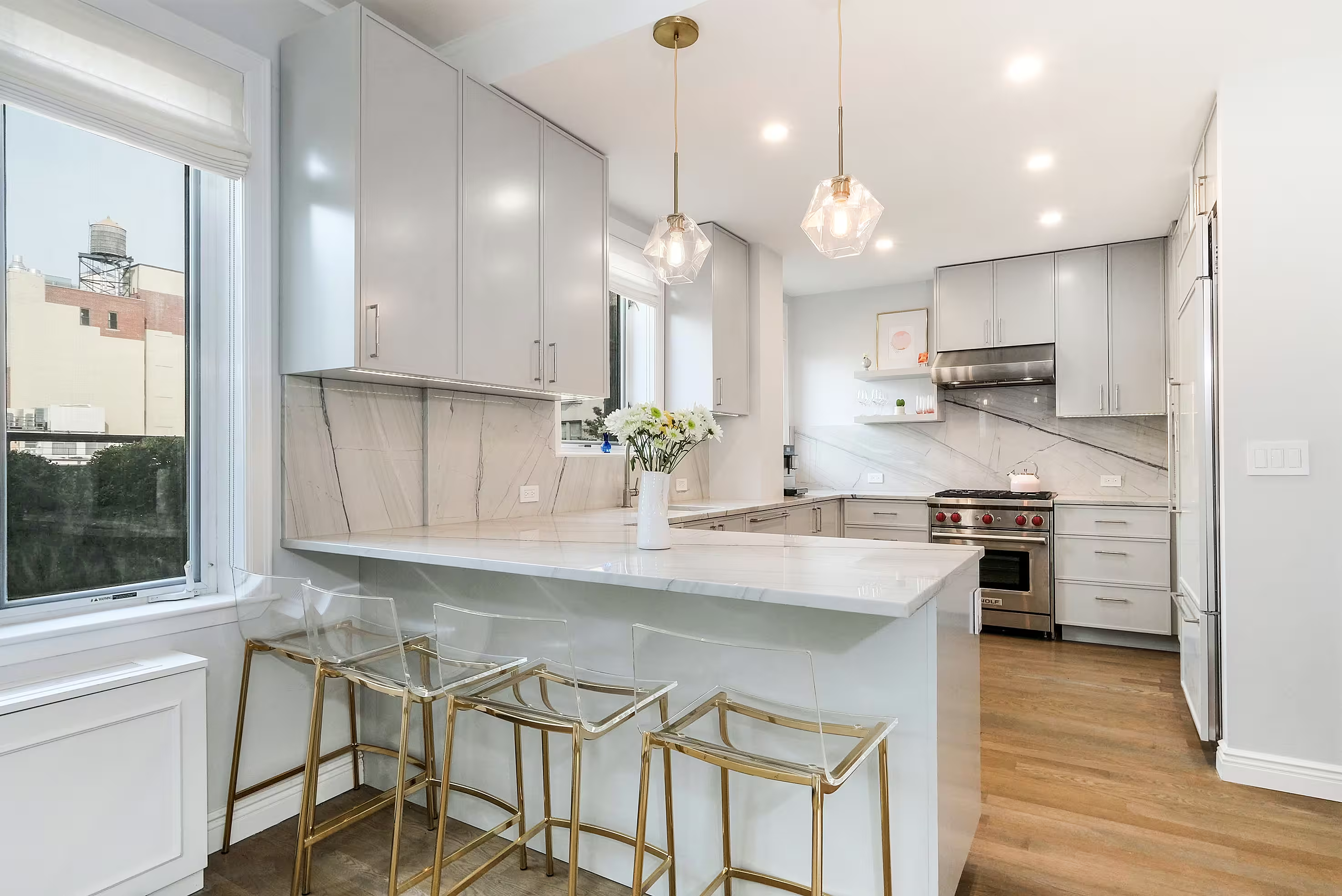
[#2]When To Choose An Interior Designer[#2]
Is an interior designer essential for your NYC overhaul? Let’s dive into this elemental role in NYC renovations and how their vision and expertise can transform your space.
What Types Of Renovations Are Best For Interior Designers?
Interior designers specialize in optimizing space, selecting materials, and crafting the overall aesthetic of your home. These creative gurus create functional and visually appealing environments, which is essential when renovating in NYC apartments, where maximizing space is crucial.
Read more about their distinct differences between those two roles via our blog, Interior Design Architect vs Interior Designer: What's the Difference?
How Do Interior Designers Work With Other Contractors?
When working with a general contractor, interior designers are often brought in to guide design details and material selections, while the contractor focuses on construction. However, their role expands significantly within full NYC apartment renovations, particularly dated pre-war renovations that require thoughtful design that can honor a building’s history while modernizing the aesthetics, layout, and functionality.
In these projects, interior designers deliver a refined, cohesive vision—whether for a complete apartment transformation, a high-end apartment refresh, or a strategic layout optimization that makes the most of limited space. Their expertise ensures efficient spatial design planning, which is vital when considering NYC’s costly square footage. Beyond structural considerations, they curate furniture, lighting, and custom millwork to enhance both form and function.
Interior Designer Or Interior Decorator?
| Scope Area | Interior Designer | Interior Decorator |
|---|---|---|
| Space Planning | Owns layout, flow, and zoning of rooms within the existing envelope. | Works within an established layout. |
| Millwork And Built-Ins | Designs custom millwork, cabinetry interiors, and built-in storage. | Typically not in scope. |
| Finish Selection | Specifies flooring, tile, stone, paint, hardware, and plumbing fixtures. | Selects paint colors and surface finishes. |
| Lighting Design | Develops layered lighting plan including ambient, task, and accent layers. | Selects decorative fixtures, lamps, and shades. |
| Furnishings And Décor | Often in scope, especially in full-service design contracts. | Primary focus. Furniture, rugs, accessories, and styling. |
| Engaged At | Project start, alongside the architect or design-build team. | After construction is complete. |
| Best Fit For | Renovations of any size where the goal is a cohesive, fully resolved home. | A move-in styling pass or refresh on a recently completed home. |
Interior designers are not to be confused with interior decorators, who focus more on aesthetics, such as furniture, color schemes, and décor, rather than the structural and spatial planning aspects of a renovation. Decorators refine the look and feel of a space, while designers shape the functionality and flow, ensuring furnishings complement the broader architectural vision.
Read more about their distinct differences between those two roles via our blog, What's The Difference Between An Interior Designer and Interior Decorator?
-min.jpg)
[#3]Where Architecture and Interior Design Intersect in NYC Renovations[#3]
When planning a renovation, understanding the roles of architects and interior designers is key, but knowing where they intersect is equally important. As a full-service design-build firm, we integrate both disciplines to create spaces that are structurally sound, highly functional, and beautifully designed. While architects focus on layout, code compliance, and structural integrity, interior designers refine the space with materials, finishes, and details that enhance both aesthetics and livability.
Different Approaches to Space Planning
Architects take a big-picture approach, ensuring the structure supports your vision, whether that means reconfiguring walls, adjusting ceiling heights, or integrating mechanical systems. Their expertise is critical for major layout changes, especially in co-ops and pre-war buildings where approvals and structural modifications come into play.
Interior designers, on the other hand, focus on how the space is experienced. From maximizing flow in a compact apartment to curating materials that bring warmth and cohesion, their work ensures every square foot is thoughtfully considered. Whether that requires selecting millwork, optimizing furniture layouts, or fine-tuning lighting design, they bring the polish that turns a renovation into a fully optimized home.
Considering a Renovation in NYC?
Click to schedule a consultation with one of the principle partners at Gallery, who will hear out your renovation plans and let you know the best way to proceed - whether we end up working together or not.
Schedule Your Consultation
When You Need Both
Many projects benefit from the combined expertise of architects and interior designers. For example, in a Sutton Place co-op we renovated at 425 East 58th, we removed walls to create a more open, modern layout, an architectural challenge that required careful planning. But the transformation was not complete until the project’s assigned interior designer curated the finishes, custom millwork, and lighting scheme that gave the space elevated character.
In our Upper West Side apartment renovation at 91 Central Park West, zoning the space effectively was just as important as selecting the right finishes. Our in-house architect was required to reengineer the flow of the kitchen, while our interior designers ensure that those divisions feel cohesive, comfortable, and catered towards the client’s goal of having a more industrial-friendly kitchen.
The key is having both skill sets seamlessly working together from the start. That’s where Gallery comes into play. With our integrated design-build approach, you are not managing multiple teams, we handle everything, ensuring your renovation is efficient, strategic, and tailored to your vision.
Read more on the full service approach via our blog, Design-Build: The Best Method For Your NYC Apartment Renovation.
| Renovation Phase | Architect | Designer | Coordination Point |
|---|---|---|---|
| Site Assessment | Lead | Support | Structural and MEP evaluation guides what's possible. Designer flags layout opportunities. |
| Layout And Floor Plan | Lead | Lead | Shared ownership. Architect resolves structure, designer resolves use and flow. |
| DOB Filings And Permits | Lead | — | Architect of record signs and seals. Designer not involved. |
| Board Approvals | Lead | Support | Architect responds to board engineer. Designer supplies finish and millwork detail for landmark or pre-war buildings. |
| Kitchen And Bath Design | Support | Lead | Designer leads layout, millwork, and finishes. Architect confirms plumbing and electrical routing. |
| Millwork And Built-Ins | — | Lead | Designer specs and details. Architect not involved unless structural backing is needed. |
| Lighting Plan | Support | Lead | Designer develops the layered scheme. Architect confirms electrical capacity and circuit routing. |
| Finish And Material Selection | — | Lead | Designer owns. Architect not involved outside of compliance items (acoustic, fire-rated, etc). |
.avif)
[#4]Factors To Consider When Making Your Decision[#4]
Choosing between an architect and an interior designer for your NYC renovation depends on several key factors. Budget, project scope, and the extent of structural changes all play a role in determining which professional (or combination of professionals) is best suited to your needs. Priorities to consider, include;
Project Scope and Structural Changes
If your renovation involves altering the layout, removing or adding walls, relocating plumbing or electrical systems, or modifying structural elements—an architect is essential. They ensure that changes comply with NYC building codes, co-op or condo board regulations, and structural requirements.
On the other hand, if your renovation focuses on finishes, space planning, or enhancing the aesthetic and functional flow of a home, an interior designer is key. They guide material selections, curate furnishings, and ensure that every detail, from millwork to lighting, contributes to a cohesive, well-executed design.
Budget Considerations
Architectural services tend to be more expensive due to the technical expertise and permitting processes involved. If your project requires substantial layout changes, budgeting for an architect is a necessity. Interior design services, while variable in cost, are often more flexible depending on the level of involvement—from simple design consultations to full-service selections and procurement.
| Project Type | Who You Need | Why |
|---|---|---|
| Cosmetic refresh (paint, flooring, fixtures in place) | Interior Designer | No structural change, no DOB filing required. Designer guides selections and procurement. |
| Kitchen or bath replacement within existing wet zone | Both | Alteration Type 2 work behind walls requires an architect. Designer handles layout, millwork, and finishes. |
| Non-load-bearing wall removal to open a layout | Both | Architect files plans and confirms non-structural status. Designer reworks the room around the opened plan. |
| Full apartment gut renovation | Both | Layout, MEP, finishes, and millwork are interdependent. Both disciplines need to be in sync from day one. |
| Pre-war restoration with original details preserved | Both | Architect handles structural and MEP upgrades behind plaster. Designer protects and reintegrates original detail. |
| Apartment combination (two units into one) | Both | Alteration Type 1 with structural drawings. Designer resolves the combined floor plan into a unified home. |
| Full interiors and furnishings only (no construction) | Interior Designer | No DOB filing or permit work. Designer leads space planning, procurement, and styling end to end. |
| Townhouse or brownstone gut renovation | Both | Structural and MEP scope is significant across multiple floors. Designer carries a cohesive language through the whole home. |
At A Glance Comparison: Architects vs. Interior Designers
| Comparison Point | Architect | Interior Designer |
|---|---|---|
| Primary Focus | Structural design, layout, building code compliance, and integration of mechanical systems. | Space planning, material selection, millwork, lighting, and the overall aesthetic of the finished home. |
| Required For | Moving walls, layout reconfigurations, MEP relocations, apartment combinations, and any work requiring sealed plans for DOB filing. | Renovations focused on finishes, flow, custom millwork, and a cohesive design vision, with or without structural change. |
| Deliverables | Sealed architectural drawings, code compliance review, DOB filings, and board engineering submissions. | Design concepts, finish and fixture schedules, millwork shop drawings, lighting plans, and procurement specs. |
| Permits Filed | Yes. Alteration Type 1 for structural work, Alteration Type 2 for in-wall work behind permitted scope. | No. Permits route through the architect of record on projects requiring DOB filings. |
| Co-Op Board Role | Engages directly with the board's reviewing architect, responds to alteration agreement comments, and revises plans for approval. | Provides finish and millwork detail to support board submissions, particularly in pre-war and landmark buildings. |
| Typical Fee Structure | Hourly or percentage of construction cost. When managing trades on a traditional project, often around 20% of construction value. | Hourly, flat fee, or percentage of furnishings and procurement. Scope ranges from consultations to full-service selections. |
| Best Fit Project | Layout-driven renovations, gut jobs, apartment combinations, and any pre-war work touching original framing or risers. | Finish-driven renovations, refreshes, kitchen and bath replacements within existing wet zones, and full interiors. |
[#5]How A Design-Build Firm Bridges The Gap[#5]
For NYC homeowners torn between hiring an architect vs interior designer, a design-build firm offers a seamless solution, integrating both under one roof for a more efficient, cohesive renovation.
A Unified Team for Better Results
In a design-build firm, architects handle structural planning and approvals, while interior designers refine layouts and materials. Working together from the start, they eliminate disconnects between design and construction, ensuring a smooth, aligned process.
Cost and Time Savings
With a design-build approach, potential issues are addressed early, minimizing costly revisions. Clients also get more accurate estimates upfront, and with fewer handoffs, projects move faster and more efficiently.
A Full-Service Approach
Beyond architects and designers, structural engineers, millworkers, and project managers are all part of the process—reducing client coordination headaches. For those seeking a streamlined, expert-managed renovation, a design-build firm is the smartest choice.
| Comparison Point | Hiring Separately | Architect-Led | Design-Build Firm |
|---|---|---|---|
| Points Of Contact | Architect, interior designer, and general contractor all contracted separately by the client. | Architect leads and engages designer and contractor on the client's behalf. | One firm, one contract, one project lead from concept through closeout. |
| Design Coordination | Client coordinates between architect plans and designer selections, with gaps surfacing during construction. | Architect leads design intent. Designer brought in to layer finishes after plans are set. | Architect and designer work as one team from day one. Plans and selections develop together. |
| Architect Fee Structure | Architect billed separately, hourly or as a percentage of construction value. | Architect typically charges around 20 percent of construction cost to manage trades. | Architectural services bundled into one fee. No separate construction management add-on. |
| Construction Pricing | Architect bids plans to multiple contractors. Pricing is competitive but late in the process. | Architect bids plans to contractors. Conditions discovered mid-project priced as change orders. | Site assessment and pricing happen alongside design, producing a more predictable final number. |
| Change Order Frequency | High. Misalignment between architect, designer, and contractor surfaces during build. | Variable. Depends on the architect's construction administration depth. | Low. Pre-construction integration catches most issues before demolition. |
| Board And Permit Handling | Client coordinates submissions across vendors. Gaps create board revisions and resubmits. | Architect handles board submissions. Contractor coordination handled separately. | Alteration agreement, DOB filings, and board engineer responses managed in-house at no separate fee. |
| Client Time Required | High. Client effectively acts as project manager between independent vendors. | Moderate. Architect handles vendor coordination, client decisions remain frequent. | Low. Client time is concentrated on design and selection decisions, not vendor management. |
[#6]Decision Framework: Who to Hire and When[#6]
- If your renovation involves structural work (wall removals, layout reconfigurations, MEP system updates), an architect is required.
- If your focus is on aesthetics, space planning, and finishes, an interior designer is the right fit.
- For a full-scale renovation where both structure and design are priorities, work with a design-build firm that integrates both services for a seamless, efficient process from concept to completion.
By understanding the scope of your project and what each profession brings to the table, you can make an informed decision that sets your renovation up for success. And if you are looking for a firm that brings both architecture and interior design together under one roof, Gallery is here to help - even if you’re just beginning the process and need some advice.
[#7]Real-World Renovation Success Via A Blended Approach[#7]
See below for a peak into how and why our full-service approach was the ideal solution for a few of our clients in Manhattan.
Full Renovation Of Pre-War Co-Op In Manhattan | 1035 5th Avenue
Our renovation at 1035 5th Ave found us overlooking Central Park, overhauling a beautiful Italian Renaissance Palazzo co-op located on Fifth and 85th, just down the street from The Met. When our client purchased this 4,000 square foot pre-war property, the space hadn’t been updated in more than 50 years. The vision for this renovation called for a total design overhaul of the extensive space, while incorporating many of the prior architectural elements and elegant marble accents, plus creating an additional bathroom and powder room. While the results speak for themselves, the client’s glowing praise for our full-service approach went a long way. View the full apartment renovation via our Before + After portfolio.
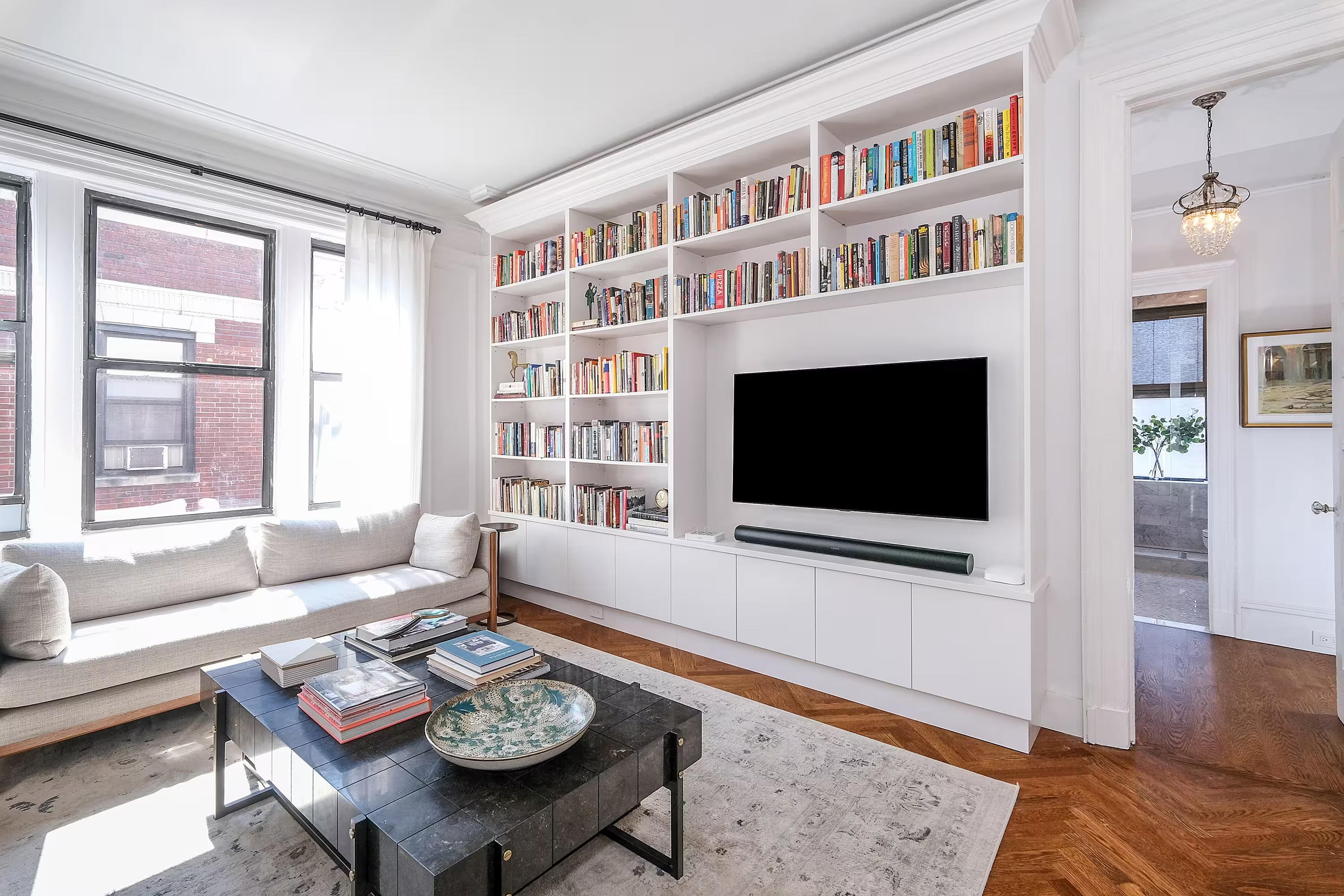
Upper West Side Pre-War Co-Op Renovation | 801 West End Ave
When we were enlisted for this co-op renovation on the Upper West Side, the dated pre-war space needed some work. The family recently purchased the Manhattan home near Broadway with the intention of reinvigorating the spacious property without losing the historic charm. With a speciality in pre-war renovations in NYC, we were happily up for the challenge. View the full co-op renovation via our Before + After portfolio.
Why Gallery For Your NYC Renovation?
With so many variables to consider when renovating in NYC, hiring a full-service design-build firm in NYC that can successfully streamline all the moving parts is vital to a successful end result. At Gallery, we strive to continually provide the best client experience possible via the following core principles:
One Team, Not Three Vendors
At Gallery, our in-house architects and interior designers sit on the same project from day one. Plans, finishes, and millwork develop together rather than in sequence, which eliminates the design-to-build handoffs that cause delays and change orders on traditional projects.
Founder-Led Architecture And Design
A founding partner is involved in every Gallery project from intake through closeout. That structural decision means architectural intent and interior design vision stay aligned with the original client brief, all the way through field execution.
One Integrated Budget
Architecture, design, permitting, and construction are quoted under a single contract. No 20% architect management fee on top of construction. No separate designer retainer. One number, one team, one accountable firm.
Considering an apartment renovation in New York City? View our portfolio of NYC apartment renovation before and afters, learn more about Gallery, or contact us today. We are a New York Times-featured design-build firm in New York City with a full-service approach to renovations in Manhattan and Brooklyn that includes everything from interior design and architecture services to filing permits and construction management. We’re experts in pre-war apartment renovations, apartment combinations, room creations, full gut renovations and all that falls in between. Let us bring your dream home to life.
Gallery KBNY is a full-service design-build firm featured in The New York Times, specializing in the architecture, interior design, and renovation of apartments, co-ops, condominiums, townhomes, and lofts across Manhattan and Brooklyn. Our integrated team of architects, designers, contractors, and project managers manages every phase from board approvals and DOB permitting through design and construction. A founding partner is involved in every project, start to finish. Because architecture, design, permitting, and construction are coordinated under one roof, the process remains streamlined, accountable, and transparent from start to finish. Our work has also appeared in Forbes, Architectural Digest, and Inc., and is backed by 100+ five-star client reviews.
[#FAQ]Frequently Asked Questions About Choosing The Right Partner For Your NYC Renovation[#FAQ]
Should I hire an architect or an interior designer for my NYC renovation?
The deciding question is whether the project involves structural or layout changes that require a DOB filing. Renovations that move walls, relocate plumbing, or alter the apartment's footprint require an architect. Renovations focused on finishes, millwork, lighting, and space planning are led by an interior designer. Most full apartment renovations in NYC end up needing both, which is why a design-build firm structures architecture and interior design under one team from the start. Identifying which category a project falls into is the first step, and it often points toward both disciplines working together.
What does an architect do in a NYC renovation, and when is one required?
An architect is required when a renovation involves structural changes, moving walls, or layout changes that need building-code compliance, and some buildings require an architect even for work that does not change the layout. The architect drafts detailed plans, confirms the design meets local codes, and provides the documentation the project files with the DOB. In a traditional structure the architect works alongside the general contractor to bring the plans to life, which depends on clear communication between the two to keep the build aligned with the drawings. The architect's role centers on layout, code compliance, and structural integrity.
What does an interior designer do, and when is one the right lead?
An interior designer optimizes space, selects materials, and shapes the overall aesthetic, which is especially valuable in NYC apartments where every square foot counts. A designer leads projects focused on finishes, space planning, and the functional flow of a home, and the role expands significantly in full renovations, particularly pre-war projects that call for honoring a building's history while modernizing its layout and function. The designer curates furniture, lighting, and custom millwork to enhance both form and function, and delivers the cohesive vision that turns a structurally sound renovation into a finished home.
What is the difference between an interior designer and an interior decorator?
The two roles differ in scope. An interior designer addresses structural and spatial planning, shaping how a space functions and flows and ensuring furnishings support the broader architectural vision. An interior decorator concentrates on the look and feel, selecting furniture, color schemes, and decor without engaging the structural or spatial side of a renovation. For a project that reconfigures how a space works, the designer's scope is the relevant one. For a purely cosmetic refresh, a decorator may be sufficient. Knowing which the project needs prevents hiring for the wrong scope.
Where do architecture and interior design intersect on a renovation?
The two disciplines overlap throughout a full renovation, which is why coordination between them matters. An architect takes the big-picture view, ensuring the structure supports the vision through reconfigured walls, adjusted ceiling heights, or integrated mechanical systems, work that is critical in co-ops and pre-war buildings where approvals and structural changes come into play. An interior designer focuses on how the space is experienced, maximizing flow in a compact apartment and curating the materials, millwork, and lighting that bring warmth and cohesion. The strongest results come when both skill sets work together from the start rather than in sequence.
How does budget factor into the architect versus designer decision?
Budget is one of the main considerations. Architectural services tend to cost more because of the technical expertise and permitting processes involved, so a project with substantial layout changes needs to budget for an architect as a necessity. Interior design costs are more variable and flexible, scaling with the level of involvement from a design consultation through full-service selections and procurement. Matching the professional to the scope, and budgeting accordingly, keeps the project realistic. A renovation that requires both should plan for the architect's technical scope and the designer's curation as distinct line items.
Why do most full NYC renovations need both disciplines?
A full renovation usually combines structural work and design refinement, which draws on both skill sets. Removing walls to open a layout is an architectural challenge requiring careful planning and approvals, though the transformation is only complete once an interior designer curates the finishes, custom millwork, and lighting that give the space its character. Reengineering the flow of a kitchen may require the architect, while making those divisions feel cohesive and comfortable falls to the designer. Because the two roles address different halves of the same project, most full apartment renovations benefit from having both engaged from day one.
How does a design-build firm bring architecture and interior design together?
A design-build firm integrates both disciplines under one roof, which resolves the coordination challenge directly. Architects handle structural planning and approvals while interior designers refine layouts and materials, and because they work together from the start, the disconnects that arise between separately hired professionals are eliminated. The integrated structure also catches potential issues early, which minimizes costly revisions and produces more accurate estimates up front. With structural engineers, millworkers, and project managers part of the same team, the client avoids coordinating multiple parties, and the renovation moves more efficiently from design through construction.
Manhattan Design-Build
Evaluate Your Manhattan Apartment
Before You Buy
Buying an apartment you plan to renovate? A founding partner walks it with you during the contract period and maps the scope, cost, and timeline, so you know exactly what you're taking on before you sign.
As seen in
Pre-Purchase Assessment
Walk the apartment with us first and understand the full scope, cost, and timeline before you close.
or call us directly
let’s
Design-Build
together