.avif)


.png)
.png)


NYC Home Renovation Ideas 2026: Top Trends & Favorite Client Requests
From statement kitchens and spa bathrooms to infrastructure upgrades and smart home systems, these are the renovation ideas NYC homeowners are prioritizing in 2026, based on what our clients are actually asking for.
December 28, 2025
|
-min.avif)
NYC Home Renovation Ideas 2026: Top Trends & Favorite Client Requests
Discover top NYC home renovation trends and client favorites, from smart upgrades to timeless designs.
Table of Contents
- Kitchen Renovation Trends
- Bathroom Renovation Trends
- Children's Room Renovation Trends
- Home Office Renovation Trends
- Appliance Upgrades Worth Considering
- Essential Infrastructure Updates
- Flooring Solution Trends
- Helpful NYC Home Renovation Articles
- FAQs About Renovating NYC Apartments
We hear renovation ideas every day. Some clients come to us with plans they have been refining for years; others are starting to sketch out what they want and need exposure to what is actually possible. As a design-build firm working exclusively in Manhattan and Brooklyn, we have a clear view of what NYC homeowners are asking for in 2026, from the design details that consistently get prioritized to the infrastructure upgrades that make everything else work. This post covers the full picture across kitchens, bathrooms, home offices, appliances, systems, and flooring.
As a full-service design-build firm working exclusively in NYC, we have a front-row seat to what homeowners want in 2026. We hear renovation ideas every day, from timeless design upgrades that wow indefinitely to timely requests that reflect a more modern lifestyle. Whether you’re locking in final plans or just starting to sketch out your ideal space, the following home renovation ideas will help focus your vision.

[#1]Kitchen Renovation Trends 2026[#1]
The kitchen delivers the highest renovation ROI of any room in the home, which is why it draws the most attention and the most budget in the projects we manage. What clients want in 2026 is a mix of timeless design decisions and a handful of tech and material upgrades that have meaningfully improved over the last few years.
Emerging Kitchen Design Aesthetics For 2026
Whether they’re gaining popularity or standing tall as pillars of priority kitchen design, here are various kitchen aesthetic options to help achieve your priority look and feel.
.jpg)
Warming Cabinetry With Trails Of Textured Wood
Lately, one of the top requests we hear from clients is warmth in the kitchen. While an open more practical space often does the trick, we’ve been pushing a cozier aesthetic direction even further with medium to dark wood cabinetry, paired with tactile finishes like reeded and fluted detailing in adjoining spaces like we did in our Manhattan co-op renovation in Sutton Place at 245 E 54th St. The result is a grounded space that feels both elevated and inviting, modern in form, but rooted in natural, handcrafted character.
Make A Statement With Bold Lighting, Sinks Or Backsplashes
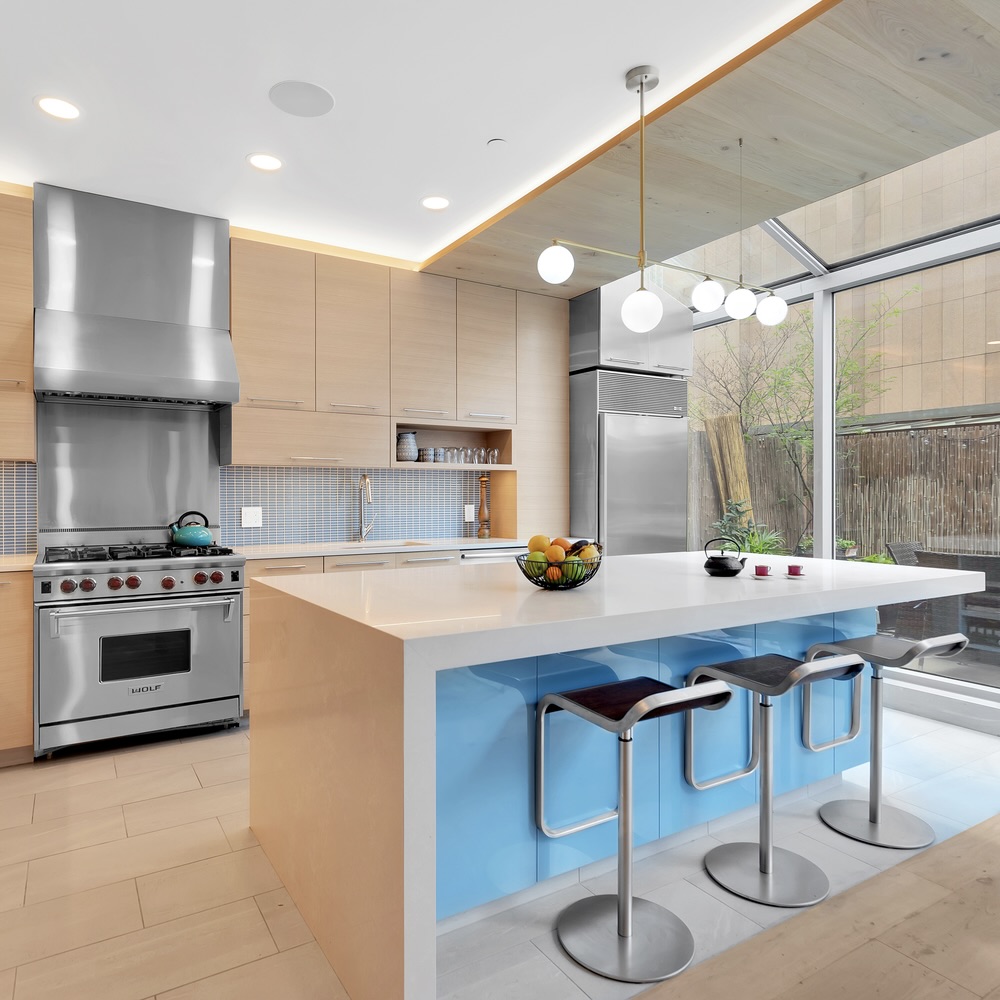
As you’ll see in our kitchen portfolio, almost all of our kitchen designs leverage lighting as a central design element. Statement fixtures, such as the oversized pendant lights you can find in the kitchen of our Manhattan co-op renovation at 140 West End Ave or a sculptural chandelier like we leveraged in our renovation at 61 Pierrepont in Brooklyn Heights, add drama and personality to your kitchen design. In the same vein, bold backsplashes with intricate patterns, textured tiles, or personalized accents allow homeowners to express their unique style and story. Another trendy way to pop your design is with a bold sink design, such as this elegant gold sink we installed in our West Village condo renovation at 17 Cornelia Street - which you can walk through with Avi above, as our team puts the finishing touches on the project.
.jpg)
Minimalist Design, Elevated Simplicity
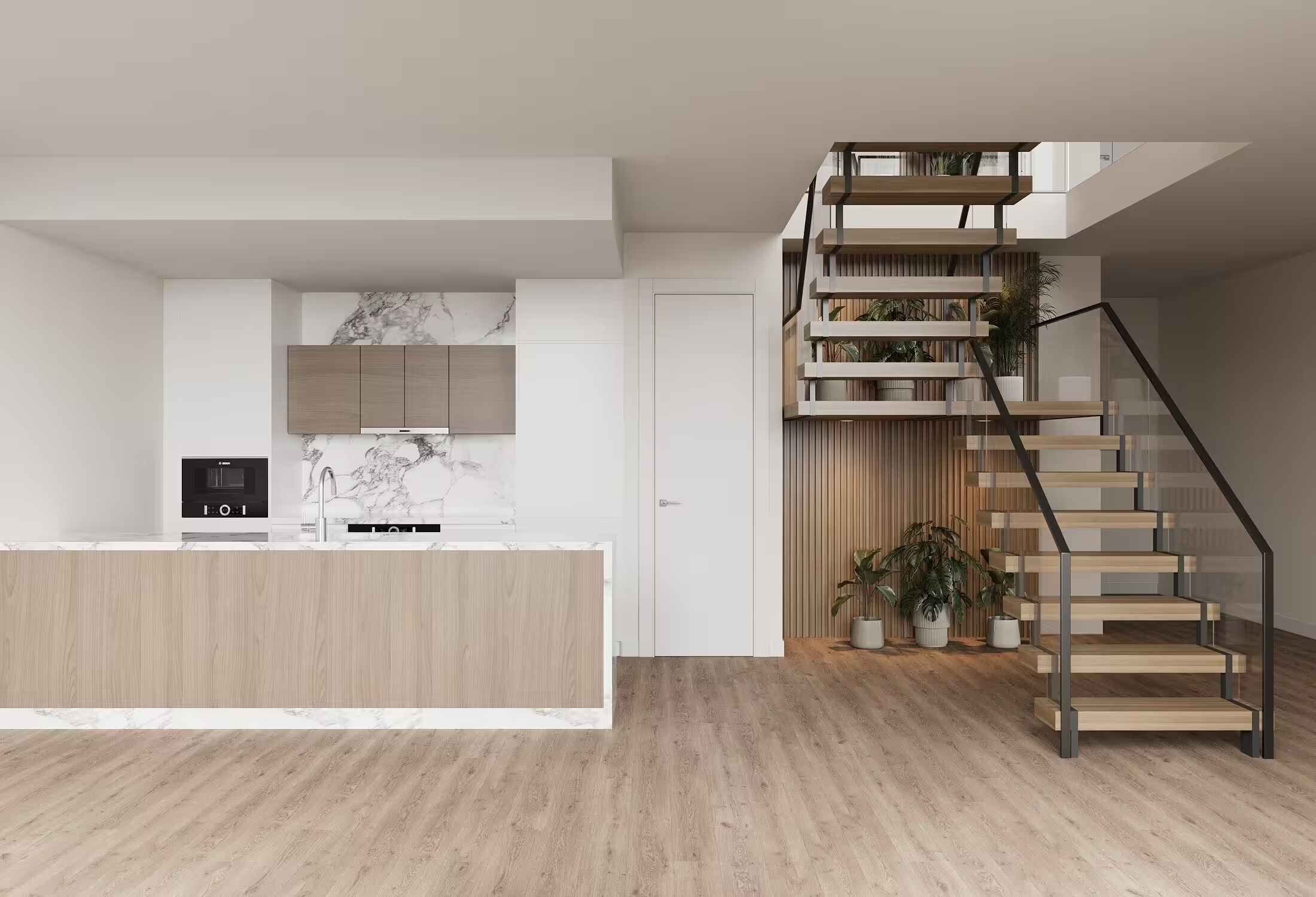
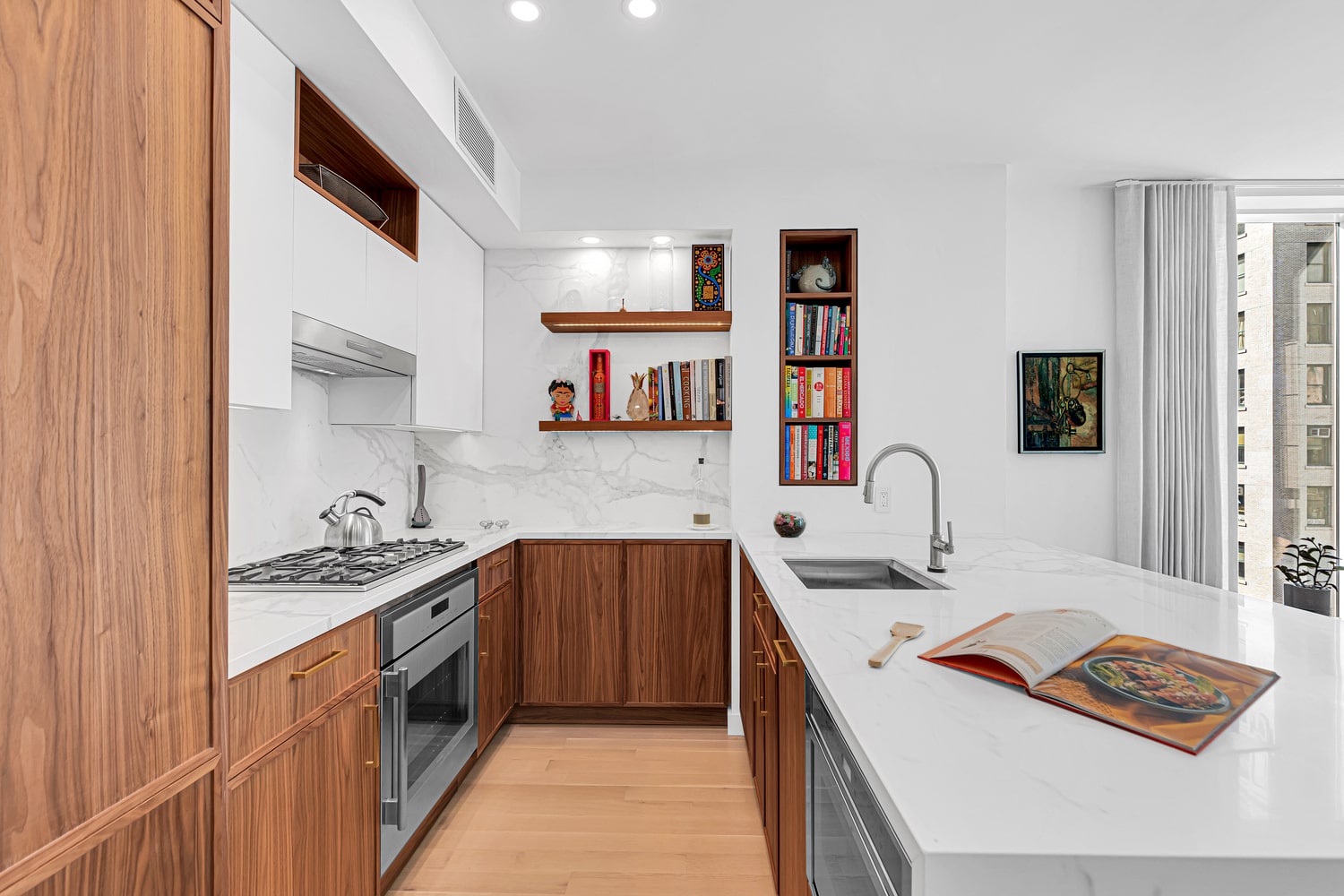
While minimalist kitchen designs remain a favorite, the aesthetic has taken on a softer, more livable feel as of late. Instead of coming off stark or overly rigid, today’s minimalist kitchen spaces lean into warmth through muted neutrals, natural textures, and purposeful design choices we help our clients dial into. Clean lines and handleless cabinetry still anchor the look, but are now complemented by durable surfaces like quartz and porcelain that feel both refined and functional. Smart storage (pull-out pantries, custom inserts, or concealed drawers like we built into this downtown Brooklyn renovation for pro chef at 365 Bridge Street or in our farmhouse kitchen renovation 21 India Street in Greenpoint) keeps the space efficient and visually clean, without stripping away comfort or personality.
Mixed Material Finishes
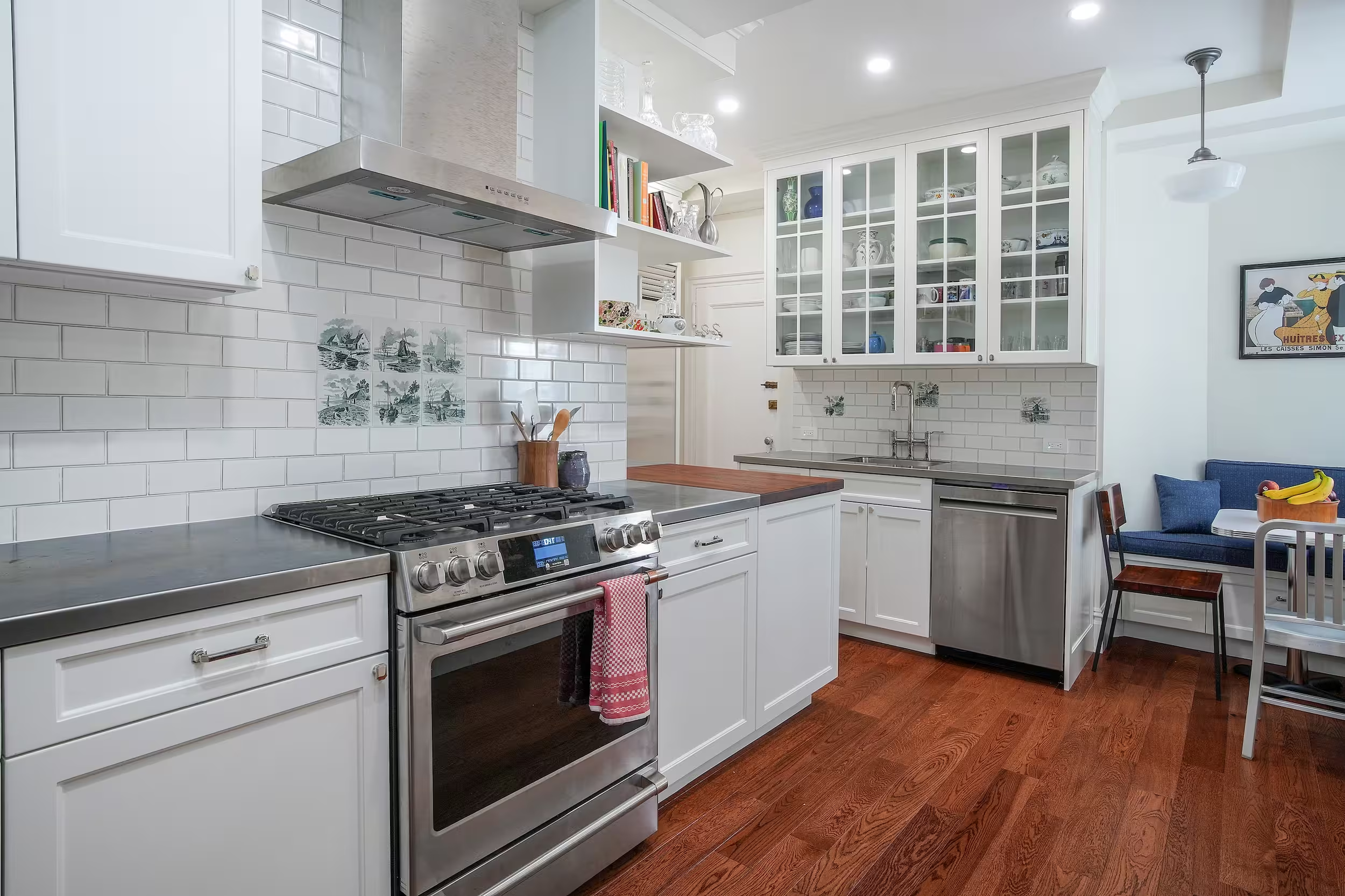
Blending materials like stainless steel, natural wood, and mixed metal accents offers a thoughtful way to break design norms—bringing unexpected texture, contrast, and added durability to your kitchen. For instance, clients from our Manhattan apartment renovation at 91 Central Park West said cooking and baking were central to their lifestyle, making the kitchen a top priority. With an enhanced layout in place, our goal was to design a chef-grade space that could handle heavy use while blending architectural appeal with commercial-grade durability—achieved through stainless steel counters and sink, integrated butcher block corners, and high-traffic European white oak flooring. View the full renovation before and after.
Smart Technology Trends For Kitchens In 2026
Whether you’re looking for added efficiency or ease of use, the following smart kitchen upgrades have been most prevalent this year amongst our clientele:
Smart Cooking With Wolf Built-In Ovens
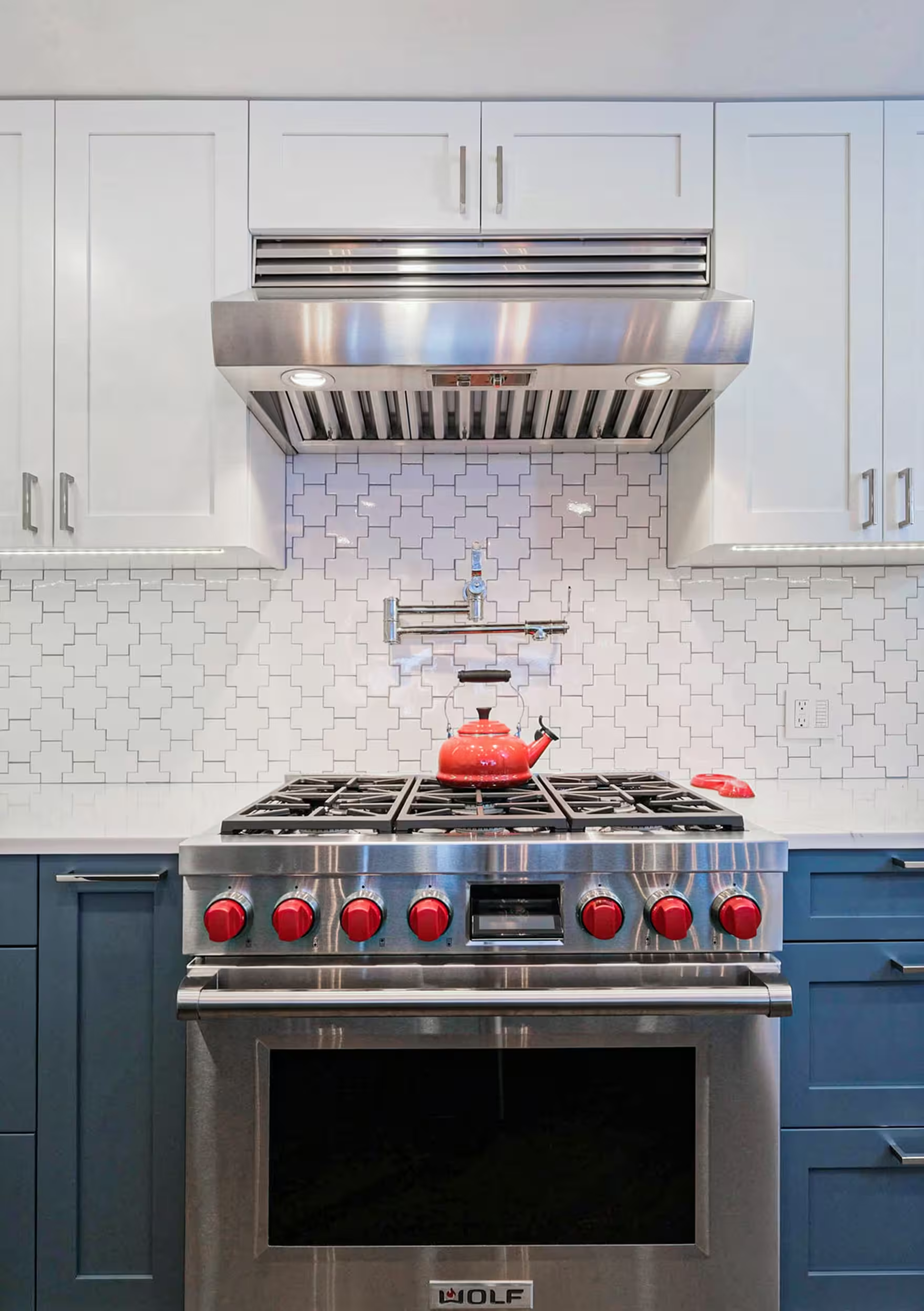
Modern kitchen aesthetics embrace smarter, more intuitive appliances—especially when precision is a priority. Many of our clients turn to the Wolf DF366 for its precise dual-stacked burners, intuitive touchscreen, WiFi connectivity for remote access, built-in temperature probe, and Gourmet Mode presets, all designed to adapt in real time for consistently reliable results. There’s even gourmet mode with 50 unique settings, where the oven automatically sets the ideal cooking atmosphere based on what you’re making. Oo la la.
Sub-Zero Refrigeration With Food Preservation Tech
Sub-Zero refrigerators do more than just keep food cold - their smart preservation system monitors temperature, humidity, and even air purification, keeping produce fresher for longer (your cold cuts will never be happier). Some models even offer Wi-Fi connectivity for app-based control, inventory tracking, and filter status.
-min.jpg)
Customizable Smart Lighting Systems
When you’ve got hands full of raw meat and flour and can’t see the recipe in front of your face, sometimes you need to shout commands to the lights. Thankfully for us multi-taskers, smart and responsive lighting continues to grow in kitchen design. Integrated smart lighting - controlled by app or voice (hello) - lets homeowners adjust brightness and tone based on time of day or cooking task. Pair with dimmable ceiling fixtures and under-cabinet LEDs, like we did in our Yorkville co-op renovation at 250 E 87th St - for a fully-immersive kitchen design.
- Further Reading: Renovations & Technology: 10 Smart Home Remodeling Ideas
Innovation & Personalization >
A well-designed kitchen should feel personal and not templated, but tailored to your specific needs. Here are a few creative ways we’ve helped clients make the most of their space, with personality baked right in.
.jpg)
Fingerprints No More With FENIX
When designing a kitchen for clients who love to cook, durability is just as important as design. For a recent renovation in Chelsea at 252 Seventh Ave, we met both needs by introducing FENIX cabinetry, a cutting-edge material with a matte, fingerprint-resistant finish that resists fading and wear over time. In this extremely modern Manhattan renovation, FENIX provided the perfect sleek backdrop to balance high-traffic functionality with long-term aesthetics. View the full renovation before and after.
The Sunken Place
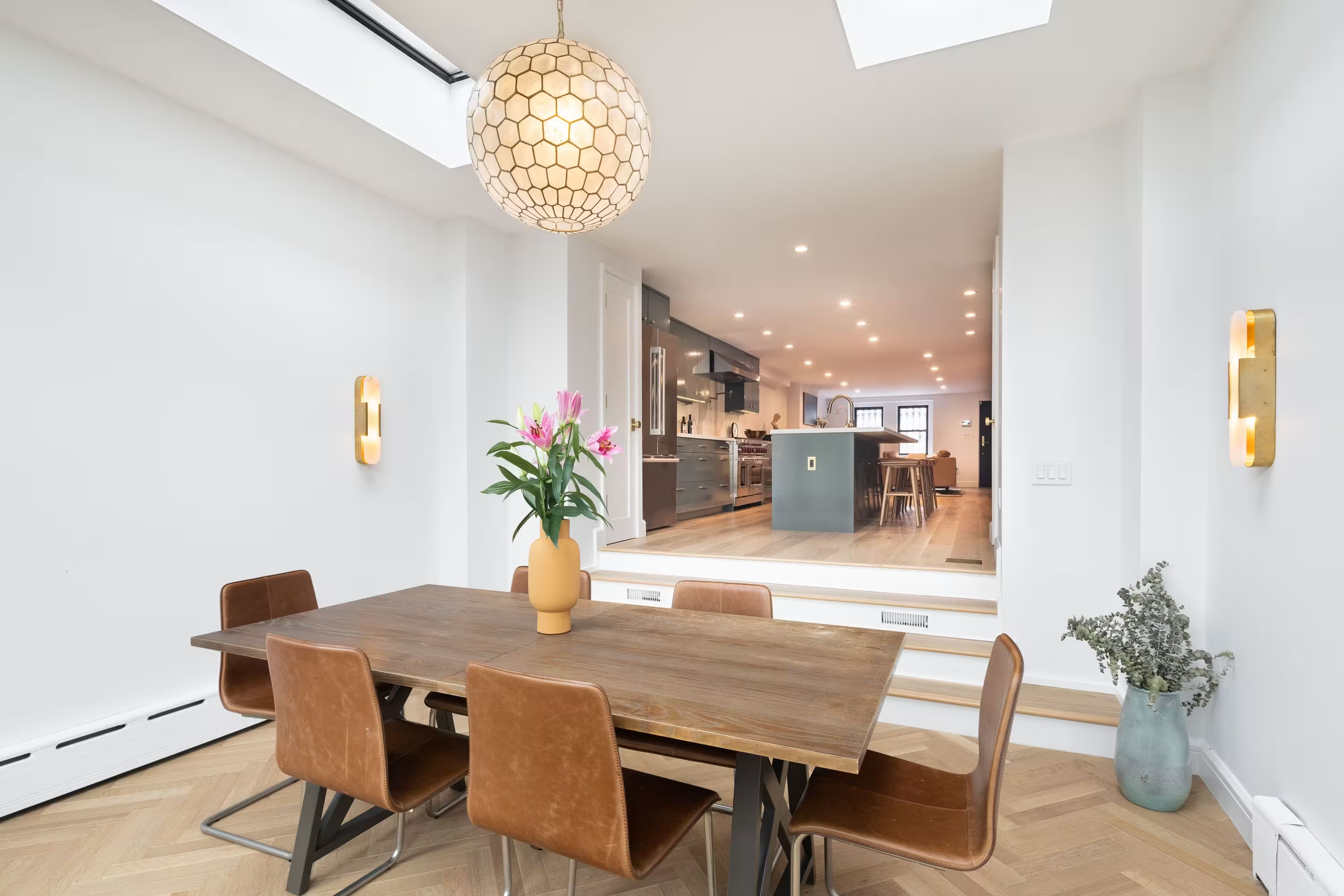
Another personalized layout we’ve helped make a quiet comeback is the sunken kitchen or living room. These slightly recessed spaces can define open-concept layouts without adding walls, creating a natural sense of separation without disrupting flow. Think less retro/dated, and more like Don Draper and Megan’s place - modern, clean, confident, and subtly dramatic. For those looking to add visual variety without compromising square footage, sunken can be a smart move. In our Brooklyn brownstone gut renovation in Carroll Gardens, the clients wanted a dining area that felt distinct - plus they had room to play with. To accommodate, we extended the back of the home to create a sunken dining area - giving the space and home a more enticing and practical visual appeal. View the full renovation before and after.
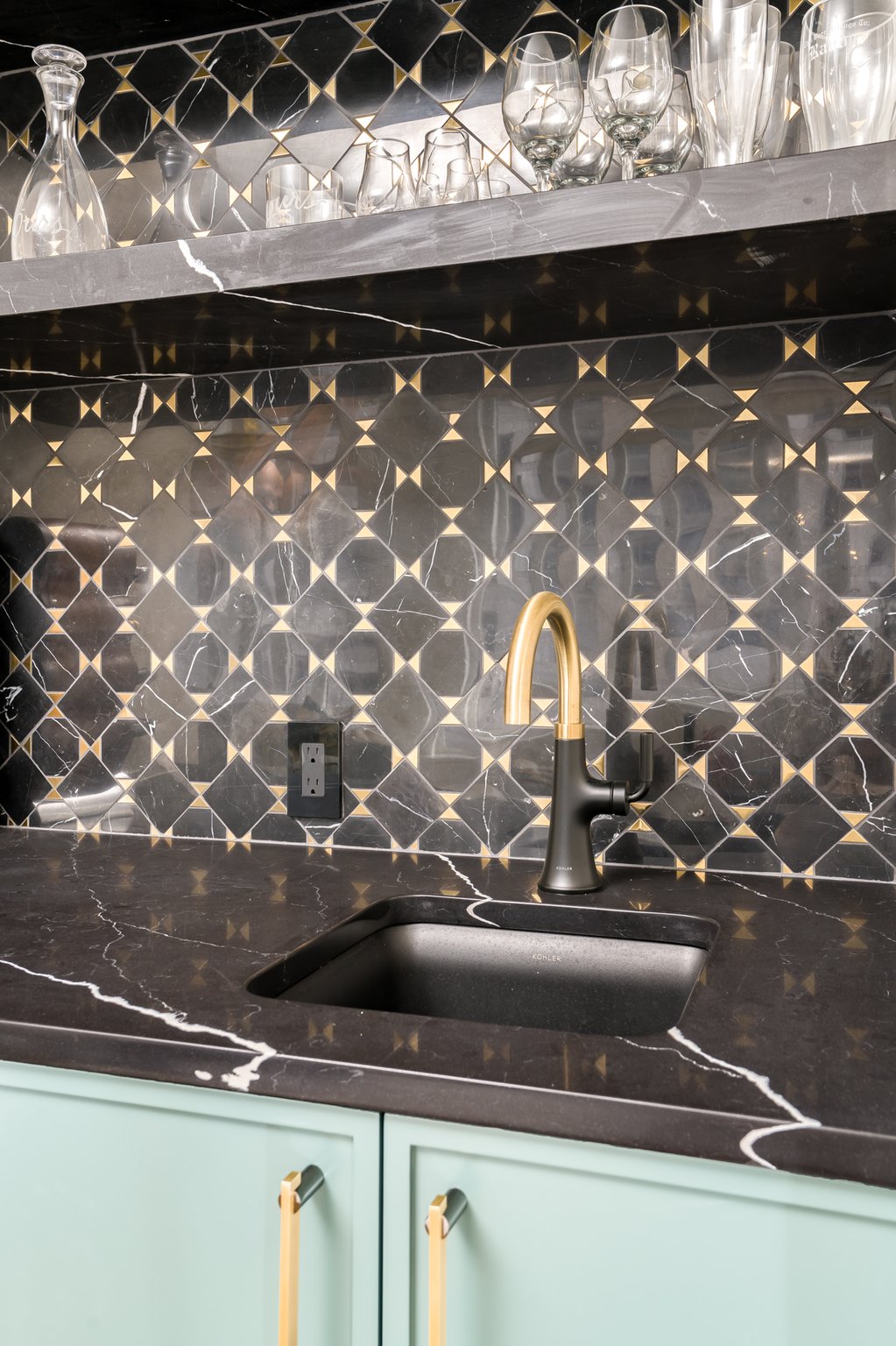
Personalized Bars, From Espresso To Espresso Martinis
No, adding a built-in bar to your home doesn’t mean you have a problem, it means you’re a great host. With a personalized stand-alone bar area, you’re adding one of the more stylish and functional ways to personalize a kitchen, especially in homes where entertaining plays a big role. Whether tucked in a corner or featured as a focal point, these custom keeps can include wine fridges, coffee stations, open shelving for glassware, integrated lighting, exclamation point backsplashes, and dedicated counter space for mixing. In our Upper West Side luxury condo renovation on Riverside Boulevard, the client wanted a discreet but elegant bar just off the kitchen. To accommodate, we created a stand-alone station en route to the kitchen entry, accentuating the space with a marble mosaic backsplash, brass inlay, and overall Art Deco appeal.
%20Gallery%20KBNY.JPG)
Design CoheSion Via Material Leftovers
One resourceful way we create visual cohesion between the kitchen and surrounding spaces is by repurposing slab remnants. When purchasing stone for countertops, you often have to buy the entire slab (even if you only need a portion) leaving usable material behind. Instead of letting such strong remnants go to waste, we may incorporate them elsewhere in the home, like the custom dining room shelving we added in our Tribeca loft renovation at 335 Greenwich St, to subtly blend the spaces.

[#2]Bathroom Renovation Trends In 2026[#2]
Bathroom renovations in 2026 are centered on two things: creating a space that genuinely feels like a retreat, and making the everyday routine easier through smart storage and better technology. The two goals are more compatible than they used to be.
Spa Stylings
Many NYC homeowners are embracing spa-inspired bathroom designs to combine relaxation with practical function. Features like large, walk-in showers, heated towel racks, and natural materials help transform the bathroom into a personal retreat, offering a Club Med experience from home.
.jpg)
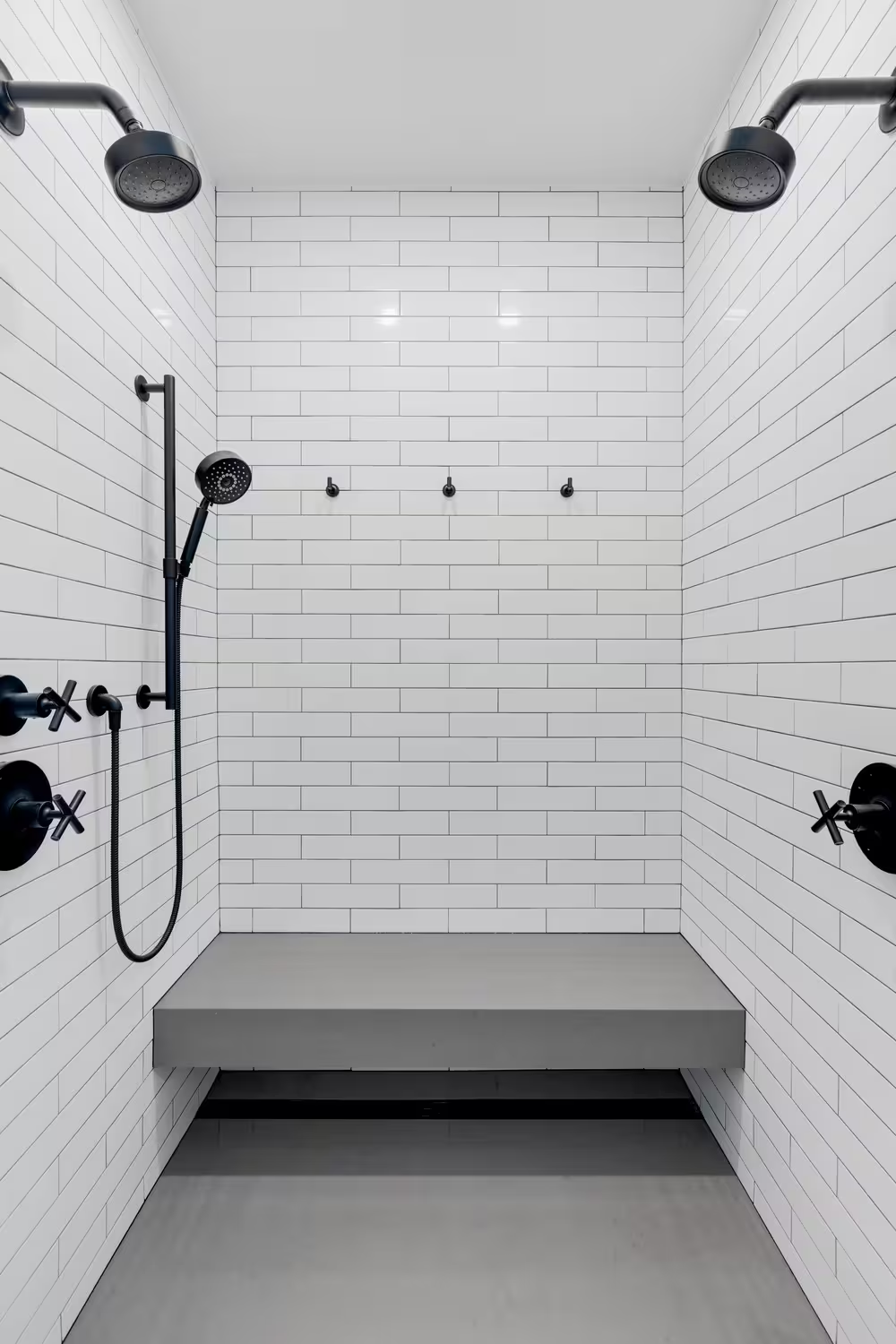
Who Says No To Double-Shower Heads?
Sure, one shower head is fine. Two? Now we’re talking. We’ve been doubling up in a lot of our recent NYC en suite renovations, often pairing a classic rainfall head with a separate hand shower across the way. Sometimes, double rainfalls. Hello. Either setup not only looks luxe, the optionality allows toggling toggling between full-body rinse and spray. So fresh and so clean. While expanding the en-suite in our recent Sutton Place renovation at 245 E 54th, the extra square footage gave us room to play, allowing for that prime spa-centric dual action.
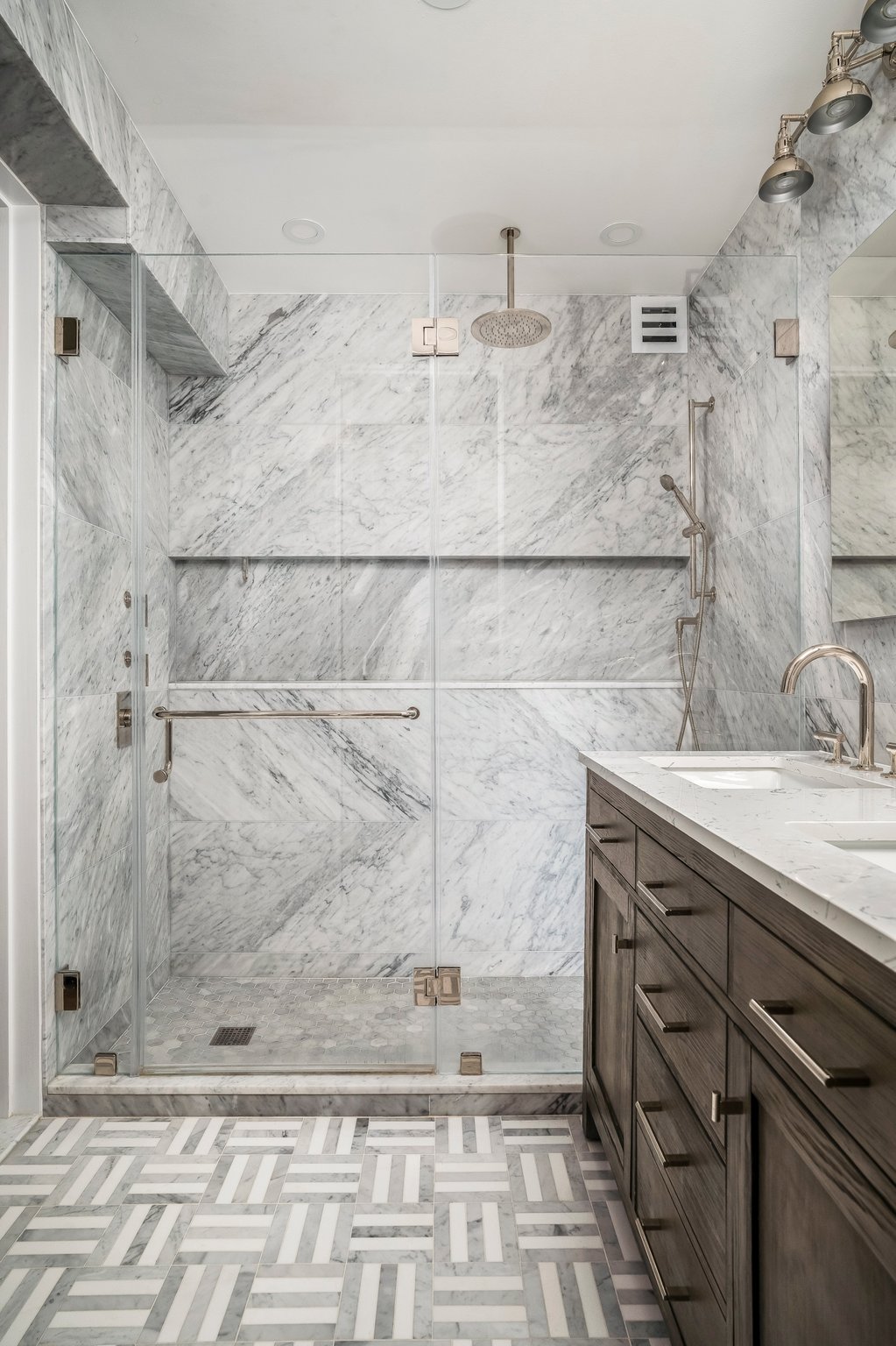
Extended Shower Space
Spas are meant to offer relaxation and that is hard to accomplish when you’re showering in a claustrophobic box. To truly feel spa-like vibes, we find that expanding your shower to typically around 5’ x 7’ to 6’ x 8 or 9’.
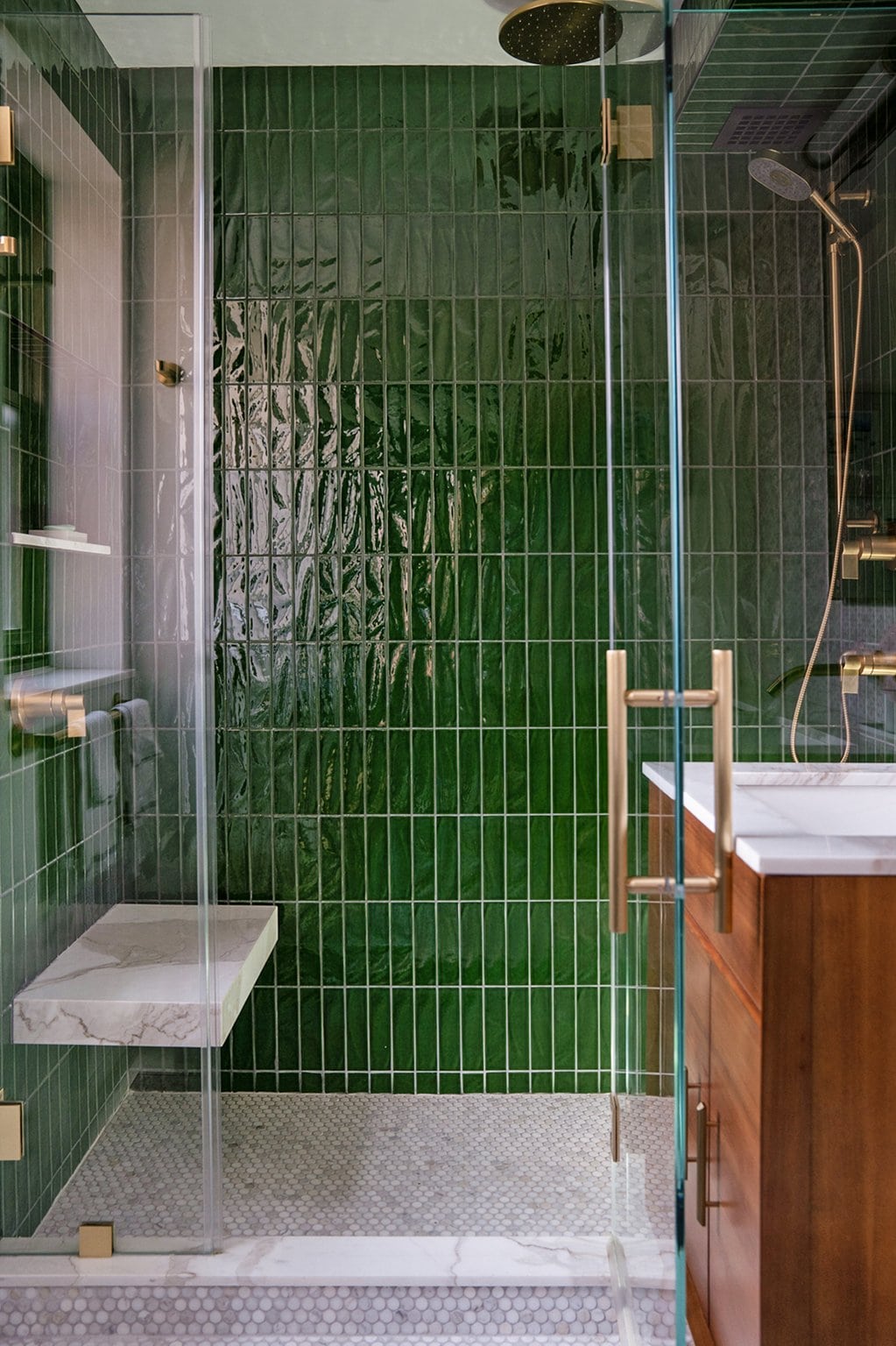
In-Set Shower Seating
With expanded shower size comes opportunities to dial in your in-home spa experience even further with in-set shower seating. See the built-in bench we installed in our Tribeca renovation at 9 Murray St or the floating marble bench from our en-suite bathroom masterpiece at 55 East End. Sit down and relax - you’ve earned the calm.
Smart Bathrooms To Ease Your Routines
From morning chaos to evening pampering sessions, here are a few smart upgrades our NYC clients love to help make the most of their bathroom routines.
Bask In The Warmth Of Heated & Programmable Towel Racks & Flooring
Step out of the shower and onto toasty floors while reaching for a perfectly warmed towel? Yes, please. Heated towel racks and radiant flooring, like we installed in our Upper East Side co-op renovation at 55 East End Ave, bring max comfort to your bathroom with the push of a button. Programmable settings mean the heat kicks in as needed, cooling down once cleaned up. Small luxury, big difference.
Smart Mirror With Defogging
Sick of wiping off that foggy mirror after your shower? Excellent, because smart mirrors are now equipped with defogging. Yes, smart mirrors now have automatic defogging settings alongside more standard integrated features like touch-motion LED lighting. Streaks no more!
More Self-Care, More Storage
With self-care becoming more prevalent than ever in recent years, bathrooms are now doing double duty—handling everyday essentials while also serving as your own personal Ulta. From LED masks and electric toothbrushes to serums and scrubbers, the modern bathroom needs to be both organized and ready to support your round-the-clock routine. Here are a few personalized ways we’ve been expanding bathroom storage in our recent NYC renovations:
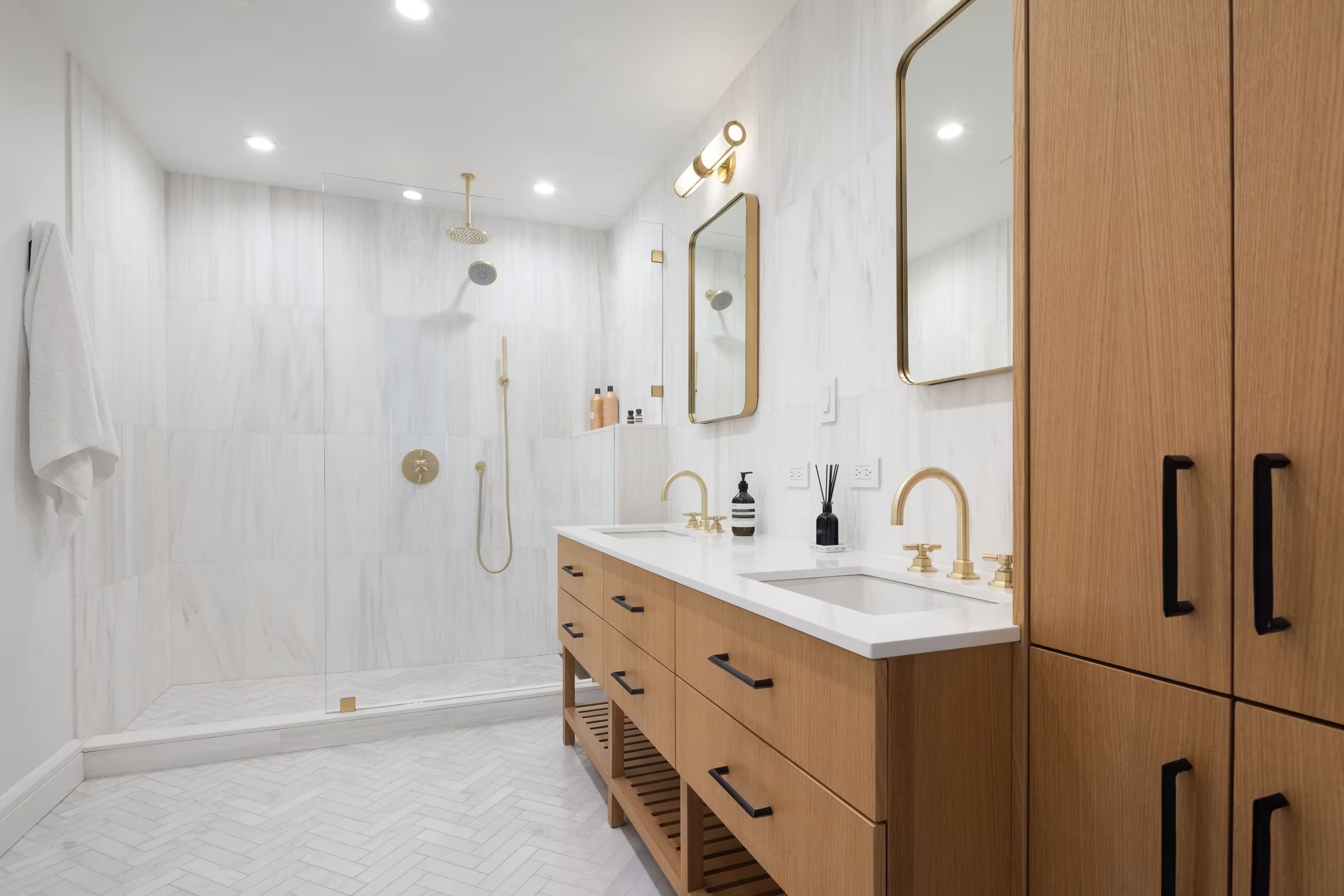
Millwork For High-Function Zones
Custom millwork remains one of the most effective ways to maximize storage without sacrificing style. In tight spaces or awkward layouts, think narrow powder rooms or prewar en suites, custom-built cabinetry provides seamless storage that’s easy on the eyes. We often design storage tailored to client routines, from soft-close drawers for tech tools to sleek upper cabinets for secondary skincare supplies. See more of the beautiful custom vanity and adjoining shelving from the ensuite of our Brooklyn Brownstone Gut Renovation in Carroll Gardens.
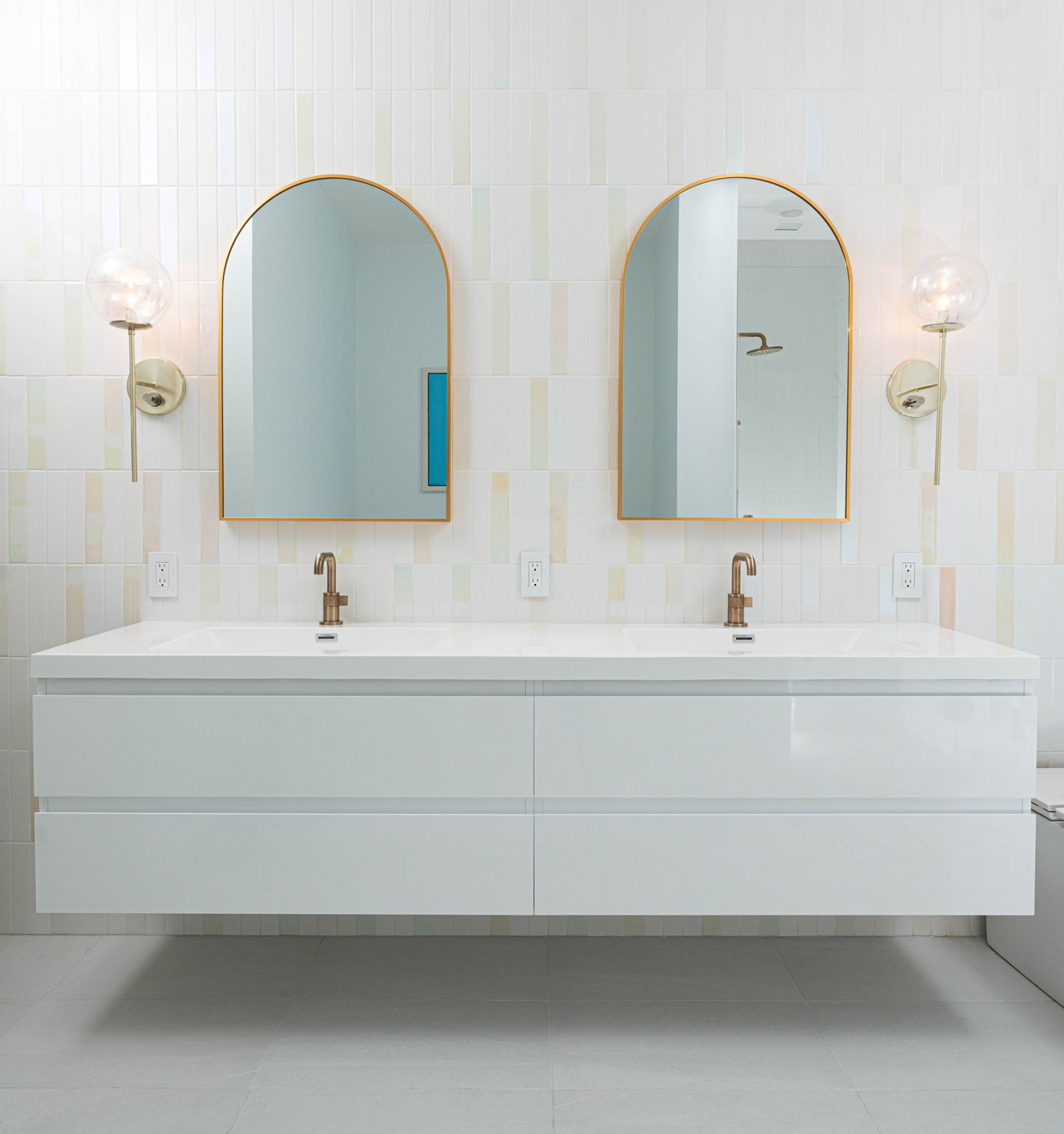
Expanded Vanities With Room to Grow
Minimal counter space simply isn’t going to work in 2026. Today’s vanities are multi-use stations designed for beauty rituals and personal grooming routines. In many of our NYC home renovations, we find clients require extended double vanities - especially in the en suite, equipped with built-in drawer organizers, charging stations, and plenty of discreet storage. See the expanded double-floating vanity from our Manhattan Condo Renovation at The Chelsea Mercantile on 252 Seventh Ave in full glory here.
-min.jpg)
In-Shower Storage That Actually Works
No more teetering shampoo bottles on the tub edge or chintzy suction-cup metal shelves that fall off mid-shower. In-shower niches and shelving are now essential to our bathroom design process, often built into the wall for a streamlined appearance. We often line these tasteful touches with marble, tile, or quartz, offering sleek in-shower storage to keep essentials close. View various examples via our portfolio of Bathroom Renovation Before & Afters.
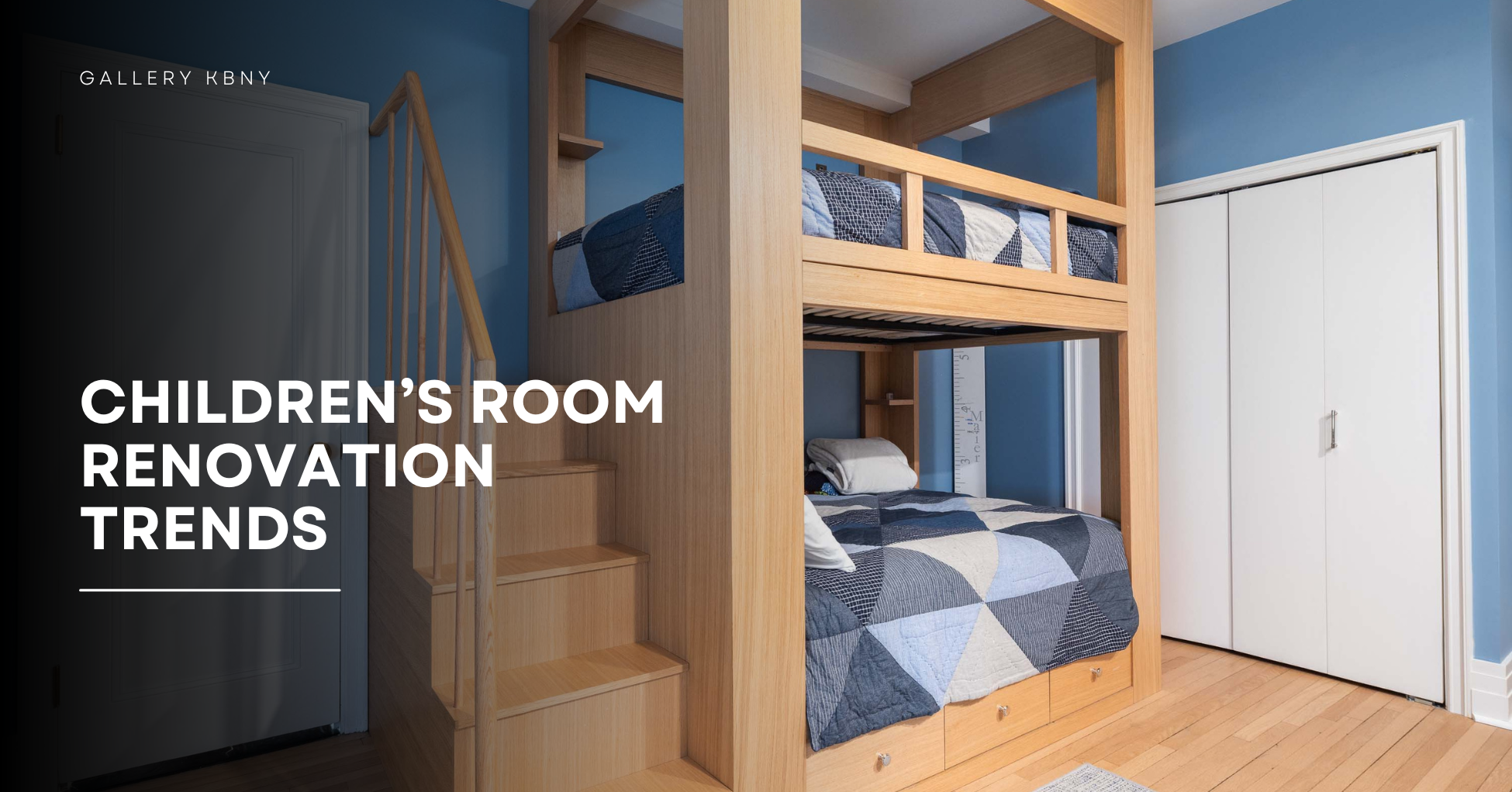
[#3]Children's Room Renovation Trends[#3]
A well-designed children's room should work as well at 12 as it does at 4. The design decisions that age best are the ones that prioritize evergreen utility over theme: clean lines, flexible storage, and finishes that do not need to be replaced every time tastes change.
Designs Built To Last
Playful character comes from the objects in a room (toys, art, color choices), not from the architecture. By anchoring the room in a clean, adaptable design and reserving the personality for things that can change, the space stays relevant as children grow. See the balance between playful and practical in the kids room from our Brooklyn Brownstone Gut Renovation in Carroll Gardens.
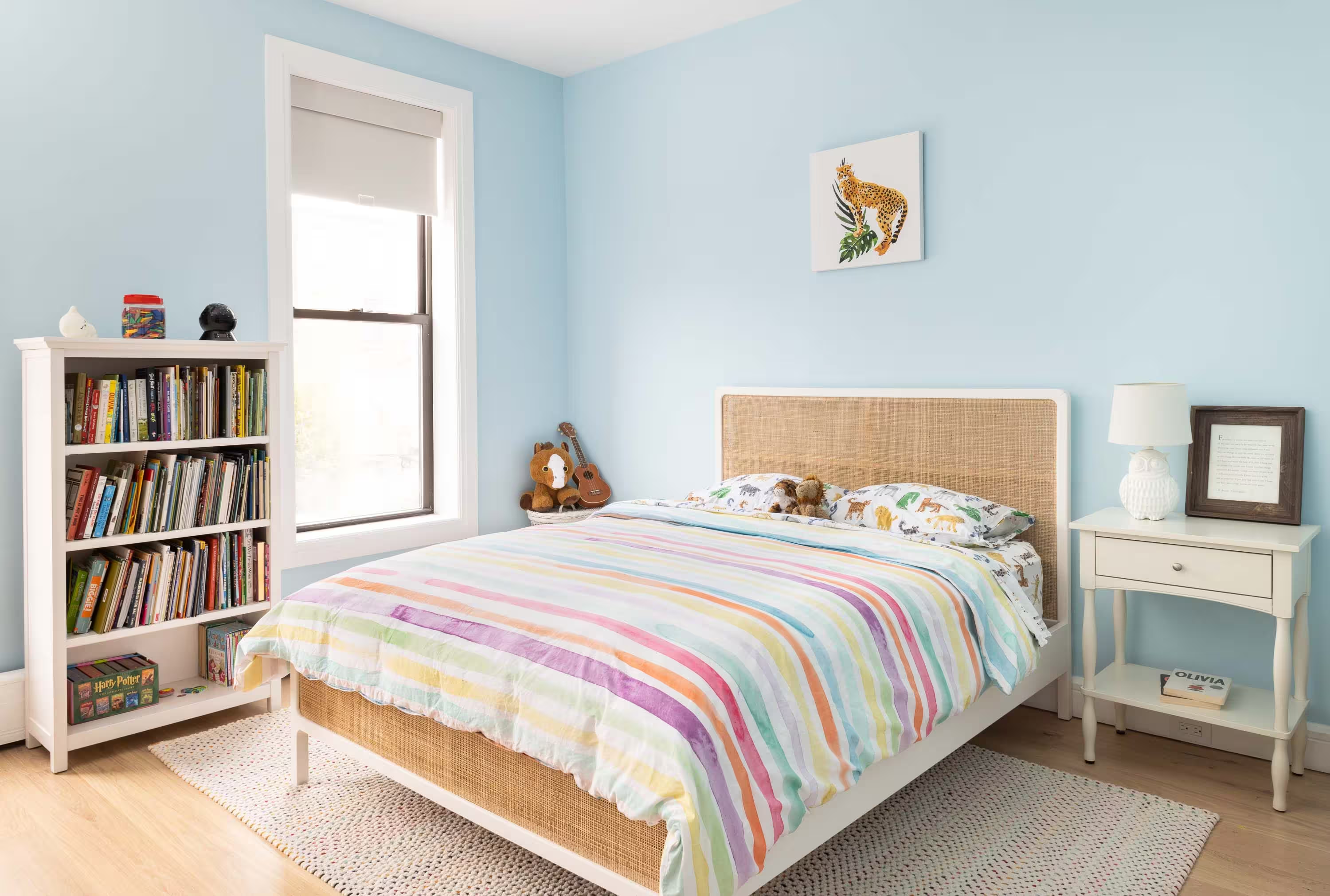
Safety-First Material Selection
Long gone are the days of lead paint and asbestos. In 2026, we’re working with safe, non-toxic materials and finishes, backed by industry safety certifications. Modern paints now offer zero-VOC or low-VOC options to reduce off-gassing and indoor air pollution, with some brands even earning kid-safe certifications from GreenGuard Gold or Green Seal.
.avif)
Custom Millwork For Evergreen Storage
While the random assortment of toys and collectibles on your kid’s shelves might evolve over time, the amount of items will likely only increase. Get ahead of the clutter your kids inevitably collect by installing custom millwork in their rooms, which serves as long-term storage and will maintain high-quality status over the years. Consider adding a built-in desk for them to grow into as we did in the kids room from our NYC condo renovation in Carnegie Hill at 8 East 83rd.
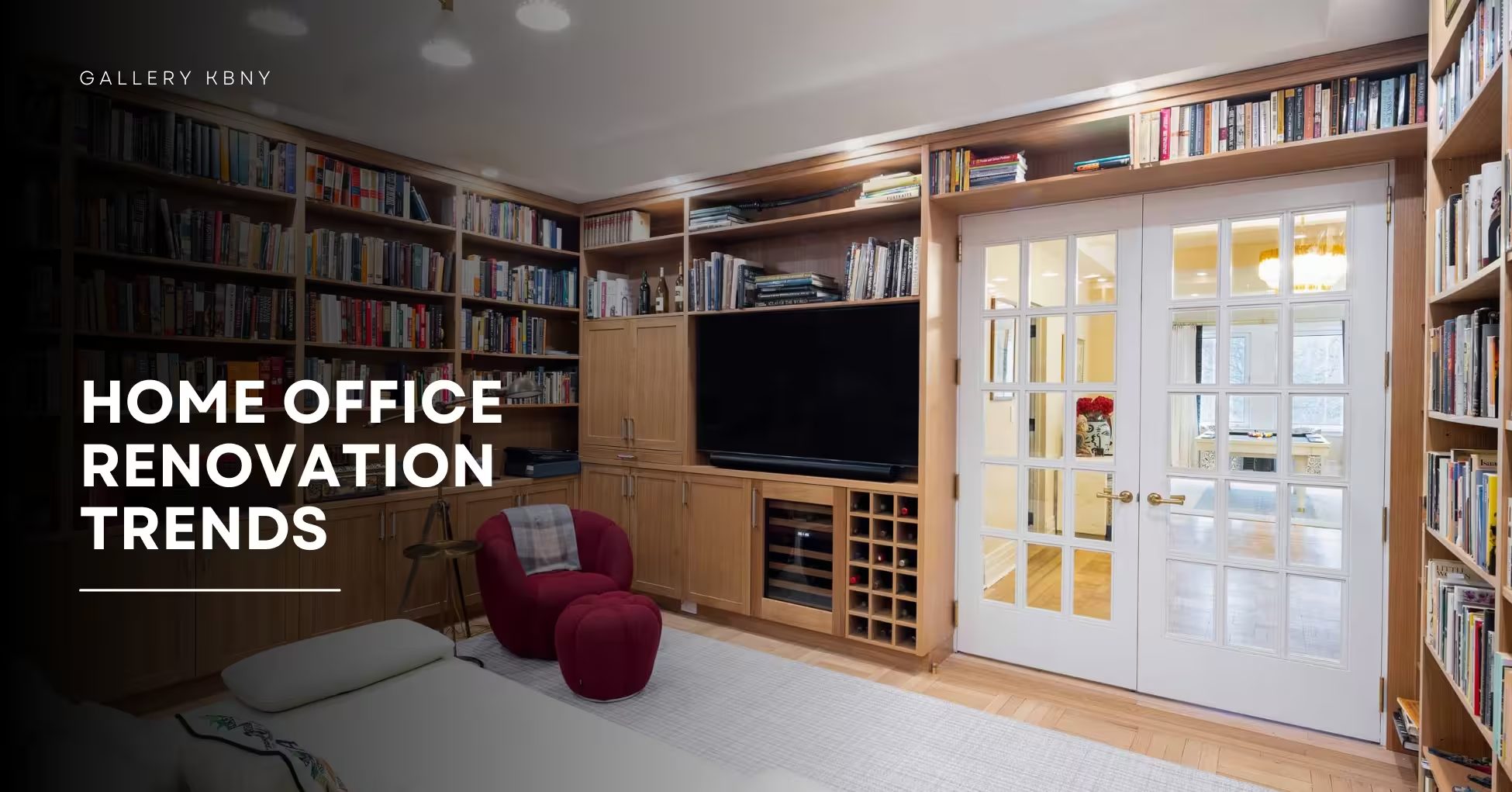
[#4]Home Office Renovation Trends[#4]
Work-from-home is no longer a temporary arrangement for most of our clients. The home office has become a permanent room, and the requests have shifted accordingly: from a functional corner to a properly designed, acoustically treated, and well-lit workspace that supports a full professional day.
Soundproof Your Set-Up
If you’re working from home often and have a family, there always seems to be more days off from school than you’d like. To calm the commotion during work hours, prepare your space with proper soundproofing when renovating.
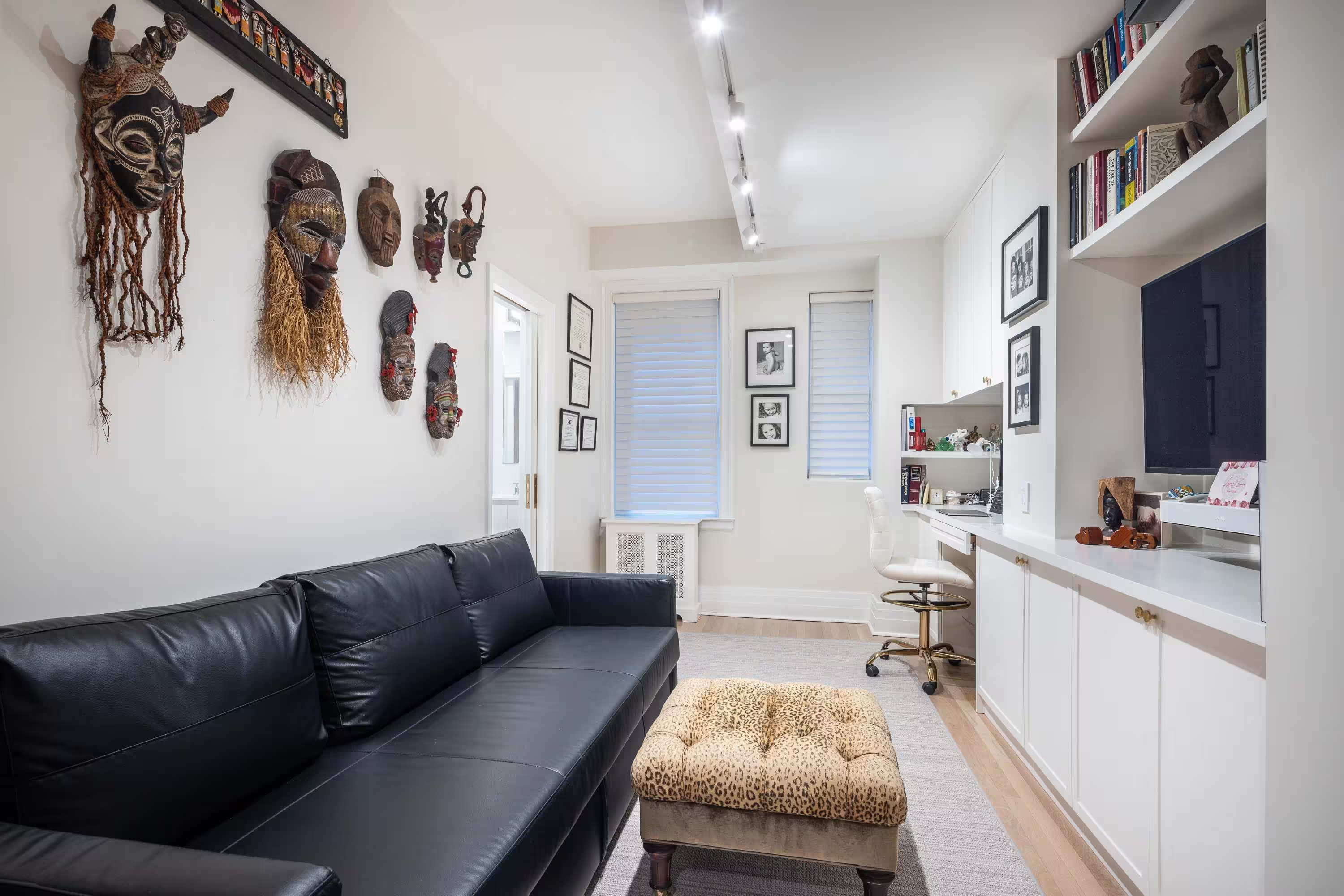
Upgrade Interior Walls With Acoustic Insulation And Isolation Systems
If your project requires a gut renovation and the space is coming down to the studs, consider beefing up the soundproofing from room to room with acoustic insulation. Mineral wool and fiberglass insulation provide enhanced soundproofing capabilities. An even more stringent approach to soundproofing your apartment’s office space walls would be installing isolation systems, which are added behind drywall to decouple surfaces and prevent vibrations from traveling through walls. Peace of mind is only an isolation system away.
%20Gallery%20KBNY.JPG)
Commercial-Grade Interior Doors
In our recent renovation 335 Greenwich, the client needed a closed-off and sound-proof work space. Our solution was a commercial-grade custom-built interior steel door, which not only helped isolate the sonics of the space, but matched the contemporary sophistication of the space. View the space in full via our Tribeca renovation before and after.
Layered Lighting for Video
A workspace that looks good on a video call requires layered, adjustable lighting with tunable color temperature. Adjustable LEDs that can shift from warm to cool white allow the room to function for focused work in the morning and look natural on camera throughout the day. This is a low-cost upgrade during a renovation and a meaningful improvement over a single overhead fixture.
Office Space Combination Room
Like the people who live in them, NYC apartments need to multitask. One client, newly working from home full-time, wanted a dedicated office without losing the function of her guest bedroom. To accommodate, we designed a custom Murphy bed with built-in millwork, creating a sleek desk area and added storage, no square foot wasted. View the full space from our Upper West Side condo renovation at 59 W 71st.
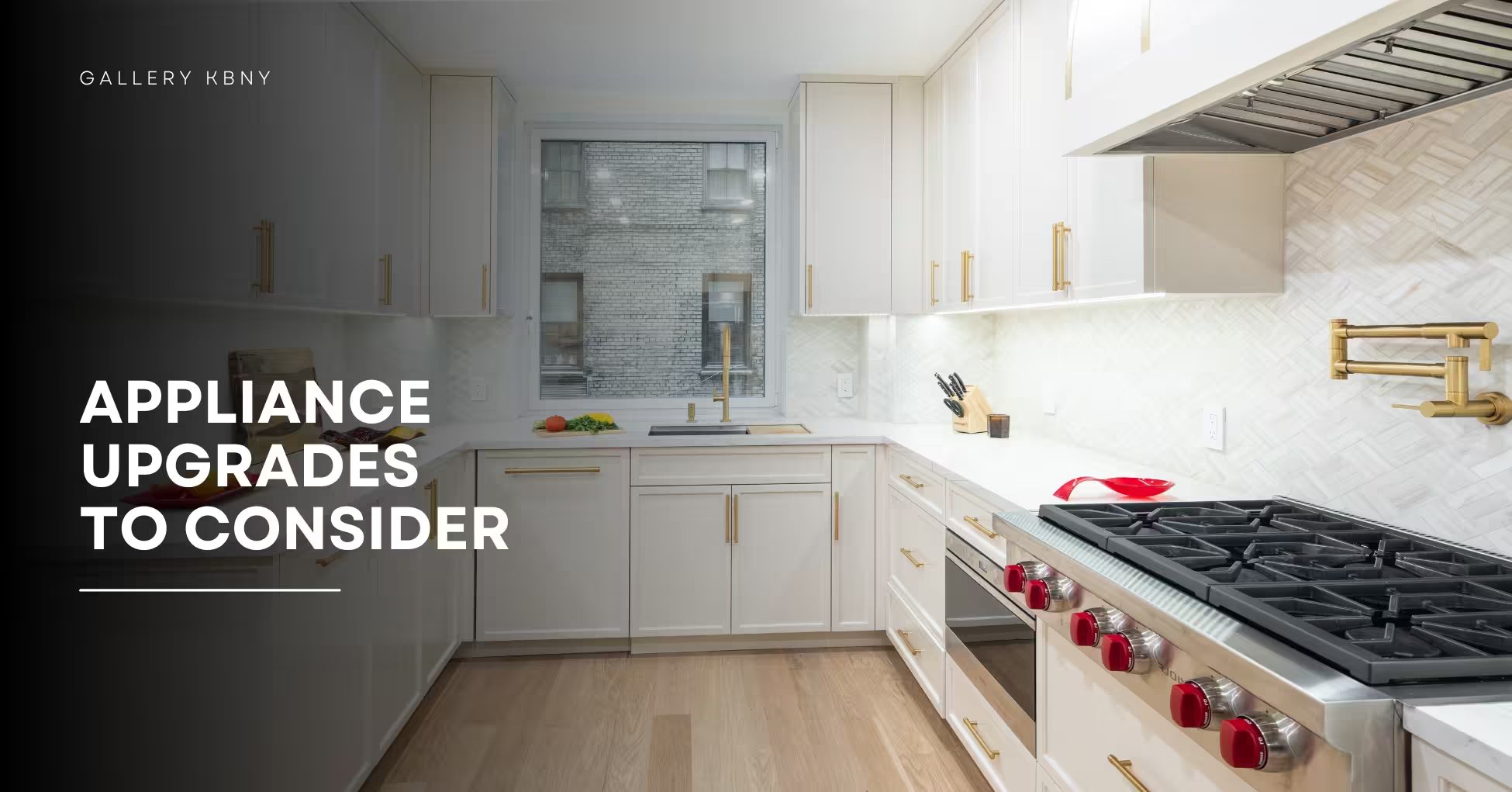
[#5]Appliance Upgrades Worth Considering[#5]
The best appliance selections in a NYC renovation combine performance with practicality. Space constraints, building requirements, and daily use patterns all shape the right choices. Not everything in a kitchen needs to be at the top of its category.
Appliances Built for NYC Kitchens
Space is premium in NYC, so your appliances need to earn their keep. Integrated drawer-style fridges (like Fisher & Paykel) and 24” dishwashers are great for tight kitchens, while compact induction cooktops and ductless hoods save room without compromising performance. We often spec downdraft ventilation systems to avoid overhead range hoods in open kitchens—especially when sightlines matter. See an example of this downdraft set-up in our Manhattan condo renovation at the Chelsea Mercantile on 252 Seventh Ave and via video above.
Smarter, Greener, Sleeker
Appliances in 2026 are doing more with less...less energy, less space, and less stress on your routine. Energy-efficient models, especially those with Energy Star certification, are now a given in most of our NYC home renovations. Beyond saving a few bills on utility costs, upgrading to smarter, greener tech provides less carbon emissions. Appliances from Bosch and Miele continue to lead on this front, especially with dishwashers and washers/dryers designed for low water use and quiet operation.
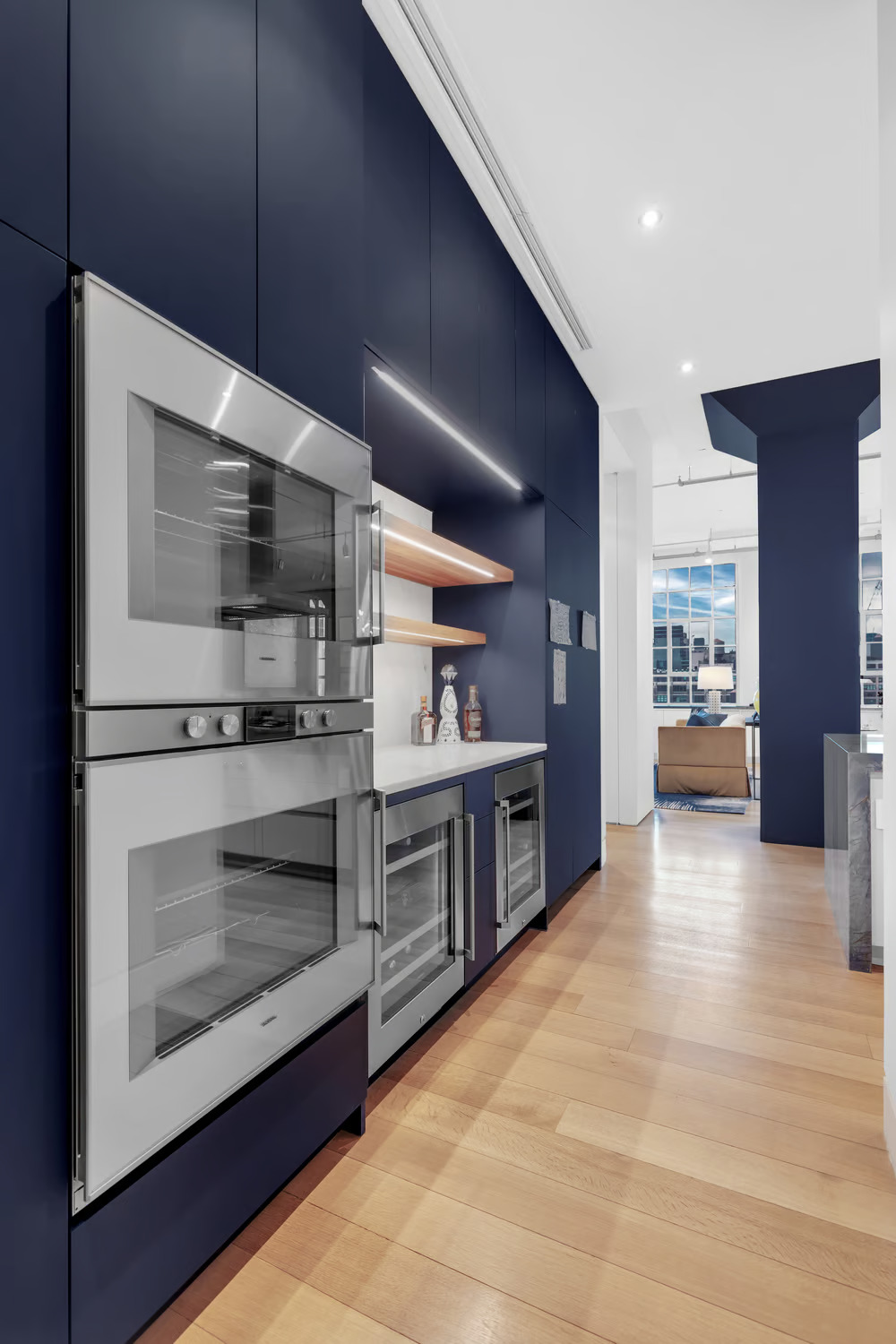
Splurge or Save?
Do we use and recommend luxury brands like Sub-Zero, Wolf, Gaggenau, and La Cornue? Yes, but building a standout kitchen doesn’t mean everything has to be top of the line. We often recommend mixing it up, maybe a relatively affordable showpiece range like the La Cornue CornuFé paired with a dependable, high-performing dishwasher from Bosch or Miele. That way, you get the wow factor at a glance plus everyday function - without stretching the budget.
- Further Reading: Best Appliances For A Luxury Kitchen Renovation In NYC
| Appliance | Save: Good Value Brands | Splurge: Premium Brands | Gallery Recommendation |
|---|---|---|---|
| Cooking | |||
| Range / Cooktop$2,000–$25,000+ | Bertazzoni, BlueStar, Cafe. Solid performance, good design at $2,000–$5,000 | Wolf, La Cornue CornuFe, Lacanche. Precision burners, longevity, statement aesthetics at $5,000–$25,000+ | Worth the splurge if cooking is central to the household. The range is the visual anchor of the kitchen and the most-used appliance in the space |
| Wall Oven$1,500–$12,000+ | Bosch, Thermador entry-level. Reliable, quiet, Energy Star at $1,500–$3,000 | Wolf, Gaggenau, Miele. Precision modes, steam-combi options, app connectivity at $4,000–$12,000+ | Splurge if baking or precision cooking matters. Wolf's Gourmet Mode and temperature probe are legitimately useful, not just marketing |
| Refrigeration | |||
| Refrigerator$2,500–$20,000+ | Liebherr, Fisher & Paykel, Cafe. Strong performance, panel-ready options at $2,500–$5,000 | Sub-Zero. Food preservation tech, air purification, WiFi, 20-year track record at $8,000–$20,000+ | Sub-Zero earns the price for families who cook seriously. For lighter use, Liebherr delivers comparable storage quality at a fraction of the cost |
| Dishwasher & Ventilation | |||
| Dishwasher$800–$3,000 | Bosch 500 series. Quiet, efficient, consistently top-rated at $900–$1,200 | Miele, Gaggenau. Near-silent operation, AutoOpen drying, exceptional longevity at $1,500–$3,000 | Save here. Bosch 500 performs at near-Miele level for half the price. One of the best value-per-dollar appliances in a kitchen renovation |
| Ventilation$500–$5,000 | Broan, Zephyr. Adequate for standard cooking at $500–$1,200 | Miele, Faber, custom integrated. Downdraft systems for open kitchens where sightlines matter at $2,000–$5,000 | Invest in the right type, not just the right brand. Downdraft systems often make more sense in open NYC kitchens than overhead hoods — spec accordingly |
| Laundry | |||
| Washer / Dryer$1,200–$4,500 | LG, Samsung. Reliable, good capacity, quiet ventless options for NYC at $1,200–$2,000 | Miele, Bosch. Low water use, very quiet, 20-year lifespan at $2,500–$4,500 per unit | Save here unless longevity is the priority. LG and Samsung handle NYC apartment ventless laundry well. Miele earns its price over a 15-20 year lifespan |
[#6]Essential Infrastructure Updates[#6]
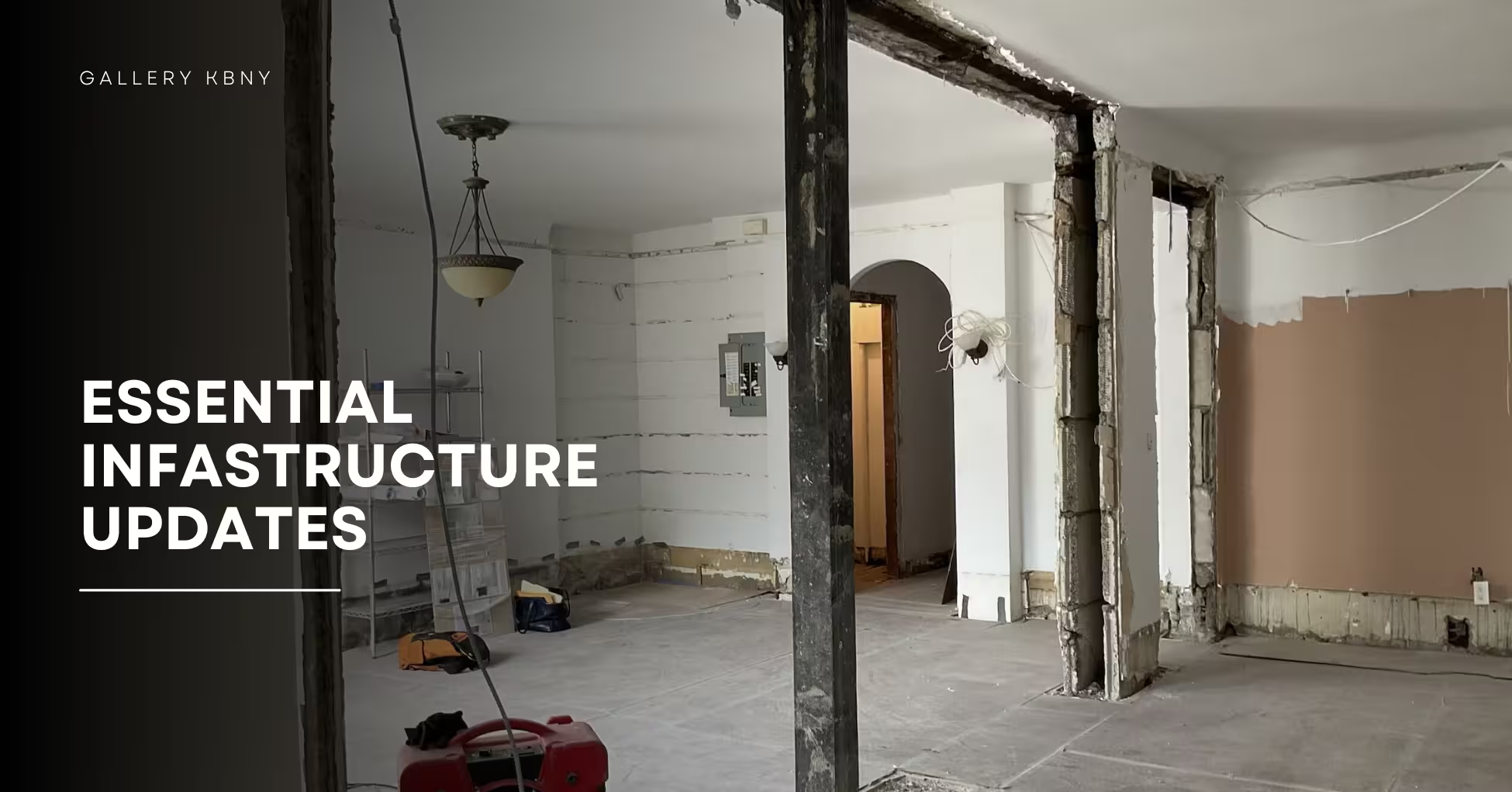
The finishes get the attention in any renovation, but the systems behind them determine whether a space actually performs. In NYC's older housing stock, the infrastructure inside the walls frequently needs as much investment as the surfaces in front of them. The earlier these decisions are made in the planning process, the less they cost.
| Infrastructure Upgrade | Typical NYC Cost Range | Pre-War Relevance | What Triggers The Need |
|---|---|---|---|
| Electrical Panel Upgrade$8,000–$25,000+ | $8,000–$25,000+ depending on amperage increase and riser distance | Almost universal in pre-war buildings operating on 40–60 amp service | Frequent tripped breakers, adding induction cooking, HVAC upgrade, heated floors, smart home systems, or any combination of high-draw appliances. Required when upgrading to 200 amp service |
| Full Rewiring$15,000–$60,000+ | $15,000–$60,000+ for a full apartment rewire in NYC (BX cable required) | High. Many pre-war buildings still have knob-and-tube or early aluminum wiring | Gut renovation, any structural work that opens walls throughout, or when existing wiring is outdated, undersized, or identified as a fire risk during pre-construction inspection |
| HVAC System Replacement$15,000–$80,000+ | $15,000–$80,000+ depending on system type and number of zones | High. Most pre-war buildings have through-wall units or no cooling at all. Modern zoned systems require design around existing ceiling and wall constraints | Aging through-wall units, absence of cooling, desire for room-by-room control, or gut renovation that opens ceiling cavities for ductwork routing |
| Plumbing Update$5,000–$40,000+ | $5,000–$40,000+ depending on scope and whether supply lines, drain lines, or both are replaced | High. Original cast iron and galvanized pipe is common in buildings built before 1950 | Low water pressure, visible corrosion, kitchen or bathroom relocation, or discovery of deteriorated pipe during pre-construction inspection |
| Acoustic Soundproofing$3,000–$20,000+ | $3,000–$20,000+ depending on number of walls and method | Moderate. Most relevant in gut renovations where walls are open and insulation can be upgraded without added disruption cost | Home office creation, bedroom adjacent to common walls, open-concept layouts where sound travels between zones, or buildings with known noise transmission issues between units |
| Radiant Floor Heating$8–$20 per sq ft | $8–$20 per sq ft installed, plus electrical capacity to support the load | Feasible in pre-war gut renovations when floors are being rebuilt. Requires adequate electrical capacity | Bathroom renovation where heated tile is a priority, or full gut renovation where subfloor is being rebuilt and the infrastructure can be integrated cleanly |
HVAC Innovations For Contemporary NYC Living
Updated HVAC is one of the first recommendations we make in any full renovation of a pre-war apartment. Most of these buildings were built before central cooling existed, and the through-wall units that were added over the decades are both inefficient and acoustically disruptive.
Custom HVAC Solutions For Pre-War Apartments
In historic buildings, integrating HVAC requires a lighter touch. Ceilings cannot always be dropped, beams cannot always be moved, and façades cannot always be touched. That is where tailored solutions shine.
At 203 West 81st, for example, we tucked ductwork through existing closets to avoid disturbing plaster ceilings. At 90 Riverside Drive, air handlers were concealed behind custom millwork with painted return grilles designed to disappear into the space. These systems provide full-home comfort while preserving the original character that made the apartment appealing in the first place. See Avi explain that solution above.
Ceiling-Mounted Solutions
Whether the building is pre-war, post-war, or relatively new, the right HVAC system comes down to three things: how it works, how it looks, and how it fits within your building’s regulations.
In newer buildings or co-ops without landmark restrictions, we often install ceiling-mounted air handlers with concealed ductwork routed through hallways or closets. These solutions preserve ceiling height, maintain the architectural intent of the space, and deliver quiet, efficient cooling without visual clutter.
Custom Solutions For Limited Roof Flexibility
In buildings with strict rules around roof access or courtyard equipment, we simply have to design our HVAC systems accordingly. This requires using interior-based systems with low-noise performance and condenser locations that stay within code, which is a solution we used in our full renovation of a pre-war co-op in Manhattan at 1035 5th Avenue. To install central air in this pre-war co-op without compromising ceiling height, pre-war aesthetics, or Central Park views, we used a VRV split HVAC system discreetly placed in a converted laundry room with fresh air access via an automated louver in place of a window, added drainage to handle any water intrusion, and heat-trace lines on the plumbing for extra freeze protection. See further explanation from Avi via video above.
Added Power With Electrical Upgrades
Many older NYC apartments still operate on just 40–60 amps of electrical service—far below what is required for today’s high-powered appliances and smart home systems. If your apartment experiences frequent tripped breakers, has outdated wiring, too few outlets, or struggles with voltage consistency, your renovation plans should include a full electrical upgrade. Consider the factors:
Contemporary Renovations Require More Power
Today’s luxury upgrades place far greater demands on your electrical system than those of decades past. Each of the following features adds significant electrical load:
- Induction Stoves
- Steam Ovens
- Advanced HVAC Systems
- Heated Floors
- Smart Home Automation
- Integrated Lighting Control Systems
Most of these upgrades require at least 100 amps—and many need 200 amps or more. Without proper electrical infrastructure, these systems may not function reliably and could even present safety concerns.
Stay Safe With Modern Standards
Sure, you want updated electrical for all the awesome tech and appliances, but there’s more behind our recommended push for more power. Aging wiring in many of NYC’s pre-war buildings can become a serious fire risk, especially when strained. A properly installed 200-amp system helps your home meet current safety codes and reduces the risk of electrical faults.
[#7]Flooring Solution Trends For 2026[#7]
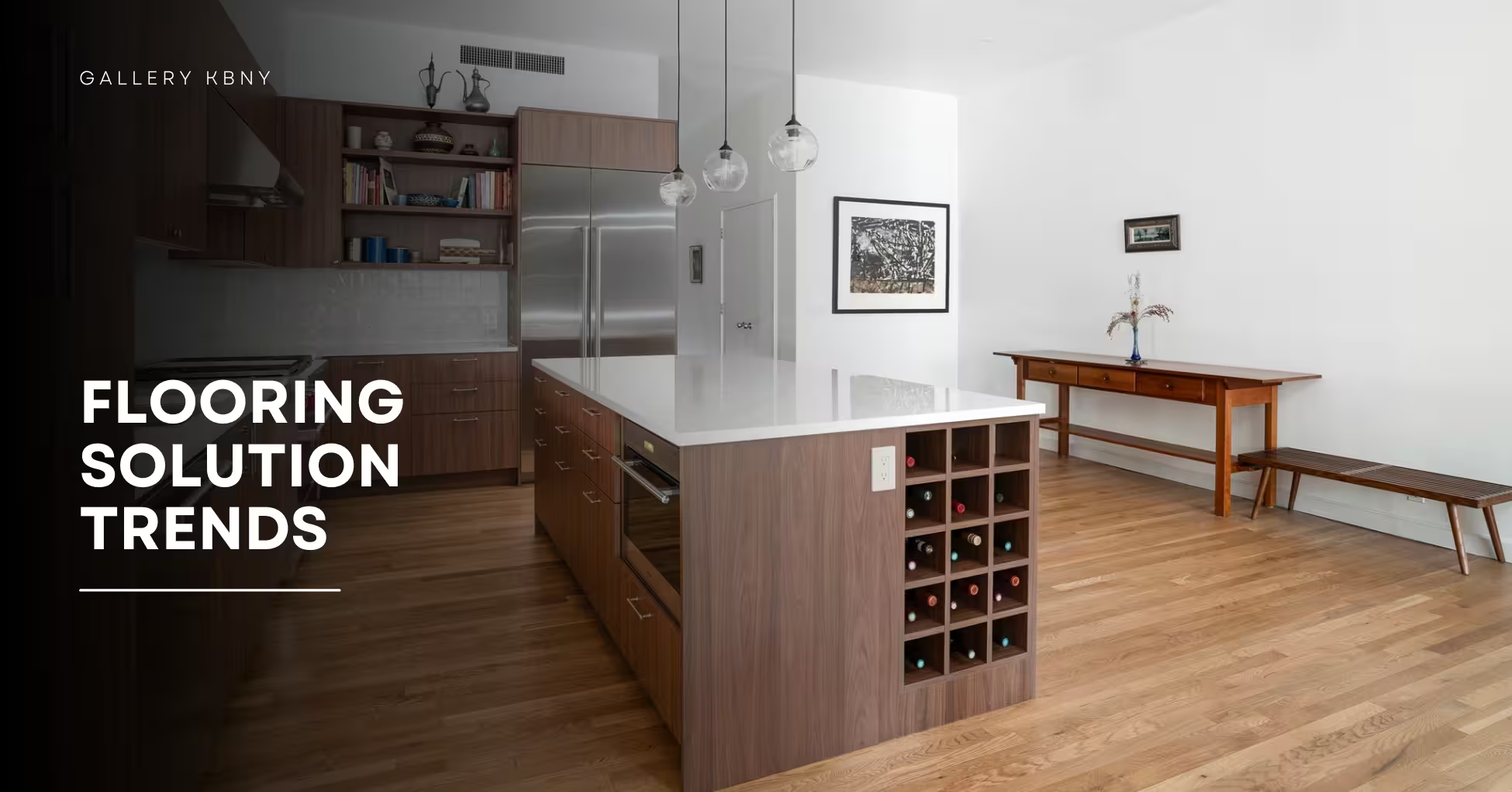
Flooring affects everything in a renovation: how a room looks, how sound travels between floors, and how the space holds up over years of real use. The material choice also has regulatory implications in most NYC co-op and condo buildings, which require minimum sound transmission ratings under the alteration agreement. Getting the selection wrong creates problems during the renovation and with the building after it is complete.
Durable Flooring To Meet Your Needs
| Material | Installed Cost | Durability | Sound Performance | Best For |
|---|---|---|---|---|
| Solid Hardwood$12–$30+ per sq ft | $12–$30+ per sq ft installed | Excellent. Can be sanded and refinished multiple times over decades | Moderate. Requires acoustic underlayment and building-compliant sound ratings in co-ops and condos | Pre-war apartments where original hardwood is being replaced or matched. Not ideal for below-grade or moisture-prone areas |
| Engineered Hardwood$8–$20 per sq ft | $8–$20 per sq ft installed | Very good. More dimensionally stable than solid hardwood. Can typically be refinished once | Moderate to good with acoustic underlayment. Easier to achieve IIC compliance than solid wood over concrete | Growing families, high-traffic areas, apartments with radiant floor heating, or buildings with strict sound transmission requirements |
| Luxury Vinyl Plank$6–$14 per sq ft | $6–$14 per sq ft installed | Excellent scratch and water resistance. Cannot be refinished but built to withstand heavy use | Good. Many LVP products include an attached acoustic underlayment. Naturally quieter underfoot than harder surfaces | Pet households, rental units, below-grade spaces, and any application where waterproofing is required |
| Large-Format Porcelain Tile$15–$40+ per sq ft | $15–$40+ per sq ft installed | Exceptional. Nearly impervious to scratch, water, and staining with proper grout sealing | Poor without underlayment. Hard surface transmits impact noise; requires full acoustic system to meet co-op and condo board requirements | Kitchens, bathrooms, entry foyers, and terraces. High-end installations using large-format slabs for a seamless look |
| Acoustic Underlayment$1–$4 per sq ft | $1–$4 per sq ft installed | Not structural. Functions as an impact noise buffer between the subfloor and finish flooring | Essential for any hard surface floor in a multi-unit NYC building. QuietWalk, cork, and rubber membranes are standard spec | Required under hardwood, engineered wood, LVP, and tile in most co-op and condo buildings. Non-negotiable in alteration agreements that specify IIC or STC ratings |
Gorgeous floors are great. Gorgeous floors that survive kids, pets, and Manhattan winters? Even better. Here are some picks for your own personal needs:
-min.jpg)
Pet-Friendly Picks
Luxury vinyl plank (LVP) has emerged as the MVP for pet households. Scratch-resistant, waterproof, and available in wood-look finishes, this sleek vinyl offering offers performance without sacrificing design. See an example of a Maison Blanc Rigid Core luxury vinyl plank we installed via our Yorkville co-op renovation in The Newbury at 250 East 87th, which is waterproof, dent-resistant and comes with an ‘Extreme Scratch Warranty’ from the manufacturer. Go ahead, Fido, do your worst.
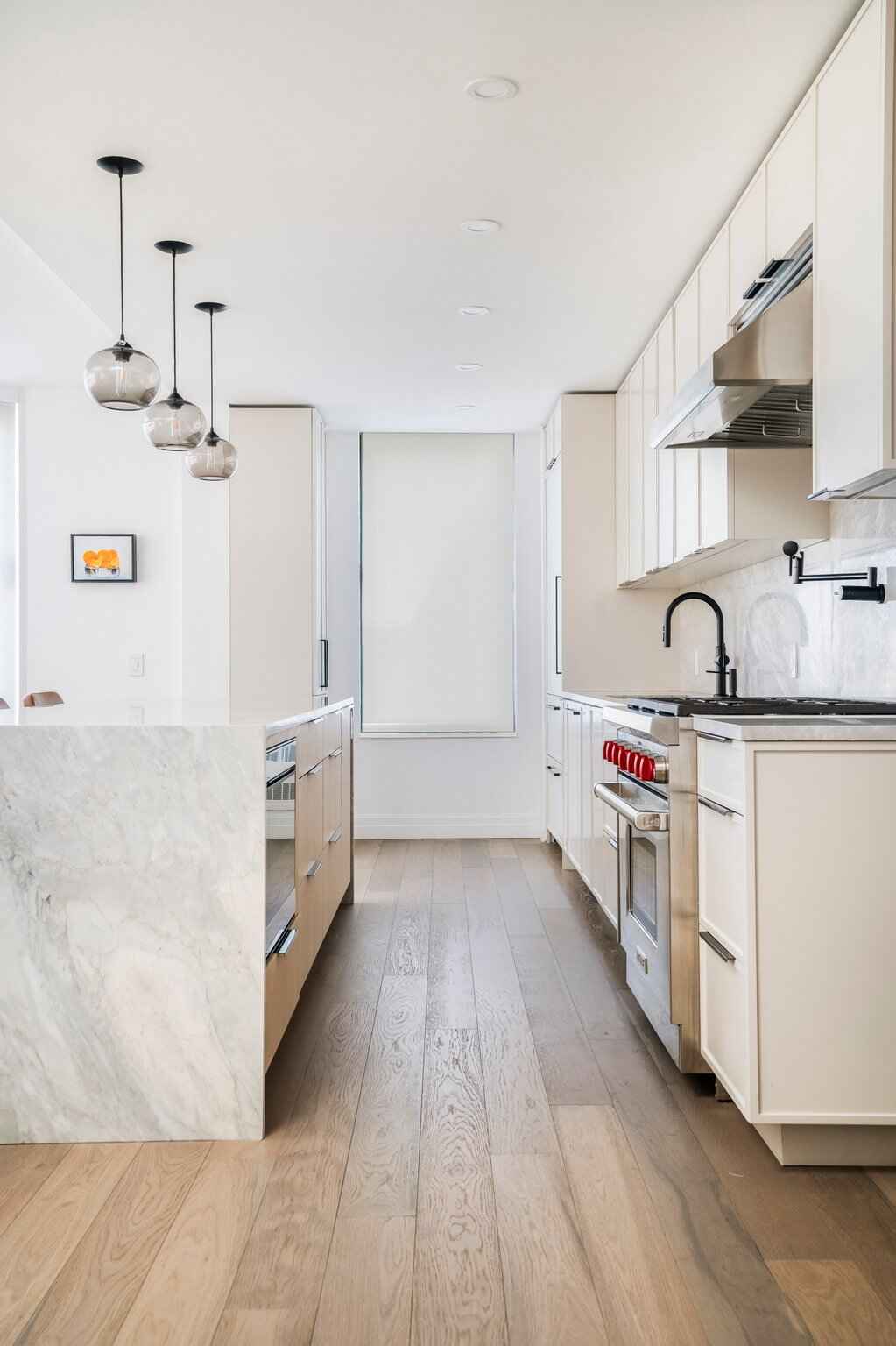
Kid-Tolerant Flooring
Engineered hardwood is a solid middle ground - sturdy, stylish, and more stable than traditional hardwood. For our Lincoln Square condo renovation in The Coronado at 155 West 70th Street, the clients were a growing family who required kid-friendly flooring. Our choice? Engineered oak flooring with a matte finish with a nice lightly brushed finish from PID floors, which has passed various scratch resistance and abrasion tests. Good to go.
Sound-Dampening Flooring Solutions For NYC Living
In a multi-unit building, what you install under the finish floor matters as much as the finish floor itself. Most co-op and condo alteration agreements require minimum IIC 50 and STC 50 sound transmission ratings. Acoustic underlayments like QuietWalk and rubber membranes sit between the subfloor and the finish flooring to reduce both airborne and impact noise. We include these on every renovation where a hard surface floor is going over a unit below. Skipping the underlayment to save a small amount of money is one of the more consistently regretted decisions in NYC apartment renovations.
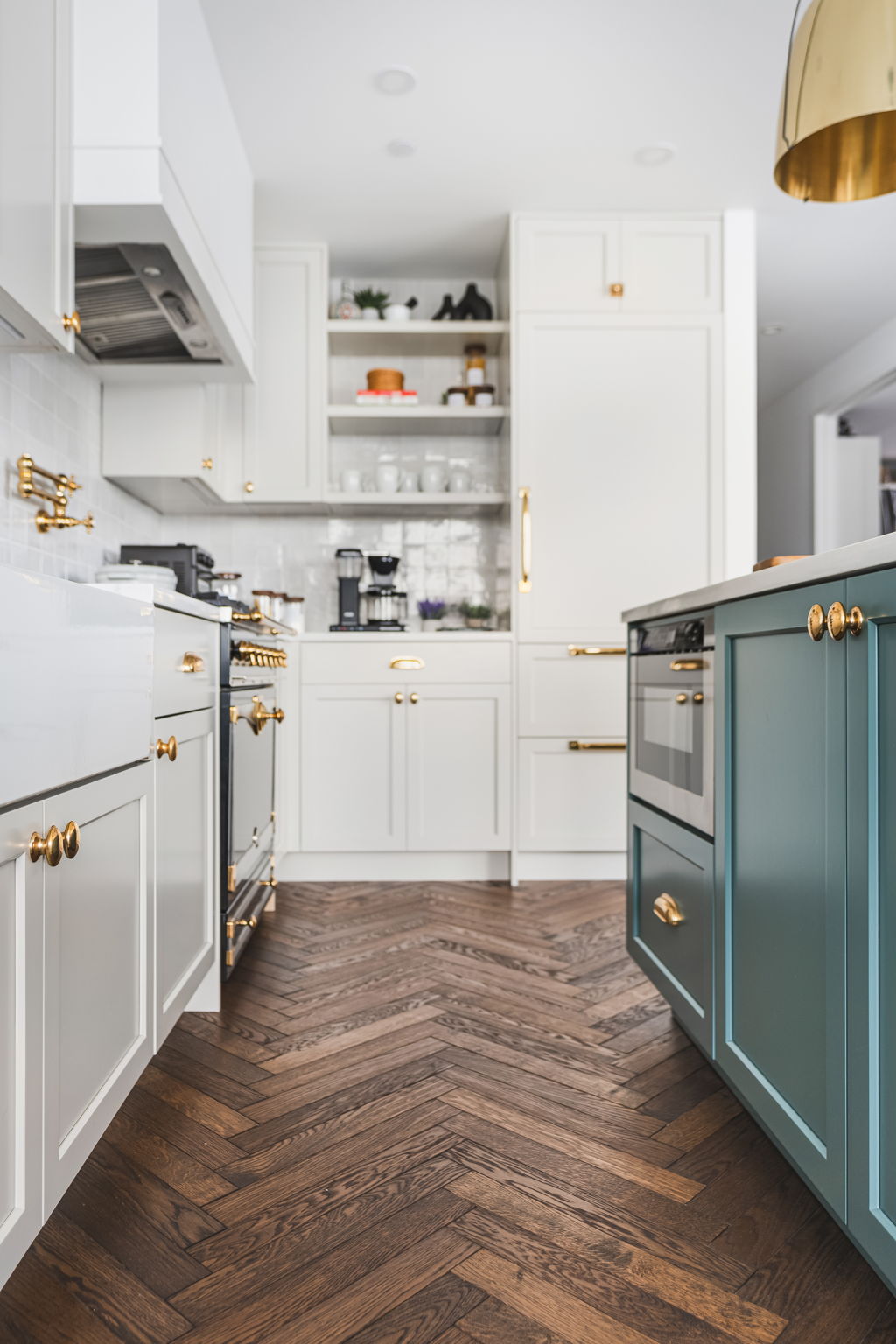
Subfloor Solutions
In most of our renovations, we’re installing acoustic under-layers like QuietWalk or rubber membranes, to make sure we’re dampening noise spread as much as possible. These materials sit between the subfloor and your flooring to help reduce both airborne and impact noise. See the process in action via the before and after images from our Greenpoint condo renovation at 21 India Street.
Soundproofing For Multi-Unit Buildings
If you’re renovating above someone else, don’t sleep on the soundproofing. Doubling up with both a sound-dampening underlayment and a thick flooring material like engineered wood or tile can drastically cut down on complaints from below.
- Further Reading: Here’s How You Can Soundproof An Apartment, Even in NYC
[#8]Helpful NYC Home Renovation Articles[#8]
Looking for more information and ideas on renovations in New York City? Make time for these priority articles from our Design & Reno blog, which lend further pre-war expertise for your upcoming NYC renovation.
- NYC Apartment Renovation Costs In 2026: Costs Per Square Foot
- Cost Comparison: Buying A Turnkey Apartment VS Renovating A Fixer Upper In Manhattan
- The Pros and Cons of Design-Build vs. Architectural Firms
- The Hidden Costs Of Renovating A Pre-War Apartment In NYC
Find A Reliable Contractor To Guide Your NYC Home Renovation
If you own a home in NYC, or are planning to purchase one that could use an upgrade, consider Gallery’s all-inclusive approach for your renovation. We’re New York City’s premier full-service design-build general contractor, with a start to finish process handling every aspect of your residential renovation, from architectural planning and interior design to permits and project management.
Ready to renovate? Learn why design-build is the best method for your NYC apartment renovation, explore more of our work, or contact us to see why our New York City apartment renovation and remodeling services are the most mindful choice when considering a residential renovation in Manhattan or Brooklyn.
Gallery KBNY is a full-service design-build firm featured in The New York Times, specializing in the architecture, interior design, and renovation of apartments, co-ops, condominiums, townhomes, and lofts across Manhattan and Brooklyn. Our integrated team of architects, designers, contractors, and project managers manages every phase from board approvals and DOB permitting through design and construction. A founding partner is involved in every project, start to finish. Because architecture, design, permitting, and construction are coordinated under one roof, the process remains streamlined, accountable, and transparent from start to finish. Our work has also appeared in Forbes, Architectural Digest, and Inc., and is backed by 100+ five-star client reviews.
[#FAQ]Frequently Asked Questions About Renovating NYC Apartments[#FAQ]
How do I know if I need a full gut renovation or a more targeted remodel?
The answer comes down to three things: the condition of your systems, the functionality of your layout, and your finish expectations. If the electrical, plumbing, and HVAC are outdated, the layout does not work for how you live, and you want everything to feel new, a gut renovation is almost always the more efficient path. Trying to do half a gut renovation typically ends up costing more than doing it properly from the start because trades get mobilized twice and finishes have to be reworked to meet in the middle. If your systems are in reasonable shape and your layout works, a targeted remodel of the kitchen, bathrooms, and finishes is a legitimate and cost-effective approach. We help clients work through this decision during the initial consultation, before any scope is committed to.
What does a full-service design-build renovation in NYC actually include?
A full-service design-build renovation covers every phase of the project under one team: architectural planning and interior design, DOB permit filings and co-op or condo board alteration agreement management, construction and all trade coordination, and project management through to the Certificate of Occupancy. At Gallery, a founding partner is involved in every project from the first walkthrough through the final inspection. The value of the integrated model is that the architect, designer, and construction team are working from the same documents and the same budget from day one, which eliminates the version control and accountability gaps that separate-firm models create.
How long does a whole-home renovation take in a Manhattan apartment?
A full gut renovation of a Manhattan apartment typically takes 12 to 18 months from the start of design through construction completion. That breaks down into roughly 2 to 4 months for design and documentation, 2 to 4 months for DOB permitting and board approvals, and 6 to 10 months of active construction depending on the apartment's size and complexity. Moderate remodels targeting kitchens, bathrooms, and finishes run 4 to 10 months. Co-ops with longer board review cycles and projects in landmarked buildings run toward the longer end of those ranges.
How much does a whole-home renovation cost in Manhattan in 2026?
A full gut renovation of a Manhattan apartment typically runs $550 to $650 per square foot at the upper mid-tier level and $700 to $1,000 or more per square foot at the luxury level, inclusive of design, construction, and project management. For a 1,200 to 1,500 square foot apartment, that puts the total range at approximately $660,000 to $1.5 million depending on size and finish level. These figures reflect current 2026 pricing. Material costs have increased 10 to 18 percent since 2024 as a result of tariffs on lumber, steel, aluminum, and imported fixtures, so budgets built before 2025 should be re-evaluated before finalizing a contract.
What renovation ideas consistently deliver the best return on investment in a NYC apartment?
Kitchen and bathroom renovations consistently deliver the highest ROI of any room, with kitchens leading. Beyond specific rooms, the upgrades that tend to hold their value best in NYC are those that address livability and function: reconfigured layouts that make better use of the square footage, infrastructure updates that bring electrical and HVAC to modern standards, custom millwork that maximizes storage without sacrificing design, and high-quality finishes in the rooms that buyers and renters evaluate first. Trend-driven choices with a short shelf life tend to perform worse than timeless, well-executed design.
Do I need to move out during a full NYC apartment renovation?
For a full gut renovation, yes in almost all cases. Once the apartment is stripped to the studs, it is not livable, and most co-op and condo buildings require the unit to be vacated during construction. For moderate remodels, it depends on the scope. A kitchen-only or bathroom-only renovation can sometimes be managed with the owner in residence if the construction is sequenced carefully, though it requires planning around temporary cooking and bathroom arrangements. We walk clients through the relocation requirements and timing during pre-construction so there are no surprises when the project starts.
What should I look for when hiring a renovation contractor in New York City?
The most important things to verify are licensing, insurance, and a track record of completed projects in NYC residential buildings. Beyond credentials, the questions that matter most are: who is managing your project day to day, how are change orders handled, and what does the contract say about timeline accountability. In NYC specifically, experience with co-op and condo board alteration agreements and DOB permitting is non-negotiable. A contractor who has not navigated those processes repeatedly will encounter delays that an experienced team would not. Asking to speak with past clients and visiting a completed project if possible are both worth the time.
Manhattan Design-Build
Evaluate Your Manhattan Apartment
Before You Buy
Buying an apartment you plan to renovate? A founding partner walks it with you during the contract period and maps the scope, cost, and timeline, so you know exactly what you're taking on before you sign.
As seen in
Pre-Purchase Assessment
Walk the apartment with us first and understand the full scope, cost, and timeline before you close.
or call us directly
let’s
Design-Build
together