.avif)


.png)
.png)


Navigating Material Choices for NYC Renovation: Top Tips
When mapping out options for your upcoming renovation, make sure material selection is closely considered.
June 20, 2026
|

Navigating Material Choices for NYC Renovation: Top Tips
Beyond top-level logistics, material selection may be most essential
Table of contents
- Why Material Choices Shape the Whole Project
- Surfaces That Belong in a High-End NYC Renovation
- The Regulatory Framework Behind Every Selection
- How to Make Informed Material Selections
- Working with a Design-Build Firm on Material Selection
- FAQs About Choosing Materials For NYC Renovations
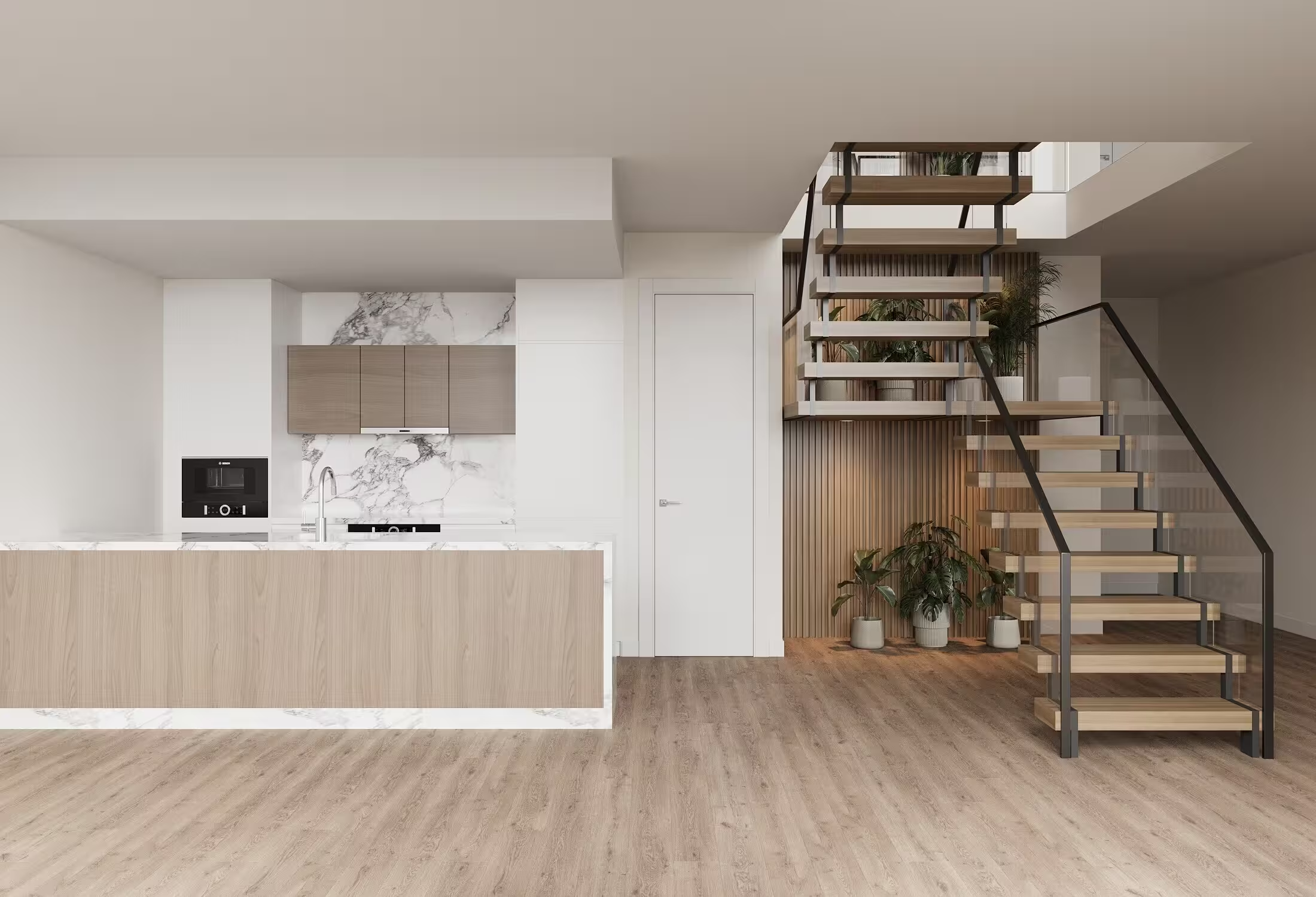
Material selection carries more weight in a New York City renovation than almost any decision made at the drawing board. Specifications shape how a home performs across decades of daily use, how it reads against the architecture of the building, and how cleanly the work moves through board and agency review. For owners working at the top of the Manhattan market, the conversation moves quickly past surface style toward provenance, structural compatibility, and the approval pathway that each selection sets in motion.
This guide walks through how material choices influence a whole-home renovation, which surfaces hold their value in a high-end apartment, the regulatory framework that governs what reaches the building, and the way a design-build firm sequences procurement so the project stays on schedule.
[#importance]Why Material Choices Shape the Whole Project[#importance]
In a residence where every square foot commands a premium, specifications set the tone for durability, the way a space ages and photographs, total cost of ownership, and the environmental performance expected of a modern home. Each of these deserves a closer look through the lens of an apartment that will be lived in fully and held for the long term.
Durability & Service Life
A primary residence absorbs constant use, and the assemblies beneath the finishes matter as much as the visible surface. Rift and quarter-sawn white oak laid over a properly prepared subfloor refinishes across multiple decades. Natural stone chosen for the correct application rewards the initial outlay with a lifetime of service. Mechanical systems earn the same scrutiny, since cooling, ventilation, and plumbing run continuously against the demands of a dense building and a variable climate.
Architectural Character
Each Manhattan neighborhood carries its own architectural vocabulary, from the cast-iron lofts of SoHo to the limestone facades of the Upper East Side. Material selection gives a renovation its voice within that context. Reclaimed timber and lime plaster bring warmth and depth to a pre-war layout, while honed stone and rift-cut oak read quiet and contemporary in a modern interior. The strongest results come from finishes chosen in sympathy with the building's own character.
Cost & Long-Term Value
Budgets in this market reward a long view. Premium materials carry a higher upfront figure, and they repay it through service life, lower maintenance, and the resale strength that buyers in this segment expect. A quartzite counter lasts a lifetime. Oak refinishes for generations, and a quality plaster wall repairs cleanly without a full redo. These selections protect value over the entire life of the home.
Sustainability
New York's sustainability standards continue to tighten, and high-performance specifications align a renovation with both regulation and the expectations of a discerning owner. Low-VOC finishes, responsibly sourced stone and timber, high-efficiency glazing, and well-insulated assemblies improve indoor air quality while reducing operating cost. Projects pursuing LEED or a comparable benchmark fold these choices into the design from the first conversation.
[#sophisticated-materials]Surfaces That Belong in a High-End NYC Renovation[#sophisticated-materials]
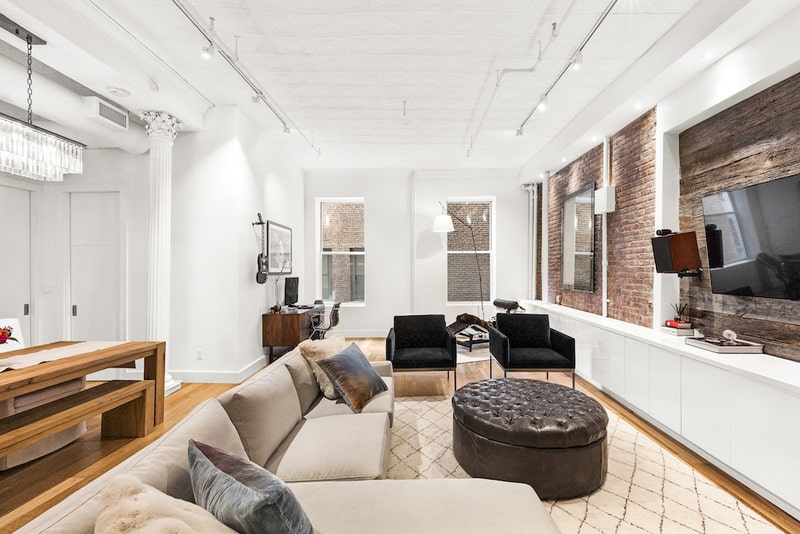
A sophisticated Manhattan renovation calls for a material palette with depth, provenance, and staying power. The selections below recur in the homes Gallery KBNY delivers across Manhattan and Brooklyn, chosen for the way they perform under daily life and the way they age.
Rift And Quarter-Sawn White Oak Flooring
White oak cut on the rift and quarter sets the standard for a high-end interior. The straight, tight grain reads calm underfoot and pairs with both pre-war detailing and a contemporary plan. A solid plank refinishes many times over its life, which keeps a floor looking current as tastes shift. Wide engineered planks offer similar beauty with added dimensional stability, a useful quality in apartments that run warm and dry through the heating season.
Natural Stone Slabs
Marble and quartzite slabs bring a depth of pattern and color that engineered surfaces approach but rarely equal. Quartzite delivers exceptional hardness and stain resistance for a working kitchen, while marble offers a soft, evolving patina prized in baths and on furniture-grade pieces. Slab selection at the quarry or yard lets the design team book-match veining across an island, a backsplash, or a full surround, a level of control that defines the most considered Manhattan kitchens.
Venetian Plaster and Limewash
Hand-applied plaster gives walls a luminous, tactile finish with a quiet sense of age. Venetian plaster holds a polished, almost stone-like surface, while limewash settles into a softer, mineral matte. Both finishes repair gracefully and avoid the flat uniformity of standard paint, which suits the proportions and light of a pre-war apartment.
Handmade and Specialty Tile
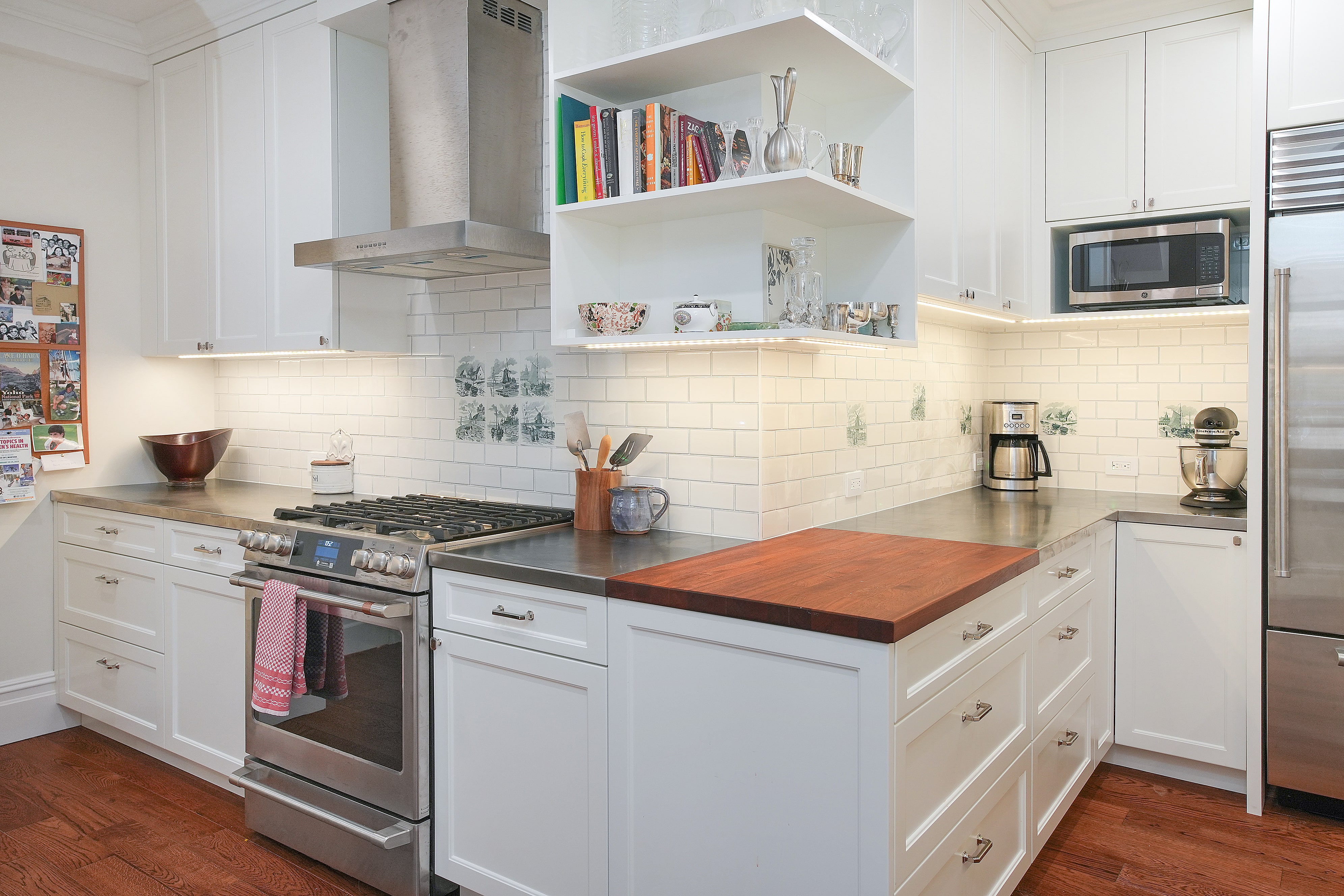
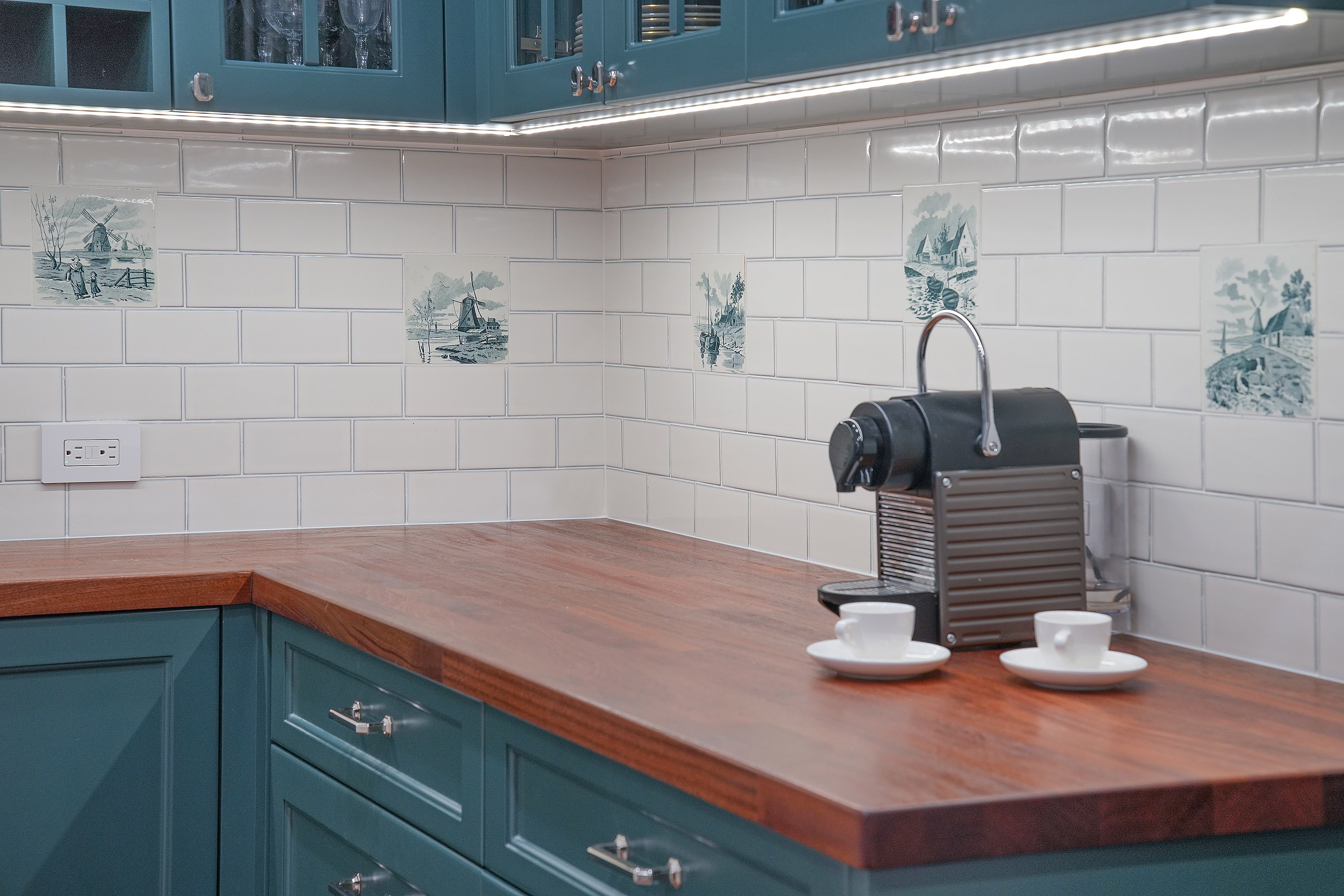
Handmade and imported tile carries subtle variation in glaze and dimension that gives a wall genuine life. A custom pantry in one of our Central Park West renovations features hand-painted tiles more than a century old, sourced from the Netherlands, set as a focal point that anchors the room. Specialty tile rewards early specification, since the finest makers work to long production calendars.
Integrated and Paneled Appliances
At this level, appliances disappear into the cabinetry. Integrated refrigeration, paneled dishwashers, and built-in column units keep the eye on the architecture and the millwork. Professional-grade ranges and ventilation deliver the performance a serious kitchen demands while holding a refined, intentional look.
Solid Hardware and Living Finishes
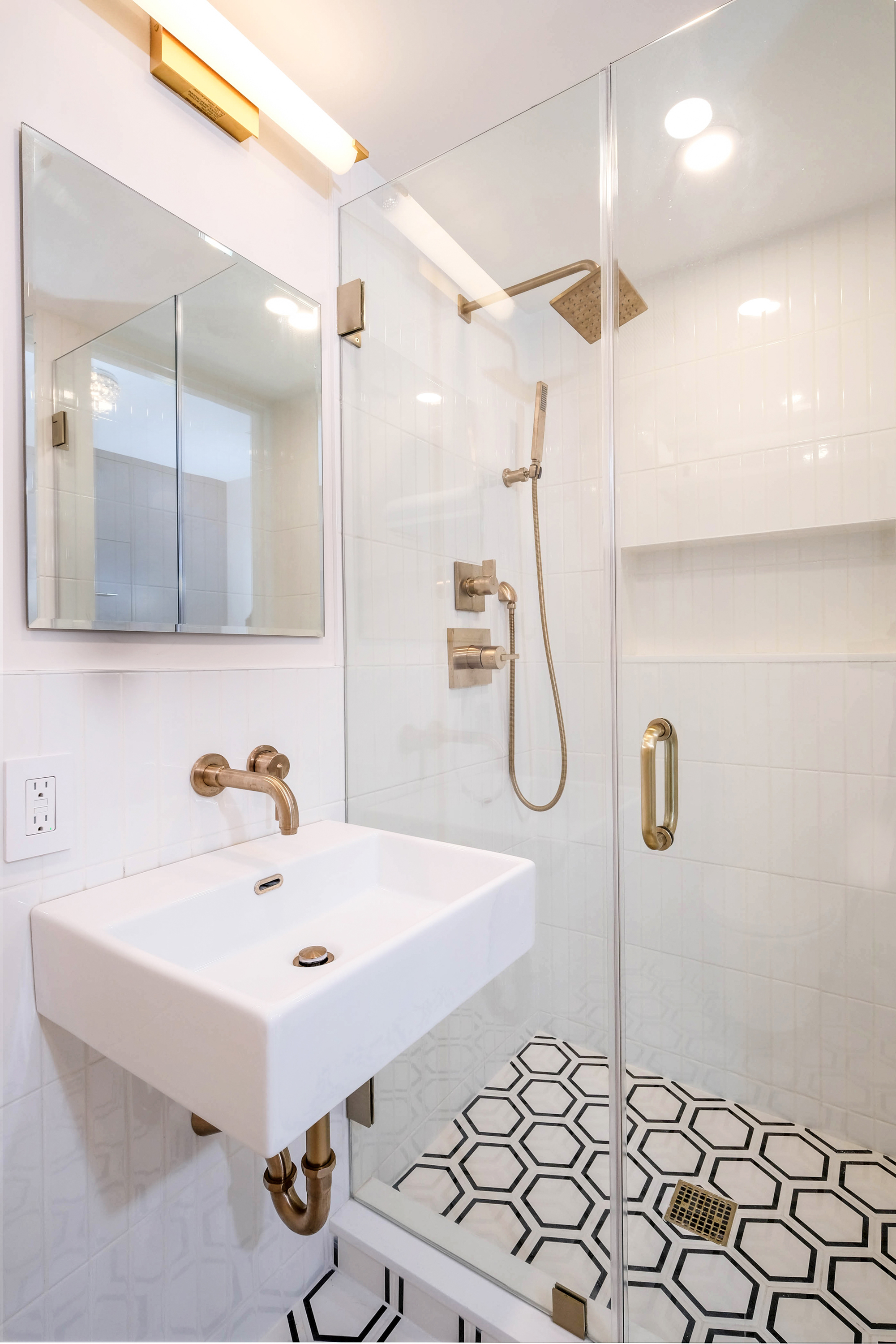
Solid hardware in unlacquered brass, aged bronze, or polished nickel completes a room with a sense of permanence. Unlacquered brass develops a warm patina that many owners prize, and the underlying metal cleans back to bright whenever a fresh look is wanted. Quality hinges, pulls, and fixtures operate smoothly for decades, a detail that registers every time a door or drawer is touched.
Stainless Steel Appliances
Stainless steel appliances add a contemporary edge to your kitchen, elevating the overall look. They are known for their durability, resisting rust, stains, and heat. While they can be a bit of a fingerprint magnet, their modern design and cost-effectiveness make them an appealing choice for upgrading the kitchen in apartments and condos. When selecting stainless steel appliances, be mindful that quality and features can vary among brands and models. Read about the latest technology in stainless steel appliances via Renovations & Technology: 10 Smart Home Remodeling Ideas.
[#regulations-requirements]The Regulatory Framework Behind Every Selection[#regulations-requirements]
Renovating in New York means working inside a layered set of rules that touch nearly every material decision. Familiarity with that framework keeps a project compliant and on schedule, and it shapes which selections are viable in a given building.
Building Codes and DOB Filings
The Department of Buildings governs structural work, mechanical systems, and the filings that authorize them. Material decisions tied to plumbing relocation, electrical capacity, or framing changes flow through these filings, and the specifications must satisfy code for fire rating, egress, and assembly performance. Early coordination with the design team confirms that a desired material clears review before procurement begins.
Landmarks and Historic Districts
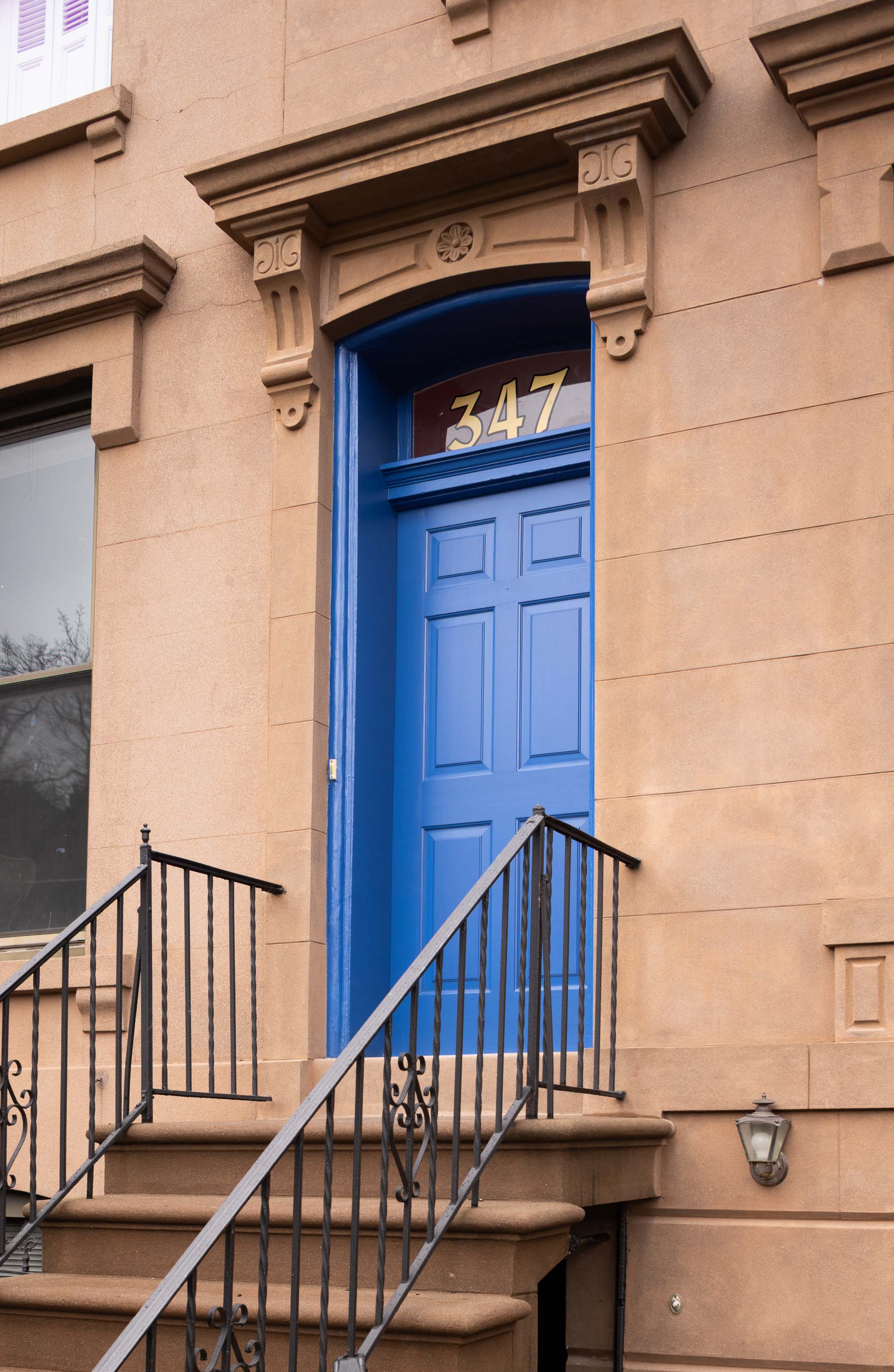
A building within a historic district or carrying landmark status answers to the Landmarks Preservation Commission for any change visible from the public way, which most often means windows, facade elements, and storefronts. Interior selections generally sit outside LPC jurisdiction unless the interior itself holds a designation. For a brownstone renovation in Carroll Gardens, our team fabricated a custom door templated to its historic predecessor and finished it in a landmark-friendly constitutional blue to earn approval, a reminder that the right material can satisfy preservation review and design intent at once.
Sustainability and Local Law
City sustainability measures increasingly influence material and system choices, particularly around energy performance and emissions. High-efficiency glazing, improved insulation, and efficient mechanical equipment support compliance while lowering long-term operating cost. Owners pursuing a green certification benefit from setting these targets during design development, where they integrate cleanly into the plan and the early filings.
Board Alteration Agreements
Co-op and condo boards govern renovation through an alteration agreement, and its terms reach directly into material selection. Sound-attenuation requirements dictate flooring assemblies, insurance and contractor qualifications gate who may perform the work, and work-hour and delivery rules shape the construction calendar. A design-build firm fluent in these agreements aligns specifications with board expectations before submission, which keeps approval on track.
[#top-tips]How to Make Informed Material Selections[#top-tips]
A disciplined approach to selection protects both the design and the budget. The points below reflect how the most successful Manhattan projects reach their material decisions.
Weigh Performance Alongside Provenance
Look past the showroom impression toward how a material behaves over years of use. Service life, maintenance demand, and suitability for a specific room carry as much weight as appearance. A finish that performs well in a powder room may struggle in a primary kitchen, so each selection deserves evaluation against its actual setting.
Account for the Building's Constraints
Every building sets its own limits through structure, mechanical capacity, and board policy. Heavy stone may call for structural review, certain flooring assemblies satisfy sound requirements that others miss, and delivery logistics in a pre-war elevator building can rule out oversized slabs. Confirming these constraints early keeps a beautiful idea from stalling at the freight entrance.
Considering a Renovation in NYC?
Click to schedule a consultation with one of the principle partners at Gallery, who will hear out your renovation plans and let you know the best way to proceed - whether we end up working together or not.
Schedule Your Consultation
Review Full-Size Samples in the Actual Light
Stone, plaster, and tile shift considerably between a supplier's showroom and the light of the apartment. Reviewing large samples on site, across morning and evening conditions, gives an honest read on color, veining, and texture. This step prevents the costly surprise of a slab that looked perfect at the yard and reads cold in the room.
Plan Maintenance Honestly
Some of the most rewarding materials ask for ongoing care. Unlacquered brass patinas, marble etches and develops character, and natural stone benefits from periodic sealing. Owners who understand and welcome that care enjoy these surfaces fully, while those seeking the lowest upkeep can lean toward quartzite, engineered surfaces, and sealed finishes that hold their look with minimal attention.
Protect the Schedule with Early Specification
Long-lead materials govern the critical path of a renovation. Imported stone, custom millwork, specialty tile, and landmark-compliant windows can each carry lead times measured in months. Locking these selections during design development, well ahead of demolition, keeps the project moving and avoids the schedule gaps that late decisions create.
[#working-design-build]Working with a Design-Build Firm on Material Selection[#working-design-build]
A design-build firm unifies design vision and construction expertise under one roof, which streamlines material selection from concept through installation. A few practices help owners get the most from that partnership.
Communicate Vision and Budget Openly
Clear direction at the outset gives the team what it needs to source well. Sharing references, mood boards, and any non-negotiable materials conveys intent, while an honest budget lets the team guide where to invest and where a smart alternative serves the same goal. Open dialogue on priorities keeps the design and the numbers aligned from the start.
Lean on In-House Sourcing
A firm with founding partners on every project brings deep supplier relationships and current knowledge of materials, construction methods, and local rules. That access opens doors to stone yards, fabricators, and makers that reward trust with priority and quality. Owners benefit from drawing on this expertise while staying clear about their own priorities.
Collaborate on Selection and Resolve Differences Through Dialogue
Working collaboratively is crucial. Your design-build team should include you in the material selection process, presenting options that align with your vision and budget. Ask questions, seek clarification, and request material samples for a tactile experience. This collaborative approach ensures your satisfaction with the final selections. See how our detailed design process works at Gallery KBNY.
Hold Transparency on Cost and Build in Flexibility
Detailed cost breakdowns covering material, fabrication, and labor give owners a clear view of where the budget goes. Renovations also reveal the unexpected, so a measure of flexibility around availability and field conditions keeps the project on track. Regular check-ins through construction keep everyone informed as selections move from drawing to delivery to installation.
[#conclusion]Bringing Your Design To Life[#conclusion]
Collaborating with a design-build firm for material selection can simplify the renovation process, ensuring your vision becomes a reality. By fostering a communicative and collaborative partnership, you'll navigate the complexities of material choices in the bustling city of New York with confidence and success.
Considering an apartment renovation in New York City? View our portfolio of NYC apartment renovation before and afters, learn more about Gallery, or contact us today.
We are a New York Times-featured design-build firm in New York City with a full-service approach to renovations in Manhattan and Brooklyn that includes everything from interior design and architecture services to filing permits and construction management. We’re experts in pre-war apartment renovations, apartment combinations, room creations, full gut renovations and all that falls in between. Let us bring your dream home to life.
Gallery KBNY is a full-service design-build firm featured in The New York Times, specializing in the architecture, interior design, and renovation of apartments, co-ops, condominiums, townhomes, and lofts across Manhattan and Brooklyn. Our integrated team of architects, designers, contractors, and project managers manages every phase from board approvals and DOB permitting through design and construction. A founding partner is involved in every project, start to finish. Because architecture, design, permitting, and construction are coordinated under one roof, the process remains streamlined, accountable, and transparent from start to finish. Our work has also appeared in Forbes, Architectural Digest, and Inc., and is backed by 100+ five-star client reviews.
[#FAQ]Frequently Asked Questions About Choosing Materials For NYC Renovations[#FAQ]
Why do material choices matter so much in a NYC renovation?
Material selection carries more weight in a New York City renovation than almost any decision made at the drawing board. Specifications shape how a home performs across decades of daily use, how it ages and photographs, and how it reads against the architecture of the building. They also determine the total cost of ownership and the environmental performance expected of a modern home. For owners at the top of the Manhattan market, the conversation moves quickly past surface style toward provenance, structural compatibility, and the approval pathway each selection sets in motion. Because material decisions touch durability, character, cost, and compliance at once, they deserve close attention early in the design.
Which surfaces belong in a high-end NYC renovation?
A sophisticated Manhattan renovation calls for a material palette with depth, provenance, and staying power. Rift and quarter-sawn white oak flooring sets the standard for a high-end interior. Natural stone slabs in marble or quartzite bring pattern and color that engineered surfaces rarely equal. Venetian plaster and limewash give walls a luminous, tactile finish with a quiet sense of age. Handmade and specialty tile adds genuine life through subtle variation. Integrated and paneled appliances keep the eye on the architecture, and solid hardware in unlacquered brass, aged bronze, or polished nickel completes a room with permanence. Each is chosen for how it performs under daily life and how it ages.
What flooring holds its value in a luxury apartment?
White oak cut on the rift and quarter sets the standard for a high-end interior. Its straight, tight grain reads calm underfoot and pairs with both pre-war detailing and a contemporary plan. A solid plank refinishes many times over its life, which keeps a floor looking current as tastes shift across the decades. Wide engineered planks offer similar beauty with added dimensional stability, a useful quality in apartments that run warm and dry through the heating season. Chosen and installed over a properly prepared subfloor, this flooring rewards the initial outlay with a lifetime of service, which is what makes it a lasting value rather than a recurring expense.
How should natural stone be selected for a renovation?
Marble and quartzite slabs bring a depth of pattern and color that engineered surfaces approach but rarely equal. Quartzite delivers exceptional hardness and stain resistance for a working kitchen, while marble offers a soft, evolving patina prized in baths and on furniture-grade pieces. The most considered approach is to select the actual slab at the quarry or yard, which lets the design team book-match the veining across an island, a backsplash, or a full surround. That level of control over how the stone flows through a space defines the most refined Manhattan kitchens. Matching the stone to its application, and to the room it will live in, is what protects both its beauty and its performance.
How do board alteration agreements affect material selection?
A co-op or condo board governs renovation through an alteration agreement, and its terms reach directly into material selection. Sound-attenuation requirements dictate the flooring assemblies that satisfy the building, so a hard surface may need a specific underlayment to meet the standard. Insurance and contractor qualifications determine who may perform the work, and work-hour and delivery rules shape the construction calendar around the materials arriving on site. A firm fluent in these agreements aligns the specifications with the board's expectations before submission, which keeps the approval on track. Confirming what the agreement requires early is what prevents a chosen material from failing review after the fact.
How do landmark rules affect material choices?
A building within a historic district or carrying landmark status answers to the Landmarks Preservation Commission for any change visible from the public way, which most often means windows, facade elements, and storefronts. Interior selections generally sit outside LPC jurisdiction unless the interior itself holds a designation. The right material can satisfy preservation review and design intent at once: for a Carroll Gardens brownstone, the team fabricated a custom door templated to its historic predecessor and finished it in a landmark-friendly constitutional blue to earn approval. Understanding what the landmark status governs before specifying exterior materials is what keeps a renovation both compliant and true to its design.
How does DOB review affect material decisions?
The Department of Buildings governs structural work, mechanical systems, and the filings that authorize them, and material decisions tied to those areas flow through the same review. A specification connected to plumbing relocation, electrical capacity, or a framing change has to satisfy code for fire rating, egress, and assembly performance. Coordinating with the design team early confirms that a desired material clears review before procurement begins, so a selection is not ordered and then rejected at filing. Building the code requirements into the material decisions from the start is what keeps the DOB process from delaying the work or forcing a substitution late in the project.
How do I make informed material selections?
A disciplined approach protects both the design and the budget. Performance deserves as much weight as provenance, so service life, maintenance demand, and suitability for a specific room matter alongside appearance, since a finish that performs well in a powder room may struggle in a primary kitchen. The building's own constraints set real limits, from structural review for heavy stone to sound requirements for flooring to the delivery logistics that can rule out oversized slabs in a pre-war elevator building. Reviewing full-size samples on site, across morning and evening light, gives an honest read on color, veining, and texture. Confirming these factors early keeps a beautiful idea from stalling at the freight entrance.
Manhattan Design-Build
Evaluate Your Manhattan Apartment
Before You Buy
Buying an apartment you plan to renovate? A founding partner walks it with you during the contract period and maps the scope, cost, and timeline, so you know exactly what you're taking on before you sign.
As seen in
Pre-Purchase Assessment
Walk the apartment with us first and understand the full scope, cost, and timeline before you close.
or call us directly
let’s
Design-Build
together