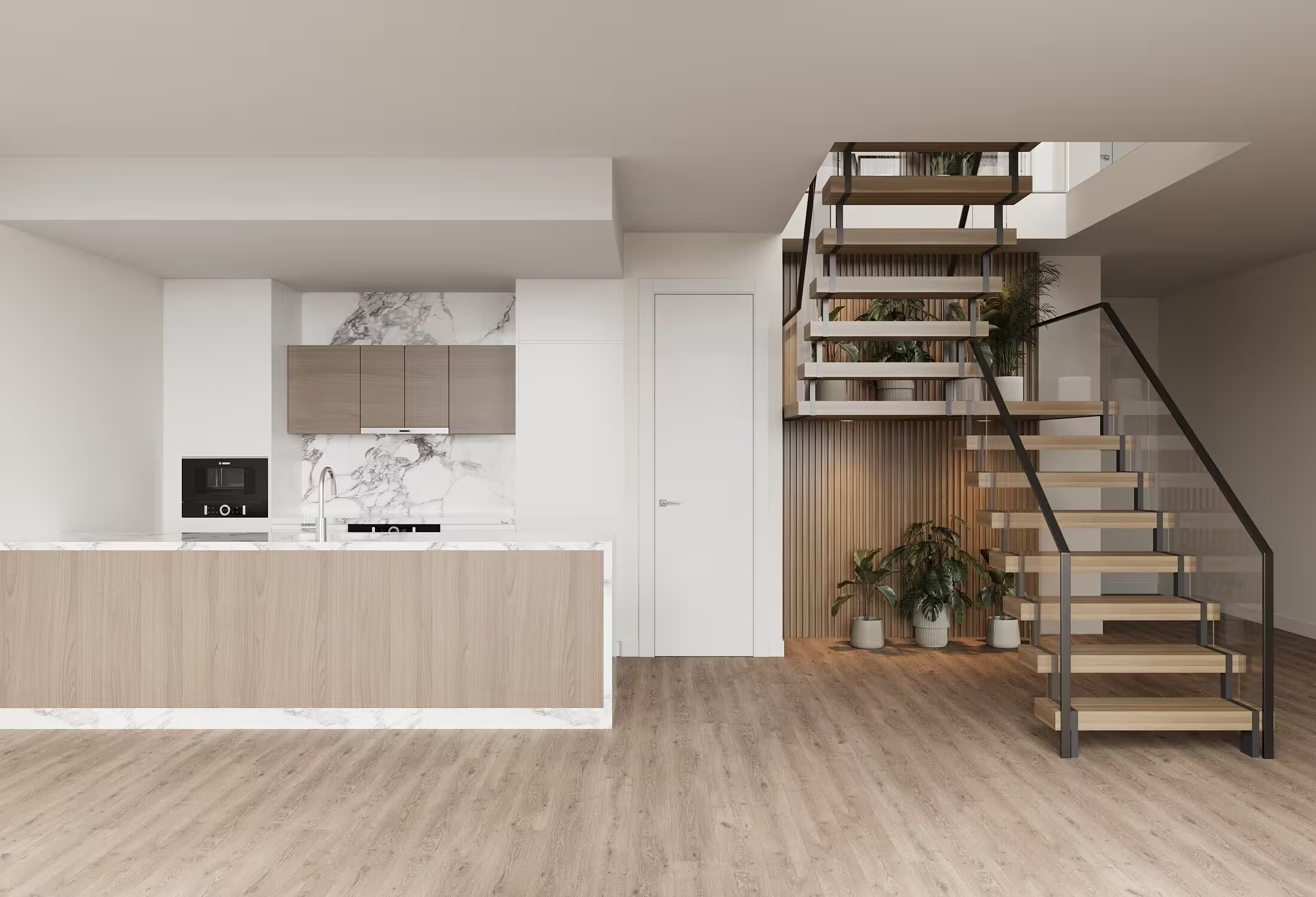
.avif)


.png)
.png)


Ceiling The Deal: Standout Lighting From Our NYC Renovations
From pre-war co-ops to modern lofts, explore how lighting shapes character, mood, and cohesion in NYC renovations.
June 5, 2026
|

Ceiling The Deal: Standout Lighting From Our NYC Renovations
From sculptural pendants to timeless chandeliers, explore how lighting defines New York City’s most inspired renovations.
TABLE OF CONTENTS
- Fredrick Ramond Oberon 37" Chandelier
- Lightology Fairfax Chandelier
- Rejuvenation Haleigh 12" Pendant
- Sean Lavin Belterra Chandelier
- Stingray Chandelier from Studio Nordhaven
- Visual Comfort Talia 8 Light 33" Wide Chandelier
- Sarnen Small Pendant Lights
- Paxton 25 3/4" Wide Polished Nickel 6-Light Chandelier
- Rousseau Grande Eight Light Articulating Chandelier
- Huntington Linear Lighting Chandelier
- Jonathan Adler Sputnik Chandelier
- Bristol Wood Bead Chandelier
- Capiz Shell Pendant 36"Chandelier
- Noella Brass Chandelier 52''
- FAQs About Lighting For Full Home Renovation In NYC
In a 4,000-square-foot pre-war co-op overlooking Central Park, the architecture already carries the room, emboldened by everything from original marble to sky-high ceilings. With such strong company, the fixture chosen to hang above the dining nook has to hold its own. That decision is essential, honoring the room's existing character while raising the bar for the space.
A well-chosen fixture brings depth and cohesion to a home, drawing out materials and anchoring the look. In the following spotlight, we're highlighting standout lighting selections from our portfolio, ranging from heritage chandeliers in pre-war co-ops to sculptural pendants in downtown lofts, each one suited to the home and the people in it. The projects below show how a single fixture can define a space.
Eyeing statement fixtures for your upcoming renovation in NYC? Browse below to see how we continually use choice lighting to define mood, style, and space across our residential renovations throughout NYC.
The Four Layers of a Lighting Plan
A statement fixture is the visible top of a deeper plan. The layers below work together so a room reads well at every hour and for every use.

[#1]Fredrick Ramond Oberon 37" Chandelier | Full Renovation Of Pre-War Co-Op In Manhattan @ 1035 5th Avenue[#1]
This full-gut renovation reworked a 4,000-square-foot pre-war co-op overlooking Central Park, updating the layout and systems while preserving the original marble and architectural detail. Above the kitchen dining nook hangs Fredrick Ramond’s Oberon 37-inch chandelier, its ribbed stems and articulating arms carrying multi-colored swirl glass shades in a heritage-brass finish. The fixture dims and adapts to a slope up to 90 degrees, giving the nook a tailored, transitional glow suited to the building’s period bones. View the full renovation before and after.
.jpg)
[#2]Lightology Fairfax Chandelier | Manhattan Condo Renovation At The Chelsea Mercantile @ 252 Seventh Ave[#2]
Inside The Chelsea Mercantile, a 19-story pre-war landmark, this full-scale condo renovation turned a previously combined two-unit residence into a refined, family-centered home. The kitchen anchors the project around a grand Armani Silver marble island and fingerprint-resistant FENIX cabinetry. The matte chrome Fairfax chandelier sits above it, its hand-blown asymmetrical glass globes and adjustable arms reading as a focal point that echoes the building’s mix of modern and historic detail. View the full renovation before and after.
%20(2).jpg)
[#3]Rejuvenation Haleigh 12" Pendant, Metal Shade | Greenpoint Condo Renovation @ 21 India Street[#3]
This Greenpoint condo renovation paired modern refinement with French farmhouse warmth. A black-and-brass La Cornue range anchors the kitchen, framed by hand-painted backsplash tile and a sculpted plaster hood. Directly above, Rejuvenation’s Haleigh 12-inch pendants carry a parabolic dome and floating brass hardware, casting a soft, diffused light that stays understated. View the full renovation before and after.
[#4]Sean Lavin Belterra Chandelier | Pre-War Co-Op Renovation @ 61 W 9th Street [#4]
On West 9th Street, this pre-war co-op renovation set contemporary fixtures within classic architecture. The Sean Lavin Belterra chandelier hangs at the center of the reimagined living space, its petal-shaped LED form drawn from the lotus flower, casting a soft, organic glow that suits the apartment’s clean lines and restrained palette. View our Manhattan Before & Afters.
.jpg)
[#5]Stingray Chandelier from Studio Nordhaven | Brooklyn Heights Pre-War Co-Op Combination @ 61 Pierrepont[#5]
For this Brooklyn Heights co-op combination, the clients expanded space for a growing family while keeping the character of their pre-war home. The renovation preserved the original detail and added modern function through new lighting and updated bathrooms, along with integrated HVAC. The Stingray chandelier from Studio Nordhaven centers the living area, its graceful curves and hand-brushed bronze shades taking their cue from the movement of stingrays and casting a warm, ambient light. View the full renovation before and after.
Color Temperature, Rendering & Control by Room
A beautiful fixture still depends on the light inside it. Warmth, color accuracy, and dimming decide whether a finished room feels considered or merely lit.
.jpg)
[#6]Visual Comfort Talia 8 Light 33" Wide Chandelier | Chelsea Co-Op Renovation @ 107 W 25th St.[#6]
Set within a historic Chelsea co-op once home to the Krisiloff Bros Sewing Machine Co, this well-received renovation balanced family function with lasting sophistication. The open kitchen and dining area were reimagined around flow and form, combining built-ins and choice accessories with finishes like Neolith Calacatta Gold Silk. Overhead, the Visual Comfort Talia chandelier ties the space together through patterned glass bulbs and a sculptural steel frame, adding a warm, refined glow. View the full renovation before and after.
- Add More Depth To Your Renovation: The NYC Kitchen Accessories Guide - Smarter Storage, Sleeker Design

[#7]Sarnen Small Pendant Lights from Visual Comfort & Co | Upper West Side Condo Renovation @ 59 W 71st[#7]
At 59 West 71st on the Upper West Side, the client brought a long-planned home to life after years of smaller updates. Careful design planning turned the kitchen into a refined focal point, with natural stone countertops and opaque Tribeca shaker cabinetry, plus updated appliances. Sarnen small pendants from Visual Comfort light the space, casting a warm, subtle sophistication across its classic-leaning palette. View the full renovation before and after.
-min.JPG)
[#8]Paxton 25 3/4" Wide Polished Nickel 6-Light Chandelier from Crystorama | Co-Op Renovation In Manhattan @ 230 E 50th St[#8]
In this Turtle Bay pied-a-terre, the clients wanted a refined Manhattan retreat with comfort at its center. A traditional palette of soft blues and grays alongside natural marble guided each choice, from light-blue Miralis shaker cabinetry to crown molding and marble mosaic flooring. The Paxton chandelier from Crystorama completes the look through a polished nickel frame and white linen shade with crystal accents, bringing a soft glow to the serene scheme. View the full renovation before and after.
.jpg)
[#9]Rousseau Grande Eight Light Articulating Chandelier from Visual Comfort | Manhattan Co-Op Renovation @ 245 E 54th St[#9]
During this Sutton Place renovation in The Brevard, the clients reimagined their home rather than relocate. Work focused on the kitchen and bathrooms, with a clean mid-century-inspired aesthetic and upgraded millwork. Above the newly opened kitchen sits the Rousseau Grande chandelier by Kelly Wearstler from Visual Comfort, a sculptural centerpiece with a minimalist silhouette and etched crystal detailing on a refined metal finish, bringing artistry and warmth to the contemporary space. View the full renovation before and after.
%20Gallery%20KBNY.JPG)
[#10]Huntington Linear Lighting Chandelier from Hudson Valley | Co-Op Loft Renovation In Tribeca @ 335 Greenwich St.[#10]
Once an artist’s live-work studio, this Tribeca loft at 335 Greenwich Street became a family-ready home that honors the building’s creative roots. The full-gut renovation introduced a reconfigured three-bedroom layout and refined proportions, with a lighting plan tuned to the loft’s architectural rhythm. The Huntington linear chandelier from Hudson Valley reads as the centerpiece, its milk-glass tubes and soft black shade set against polished metal accents for a modern, Art Deco-inspired effect. View the full renovation before and after.
Sizing & Hanging a Statement Fixture
The right fixture in the wrong proportion reads as a misstep. These are the working guidelines Gallery uses to scale and place a piece before it ever ships.
.jpg)
[#11]Jonathan Adler Sputnik Chandelier | Manhattan Condo Renovation @ 360 East 88th[#11]
This Upper East Side condo renovation turned a dated post-war apartment into a bright, contemporary retreat. Clean lines and glossy white cabinetry, paired with natural quartz, opened the space into a light-filled room that feels current and lasting. Above the dining area, the Jonathan Adler Sputnik chandelier adds a playful focal point through brass crown cups and crystal accents. View the full renovation before and after.
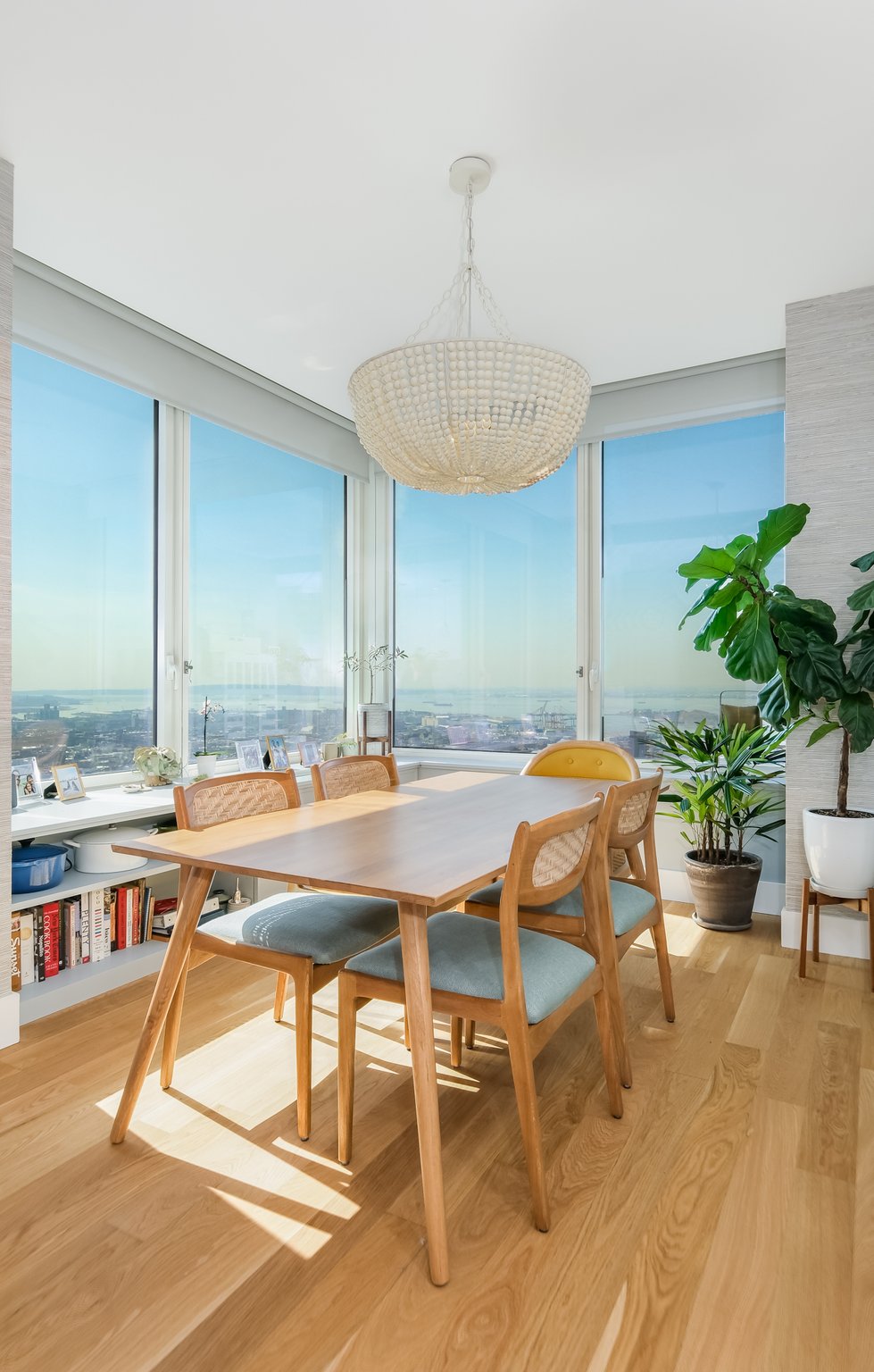
[#12]Bristol Wood Bead Chandelier | Condo Renovation Downtown Brooklyn @ 388 Bridge Street[#12]
For this downtown Brooklyn condo renovation, the clients wanted a warm, welcoming space with boho character and modern polish. The kitchen and dining areas were reimagined around a custom island and a sleek bar, with layered natural texture that frames panoramic Manhattan views. Centered above the dining table, the Bristol Wood Bead chandelier from Pottery Barn adds organic charm through handwoven Gemelina wood beads and a soft whitewashed finish. View the full renovation before and after.
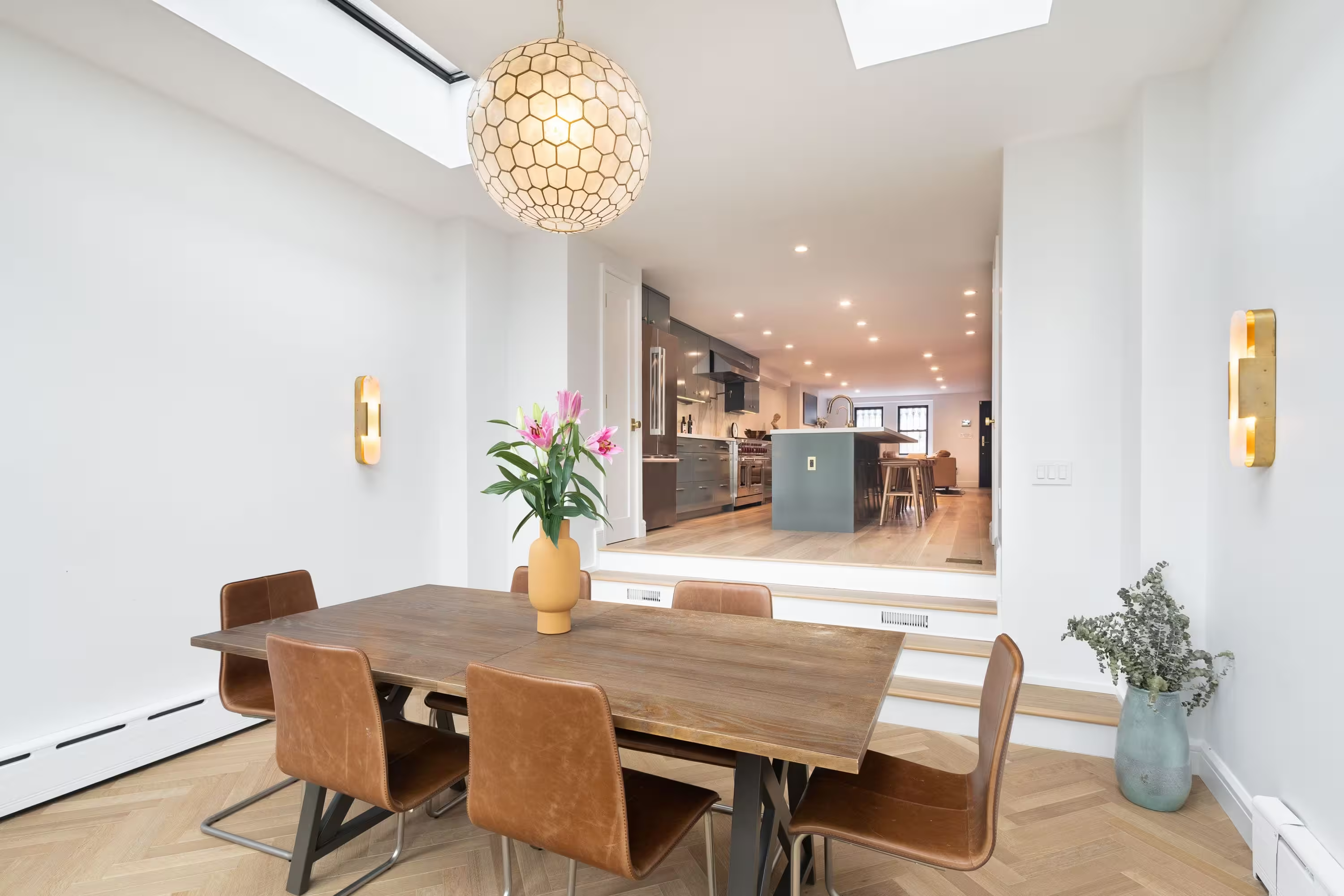
[#13]Restoration Hardware Capiz Shell Pendant 36"Chandelier | Brooklyn Brownstone Gut Renovation In Carroll Gardens[#13]
This full-gut renovation reworked a landmarked Carroll Gardens brownstone into a bright, modern home built for family life. A newly extended, sunken dining area pulls in natural light and connects to the backyard. Suspended above the dining table, the Capiz Shell chandelier from Restoration Hardware softens the room with hand-cut natural shells that filter the light, suiting the home’s blend of history and contemporary ease. View the full renovation before and after.
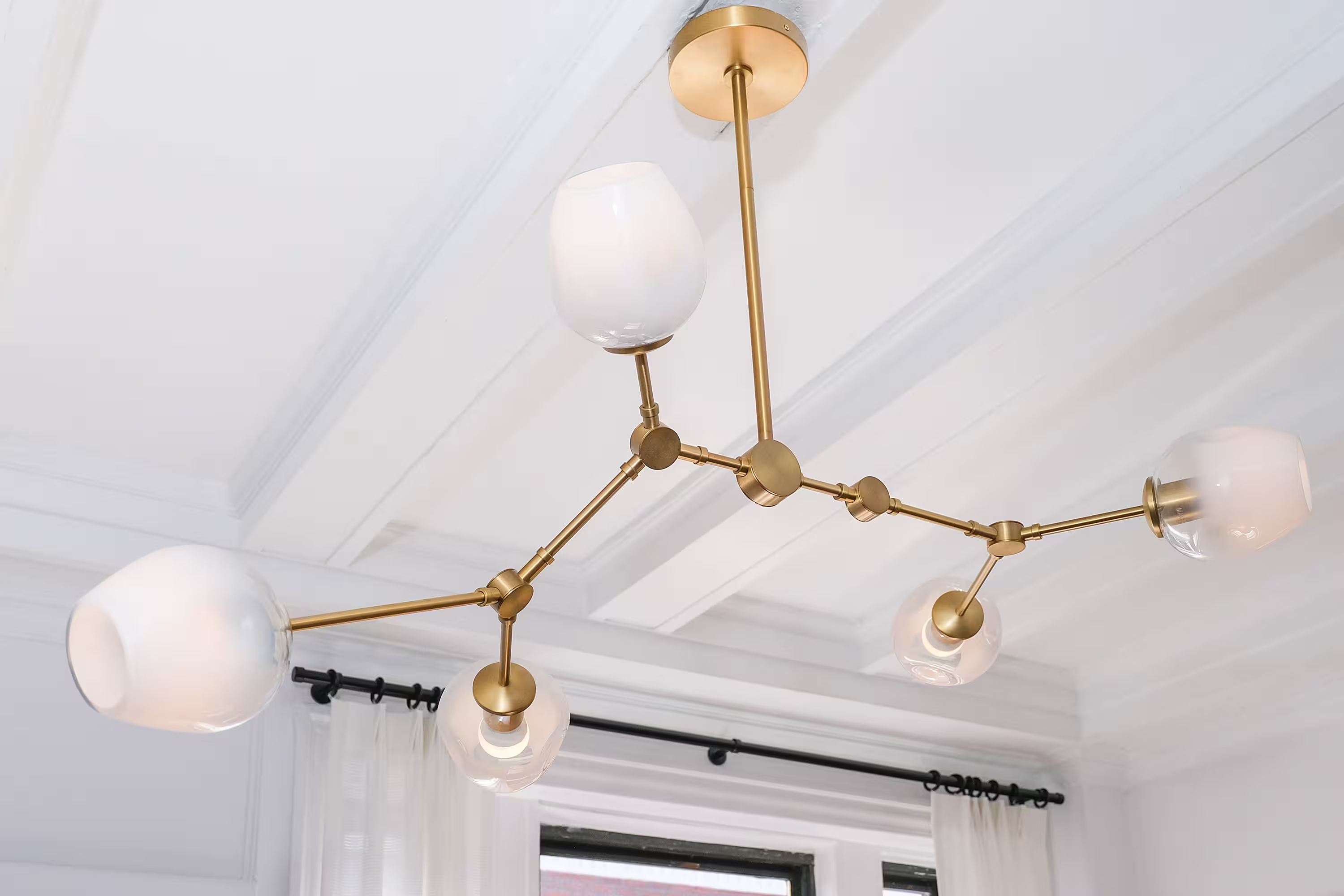
[#14]Noella Brass Chandelier 52'' | Upper West Side Pre-War Co-Op Renovation @ 801 West End Ave[#14]
For this Upper West Side pre-war co-op renovation, the clients wanted new life in a historic apartment with its character intact. The design drew on herringbone wood floors and Carrera marble bathrooms, with crisp shaker cabinetry, for a refined and welcoming result. The Noella Brass chandelier completes the room, its ombre glass globes and matte brass frame adding a modern glow to the apartment’s older bones. View the full renovation before and after.
Looking to elevate your New York City home with thoughtful lighting and design? Contact us today to schedule a consultation or explore our portfolio of NYC renovations.
At Gallery, we’re a New York Times-featured design-build firm in NYC specializing in full-service apartment, condo, and townhouse renovations throughout Manhattan and Brooklyn. From architectural planning and interior design to lighting layout, millwork, and construction, we create cohesive spaces that balance beauty, function, and individuality, enlightening every detail of your home.
Gallery KBNY is a full-service design-build firm featured in The New York Times, specializing in the architecture, interior design, and renovation of apartments, co-ops, condominiums, townhomes, and lofts across Manhattan and Brooklyn. Our integrated team of architects, designers, contractors, and project managers manages every phase from board approvals and DOB permitting through design and construction. A founding partner is involved in every project, start to finish. Because architecture, design, permitting, and construction are coordinated under one roof, the process remains streamlined, accountable, and transparent from start to finish. Our work has also appeared in Forbes, Architectural Digest, and Inc., and is backed by 100+ five-star client reviews.
[#FAQ]Frequently Asked Questions About Lighting For Full Home Renovation In NYC[#FAQ]
What are the layers of a good lighting plan?
A statement fixture is the visible top of a deeper plan, and a well-designed room works in layers that read well at every hour and for every use. Ambient lighting provides the overall base level that fills the room. Task lighting delivers focused illumination where work happens, such as a kitchen counter or a reading chair. Accent lighting draws attention to architecture, artwork, or texture, adding depth and dimension. The decorative layer, where a statement chandelier or pendant lives, anchors the look and carries the design. Planning these layers together, rather than relying on a single fixture, is what makes a finished room feel considered across the full range of how it is used.
How does a statement fixture function in a room?
A well-chosen fixture brings depth and cohesion to a home, drawing out the materials around it and anchoring the overall look. In a room where the architecture already carries weight, such as a pre-war space with original marble and high ceilings, the fixture has to hold its own while honoring that character and raising the bar for the space. A single fixture can define a room, setting its mood and style from above. The strongest selections suit both the home and the people in it, which is why the choice follows the room's proportions, palette, and use rather than a passing trend. Placed and scaled well, the fixture becomes the focal point that ties the design together.
What color temperature should I choose for different rooms?
Color temperature shapes how a room feels as much as the fixture does, since a beautiful fixture still depends on the light inside it. Warmer tones, in the range of soft, low-Kelvin light, suit living rooms, dining areas, and bedrooms where the goal is relaxation and a welcoming glow. Cooler, brighter light serves task-heavy areas such as a kitchen work surface or a bathroom vanity, where clarity matters. Many rooms benefit from tunable fixtures that shift across that range through the day. Matching the color temperature to how each room is used, rather than applying one setting throughout, is part of what separates a considered result from a space that is merely lit.
Why does color rendering matter in a lighting plan?
Color rendering describes how accurately a light source reveals the true color of everything under it, and it is one of the quiet decisions that determine whether a finished room feels right. High color accuracy makes marble read as marble, wood show its real grain and tone, and paint appear as it was chosen, so the finishes an owner invested in look the way they should. Poor rendering flattens and distorts those materials regardless of how good the fixture looks. Specifying light sources with strong color rendering across the home is what lets the design's materials and palette perform, and it is part of what turns a well-lit room into a considered one.
Why do dimming and control matter in a lighting plan?
Dimming and control decide whether a room can adapt across the day and across its uses. A dining room set for a bright family breakfast has to become a warm, low evening scene, and a fixture on a dimmer makes that shift possible without changing the bulb. Control by room lets each space serve its own purpose, with the kitchen bright for prep and the living room soft for winding down. Layering dimmable circuits and thoughtful controls into the plan, rather than wiring a room to a single on-off switch, is what makes the lighting flexible. That flexibility is often the difference between a room that feels finished and one that feels static.
How do I size a statement fixture correctly?
The right fixture in the wrong proportion reads as a misstep, so scale is settled before a piece ever ships. A fixture over a dining table is sized to the table, generally leaving comfortable clearance on either side so it centers the setting without crowding it. Ceiling height and overall room dimensions guide the fixture's diameter and drop, since a piece that suits a double-height loft would overwhelm a standard room. The surface below, whether a table, an island, or open floor, sets the reference point for width. Working through these proportions during design, rather than choosing a fixture by look alone, is what ensures the piece anchors the room at the correct scale.
How high should a chandelier or pendant hang?
Hanging height depends on the ceiling and on what sits below the fixture. Over a dining table, a fixture typically hangs low enough to feel intentional and high enough to clear sightlines across the table. Over a kitchen island, pendants hang to light the work surface without obstructing the view across the room. In an open area with nothing beneath it, the fixture clears head height comfortably while relating to the ceiling. Higher ceilings allow a longer drop, which a double-height loft can carry gracefully. Setting the height against the ceiling and the surface below during planning is what lets a fixture anchor a space rather than interrupt it.
How does lighting fit into a whole-home renovation?
Lighting is most effective when it is planned alongside the architecture, interior design, and construction rather than added at the end. Integrating the lighting layout into the renovation from the start allows the layers, the fixture selections, and the controls to be wired and placed correctly while the walls are open. Each fixture can then be tuned to the home and the people in it, suited to the room's proportions, palette, and use. Keeping the lighting design under the same roof as the rest of the work is what produces a cohesive result, where the fixtures, the finishes, and the architecture reinforce one another rather than competing.
Manhattan Design-Build
Evaluate Your Manhattan Apartment
Before You Buy
Buying an apartment you plan to renovate? A founding partner walks it with you during the contract period and maps the scope, cost, and timeline, so you know exactly what you're taking on before you sign.
As seen in
Pre-Purchase Assessment
Walk the apartment with us first and understand the full scope, cost, and timeline before you close.
or call us directly
let’s
Design-Build
together