.avif)


.png)
.png)


How Do You Evaluate Whether A Renovation Firm Is Reputable In NYC?
A reputable NYC renovation firm shows co-op board and DOB fluency, itemized estimates, and completed built work. Review the 8 signals to verify first.
February 25, 2026
|
-min.avif)
How Do You Evaluate Whether A Renovation Firm Is Reputable In NYC?
Learn the signals that set a reputable NYC renovation firm apart, from co-op board and DOB fluency to the way it plans, prices and stands behind its work.
Table of contents
- Depth Of NYC-Specific Experience
- Quality Of Pre-Construction Process
- Transparency Of Estimates And Contracts
- How They Handle Change Orders And Risk
- Communication Structure And Accountability
- Quality Of Built Work, Not Just Renderings
- Reputation Beyond Marketing
- Willingness To Advise, Not Just Sell
- In The End, Reliability Guides Reputation
- Frequently Asked Questions About Evaluating NYC Renovation Firms
Hiring a renovation firm in New York City is one of the more impactful decisions you’ll make in the course of owning an apartment. The market is crowded, the marketing budgets are massive, and the gap between what a firm promises and what they actually deliver can be enormous - not to mention, expensive.
The good news is that reputable firms are distinguishable from unreliable ones, if you know what to look for. It is not about the logo or the Instagram grid. It is about process, experience, and how a firm behaves before you sign a contract. Here is how to evaluate whether a NYC apartment renovation firm is genuinely worth hiring.
[#1]Depth Of NYC-Specific Experience[#1]
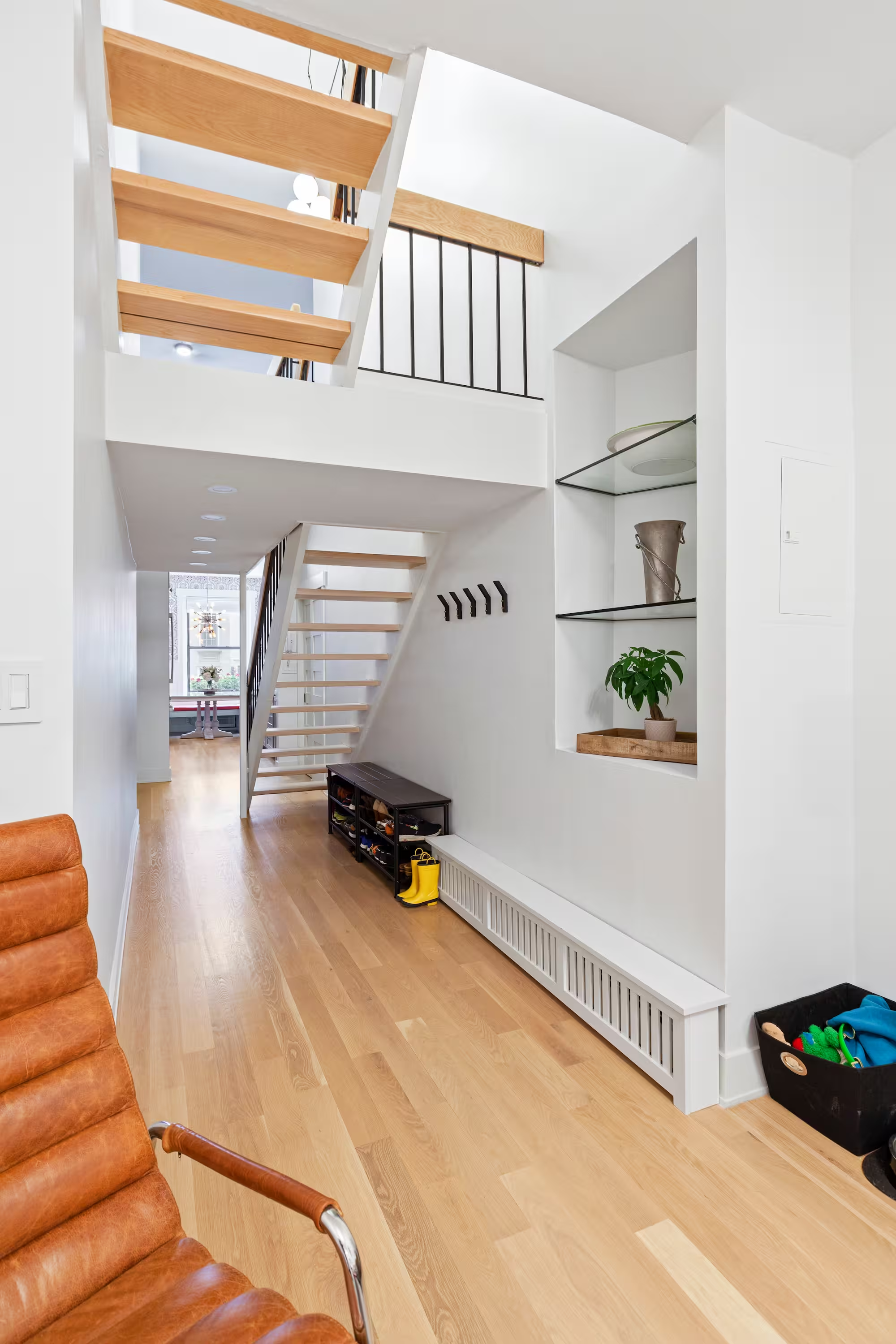
Renovating an apartment in New York City is categorically different from renovation work anywhere else in the country. The regulatory environment, the building approval processes, the logistical constraints of high-density residential buildings, and the technical complexities of pre-war construction create a level of complexity that generalist contractors routinely underestimate.
Ask them for specific examples and named processes, and see if they’ve worked with buildings similar to yours.
A reputable firm can articulate this clearly, without vague terms and with specifics. They should be fluent in co-op and condo board approval processes, Department of Buildings filings, building-specific work-hour restrictions, elevator logistics, and the mechanical constraints common in older residential buildings. Ask them to walk you through how they handled the approval process on a recent co-op project, or how they managed a DOB objection mid-construction. The quality of answer will tell you more than any portfolio.
[#2]Quality Of Pre-Construction Process[#2]
The most reliable predictor of renovation delays and cost overruns is not what happens during construction, but the lack of planning done prior. Firms that skip or rush pre-construction due diligence are the firms who call you six weeks into a project with a change order that keeps you up at night.
A reputable firm treats pre-construction as the foundational framework for your project, not an afterthought. Before a price is finalized, before a submission is filed, before a wall comes down, they should be evaluating electrical capacity, plumbing feasibility, HVAC options, structural constraints, and building logistics. They should be defining scope clearly and setting timelines that account for approvals and procurement, not just construction duration.
Ask: what does your pre-construction process look like, and what did you find during it on your last project?
A firm with an answer to that question has a real process. A firm that pivots immediately to talking about construction speed probably does not.
[#3]Transparency Of Estimates And Contracts[#3]
An estimate is not just a number. This is a true barometer that tells you exactly what a firm thinks about your project, allowing you to gauge how honest they are prepared to be with you before you have given them any money.
Ask: How every finish allowance was established, what is not in the number and why, and how change orders are handled if scope evolves.
Reputable firms provide estimates that are clearly itemized, explicit about inclusions and exclusions, and honest about allowances and assumptions. Renovation costs in NYC are significant, and a low headline number built on vague scope or unrealistically low allowances is not a competitive estimate - it’s a problem waiting to happen later in the project.
Firms worth hiring offer estimates that require explanation up front. Their thoroughness is not a burden, but evidence they have actually thought through your project.
NYC Renovation Cost Per Square Foot: Tier Reference
Four tiers of NYC apartment renovation by scope and finish level, with the per-square-foot range typical of each. Use this as a sanity check on any estimate before signing.
-
01
Tier 01 / Cosmetic Refresh
Surface-Level Update
$150 to $300per sq ft
Typically Includes
Paint, refinished floors, replaced fixtures and hardware, minor cabinetry updates, light electrical work. No layout changes, no permits in most cases.
Best Fit
Pre-sale prep, recent units needing freshening, rental turnover. Not for buildings requiring board approval on cosmetic work.
-
02
Tier 02 / Mid-Tier Renovation
Kitchen And Bath With Some Layout Work
$300 to $500per sq ft
Typically Includes
Full kitchen and bath renovation, partial electrical and plumbing replacement, mid-tier appliances and finishes, some non-load-bearing layout adjustment, board and DOB filings.
Best Fit
Post-war condos and co-ops with sound underlying systems. Owners updating high-impact rooms without committing to a full gut.
-
03
Tier 03 / Full Gut Renovation
Comprehensive Apartment Reset
$400 to $750per sq ft
Typically Includes
Full demolition, replaced MEP systems, new layout, all-new kitchen and bathrooms, custom millwork, premium finishes, full board approval and DOB process.
Best Fit
Pre-war buildings with outdated systems, apartments being adapted to a new owner's needs, units where partial renovation would leave too much legacy infrastructure in place.
-
04
Tier 04 / Luxury Or Combination
High-End Finish Or Apartment Combination
$750+per sq ft
Typically Includes
All of Tier 03 plus imported stone, custom metalwork, integrated AV and lighting control, restoration-grade pre-war detailing. Or combining two units, which adds structural work and dual board approvals.
Best Fit
High-end condos and co-ops where finish level is non-negotiable, landmark restorations, full-floor combinations, townhouse work.
What to do with this: Identify your tier based on scope, not on what you hope to spend. An estimate priced for Tier 02 work that you actually need at Tier 03 is not a bargain. It is a scope mismatch that surfaces later as change orders.
.avif)
[#4]How They Handle Change Orders And Risk[#4]
No renovation is entirely risk-free, particularly in older New York City buildings where conditions behind walls are sometimes impossible to fully anticipate in advance. The question is not whether change orders will ever occur, it is how a firm thinks about minimizing them, and how they handle them when they do.
Ask: How does your firm handle change orders during a project?
A reputable firm distinguishes clearly between client-driven scope changes, genuine unforeseen conditions, and changes in means and methods that should not be the client's financial responsibility. They document changes before proceeding, obtain approval before billing, and can explain their change-order process in specific terms. Understanding the difference between design-build and design-bid-build matters here too, as integrated firms have far fewer opportunities for the gaps between design and construction to generate unexpected costs.
Estimate Anatomy: What To Look For Line By Line
Eight categories every NYC renovation estimate should account for, with what a transparent breakdown looks like versus the lump-sum language that should raise questions. Use this as a checklist against any estimate you receive.
| Estimate Category | Lump-Sum Red FlagWhat weak estimates say | Itemized EstimateWhat a transparent estimate shows |
|---|---|---|
| Demolition & Protection | "Demo and prep work, $XX,000." | Separate line items for demolition, debris removal, floor and elevator protection, dust containment, and disposal fees by NYC weight tipping rate. |
| Permits & Filings | "Permits as needed." | DOB filing fees, expediter fees, ACP-5 or ACP-7, structural sign-off (PE/RA stamps), and any LPC submission costs broken out individually. |
| Board & Building Costs | Not mentioned, or rolled into a general line. | Board application fees, alteration agreement deposit, COI processing, elevator-use fees, building engineer review fees, and after-hours work surcharges if applicable. |
| Trade Labor | "Plumbing and electrical, lump sum." | Trade-by-trade breakdown: rough plumbing, finish plumbing, electrical service and rough, electrical finish, HVAC, framing, drywall, tile setting, flooring, painting, millwork. |
| Material Allowances | "$15,000 tile allowance." | Per-room allowances with assumed price per square foot or per item. Tile $X/sf, plumbing fixtures by room, lighting fixtures with named tier, cabinetry by linear foot. |
| Design & Project Management | Not separated, or labeled vaguely as "overhead." | Design fees, architectural documentation, project management, and site supervision broken out as distinct line items with their basis (% of hard cost, fixed fee, or hourly). |
| Contingency | No contingency line. Or buried inside material allowances. | Explicit contingency line, typically 5 to 15 percent of hard cost depending on building age and project scope, with conditions for how it gets drawn down. |
| Exclusions | No exclusions section. | A written exclusions list covering what is not included: appliance purchases, owner-supplied items, post-completion punch list, asbestos abatement if discovered, structural reinforcement contingent on probe findings. |
How to use this: Lay any received estimate next to these eight categories. If three or more rows are bundled into lump sums or missing entirely, the firm has either not done the diligence to itemize honestly or is concealing how the number was built. Both are reasons to keep looking.
Considering a Renovation in NYC?
Click to schedule a consultation with one of the principle partners at Gallery, who will hear out your renovation plans and let you know the best way to proceed - whether we end up working together or not.
Schedule Your Consultation
[#5]Communication Structure And Accountability[#5]
Renovation anxiety is almost always a communication problem. Clients who feel anxious about their projects are usually clients who are out of the loop.
Reputable firms can describe their communication structure in concrete terms. This entails who the day-to-day point of contact is, how decisions and approvals are documented, how often progress is communicated, and what platform or system keeps everything organized. Meetings and check-ins are pre-planned. Consistency becomes routine.
Ask: What happens when something unexpected comes up on site. How quickly are you notified? How is the resolution documented?
A firm that has a clear, practiced answer to this question has built accountability into their process. A firm without a system in place is probably not equipped for larger projects.
[#6]Quality Of Built Work, Not Just Renderings[#6]
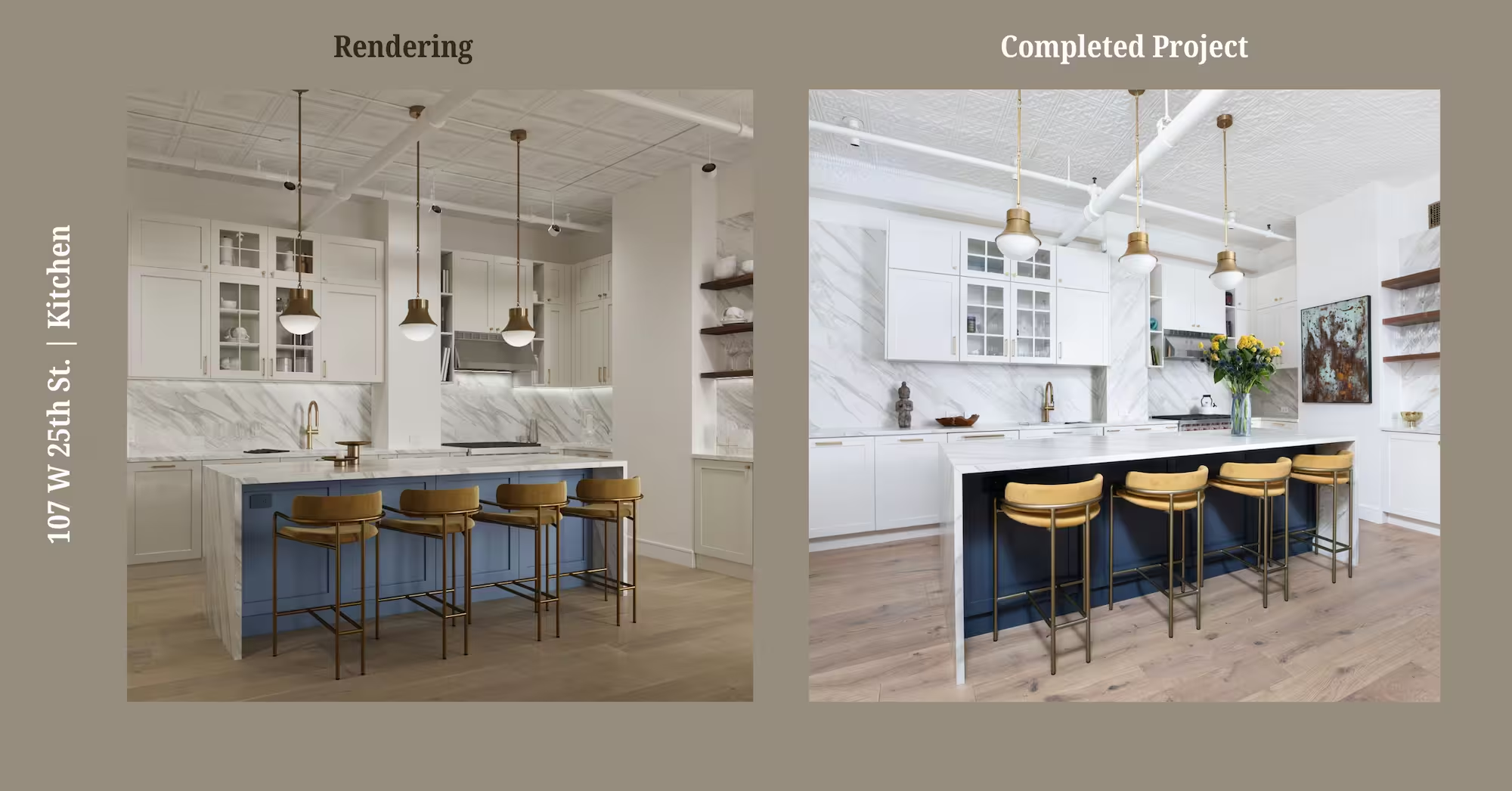
Renderings are a design tool. They are not evidence of execution quality. Before you evaluate a firm's portfolio, make sure you understand what you are actually looking at.
Reputable firms can point to completed projects that demonstrate craftsmanship, detail, and consistency across multiple scopes and building types. The finished work should look like the design intent, not a diluted version of it. Tile layouts should be centered and considered. Millwork should be tight. Paint lines should be clean. These are not luxuries in a high-end renovation, they’re the baseline.
If a firm's portfolio is heavy on renderings and light on built photography, ask for more. Ask to see completed project photos taken after move-in, if possible.
If you want to really put them to the rtest, have them show you how their renderings compared to the completed projects. See how we bring our renders to reality here at Gallery.
[#7]Reputation Beyond Marketing[#7]
In theory, a firm's own website is the least objective source about that firm. Legitimate contractors have reputations that extend beyond what they have written about themselves.
Look for industry recognition, awards, and media coverage, but also look for the quieter signals: repeat clients, long-standing relationships with architects and building professionals, referrals from managing agents or co-op boards who have seen their work up close. These are the endorsements that are hard to manufacture and easy to verify.
Be skeptical of firms whose primary footprint is paid ads and social media, with little evidence of process or built work behind the brand. Marketing is no substitute for track record.
Marketing Claims Vs. Verifiable Trust Signals
Six categories of reputation signals every NYC firm uses. Some are easy to manufacture, others are not. Here is how each one stacks up, and what the verifiable equivalent looks like.
| Reputation Category | Marketing-Driven Claim | Verifiable Equivalent | Signal Strength |
|---|---|---|---|
| 01 / MediaPress & Editorial | "Featured in publications." Generic banner logos on a homepage with no links. | Named publications with linked, dated articles. Long-form coverage of specific projects rather than directory listings. | Strong |
| 02 / AwardsIndustry Recognition | Self-issued badges or pay-for-placement directory awards with unclear criteria. | Judged industry awards, multi-year recognition (Houzz Best of Design), and publication-level lists tied to specific completed projects. | Strong |
| 03 / ReviewsClient Testimonials | Curated quotes on the firm's own website with no third-party verification. | Public reviews on Houzz, Google, and platform sites with named reviewers, multi-paragraph detail, and ability to ask the reviewer directly. | Strong |
| 04 / Repeat WorkReturning Clients | Not mentioned. Hard to surface in marketing. | Same client engaged for second or third renovation. Buyer engages firm again at next apartment purchase. These are referrals you have to ask to hear about. | Strong |
| 05 / Building ProsArchitect & Agent Endorsements | "We work with top NYC architects." | Named architects, designers, and managing agents who refer the firm repeatedly. Building professionals who have seen the work up close, often across multiple projects. | Strong |
| 06 / Social MediaInstagram & Paid Ads | Polished feed, sponsored placements, high follower count, render-heavy content. | Built-work photography with named buildings, in-progress documentation, before-and-afters from comparable scopes. | Mixed |
| 07 / AdsPaid Search Footprint | Top Google Ads result for "NYC renovation contractor." | Organic ranking driven by demonstrated expertise, original content, and external links rather than paid placement. | Weak |
| 08 / BrandingSelf-Authored Tagline | "Premier," "New York Times-featured," "top-rated," "trusted" with no anchored proof point. | Specific evidence: named awards, named clients (with permission), specific projects, specific buildings, specific years of operation. | Weak |
How to use this: Strong signals are difficult to manufacture. They require time, completed work, and relationships in the industry. When evaluating a firm, weight the four Strong categories heavily and treat Weak categories as table stakes that any well-funded operation can produce.
MIN.jpg)
[#8]Willingness To Advise, Not Just Sell[#8]
This one is easy to overlook but consistently separates the best firms from the rest. A reputable contractor is willing to tell you things you might not want to hear, before you have committed to anything.
They will tell you when a scope is not feasible in a specific building. When a budget is unrealistic for the outcome you want. When a timeline needs to be adjusted. When a property you are considering purchasing may not be the right renovation candidate. Firms that work with buyers before they close on a property are particularly well positioned to offer this kind of candid guidance and the ones worth hiring are the ones who give it honestly even when it risks losing the project. For an example of what to an expect from a potential renovation partner who has your best interests in mind, consider the following testimonial from a potential buyer who asked us for our honest assessment of a Manhattan property she was considering buying with intent to renovate:
“I'm very grateful to Alex from KBNY for his honest and realistic assessment of an estate apartment I was considering. He took the time to view the property and didn't sugarcoat the gut renovation, providing a clear picture of the costs and time involved. His upfront approach, knowing that it might risk losing my business, was invaluable in informing my decision on whether or not to move forward with the purchase.”
This type of willingness to prioritize your outcome over added revenue is the clearest indicator of a firm's actual values.
[#9]In The End, Reliability Guides Reputation [#9]
In New York City, reputation is best measured by a firm's ability to anticipate complexity, communicate clearly, and deliver consistent results. None of those mean the lowest price or the fastest promise. The most reliable firms are the ones who explain their process in specific terms, justify their assumptions with evidence, and point to completed work in buildings comparable to your own.
At Gallery KBNY, we’re a New York Times-featured design-build firm in New York City with a full-service approach to residential renovations in Manhattan and Brooklyn that includes everything from interior design and architecture services to filing permits and construction management.
Whether you are planning a full gut renovation, considering a fixer-upper purchase, or evaluating renovation firms for the first time, Gallery KBNY's principal-led team has spent years building a process specifically designed to produce predictable, high-quality results in New York City's most demanding renovation environments. If you are evaluating firms and want a straightforward conversation about your project (scope, budget, timeline, and fit), we are ready to help.
Considering an apartment renovation in NYC? View our full portfolio of New York City renovation before and afters, learn more about Gallery KBNY, or simply contact us today.
Gallery KBNY is a full-service design-build firm featured in The New York Times, specializing in the architecture, interior design, and renovation of apartments, co-ops, condominiums, townhomes, and lofts across Manhattan and Brooklyn. Our integrated team of architects, designers, contractors, and project managers manages every phase from board approvals and DOB permitting through design and construction. A founding partner is involved in every project, start to finish. Because architecture, design, permitting, and construction are coordinated under one roof, the process remains streamlined, accountable, and transparent from start to finish. Our work has also appeared in Forbes, Architectural Digest, and Inc., and is backed by 100+ five-star client reviews.
[#10]Frequently Asked Questions About Evaluating NYC Renovation Firms[#10]
Q: What Are The Biggest Red Flags When Hiring A Renovation Firm In NYC?
The most significant red flags include estimates with vague scope descriptions or unrealistically low allowances, an inability to clearly explain the board approval or DOB permit process, a heavy emphasis on construction speed without discussion of pre-construction planning, and limited evidence of completed built work beyond renderings. A firm that cannot describe its communication structure or change-order process in concrete terms is also worth approaching with caution. Reviewing these 30 tips before your first contractor meeting will help you identify warning signs early.
Q: What Questions Should I Ask A Renovation Contractor Before Hiring?
Key questions include: How do you handle the co-op or condo board approval process? What does your pre-construction due diligence involve? How are change orders documented and approved? Who is my day-to-day point of contact? Can I see completed project photos from comparable scopes? A reputable firm should be able to answer all of these specifically and without hesitation.
Q: How Do I Know If A Renovation Estimate Is Realistic?
A realistic estimate is clearly itemized, explicit about inclusions and exclusions, and transparent about allowance assumptions. If an estimate looks significantly lower than others you have received, ask specifically what is not included and how finish allowances were established. In NYC, renovation costs for a full gut renovation typically range from $400 to $750+ per square foot depending on scope and finish level - estimates that fall significantly below that range for comparable work warrant scrutiny.
Q: What Is The Difference Between A Design-Build Firm And A General Contractor?
A design-build firm integrates architecture, interior design, permitting, and construction under a single contract and team. A general contractor executes construction plans prepared by a separately hired architect or designer, with no formal coordination between the two parties. The design-build model eliminates the handoffs and accountability gaps that occur when design and construction are managed under separate contracts - a particularly meaningful distinction in complex NYC apartment renovations where precision between design intent and execution directly affects outcomes.
Q: How Important Is NYC-Specific Experience When Hiring A Renovation Firm?
NYC-specific experience is one of the most important factors to evaluate, particularly for co-op and condo renovations. The board approval process, DOB filing requirements, building logistics, and technical constraints of pre-war construction are specific to this market and routinely underestimated by contractors without deep local experience. A firm that works primarily in New York City (specifically in co-ops, condos, and older residential buildings) brings a level of process fluency that materially reduces risk, delays, and unforeseen costs.
Q: How Does Gallery KBNY Approach The Evaluation Process With New Clients?
Gallery KBNY begins every client relationship with a detailed consultation in which the founding principal reviews the project scope, building type, budget range, and timeline, and provides an honest assessment of feasibility before any commitment is made. For buyers who have not yet closed on a property, Gallery also offers pre-purchase feasibility assessments to evaluate renovation scope before purchase. The goal is to ensure that clients enter the project with accurate expectations, realistic numbers, and a clear understanding of what the process will involve.
let’s
Design-Build
together


.avif)