.avif)


.png)
.png)


Buying A Manhattan Apartment That Needs Work: Everything You Need To Know Before You Close
A practical guide to evaluating, budgeting, and planning a renovation for a Manhattan apartment purchase. From pre-war pitfalls to co-op board timelines.
March 8, 2026
|
Buying A Manhattan Apartment That Needs Work: Everything You Need To Know Before You Close
Thinking about buying an apartment in Manhattan that needs renovation? From hidden costs and building conditions to board approvals and contractor timing, here’s what to evaluate before you close.
Table of Contents
- Do The Math Before You Fall In Love With The Apartment
- What’s Behind the Walls Matters More Than What’s in Front of Them
- Co-Op Vs. Condo: The Renovation Implications Are Real
- The Timeline Is Longer Than You Think
- Talk to Your Renovation Firm Before You Go Into Contract, Not After
- Define Your Scope Early, It Shapes Everything
- Choose Your Renovation Approach Wisely
- If It’s Pre-War, Know What You’re Getting Into
- A Practical Checklist for Buyers
- FAQs About Buying A Manhattan Apartment That Needs Work
So, you’re looking at buying an apartment in Manhattan that needs a lot of work. Maybe you're in the market for an estate-condition co-op on the Upper East Side with original 1940s everything. Maybe it’s a dated two-bedroom on the Upper West Side where the listing photos strategically avoid showing the kitchen. Maybe your broker called it “a great opportunity for someone with vision," which is real estate speak for this place needs serious renovation.
You’re not wrong to be interested. Buying a fixer-upper in Manhattan and renovating it can be one of the smartest real estate plays in the city. The total cost (purchase price plus renovation) is often significantly less than buying a comparable move-in-ready apartment in the same building or neighborhood. You also get something a turnkey apartment can never offer: a home built exactly to your specifications.
But between the excitement of finding the right apartment and the reality of living in it, there’s a gauntlet of planning, approvals, hidden conditions, and construction that most first-time renovators don’t fully appreciate until they’re deep into the process. This guide covers what you need to know before you close, so you can make a smarter purchase, set realistic expectations, and avoid the mistakes that turn a good investment into an expensive headache.
[#1]Do The Math Before You Fall In Love With The Apartment[#1]
The appeal of a fixer-upper is the price gap. An unrenovated apartment typically sells for significantly less per square foot than a renovated comparable in the same building. But the question isn’t whether that gap exists, it’s whether the renovation cost fits inside it.
Here’s a framework we walk buyers through during initial consultations:
Step 1: Find The Renovated Comparable
Look at StreetEasy for recently sold units in the same building (or similar buildings nearby) that are similar in square footage and bedroom count but fully renovated. What did they sell for? That’s your ceiling, the post-renovation value of the apartment you’re considering.
Step 2: Estimate The Renovation Cost
Using current Manhattan pricing, a full apartment renovation with upper mid-tier finishes typically runs $400–$550 per square foot. A gut renovation starts at $450–$550 and can reach $650–$1,000+ per square foot for luxury-level work. For a 1,200 sq ft two-bedroom, that’s roughly $510K–$1.2M depending on scope and finishes.
Step 3: Add The Soft Costs People Forget
Beyond the renovation itself, budget for: architectural and engineering fees (if not using a design-build firm that includes these), board application fees ($500–$2,000+), building review architect fees ($1,000–$3,000), temporary housing during construction (4–9 months of short term rental), storage for your belongings, moving costs (twice, out and back in), and carrying costs on the apartment during renovation (mortgage, maintenance, taxes). These soft costs typically add 10–20% to the renovation budget.
Step 4: Weigh Your Options
Purchase price + renovation cost + soft costs + carry costs = your all-in investment. Is it still less than the renovated comparable? If yes, and you have the timeline flexibility, the fixer-upper is likely the better value play. If the numbers are close or the renovated comp is actually cheaper, you may be better off buying turnkey or rethinking your offer.
We break this calculation down with real UWS numbers in our turnkey vs. fixer-upper cost comparison.
[#2]What’s Behind the Walls Matters More Than What’s in Front of Them[#2]
When you tour a potential purchase, you’re seeing the surface: dated cabinets, old tile, worn floors, maybe wallpaper from another decade. All of that is cosmetic and relatively straightforward to address. What makes or breaks your renovation budget is what you can’t see, the infrastructure behind the walls.
In Manhattan’s older buildings (and most buildings in Manhattan are older), here are the hidden conditions that routinely drive renovation costs higher:
Asbestos
Asbestos was used in floor tile, pipe insulation, and numerous other building materials through the 1960’s and 1970s (and in previous decades). NYC law requires asbestos testing before any renovation that involves demolition, and if asbestos is found in areas that will be disturbed, professional remediation is required before construction can begin. Remediation costs vary widely but can add $10K–$50K+ to your project depending on the extent. This is not optional, it’s a legal requirement and a gating item for your DOB permit application.
Electrical Capacity
Many pre-war buildings were designed for a different era of electrical demand. If you’re planning to install HVAC or even incorporate a modern kitchen with a dual-fuel range, dishwasher, disposal, under-cabinet lighting, and a washer/dryer, you may need significantly more electrical capacity than the apartment currently provides. Upgrading electrical service can involve coordination with the building, Con Edison, and potentially running new conduits from the basement, a process that adds both cost and time.
Plumbing
By now it’s not a secret that most buildings require replacement and updating of all plumbing in the wet areas that are being renovated. However, there are more nuanced considerations that can often be overlooked. For example, thinking of installing PTACs through wall PTACs for cooling and heating? Your building may force you to replace the radiator branch lines and remediate the asbestos on them. Or better yet, thinking of adding a gas dryer because you don’t have enough electrical capacity for an electric one? Make sure the building gas load can support this or be surprised later when ConEd declines the case.
Structural Conditions
Want to open up the kitchen to the living room? Remove a wall to create a larger primary bedroom? Combine two units? Before you get attached to a new layout, you need to know which walls are structural and what’s feasible within the building’s construction. Steel-beam headers can work around many limitations, but they require engineering, DOB approval, and can add meaningful cost.
For a deeper dive into the hidden conditions we encounter on pre-war projects, read our posts on common surprises when renovating a NYC apartment and the hidden costs of renovating a pre-war apartment.
.avif)
[#3]Co-Op Vs. Condo: The Renovation Implications Are Real[#3]
This isn’t just about ownership structure, it directly affects how much control you have over your renovation, how long the approval process takes, and how much flexibility you have during construction.
Co-Ops
Most Manhattan apartments are co-ops, and co-op boards have significant authority over renovations. You’ll need to submit a formal alteration package that typically includes full architectural plans, an alteration agreement, proof of contractor insurance (often with elevated minimums), a construction schedule, and sometimes a financial guarantee or escrow deposit. Almost all boards restrict work hours to weekdays only, impose daily penalties for projects that run past their approved timeline, and require specific floor-to-floor soundproofing if you’re replacing flooring.
The board approval process can take anywhere from 8 to 12+ weeks depending on the building, and you cannot begin construction until it’s complete. This is time that needs to be factored into your overall timeline and carrying costs.
Condos
Condos generally offer more flexibility. You’ll still need to notify management and submit plans for review, but the approval process is typically faster and less restrictive than a co-op board. That said, condos still require DOB permits for structural, plumbing, and electrical work, the city’s requirements apply regardless of your building type.
Either way, your ideal team should be preparing the entire board package on your behalf. For a full breakdown of what these approval processes involve, read our guide on NYC alteration agreements and Manhattan apartment renovation laws.
[#4]The Timeline Is Longer Than You Think[#4]
This is the reality check that catches most buyers off guard. From the day you close on a Manhattan apartment to the day you move into a fully renovated home, you’re looking at roughly 9 to 15 months for a comprehensive renovation. Here’s how that breaks down:
That means if you close in March, a full gut renovation might not have you moving in until January or February of the following year. Plan your lease, your storage, and your patience accordingly.
One of the biggest advantages of talking to a renovation firm before you close is getting a realistic timeline estimate. We can often evaluate a unit during the due diligence period, identify likely issues, and provide you with a detailed scope and schedule that helps you structure your offer and your post-purchase plans. For more on how to estimate your project timeline, read How Does a Buyer Gauge the Timeline for a NYC Renovation?
[#5]Talk to Your Renovation Firm Before You Go Into Contract, Not After[#5]
This is the single most valuable piece of advice in this entire post, and it’s the one many buyers skip.
When you’re evaluating a potential purchase, your real estate broker and your attorney are giving you advice on the deal terms, the building’s financials, and the legal structure. But neither of them can tell you how much it will cost to turn that apartment into the home you actually want, what hidden conditions might be lurking, or how long you’ll be displaced during construction. Those answers come from a renovation firm.
Here’s what a pre-purchase consultation with the right firm can give you:
- A renovation budget range | Base on the apartment’s size, condition, and your goals, so you can factor it into your offer price and financing
- An assessment of likely hidden conditions | Consider cloth wiring, asbestos probability, plumbing age, electrical capacity, based on the building’s era and construction type
- A realistic project timeline | Should account for design, board approvals, and construction, so you can plan temporary housing and carrying costs
- Feasibility feedback on your layout goals | Can you open the kitchen? Add a bathroom? Create a home office? Some ideas are straightforward; others are structurally or regulatory impossible in certain buildings
- Red flags specific to the building | An experienced NYC firm may know the building, the board’s renovation policies, or specific construction challenges from previous projects in the same address
This information can change whether you buy the apartment, how much you offer, and how you structure your financing. At Gallery, we regularly walk potential properties with clients before they’ve made an offer and the insight we provide at that stage saves them far more than the time it takes. Read more about the process of finding the right contractor for your NYC renovation.
[#6]Define Your Scope Early, It Shapes Everything[#6]
Not every apartment purchase requires a gut renovation. Understanding the difference between renovation scopes will help you set the right budget and timeline:
Targeted Renovation
You’re keeping the layout and major systems but renovating specific rooms, typically the kitchen, bathrooms, and possibly flooring and paint throughout. This is appropriate when the apartment’s infrastructure is sound and the layout works for you. Expect 3–5 months of construction and costs in the $400/sqft range depending on scope and finishes.
| Scope | Cost Per Sq Ft | Construction | The Right Call When |
|---|---|---|---|
| Targeted | ~$400 | 3 to 5 months | The infrastructure is sound and the layout works, so the kitchen, baths, flooring, and paint carry the project. |
| Full | ~$450 | 4 to 6 months | Every room is addressed within the existing layout or with modest structural changes. |
| Gut | $450 to $550+ | 5 to 8 months | Systems are obsolete or the layout needs real reconfiguration, so the unit is taken to its structural core. |
| Luxury Gut | $600 to $1,000+ | 6 to 8+ months | A gut renovation pairs with luxury-level finishes, custom millwork, and bespoke detailing throughout. |
The scope you need is largely determined by the apartment’s current condition, which is why that pre-purchase assessment we mentioned in section 5 is so important. For a complete overview of what’s involved in the most comprehensive option, read our Gut Renovations in New York City 101 guide.
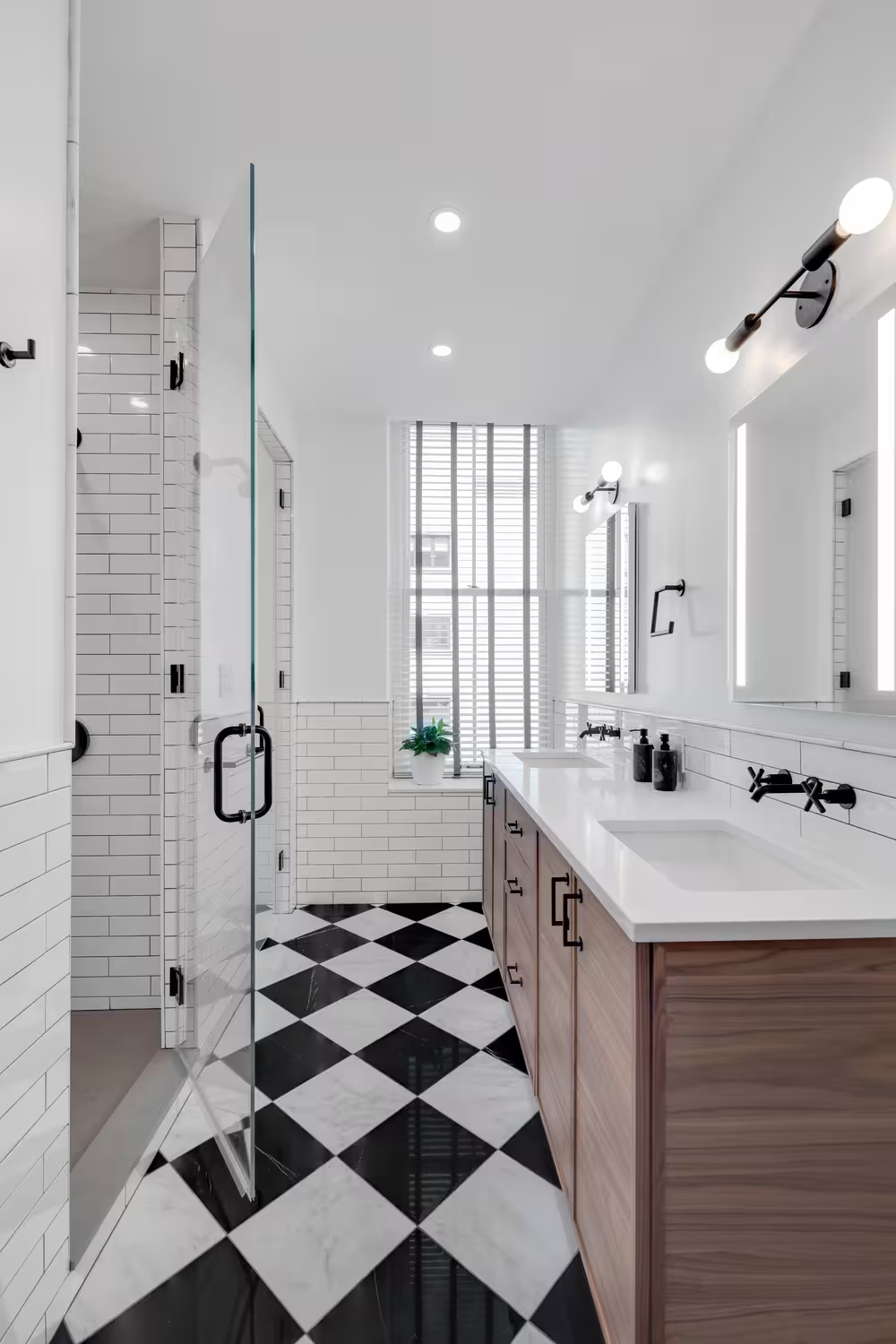
[#7]Choose Your Renovation Approach Wisely[#7]
How you structure the renovation matters as much as what you renovate. In Manhattan, there are three primary approaches:
Hire An Architect, Bid Out Construction Separately
This is the traditional route. The architect designs the space, then you solicit bids from general contractors. The risk: the architect’s design may exceed your budget, and you won’t know the construction cost until months into the design process. You also manage the coordination between two separate firms.
Hire A General Contractor Directly
This works for straightforward projects where you don’t need significant design or architectural services. But for a fixer-upper that needs real work (layout changes, full systems replacement, DOB filings) you’ll likely need architectural services anyway, and managing them separately creates coordination gaps.
Hire A Design-Build Firm
Architecture, interior design, and construction are handled by a single team under one contract. The architects who design the space work alongside the builders who will construct it, so feasibility, budget, and timeline are aligned from the start. One point of contact. One comprehensive proposal. No coordination gaps between separate firms.
For those purchasing a fixer-upper, the design-build model is particularly well-suited because you need the full service stack (architecture, design, permitting, board approvals, and construction) and managing those elements across multiple firms while you’re still moving, setting up financing, and navigating a building you’re brand new to is a recipe for stress. For a deeper comparison, read our post on design-build vs. general contractor: what’s the difference.
[#8]If It’s Pre-War, Know What You’re Getting Into[#8]
The majority of fixer-upper opportunities in Manhattan are in pre-war buildings. These apartments are coveted for good reason: generous proportions, high ceilings, architectural details, and classic NYC character. But pre-war renovations are a different animal than renovating a postwar or modern apartment.
Here’s what to expect:
- Asbestos is almost guaranteed in some form. Floor tile mastic, pipe insulation, and some plaster; testing and remediation should be assumed in your budget.
- Cloth wiring (knob-and-tube or fabric-insulated conductors) may still be present and will need to be replaced entirely if discovered.
- Plaster walls are heavier, messier to demolish, and more expensive to dispose of than modern drywall. Factor in higher demolition costs.
- Galvanized plumbing may be corroded internally, reducing water pressure and nearing failure. Full replacement is common in pre-war gut renovations.
- Landmark status affects some pre-war buildings and historic districts. If the building is landmarked, exterior-facing changes require LPC approval, which adds time to the process.
- Electrical capacity may be limited. Pre-war buildings weren’t designed for modern kitchens, in-unit laundry, HVAC systems, and the dozens of devices we now consider essential.
Pre-war renovations typically cost 20–35% more than comparable postwar projects due to these factors. But the results, when executed by a firm that specializes in these buildings, are among the most beautiful apartments in the city. Read our guide on pre-war apartment renovations in NYC for a full breakdown.
%2520copy.jpeg)
[#9]A Practical Checklist for Buyers[#9]
If you’re seriously considering a Manhattan apartment that needs work, here’s the sequence we recommend:
- Research renovated comparables | Consider similar jobs in the same building or neighborhood to understand your all-in investment ceiling
- Talk to a renovation firm before making an offer | Get a preliminary budget range and timeline estimate based on the specific unit (Contact Us for a Consultation)
- Factor the full cost into your offer | Purchase price + renovation + soft costs + contingency = your real investment
- Ask your broker or attorney about the building’s renovation history | What have other units done? How cooperative is the board? Are there specific restrictions?
- Plan temporary housing and storage | You likely cannot live in the apartment during a significant renovation
- Start design immediately before closing | Every week of delay extends your move-in date by at least a week
- Be realistic about timeline | 8–15 months from closing to move-in is standard for a comprehensive Manhattan renovation
For an even deeper collection of practical advice, our 30 essential NYC renovation tips covers everything from budgeting and bidding to construction logistics and design strategy.
The Bottom Line
Buying a Manhattan apartment that needs work is one of the best ways to get more value, more customization, and more home for your investment. But it’s only a smart play if you go in with clear-eyed expectations about what it costs, how long it takes, and what hidden conditions might be waiting behind those old walls.
The buyers who have the best experience are the ones who bring a renovation firm into the conversation early - before they close, not after. The ones who understand that the purchase price is just the beginning, and that the real investment is purchase plus renovation plus time. And the ones who choose a firm that can handle the entire process from design through construction, so they’re not managing five different relationships while also learning the idiosyncrasies of their new building.
If you’re looking at a Manhattan apartment and want to know what a renovation would really involve, we’re happy to walk the property with you and give you a clear picture of scope, budget, and timeline. That’s how most of our best client relationships start, with an honest conversation before any commitments are made.
Whether you are planning a full gut renovation, considering a fixer-upper purchase, or evaluating renovation firms for the first time, Gallery KBNY's principal-led team is ready to walk you through what your project would actually involve - honestly, specifically, and no pressure.
Considering an apartment renovation in NYC? View our full portfolio of New York City renovation before and afters, learn more about Gallery KBNY, or simply contact us today.
Associated Content
- Cost Comparison: Buying a Turnkey Apartment vs. Renovating a Fixer-Upper in Manhattan
- The Essential Updates for a Fixer-Upper Renovation in NYC
- Common Surprises When Renovating a NYC Apartment
- Gut Renovations in New York City 101
Gallery KBNY is a full-service design-build firm featured in The New York Times, specializing in the architecture, interior design, and renovation of apartments, co-ops, condominiums, townhomes, and lofts across Manhattan and Brooklyn. Our integrated team of architects, designers, contractors, and project managers manages every phase from board approvals and DOB permitting through design and construction. A founding partner is involved in every project, start to finish. Because architecture, design, permitting, and construction are coordinated under one roof, the process remains streamlined, accountable, and transparent from start to finish. Our work has also appeared in Forbes, Architectural Digest, and Inc., and is backed by 100+ five-star client reviews.
[#10]FAQ: Buying a Manhattan Apartment That Needs Work[#10]
Is It Worth Buying A Manhattan Apartment That Needs Renovation?
Yes, in most cases, buying a fixer-upper in Manhattan and renovating it delivers better value than purchasing a comparable turnkey apartment. The total all-in cost (purchase price + renovation + soft costs) is often significantly lower than buying a move-in-ready unit in the same building, and you get a home built exactly to your specifications. The key is doing the math before you fall in love with the apartment.
How Much Does It Cost To Renovate A Manhattan Apartment After Buying It?
Renovation costs in Manhattan currently run:
- Targeted renovation (kitchen, baths, finishes): ~$400/square foot
- Full renovation: ~$450/square foot
- Gut renovation, upper mid-tier finishes: $450–$550/square foot
- Luxury gut renovation: $600–$1,000+/square foot
For a 1,200 sq ft two-bedroom, a gut renovation typically runs $510K–$1.2M+ depending on scope and finishes. Add 10–20% for soft costs (architecture, board fees, temporary housing, storage, carrying costs).
How Long Does It Take To Renovate A Manhattan Apartment After Closing?
From closing to move-in, expect roughly 9–15 months for a comprehensive renovation. The timeline breaks down as: design and architecture (12–16 weeks), board approvals and permitting (4–12+ weeks), pre-construction (2–4 weeks), and construction (4–8 months). A targeted kitchen-and-bath renovation is on the shorter end; a full gut renovation or apartment combination is on the longer end.
Should I Talk To A Contractor Before Buying An Apartment In Manhattan?
Absolutely, and ideally before you make an offer, not after you close. A pre-purchase consultation with a renovation firm gives you a budget range, a realistic timeline, an assessment of likely hidden conditions (asbestos, electrical, plumbing), and feasibility feedback on your layout goals. This information can change how much you offer, how you structure your financing, and whether you buy the apartment at all.
What Hidden Costs Should I Budget For When Buying A Fixer-upper In Manhattan?
Beyond the renovation itself, budget for:
- Architectural and engineering fees (if not using a design-build firm)
- Board application fees ($500–$2,000+)
- Building review architect fees ($1,000–$3,000)
- Asbestos testing and remediation ($10K–$50K+ if required)
- Temporary housing during construction (4–9 months of short-term rental)
- Storage for belongings
- Moving costs (twice, out and back in)
- Carrying costs during renovation (mortgage, maintenance, taxes)
These soft costs typically add 10–20% to your renovation budget.
What's The Difference Between A Co-op And Condo Renovation In Manhattan?
Co-ops require a formal alteration package submitted to the board, full architectural plans, an alteration agreement, proof of contractor insurance, and sometimes a financial guarantee. Board approval can take 8–12+ weeks, and construction cannot begin until it's complete. Condos offer more flexibility and faster approvals, but still require DOB permits for structural, plumbing, and electrical work. Both building types require careful planning around approval timelines.
What Is Asbestos Remediation And Is It Required When Renovating In NYC?
NYC law requires asbestos testing before any renovation involving demolition. If asbestos is found in areas that will be disturbed, professional remediation must be completed before construction can begin. This is a legal requirement and a gating item for your Department of Buildings permit. Costs typically range from $10,000 to $50,000+ depending on the extent of the contamination.
Are Pre-War Manhattan Apartments More Expensive To Renovate?
Yes, pre-war renovations typically cost 20–35% more than comparable postwar projects. Key factors include near-certain asbestos presence, potential cloth (knob-and-tube) wiring requiring full replacement, heavier plaster walls with higher demolition and disposal costs, corroded galvanized plumbing, limited electrical capacity, and potential Landmarks Preservation Commission (LPC) requirements for landmarked buildings or historic districts.
What Is A Gut Renovation And When Do I Need One?
A gut renovation means stripping the apartment to its structural core and rebuilding from the ground up: new electrical, plumbing, HVAC, walls, layout, and finishes. It's the right approach when the apartment's infrastructure is obsolete, the layout requires significant reconfiguration, or you want complete control over every element. For a Manhattan apartment, gut renovations typically start at $450–$550/square foot for upper mid-tier work and can reach $800–$1,000+/square foot for luxury finishes.
What Is A Design-Build Firm And Is It The Right Choice For A Fixer-Upper?
A design-build firm handles architecture, interior design, and construction under one contract and one point of contact. For fixer-upper purchases (which require the full service stack of architecture, design, permitting, board approvals, and construction), the design-build model is particularly well-suited. It eliminates coordination gaps between separate firms and aligns budget and timeline from day one, which is critical when you're also managing a move, new financing, and an unfamiliar building.
Can I Live In My Manhattan Apartment During Renovation?
For a comprehensive renovation (gut, full, or any scope involving significant demolition), no. You'll need to arrange temporary housing for the duration of construction, which can range from 4 to 8+ months. Factor short-term rental costs into your overall budget alongside the apartment's carrying costs (mortgage, maintenance, taxes) during that same period.
How Do I Figure Out If A Manhattan Fixer-Upper Is Actually A Good Deal?
Use this framework: (1) Find recently sold renovated comparables in the same building; that's your post-renovation value ceiling. (2) Estimate renovation cost based on square footage and scope. (3) Add all soft costs and carrying costs. (4) Compare: purchase price + renovation + soft costs + carry costs vs. the renovated comparable. If your all-in number is materially lower than the comp, the fixer-upper is likely the better value play. If the gap is small, a turnkey purchase may make more financial sense.
Manhattan Design-Build
Evaluate Your Manhattan Apartment
Before You Buy
Buying an apartment you plan to renovate? A founding partner walks it with you during the contract period and maps the scope, cost, and timeline, so you know exactly what you're taking on before you sign.
As seen in
Pre-Purchase Assessment
Walk the apartment with us first and understand the full scope, cost, and timeline before you close.
or call us directly
let’s
Design-Build
together