Apartment Combination In Upper West Side Manhattan | 30 West 60th

About This Renovation
Combining two apartments in New York City can be an enticing option for a variety of reasons. One of the most common reasons is the cost of purchasing an adjacent apartment and combining it with an existing can be more appealing than the cost of purchasing a new apartment with similar square footage, not to mention the stress of house hunting and moving. There are a number of things anyone considering an apartment combination in NYC should be aware of, a blog we wrote on this very topic can provide you with additional details.
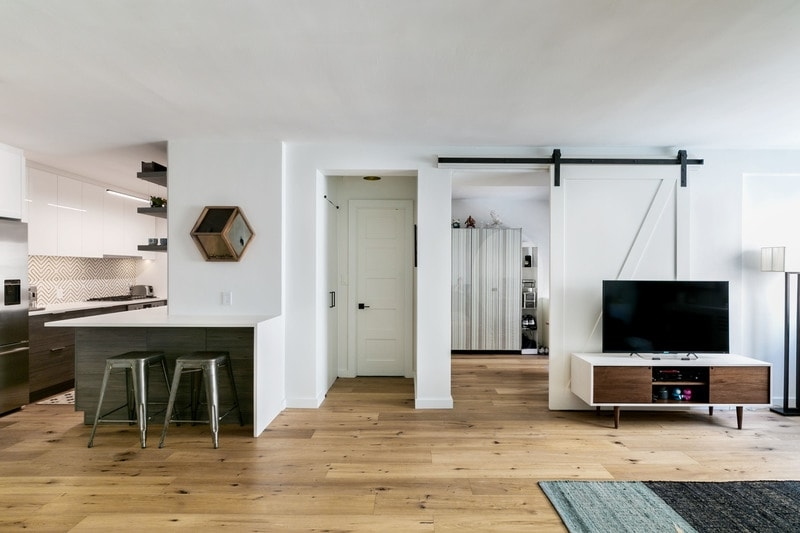
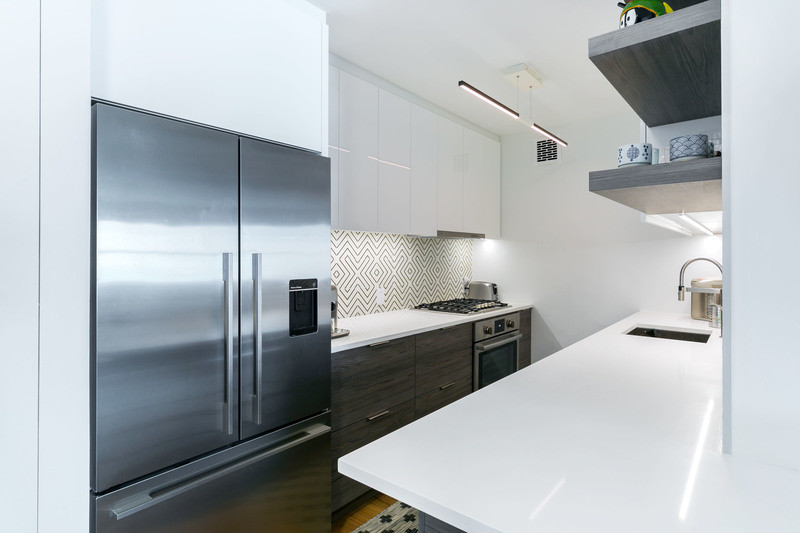
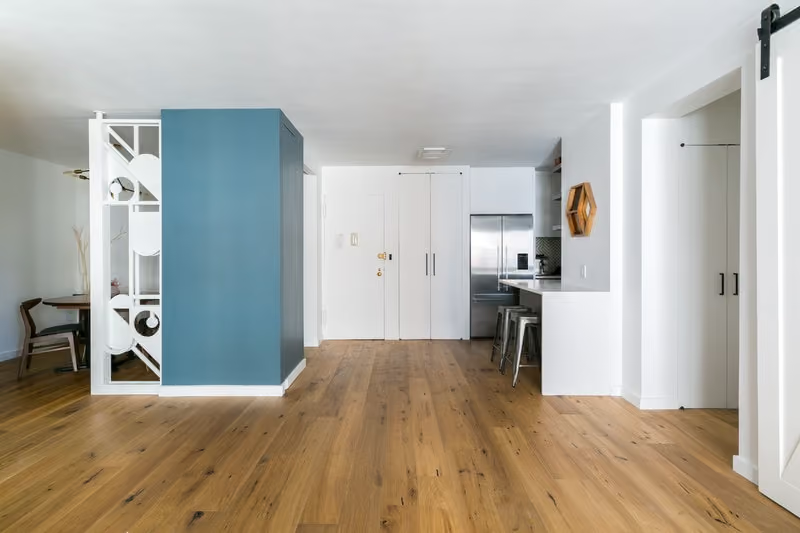
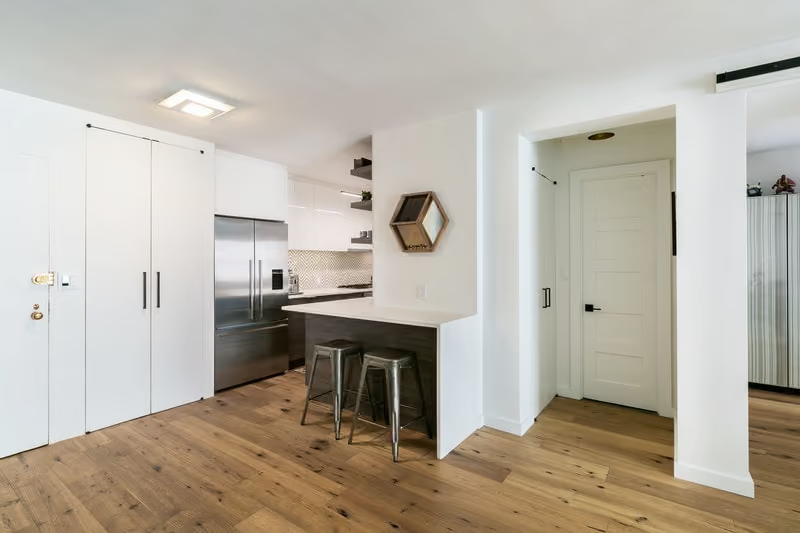
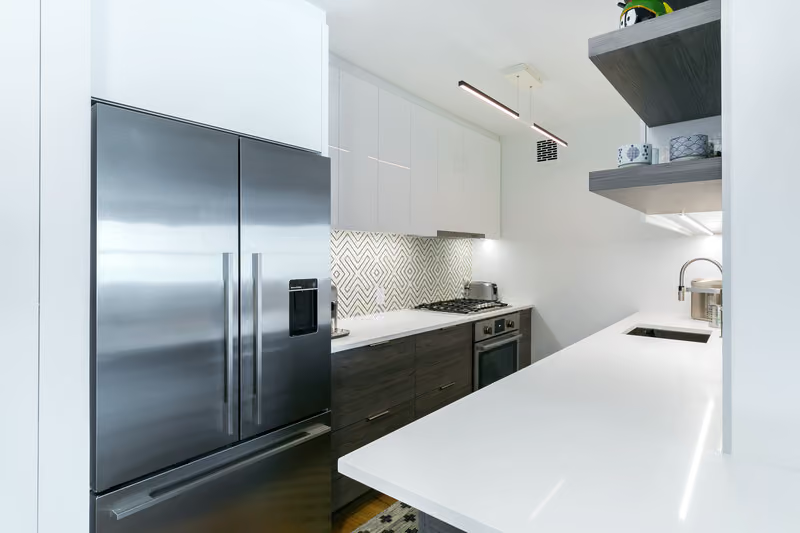
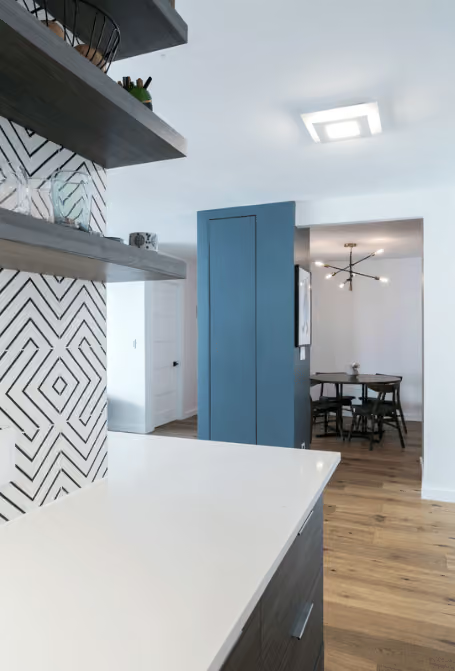
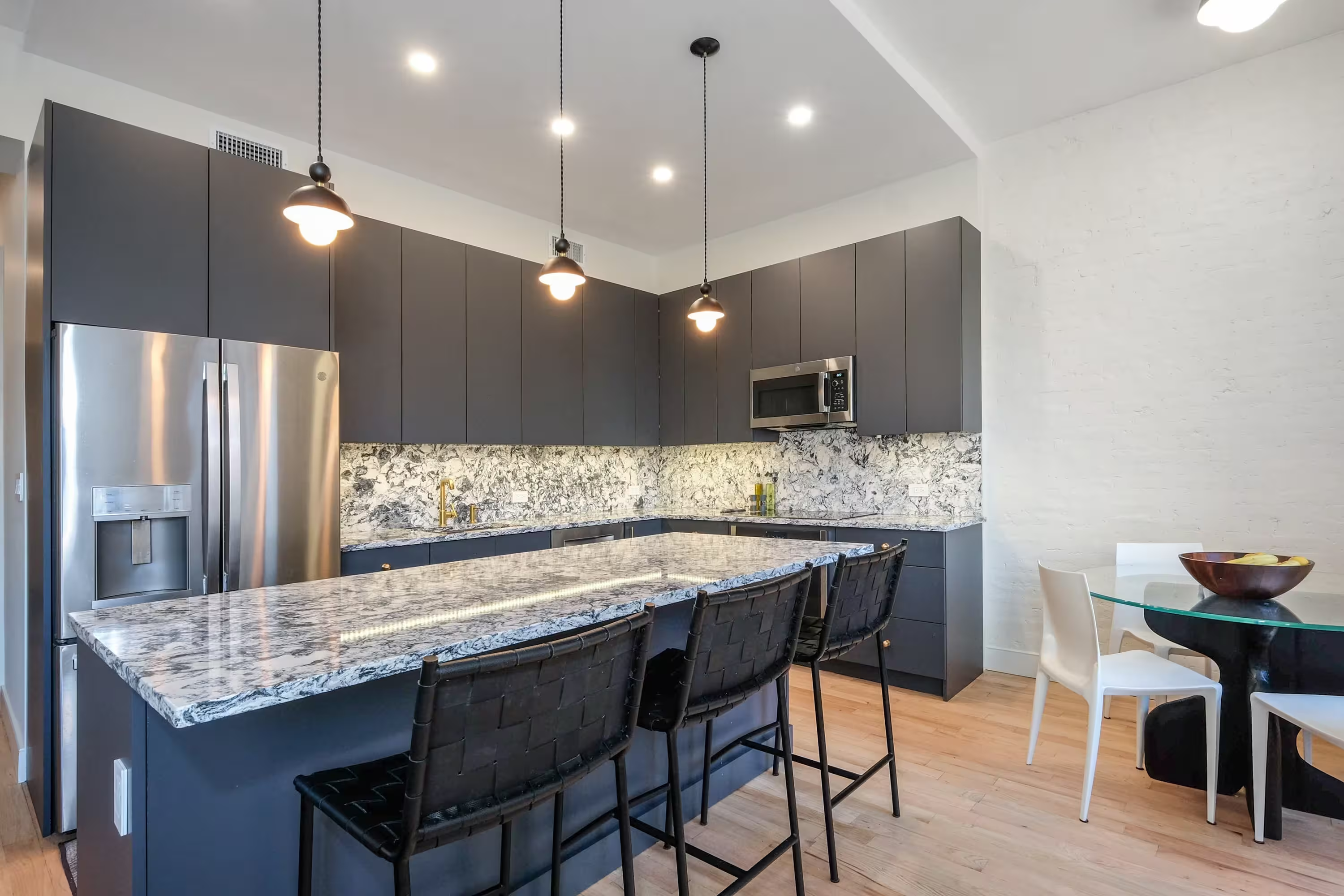
This specific NYC apartment renovation project in a Columbus Circle co-op involved the horizontal combination of an existing one bedroom apartment with a newly purchased one bedroom unit next door. As is common with almost any project involving the adjoining of two apartments, the scope of construction included work being done in both units to ensure a uniform floor and ceiling height and the integration of the electrical system. The scope of work also included a full renovation of a kitchen, in a mid-century Scandinavian design, plus the renovation of a bathroom, new floors, doors, paint, and general carpentry work.
Project at a glace
Job Type
Ownership Type
Building
AddresS
Neighborhood
Year Built
Square Footage
Duration
SCOPE
SERVICES
DESIGN STYLE
DESIGNER
THE TECHNICAL SIDE OF A NYC APARTMENT COMBINATION
Combining two apartments in New York City is usually a substantial project, involving the removal of walls and significant electrical work. However it is not just the removal of the wall between the two apartments, but often times the removal of walls within the apartments to repurpose certain rooms and create the desired layout. One of the biggest challenges of removing walls is dealing with the electrical lines running through the walls that have now been removed. In apartments, a electrical lines run through conduits, which connect to outlets and junction boxes. Often times, they feed into an outlet of a different wall – in other words, removing walls along with the electrical lines and junction boxes running through them will usually affect electric supply to another part of the apartment – this was exactly the challenge we had to overcome in dealing with this apartment combination.
Adding to the challenge was not being allowed to channel electrical lines through the floors and the ceiling of both combined units, as is the norm in almost all New York City apartment buildings. In order to successfully integrate both apartments our licensed electricians had to run new circuitry and rewire the apartment in order to feed the new layout. This was a complex project involving a comprehensive electrical plan that called for channeling of walls, running new electric throughout, rebalancing the two circuit breaker boxes, and significant carpentry work once the electrical work was complete.

THE CREATIVE SIDE OF A NYC APARTMENT COMBINATION
Our clients were split on what they wanted from the design of their newly combined apartment. On one hand, they were looking for a modern European design, on the other, they were in love with a transitional style shaker cabinet kitchen. In addition, they were looking to contrast this look with a rustic hardwood floor. With a big portion of the budget already being spent on the technical side of their renovation, our design and build team not only needed to provide a design solution that would serve a happy medium, but also source alternative flooring options that accomplish the desired look without fully breaking the bank.
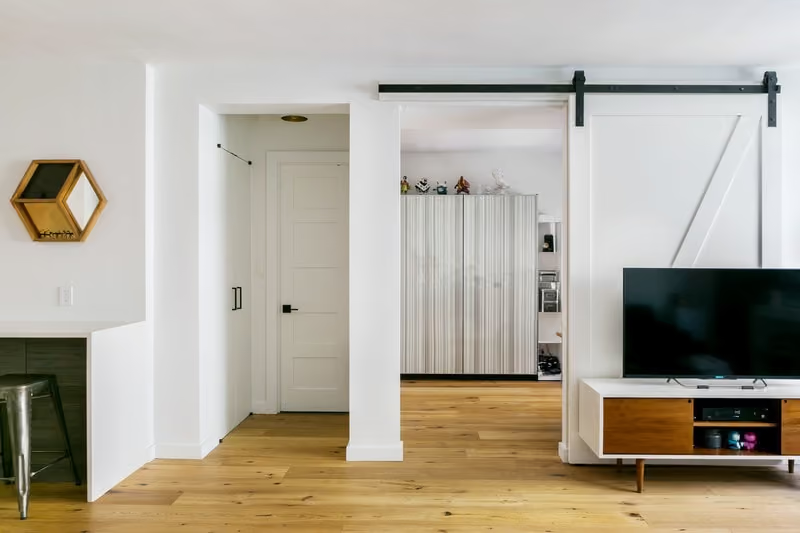
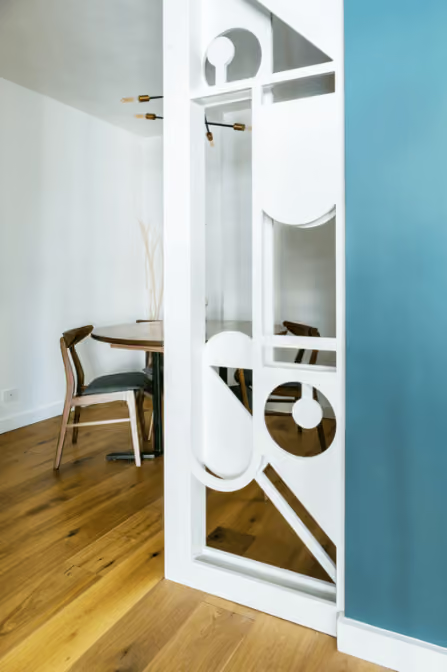
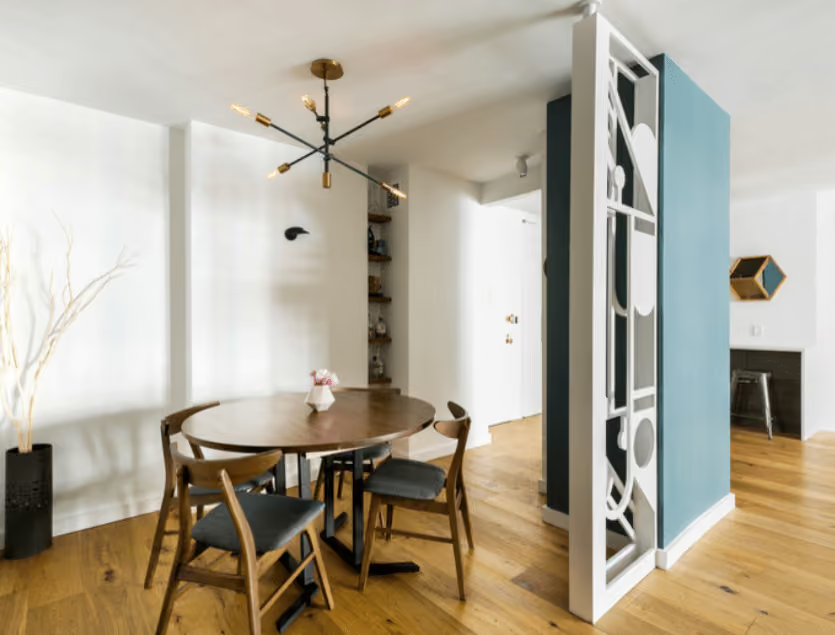
During the design consultation our design team suggested incorporating elements of wood in the kitchen base cabinets and glossy white flat panel wall cabinets. The combination of the two not only tied the modern European together with the transitional, but it also sparked the mid-century Scandinavian theme throughout the rest of the apartment. With this in mind, our design and build team procured an engineered wood floor at half the cost of what a hardwood floor would cost. Adding to this, we incorporated a barn wood sliding door in the living room, giving our customers the open layout feel they want for when friends and family are over yet being able to also have privacy when needed.
TYING IT ALL TOGETHER
Combining two apartments in New York City can be a great option with a rewarding experience, but it can also be chaotic if you do not have the right team working on your project.
Considering an apartment combination in NYC? Find timely inspiration for your upcoming condo reno via our latest piece, Condo Renovation Ideas 2026. View our full portfolio of apartment combination before and afters, learn more about Gallery KBNY, or simply contact us today.
We are a New York Times-featured design-build firm in New York City with a full-service approach to residential renovations in Manhattan and Brooklyn that includes everything from interior design and architectural services to facilitating building management and board approval, to construction and construction management. We’re experts in renovating pre-war homes, kitchens, bathrooms, flooring, sourcing custom pieces, building entirely new rooms (or even balconies), millwork, and all that falls in between. Let Gallery bring your dream home to life.

NYC RENOVATION FAQS
For a full apartment of about 1,700 square feet, construction typically runs five to six months. Design, board approval, and permitting come first and usually take four to six months, so most full renovations move from first consultation to move-in in 10 to 12 months. Scope, building rules, and how much infrastructure is being replaced set where a project falls in that range.
Read More: How Long To Renovate An Apartment In NYC?
The construction portion of a full kitchen renovation typically takes 7 to 11 weeks. Door to door, the timeline depends mostly on the building: about 10 to 14 weeks in a private townhouse, 14 to 20 weeks in a condo, 16 to 24 weeks in a post-war co-op, and 20 to 30 weeks in a pre-war co-op, where board and engineering review take longer. Gallery KBNY orders custom cabinetry, stone, and long-lead appliances during design and approvals, so materials arrive ready for the build.
Read More: How Long Does a Kitchen Renovation in NYC Take? A 2026 Timeline Breakdown
The construction portion of a bathroom renovation typically takes three to four weeks. Gallery KBNY renovates bathrooms as part of larger interior renovations, so bathroom work is sequenced alongside the rest of the apartment within the overall project schedule.
Learn More: Our NYC Bathroom Renovations
Board review and execution of the alteration agreement typically take 6 to 10 weeks in a post-war co-op and 8 to 14 weeks in a pre-war co-op, where asbestos filings, electrical load letters, and engineering review add steps. DOB permits usually run at the same time. A complete package with full technical drawings and specifications tends to clear the building's reviewing architect in one or two rounds, which keeps the approval phase on schedule.
Get Into The Specifics: In-Depth Co-Op Board Approval Process For Complex NYC Renovations: What to Expect
RELATED RENOVATIONS
Our success stories
View all reviewslet’s
Design-Build
together

RELATED POSTS