.avif)


.png)
.png)


What To Know About Renovating A Co-Op In NYC
Prepare for a co-op renovation in NYC with our complete guide on rules, regulations, and what to expect throughout the process.
May 6, 2026
|
.avif)
What To Know About Renovating A Co-Op In NYC
What sets co-op renovations apart in NYC? From board approvals to unique rules, here’s what you need to know.
Table of contents
- Navigating the Co-Op Board Approval Process
- Costs and Timing Planning
- Choosing A Contractor For Your NYC Co-Op Renovation
- Frequently Asked Questions About Renovating a Co-Op in NYC
Purchasing a NYC co-op with the intent of renovating it prior to moving in is one of the most common renovations we take on at Gallery. Given the age and condition of most NYC co-op’s plus the demanding boards, city rules, and management companies is what gives many buyers angst and creates obstacles that could cause your dream home design to be adjusted.
At Gallery, we excel at co-op and condo renovations in New York City, and have outlined various considerations below to provide proper expectations for anyone about to navigate a co-op renovation in NYC.
[#Navigating]Navigating the Co-Op Board Approval Process[#Navigating]
Co-op renovations in NYC have plenty of red tape and come with added bureaucratic details to account for before any alterations can begin.
Alteration Agreement
Once you decide upon a co-op renovation, the first step is to request an alteration agreement from the building management company. In short, an alteration agreement provides rules and governs renovations in the co-op building. It is set up by the co-op board and management company to ensure everything needed for the renovation is up to code, including insurance requirements and various technical elements.
What's Inside An Alteration Agreement?
Alteration agreements typically contain all of the following information:
- Times of work and noise hours
- Duration of a renovation (sometimes buildings only allow for 90 days or 120 days, after which a penalty is incurred)
- Requirements for plumbing and electrical work
- All insurance document requirements
- Specs of all plumbing and electrical fixtures to be used
- Requirements for asbestos and lead testing along with abatement requirements
- Description of factors that trigger architectural plans
- Requirements from your contractor
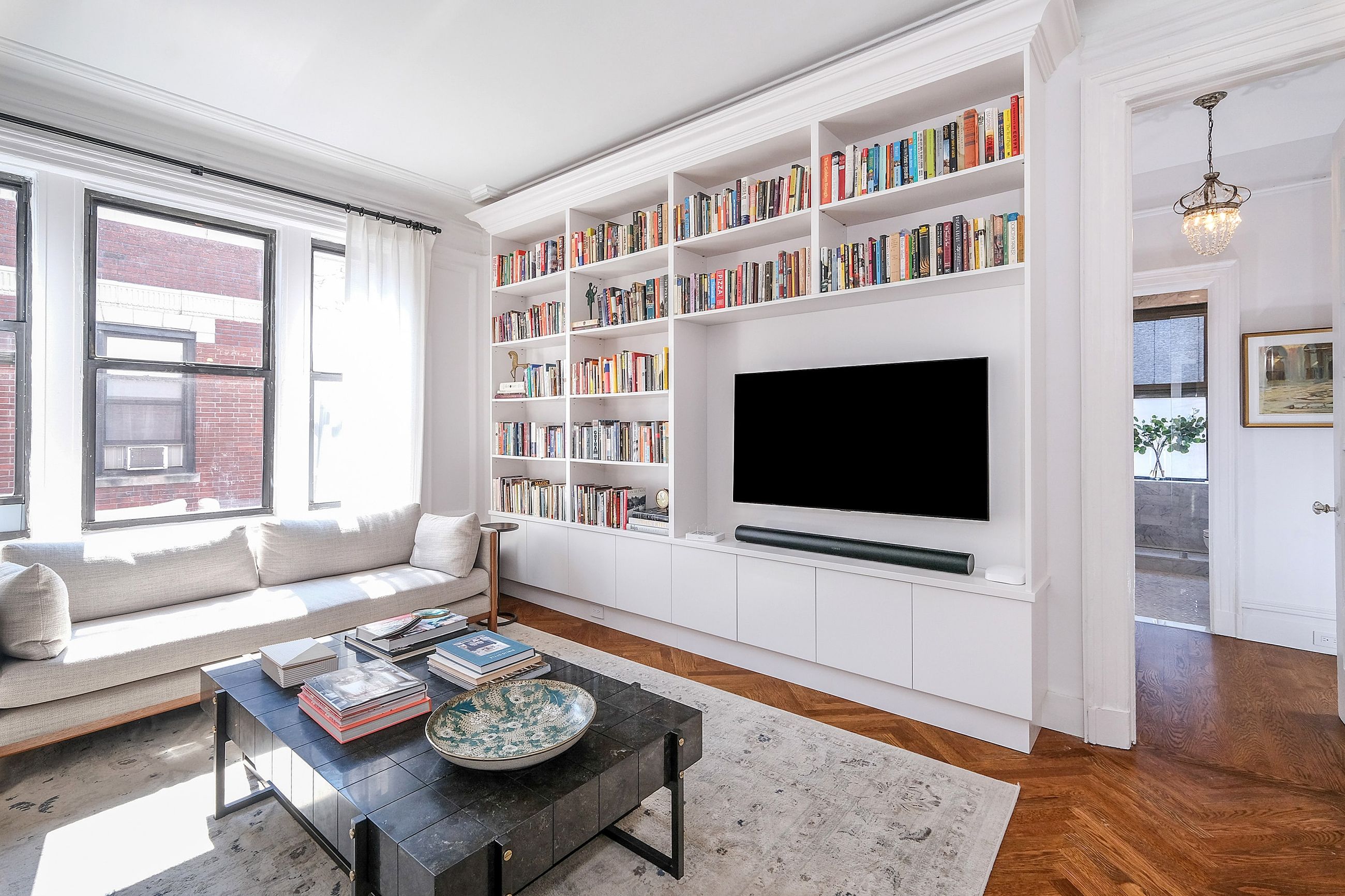
Virtually every co-op in New York will require compliance with the alteration agreement prior to allowing your renovation project to commence. The process of satisfying the alteration agreement on larger projects such as complete gut renovations, apartment combinations, or multi room remodels can be lengthy and time consuming, highlighting the importance of having an expert navigate the process.
Dedicating the time and effort to make sure everything in your alteration agreement is picture perfect prior to submission is essential to a seamless approval process. At Gallery, handling alteration agreement submissions is one of our specialties, which will ensure your project approval process runs as smoothly as possible. Board rapport is important because co-op boards and their reviewing architects will often provide a laundry list of adjustments required before work can begin - which we always help our clients work out appropriately.
Layout Changes
When planning the architectural design for your upcoming co-op renovation, the following caveats should be kept close in order to properly anticipate any specifications that may restrict specific layout changes:
Wet-Over-Dry Restrictions
Wet-over-dry restrictions dictate whether or not you can physically relocate what is deemed a ‘wet’ area (typically, a bathroom and kitchen) over a ‘dry’ area (the bedroom or living room of your neighbor directly below. Typically, this is not allowed in most NYC buildings.
Plumbing Risers
Plumbing stacks dictate whether or not you can open up certain walls in kitchens and bathrooms. Pipe systems in most NYC buildings run vertically and horizontal movement is often frowned upon by co-op boards, due to the potential for disruption to other tenants.
Alteration Permits
When making layout changes during your condo or co-op renovation, you will need the proper work permit from the NYC Dept. Of Buildings. There are two types of permits:
- Alteration Type 1: Required if there will be structural changes made to the building - which would be rare in most common co-op renovations and applies to more significant speciality jobs like an apartment combination.
- Alteration Type 2: Required during any renovation that requires work behind the walls, including replacing old electrical wiring, re-routing lines, plumbing updates, etc. A type 2 permit is needed in the majority of our condo and co-op renovations in NYC.
Layout Restrictions
What Co-Op Boards Typically Allow, Restrict, And Deny
| Proposed Layout Change | Typical Feasibility | Permit Required | Why It Matters |
|---|---|---|---|
| Cosmetic Refresh | Generally Allowed | No DOB Permit | Paint, flooring, fixtures, and cabinetry replacement that do not touch electrical, plumbing, or structural systems clear most alteration agreements without architectural plans. |
| Electrical Or Plumbing Upgrade In Place | Generally Allowed | Alt-2 Permit | Replacing wiring or fixtures within existing locations requires permit filing, board insurance compliance, and a licensed contractor on the approved list. |
| Non-Load-Bearing Wall Removal | Generally Allowed | Alt-2 Permit | Opening a non-structural interior wall to combine rooms or improve flow is routinely approved with architectural plans submitted to the board and DOB. |
| Bathroom Or Kitchen Layout Shift Within Wet Zone | Conditional | Alt-2 Permit | Moving fixtures within an existing wet area is often allowed, but plumbing riser locations and waste line routing must be respected. Plans typically require board engineer review. |
| Adding A New Bathroom Or Kitchen Over Dry Space | Usually Restricted | Alt-2 + Board Waiver | Wet-over-dry restrictions typically forbid placing a new wet area above a neighbor's living or sleeping space. Board waiver is possible but rare and requires extensive sound and waterproofing scope. |
| Horizontal Plumbing Reroute Across Risers | Usually Restricted | Alt-2 + Board Approval | Most NYC co-op risers run vertically. Horizontal movement across stacks introduces neighbor disruption risk and is often denied unless tied to an approved building-wide plumbing strategy. |
| Load-Bearing Wall Removal Or Apartment Combination | Conditional | Alt-1 Permit | Structural changes require an Alt-1 filing with sealed engineering drawings, full DOB review, and explicit board approval. Common on combinations and gut renovations but adds weeks to permitting. |
| Window Replacement Or Facade Penetration | Building-Specific | Varies | Facade work touches a co-op's common elements. Approvals depend on the building's standard window spec, landmark status, and whether replacements are tied to a building-wide program. |
Source: Gallery KBNY co-op alteration agreement framework, Manhattan and Brooklyn (2026). Specific rules vary by building; this matrix reflects patterns common across NYC co-op alteration agreements.
In certain circumstances, if proposed layout changes from our clients are being disallowed by the co-op board then we’ll petition the co-op board to make an exception. We will only do this in certain cases, if we feel it’s a genuine and worthwhile possibility.

[#Planning]Costs and Timing Planning[#Planning]
Budgeting For A NYC Condo Or Co-Op Renovation
The total cost of any NYC condo or co-op renovation depends on existing site conditions, design preferences, level of finishes, and the actual scope of the project. As a general 2026 benchmark, a full upper mid-tier co-op or condo renovation in NYC ranges from $400 to $550 per square foot, inclusive of all labor and materials under a full-service design-build scope. Luxury renovations typically start at $550 per square foot and can reach $850 per square foot or more depending on finish level, custom millwork, and the extent of layout changes.
These ranges apply to full apartment renovations. Individual room renovations carry a higher cost per square foot because of fixed costs and trade minimums that get spread across a smaller scope.
Where The Numbers Move Within That Range
A handful of conditions and scope decisions reliably push a co-op renovation above the upper mid-tier baseline. The most common in our work across Manhattan and Brooklyn:
- Pre-War Status: $600+ per square foot. Plaster walls, original framing, aging mechanical systems, and the level of period-specific restoration the apartment warrants all add scope. Pre-war co-ops also tend to involve more invasive electrical and plumbing rework once walls are opened.
- Estate Condition: $600+ per square foot. Apartments that have not been touched in decades almost always require a full gut. The starting point is closer to a complete reset than a renovation, which is why estate-condition co-ops typically begin above the upper mid-tier ceiling.
- Layout Changes: $550+ per square foot minimum. Moving walls, relocating plumbing, or reconfiguring rooms adds DOB filings, structural coordination, and trade complexity that pushes projects past the baseline range, often into luxury territory depending on the scope of the change.
- Brownstones And Townhomes: $700+ per square foot. Larger systems, more square footage to coordinate, additional permits, and hidden conditions specific to older row houses move these projects into their own tier.
Cost Scenarios
NYC Co-Op Renovation Cost By Apartment Size And Scope
Source: Gallery KBNY 2026 NYC apartment renovation cost framework, Manhattan and Brooklyn. Per-square-foot ranges inclusive of labor and materials under a full-service design-build scope. Adding central air or true HVAC is a separate lump-sum scope item that typically adds $50,000 to $100,000 depending on system size and routing complexity. Brownstones and townhomes start at $700+ per square foot due to larger systems and hidden conditions.
Adding Central Air Or True HVAC
Adding central air or full HVAC to a NYC co-op renovation is a separate scope item rather than a per-square-foot adjustment. The work involves ductwork, condenser placement, additional electrical capacity, and almost always requires board approval and DOB filing. Most projects fall between $50,000 and $100,000 in added cost, depending on system size, routing complexity, and whether existing chases can be reused.
Carrying And Temporary Housing Costs
Beyond the construction estimate, factor in carrying costs and temporary housing for the duration of the project. Most full co-op renovations require three to six months of relocation depending on complexity and building work-hour restrictions. Carrying costs accumulate quickly when overlapping with a mortgage on the renovated unit, so we provide a detailed construction schedule early in planning so clients can arrange accommodations and storage with appropriate lead time.
Permits, Filings, And Building Fees
Permits and architectural filings for a NYC co-op renovation can run upwards of $30,000 in aggregate. Plumbing permits alone can reach $5,000, electrical permits typically cost about $900, and asbestos inspections add another $500 to $1,500 when required. Co-op-specific fees also add up: common area protection, elevator reservation, after-hours work charges, and certificate of insurance riders are all typical line items. We handle the full filing and approval process in-house at no separate fee, including alteration agreement coordination with the building's managing agent and reviewing architect.
Considering a Renovation in NYC?
Click to schedule a consultation with one of the principle partners at Gallery, who will hear out your renovation plans and let you know the best way to proceed - whether we end up working together or not.
Schedule Your Consultation
[#Choosing]Choosing A Contractor For Your NYC Co-Op Renovation[#Choosing]
When renovating a co-op in NYC, there are various routes you can go - each with their own advantages. See how our design-build approach compares to competitive renovation models:
Design-Bid Firm Vs Design-Bid-Build Firm
A true design-build firm like Gallery offers a full-service renovation package for clients who value a partner with one main point of contact to oversee the entire process. Alternatively, a design-bid-build firm delivers a more piecemeal approach that allows for more flexibility, but essentially makes the client a project manager. Read a more detailed breakdown of the two approaches via Design-Build vs Design-Bid-Build: What’s The Difference?
Design-Build Firm Vs Architect
When taking on a full apartment renovation, the traditional approach has been to hire an architect, who draws up plans and handles the design work. They then bid out those plans to various contractors. The architect will act as your agent, often managing project construction too. This does not come without fees, as architects typically charge an additional 20% of the construction price to manage the contractors.
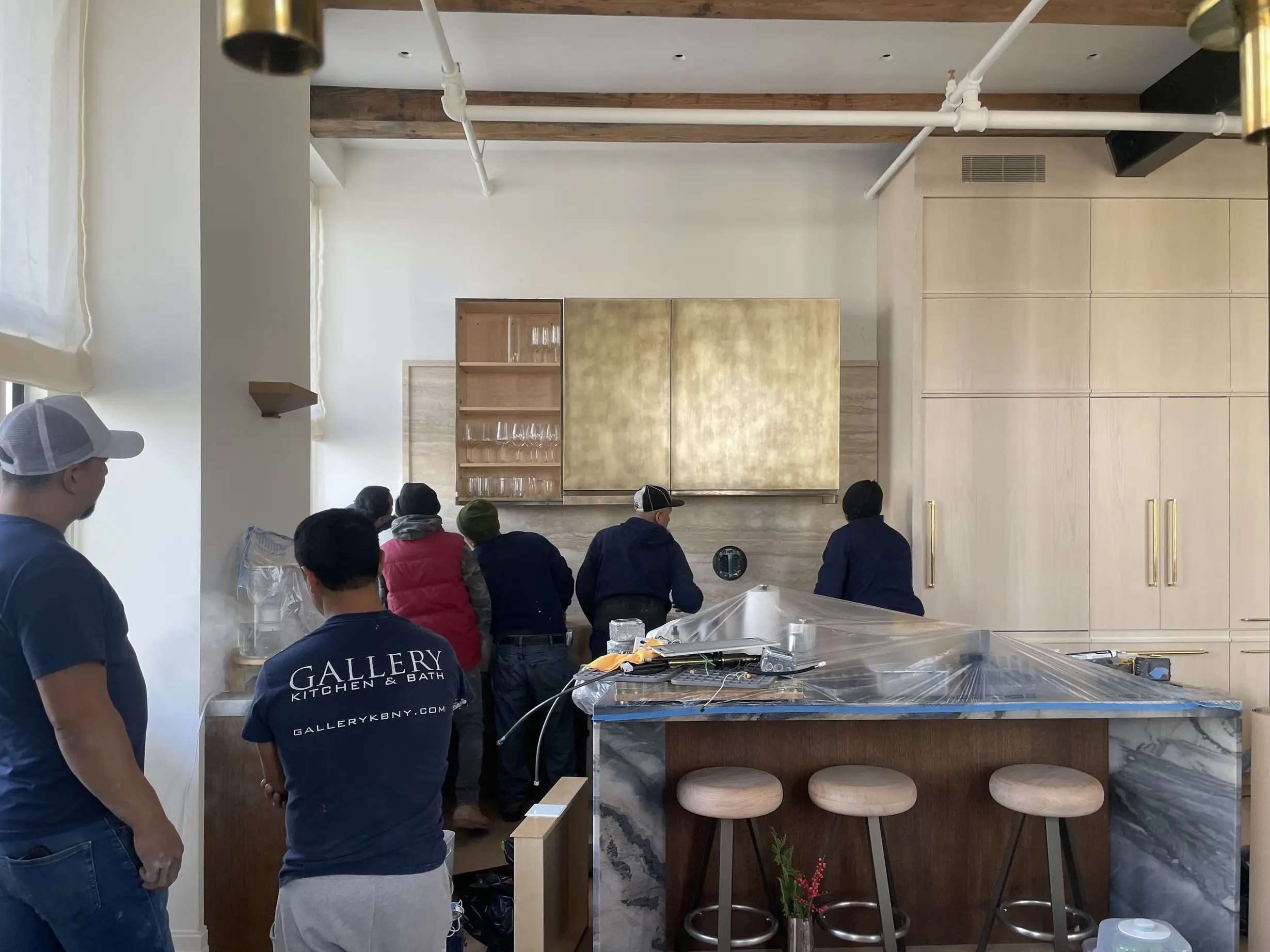
Design-build firms, on the other hand, offer a similar approach - without having to bid out plans to multiple contractors AND without the added 20% architects charge. With a design-build firm like Gallery, everything is done in-house. Our architect draws up the plans while the design team handles the space planning, finish and fixture component of the project, then our team does the build and construction - all overseen by our in-house project manager and construction manager, who ensure all finer points meet your specific expectations. We design the project, and then we build the project.
Delivery Model Comparison
How Each Co-Op Renovation Approach Compares
| Comparison Point | Design-Build Firm | Design-Bid-Build | Architect-Led |
|---|---|---|---|
| Points Of Contact | One firm, one contract, one project lead from concept through closeout. | Designer, architect, contractor, and any specialty trades all contracted separately. | Architect leads, contractor and trades managed under a separate contract. |
| Who Manages Construction | In-house project manager and construction manager within the same firm as the design team. | Client acts as the de facto project manager between independent vendors. | Architect typically manages the contractor on the client's behalf. |
| Architect Fee Structure | Architectural services bundled into one fee, no separate construction-management add-on. | Architect fee paid separately, often hourly or as a percentage of plans. | Architect typically charges around 20% of construction cost to manage trades. |
| Pre-Construction Planning | Integrated. Site assessment, electrical and plumbing inspections, and board strategy happen before pricing is finalized. | Bid-driven. Each contractor prices the same plans, so unforeseen conditions are typically priced as change orders mid-project. | Architect plans, contractor prices. Less integrated coordination on infrastructure surprises. |
| Change Order Frequency | Low. Pre-construction integration catches most issues before demo. | Moderate to high. Gaps between plans and execution surface mid-project. | Variable. Depends on architect's construction-administration depth. |
| Board Approval Handling | Alteration agreement, DOB filings, and board engineer responses managed in-house at no separate fee. | Client coordinates submissions across architect and contractor; gaps create board revisions. | Architect typically handles board submissions; contractor coordination varies. |
| Best Fit For | Owners who want a single accountable team, predictable budget, and minimal client-side coordination on a complex co-op. | Owners with strong project-management experience and time to actively coordinate. | Owners working with an established architect relationship and a defined construction budget. |
Source: Gallery KBNY delivery model framework, Manhattan and Brooklyn co-op renovations (2026).
For more on the topic, read our full blog on Design-Build vs. Architectural Firms.
Why Gallery For Your Co-Op Renovation In NYC?
With so many variables to consider when renovating your condo or co-op, hiring a knowledgeable full-service design-build firm in NYC that can successfully streamline all the moving parts is vital to a successful end result. At Gallery, we strive to continually provide the best client experience possible via the following core principles:
Board Approval And Permit Pros
We take on the responsibility of handling all red tape involved in co-op renovations in NYC, at no additional cost. This includes reviewing and satisfying a board’s alteration agreement, filing all relevant architectural plans with the Department Of Buildings, and procurement of all necessary permits.
Extensive Planning To Avoid Unexpected Costs & Change Orders
With a full-service team of design and construction professionals experienced in the complexities of NYC co-op renovations, our all-inclusive design-build approach makes change orders and mid-project budget adjustments much less likely.
Constant, Clear Communication
One of our core principles is keeping an open line of communication. We do this by offering regular site visits and phone calls, plus a mobile project management app to track all the steps of the job, material selections or questions, and anything else to discuss. You know what we know, every step of the way.
Are you looking to renovate a co-op or condo in New York City? Learn more about Gallery, view a portfolio of our co-op and condo renovations in NYC, or contact us to begin consultations on your own co-op renovation.
Gallery KBNY is a full-service design-build firm featured in The New York Times, specializing in the architecture, interior design, and renovation of apartments, co-ops, condominiums, townhomes, and lofts across Manhattan and Brooklyn. Our integrated team of architects, designers, contractors, and project managers manages every phase from board approvals and DOB permitting through design and construction. A founding partner is involved in every project, start to finish. Because architecture, design, permitting, and construction are coordinated under one roof, the process remains streamlined, accountable, and transparent from start to finish. Our work has also appeared in Forbes, Architectural Digest, and Inc., and is backed by 100+ five-star client reviews.
[#FAQ]Frequently Asked Questions About Renovating a Co-Op in NYC[#FAQ]
What Is a Co-Op Alteration Agreement and Why Does It Matter?
An alteration agreement is a formal document issued by the co-op board and management company that governs all renovation work within the building. It functions as a binding contract between the shareholder and the building, and no renovation work can begin until it is fully executed. The agreement specifies allowable working hours and noise hours, maximum renovation duration with penalty provisions for overruns, insurance requirements for the contractor and all subcontractors, technical specifications for plumbing and electrical fixtures and methods, asbestos and lead testing requirements and abatement standards, conditions that require architectural plans to be filed with the Department of Buildings, and the contractor qualifications the building will accept. The alteration agreement is building-specific, which means every co-op in New York City has its own version with its own rules. What is straightforward in one building may be heavily restricted in another. Submitting an incomplete or non-compliant alteration agreement package is the most common cause of delays in co-op renovation approvals, which is why the quality of the submission matters as much as the content of the renovation itself.
How Long Does Co-Op Board Approval Take for a Renovation in NYC?
Co-op board approval for a renovation typically takes four to ten weeks from the time a complete submission package is delivered to the managing agent. The process involves the managing agent reviewing the submission for completeness, preparing the package for board review, the board reviewing the application at its scheduled meeting, and any revision requests being addressed before final approval is granted. Most co-op boards meet monthly or bimonthly, which means missing the submission cutoff for one meeting cycle adds four to six weeks to the timeline before the next opportunity. Boards with a designated reviewing architect add another layer: the plans must be reviewed and cleared by that architect before the board votes. The submission package that moves fastest through this process is one that is architecturally complete, fully compliant with the building's alteration agreement, and accompanied by all required insurance documents, contractor credentials, and supporting material specifications. Revision requests from the board or its reviewing architect are common on larger scopes, and each round of revisions restarts a portion of the review cycle.
What Is a Wet-Over-Dry Restriction in a NYC Co-Op Renovation?
A wet-over-dry restriction prohibits the placement of a wet area, defined as a space with active plumbing such as a kitchen or bathroom, directly above a dry area in the apartment below, meaning a living room or bedroom. The restriction exists because water infiltration from a wet space into a neighbor's ceiling is a significant liability for both the shareholder and the building, and co-op boards use this rule to protect against it. In practical terms, a wet-over-dry restriction means you cannot create a new bathroom or kitchen in a location that sits above a neighbor's living or sleeping space. You can typically reconfigure plumbing within an existing wet zone, but moving a bathroom or kitchen to an entirely new location requires analysis of what is directly below, and in most buildings that kind of move will require either a board waiver or will be denied outright. The restriction is one of the most significant design constraints in NYC co-op renovations and should be researched before floor plan concepts are finalized.
What Is the Difference Between an Alteration Type 1 and Alteration Type 2 Permit in NYC?
Alteration Type 1 and Alteration Type 2 are Department of Buildings permit classifications that reflect the scope and nature of the work being proposed. An Alteration Type 2 permit is the more common of the two in co-op renovations. It is required for any work that occurs behind walls, including electrical rewiring, plumbing replacement or rerouting, HVAC installation, and any structural work that does not change the certificate of occupancy. The majority of full co-op renovations in New York City require an Alteration Type 2 filing. An Alteration Type 1 permit is required when the proposed work changes the legal use of the space, the occupancy classification, or the certificate of occupancy itself. In residential co-op renovations, this is most commonly triggered by apartment combinations, where two separate units are being merged into one, which requires the certificate of occupancy to be amended to reflect the new configuration. Alteration Type 1 filings involve a more extensive review process at the Department of Buildings, require sealed engineering drawings, and take longer to approve than Alteration Type 2 filings.
How Do Plumbing Riser Locations Affect What You Can Do in a NYC Co-Op Renovation?
Plumbing risers are the vertical pipes that run through a building carrying supply water and waste lines. In most NYC co-op buildings, these risers run in fixed vertical chases shared across multiple floors, meaning the location of a kitchen sink, bathroom fixtures, or any other plumbing connection is constrained by where the nearest riser is located. Horizontal movement of plumbing across a riser is technically possible but is almost always restricted by co-op boards because running new pipe horizontally through floor and ceiling assemblies creates risk of interference with neighbors' units and the building's shared infrastructure. In practical terms, this means a kitchen can be reconfigured within its existing footprint but may not be able to move to the opposite wall or an entirely different room if that move requires routing waste lines across or away from the building's riser stack. Understanding riser locations relative to the proposed layout is one of the first feasibility checks in any co-op renovation that involves kitchen or bathroom changes.
What Additional Fees Beyond Construction Costs Should Co-Op Owners Budget For?
A co-op renovation budget has two distinct components: construction costs and soft costs, and soft costs in a co-op context are more numerous than in most other renovation scenarios. Beyond architecture and interior design fees, permit filing fees, and the DOB filing costs themselves, co-op-specific fees add meaningful dollars to the total project investment. Permit fees across general construction, plumbing, and electrical typically total several thousand dollars. Asbestos inspection and ACP-5 testing, required before most DOB filings, adds fifteen hundred to four thousand dollars in testing costs alone, with abatement costs additional if asbestos is found in materials that will be disturbed. Co-op building fees include common area protection deposits, elevator reservation fees for material deliveries and debris removal, after-hours work charges when work extends beyond the building's permitted renovation hours, certificate of insurance riders naming the building and managing agent as additionally insured, and in some cases an escrow deposit held against potential damage to common areas during construction. Carrying costs and temporary housing for the duration of the renovation, typically three to six months for a full co-op renovation, represent the largest soft cost item that many buyers underestimate when budgeting.
Why Does a Pre-War Co-Op Renovation Cost More Than a Post-War Co-Op Renovation?
The cost difference between pre-war and post-war co-op renovations is rooted in what lies behind the walls, not in what is visible at the surface. Pre-war buildings were constructed before standardized electrical codes, modern plumbing materials, and contemporary framing practices. When walls are opened during a gut renovation, the conditions that are commonly found include cloth-insulated wiring that does not meet current code and must be fully replaced, galvanized or lead supply pipes that have corroded and require replacement, plumbing configurations that do not conform to current wet stack and riser standards, and asbestos-containing materials in pipe insulation, floor tiles, and plaster that require testing and, if disturbed, licensed remediation before work can proceed. Each of these conditions adds scope that post-war buildings, with their more standardized construction, are less likely to present. Pre-war buildings also carry period-specific architectural details, including plaster walls, original moldings, and pre-war ceiling heights, that require more skilled labor and more careful coordination to preserve or restore properly. The combination of infrastructure replacement and craftsmanship demands is why pre-war co-op renovations reliably land at the upper end of or above the standard per-square-foot range.
Can a Co-Op Board Deny a Renovation Request in NYC?
Yes. Co-op boards have broad discretion to approve, conditionally approve, or deny renovation requests, and that discretion is largely protected by the business judgment rule under New York law, which means boards are not required to justify their decisions in most circumstances. In practice, outright denials are less common than conditional approvals that require modifications to the proposed scope. Boards most frequently request changes to plumbing configurations that implicate shared risers, layout proposals that would introduce wet areas over dry spaces below, window or facade modifications that touch common elements of the building, and work hours or construction duration that exceed building standards. When a denial or modification request is issued, it is possible in certain circumstances to petition the board for a variance or exception, particularly when the proposed modification does not create meaningful risk to the building or other shareholders. The strength of the submission package and the board's existing relationship with the renovation team both influence how these conversations go. Boards that have worked with a contractor before, seen their work completed on time and without incident, and found their submissions to be complete and professionally prepared are meaningfully more receptive to approvals and variances than boards encountering a contractor for the first time.
How Does Hiring a Design-Build Firm Simplify a NYC Co-Op Renovation?
A co-op renovation in New York City involves more approval touchpoints, more regulatory requirements, and more coordination between parties than almost any other residential renovation scenario in the country. A design-build firm manages all of those touchpoints under one roof rather than distributing them across a separately hired architect, contractor, and expediter, each of whom communicates with the board and DOB independently. In practical terms, this means the alteration agreement submission is prepared by the same team building the project, which eliminates translation errors between what was designed and what was submitted. DOB filings are handled in-house, which means the team filing the permits understands the project at a construction level and can respond to DOB objections or revisions without a back-and-forth handoff. Pre-construction inspections for asbestos, electrical capacity, and plumbing condition are integrated into the planning phase rather than discovered mid-project by a contractor who had no input on the design. And when the board's reviewing architect requests a plan revision, the response comes from the team that drew the plans rather than an outside architect who may no longer be actively engaged. For a renovation type as procedurally complex as a NYC co-op, the single-accountability model is not a convenience. It is a meaningful risk reduction.
Manhattan Design-Build
Evaluate Your Manhattan Apartment
Before You Buy
Buying an apartment you plan to renovate? A founding partner walks it with you during the contract period and maps the scope, cost, and timeline, so you know exactly what you're taking on before you sign.
As seen in
Pre-Purchase Assessment
Walk the apartment with us first and understand the full scope, cost, and timeline before you close.
or call us directly
let’s
Design-Build
together

.avif)