.avif)


.png)
.png)


This Is The Best Way To Renovate A Manhattan Apartment
Renovating your Manhattan apartment doesn't have to become a burden. Here’s how to make the process smoother, faster, and stress-free as possible.
December 5, 2025
|
%2520Gallery%2520KBNY.webp)
This Is The Best Way To Renovate A Manhattan Apartment
Want to renovate your Manhattan apartment without the headaches? Discover the smarter, streamlined way to elevate your NYC home.
TABLE OF CONTENTS
- The Problems With A Fragmented Approach
- Why Full-Service Design-Build Is the Best Approach
- Streamlined Communication and Accountability
- Cost Transparency and Budget Control
- Faster Project Timelines
- FAQs About Choosing A Renovation Partner In Manhattan
Renovating your NYC apartment? If so, you’ve likely encountered, or even experienced firsthand, the unique challenges of navigating a co-op or condo renovation in NYC. Beyond design decisions and budgeting, the process requires approvals, coordination, and expert oversight to ensure everything runs smoothly.
One of the most critical decisions you’ll face is determining how to structure the renovation. As we discussed in our popular blog What is The Right Approach For Your NYC Apartment Renovation, there are various routes one can take to accomplish their renovation goals. The question is - which makes most sense for you? Should you hire an independent interior designer, a separate architect, and then bid out the plans to a general contractor? Or, is there a better and more efficient way to manage the process without juggling multiple parties on top of your already demanding schedule? Yes, actually there is.
Imagine having a seasoned wedding planner, but for your renovation. Someone who handles every detail from start to finish, guaranteeing a seamless process and taking full responsibility for every aspect of planning, design, and construction.
As one of NYC’s most experienced full-service design-build firms, Gallery handles the renovation from start to finish under one roof. The sections below cover where a piecemeal approach tends to break down and why an integrated process delivers a more efficient and cost-controlled result.
MIN.jpg)
[#1]The Problems With A Fragmented Approach[#1]
Hiring separate professionals for architecture, interior design, and general contracting can look like a sensible way to assemble a renovation. In practice, an a la carte structure tends to introduce inefficiency and miscommunication, and to push costs past budget. The reasons follow.
Gaps Between Design And Construction
When professionals work independently, communication gaps become almost inevitable. An architect may design a beautiful space, yet if construction costs enter the conversation late, you can face last-minute compromises. A designer may specify finishes that sit outside the budget. Disconnects like these lead to costly redesigns and avoidable delays.
Unclear Accountability
Who takes the lead when an unexpected issue surfaces? In a fragmented setup, the owner often becomes the middleman, resolving differences among the architect, designer, and contractor. Should a structural condition appear mid-project or a city approval stall, responsibility can blur, and the work of sorting it out falls to you.
Budget Overruns
With several professionals working independently, cost control becomes difficult. A design developed without real construction pricing can produce sticker shock once contractor bids arrive. Change orders and unforeseen site conditions then push the budget further still.
Extended Timelines
Teams working out of sync can stretch a renovation well past plan. Time spent waiting on redesigns, rebidding contracts, and clearing up miscommunication adds up quickly. In Manhattan, where each week of delay carries real cost and logistical weight, an efficient process matters.
| How It Works | A La Carte | Design-Build |
|---|---|---|
| Contracts & Contact | Separate agreements you coordinate yourself | One contract, one point of contact |
| Design & Cost Alignment | Construction cost often surfaces after design is set | Build cost informs design from the start |
| Accountability | Shared across parties, with you mediating | One firm owns the outcome end to end |
| Budget Visibility | Clear once contractor bids arrive | Set and transparent before you commit |
| Timeline | Pauses for redesigns and rebidding | Continuous, coordinated schedule |
| DOB, Board & LPC | Ownership of approvals can blur | Filed and tracked by one firm |
[#2]Why Full-Service Design-Build Is the Best Approach[#2]
As a full-service design-build firm, Gallery eliminates the inefficiencies and frustrations of a fragmented process by integrating planning, design, and construction into a seamless workflow. Here’s why this approach works best:
One Team, One Vision
We manage every aspect of your renovation in-house (including architecture, interior design, approvals, material selections plus procurement, construction, and project management) without outsourcing to third parties. This direct oversight ensures complete control and accountability, allowing us to seamlessly carry the initial design vision through to execution without compromise or miscommunication.
Streamlined Communication And Accountability
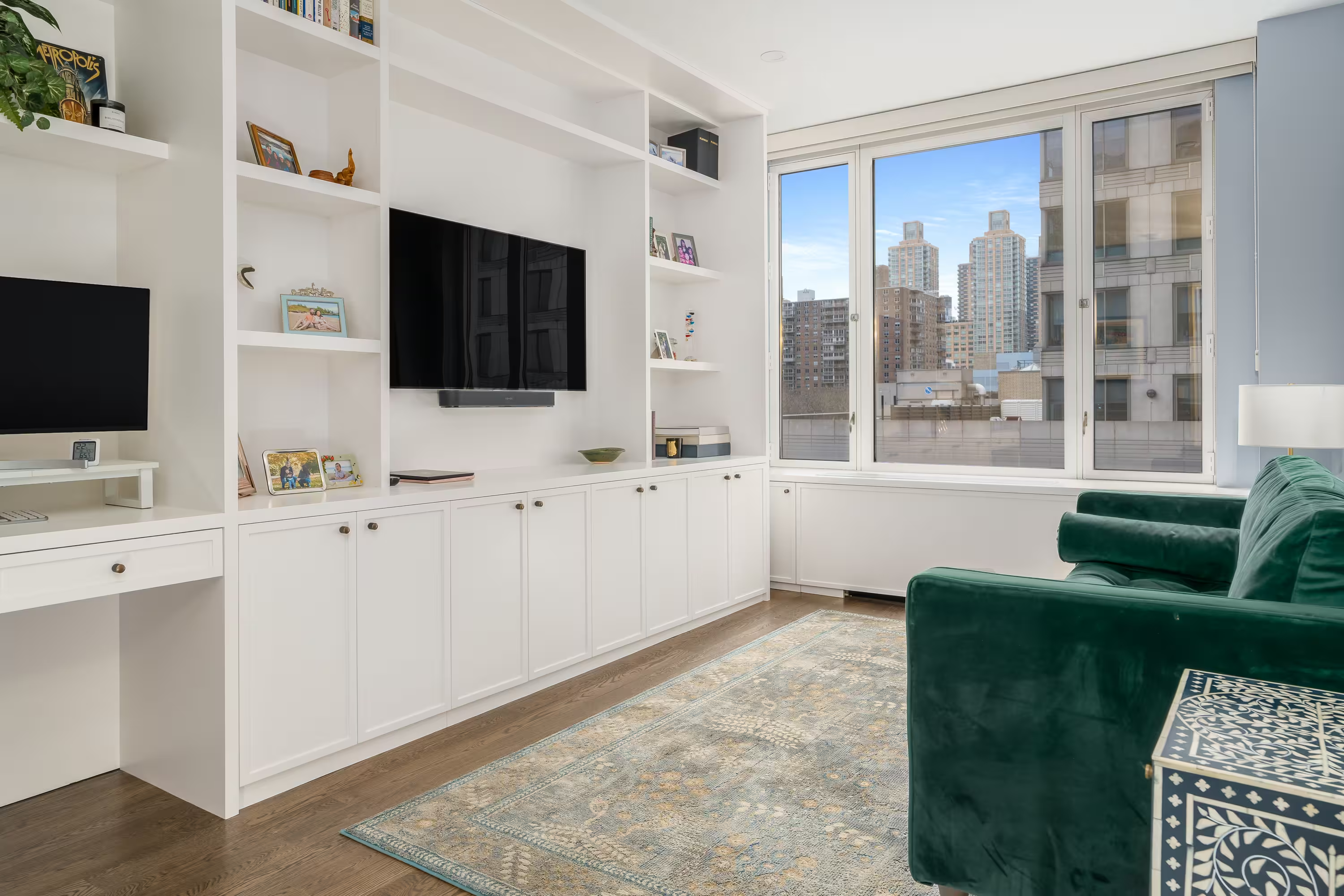
A single unified team oversees the project, which removes the finger-pointing common between separate parties. When an issue arises, the firm takes responsibility and resolves it, so you are never pulled in to mediate.
Cost Transparency And Budget Control
The process sets a clear budget at the outset, with design decisions measured against your objectives and real construction costs. Managing every part of the work in-house keeps unexpected overruns to a minimum and gives you a transparent financial picture throughout, well before you formally commit to the project.
Faster Project Timelines
Integrating design and construction keeps the project moving, with no downtime waiting on redesigns or rebid contracts. A coordinated team holds progress steady and predictable.
Command Of Manhattan's Requirements
From DOB approvals to co-op and condo board permissions, Gallery specializes in Manhattan renovations and knows the city's regulatory landscape in depth. That fluency heads off the costly missteps and delays that catch less experienced teams.
Design-Build: A Better Renovation Experience
Renovating in Manhattan carries no shortage of challenges, and the structure you choose makes much of the difference. Gallery's integrated, full-service design-build approach gives you a streamlined and cost-controlled path, with your vision carried out precisely and efficiently. A dedicated team guides each phase, which frees you to focus on the rewarding parts of the project: selecting finishes, approving designs and renderings, and watching the space come together.
If you’re considering a Manhattan renovation, we’d love to discuss how our team can help you achieve ideal results. Contact us today to learn more about our process and start planning your dream home. Or, view our portfolio of Manhattan apartment renovation before and afters, then learn more about Gallery.
We are a New York Times-featured design-build firm in New York City with a comprehensive renovation process that caters to our clients. We’re experts in pre-war apartment renovations, apartment combinations, room creations, full gut renovations and all that falls in between. Let us bring your dream home to life.
Gallery KBNY is a full-service design-build firm featured in The New York Times, specializing in the architecture, interior design, and renovation of apartments, co-ops, condominiums, townhomes, and lofts across Manhattan and Brooklyn. Our integrated team of architects, designers, contractors, and project managers manages every phase from board approvals and DOB permitting through design and construction. A founding partner is involved in every project, start to finish. Because architecture, design, permitting, and construction are coordinated under one roof, the process remains streamlined, accountable, and transparent from start to finish. Our work has also appeared in Forbes, Architectural Digest, and Inc., and is backed by 100+ five-star client reviews.
[#FAQ]Frequently Asked Questions About Choosing A Renovation Partner In Manhattan[#FAQ]
What are the ways to structure a Manhattan apartment renovation?
One of the most critical decisions in a Manhattan renovation is how to structure it. The traditional route hires an independent interior designer, a separate architect, and then bids the plans out to a general contractor, leaving the owner to coordinate several parties. The alternative is a full-service design-build firm that handles the renovation from start to finish under one roof, carrying architecture, interior design, approvals, procurement, and construction as a single team. The right choice depends on how much of the coordination an owner wants to manage, though for the demands of a Manhattan project the integrated structure generally proves more efficient and easier to control.
What goes wrong with a fragmented renovation approach?
Hiring separate professionals for architecture, interior design, and general contracting can look like a sensible way to assemble a renovation. In practice, an a la carte structure tends to introduce inefficiency and miscommunication, and to push costs past budget. Four problems recur: gaps open between design and construction, accountability blurs when an issue arises, budgets overrun without unified cost control, and timelines stretch as teams work out of sync. Each traces back to the same root, which is several parties operating independently without a single team holding the whole. Recognizing these failure points is what makes the case for an integrated approach.
Why do gaps open between design and construction in a piecemeal setup?
When professionals work independently, communication gaps become almost inevitable. An architect may design a beautiful space, yet if construction costs enter the conversation late, the owner can face last-minute compromises to bring the plan back within reach. A designer may specify finishes that sit outside the budget, discovered only when pricing arrives. Disconnects like these lead to costly redesigns and avoidable delays, because the design and the build were never developed together. Closing that gap requires the people pricing the construction to be in the room while the design is taking shape, which a fragmented structure cannot easily provide.
Who is accountable when a problem arises in a fragmented renovation?
In a fragmented setup, the owner often becomes the middleman. When an unexpected issue surfaces, resolving the differences among the architect, the designer, and the contractor tends to fall to the person who hired them all. Should a structural condition appear mid-project or a city approval stall, responsibility can blur, and the work of sorting it out lands on the owner. That burden arrives on top of an already demanding schedule. An integrated team removes it, because a single firm takes responsibility for the whole and resolves issues without pulling the owner in to mediate between parties.
Why do fragmented renovations tend to run over budget?
With several professionals working independently, cost control becomes difficult. A design developed without real construction pricing can produce sticker shock once contractor bids arrive, since nothing tested the plan against actual costs along the way. Change orders and unforeseen site conditions then push the budget further still. The core issue is that the design decisions and the construction pricing happen in separate places, so the true cost of a choice surfaces only after it is made. Keeping the budget under control depends on measuring each design decision against real construction costs as it is made, which requires the two functions to sit together.
How does design-build keep a renovation on budget?
A design-build process sets a clear budget at the outset, with design decisions measured against the owner's objectives and against real construction costs as they are made. Managing every part of the work in-house keeps unexpected overruns to a minimum and gives the owner a transparent financial picture throughout, well before any formal commitment to the project. Because the team pricing the construction is the same team developing the design, the cost of a choice is known when the choice is made rather than after bids come in. That continuous alignment of design and cost is what holds the final figure close to the budget set at the start.
How does an integrated team improve accountability and communication?
A single unified team overseeing the project removes the finger-pointing common between separate parties. When an issue arises, the firm takes responsibility and resolves it, so the owner is never pulled in to mediate. Managing architecture, interior design, approvals, procurement, and construction in-house, without outsourcing to third parties, gives one team complete control and a single line of accountability from the first drawing to the final finish. That direct oversight carries the original design vision through to execution without the compromises that creep in when work passes between unconnected firms. The owner deals with one team throughout, which keeps communication clear at every step.
Why does design-build suit Manhattan's specific requirements?
Renovating in Manhattan means working through DOB approvals and co-op or condo board permissions, a regulatory landscape that rewards deep familiarity. A firm that specializes in Manhattan renovations knows that terrain in depth, which heads off the costly missteps and delays that catch less experienced teams. Folding the approvals into the same process as the design and construction keeps the regulatory work aligned with the plan rather than bolted on at the end. That command of the city's requirements, combined with an integrated and cost-controlled workflow, is what makes design-build well suited to the specific demands of a Manhattan apartment renovation.
Manhattan Design-Build
Evaluate Your Manhattan Apartment
Before You Buy
Buying an apartment you plan to renovate? A founding partner walks it with you during the contract period and maps the scope, cost, and timeline, so you know exactly what you're taking on before you sign.
As seen in
Pre-Purchase Assessment
Walk the apartment with us first and understand the full scope, cost, and timeline before you close.
or call us directly
let’s
Design-Build
together