.avif)


.png)
.png)


Remodeling Your Kitchen? Know What You’re Paying For
Most NYC kitchen cost guides give you a range and call it a day. This one breaks it down by kitchen size, finish tier, and the specific line items that actually move the budget, including the ones every renovation client overspends on.
March 16, 2026
|
Remodeling Your Kitchen? Know What You’re Paying For
NYC kitchen renovations typically run $64K to $190K+ for a standard 150-200 sqft kitchen. Our 2026 cost framework breaks down pricing by size, finish tier, and where to save vs splurge.
Table of contents
- NYC Kitchen Renovation Cost By Size And Finish Tier
- Seven Factors That Drive Kitchen Renovation Cost
- Where To Save Vs Where To Splurge In A NYC Kitchen
- How Project Execution Affects Total Cost
- How Gallery Handles A NYC Kitchen Renovation
- Frequently Asked Questions About NYC Kitchen Renovation Costs
The thought of finally having your dream kitchen is exciting. Understanding what it actually costs to get there is less exciting and a lot more useful.
A kitchen renovation in New York City is the most expensive room renovation per square foot in nearly any apartment. Most projects for a standard 150-200 square foot NYC kitchen land between $64,000 and $190,000 or more depending on finish tier, layout complexity, and site conditions. Smaller galley kitchens start around $45,000; larger open-concept and brownstone kitchens can run $250,000 to $550,000+ at the top end.
Important framing before the breakdown: per-square-foot ranges are most reliable for full apartment renovations. Individual rooms like kitchens often price higher per square foot due to fixed costs and trade minimums (a kitchen always needs a sink, dishwasher, range, refrigerator, exhaust, and full electrical regardless of size). The smaller the kitchen, the higher the per-sqft cost because those fixed line items get spread across less area. Use total project cost ranges, not per-sqft figures, as your primary budget anchor for kitchens.
Below is the complete 2026 cost framework for NYC kitchen renovations, including pricing by kitchen size and finish tier, what drives the variance, and where to spend and save within your budget.
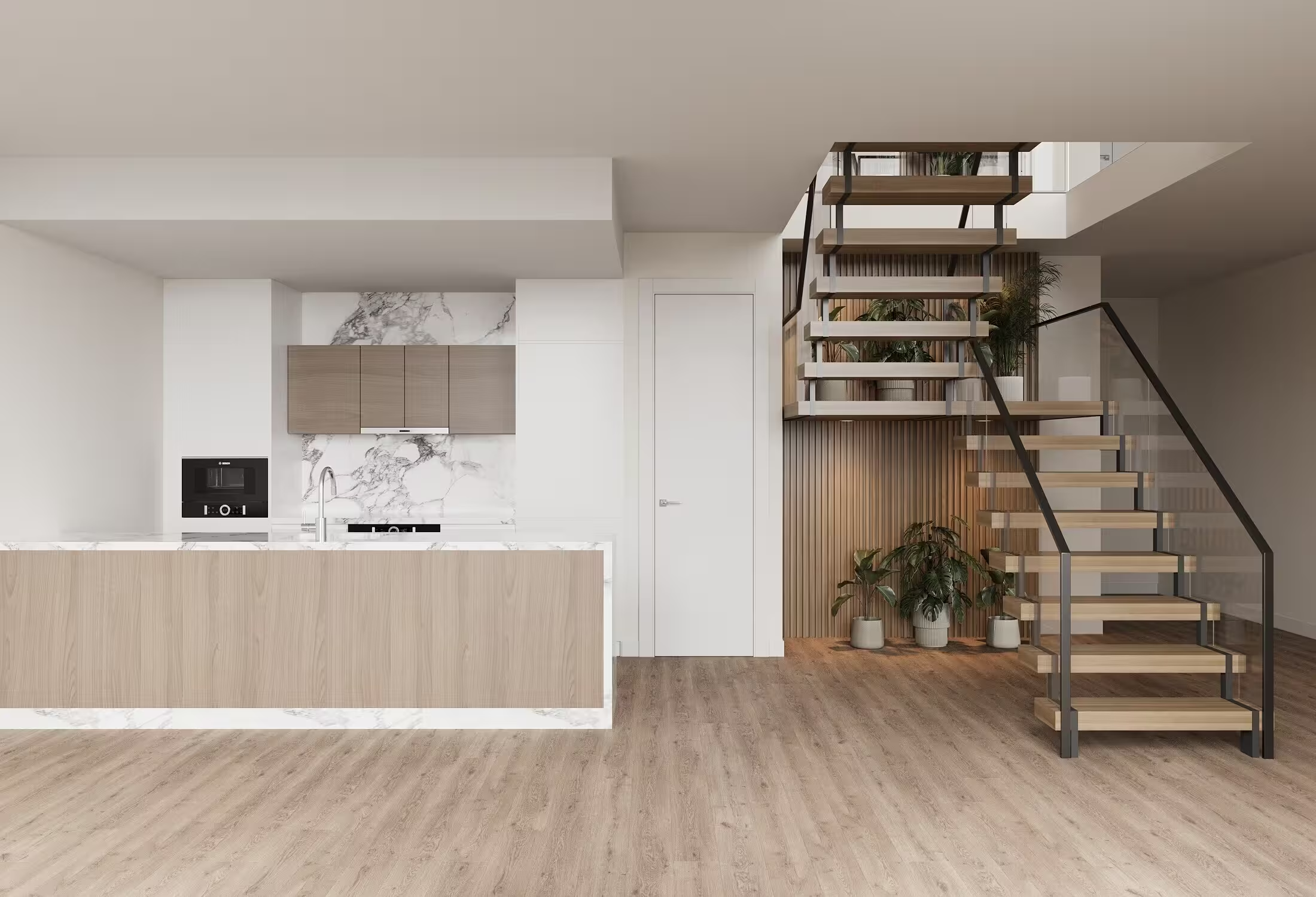
[#NYC]NYC Kitchen Renovation Cost By Size And Finish Tier[#NYC]
Pricing varies meaningfully by kitchen size. A small galley kitchen with a stock cabinetry package will land in a very different range from a brownstone kitchen with custom millwork and pro-grade appliances. The four most common NYC kitchen size categories with 2026 pricing:
Small Galley Kitchen (80 – 120 sqft)
Common in pre-war one-bedroom apartments and studios. Upper mid-tier projects run $45,000 to $70,000. Luxury runs $70,000 to $115,000. Ultra-custom builds with full bespoke cabinetry and pro-grade appliances reach $115,000 to $145,000+.
Standard NYC Kitchen (150 – 200 sqft)
The most common kitchen size across Manhattan and Brooklyn apartments. Upper mid-tier runs $64,000 to $110,000. Luxury runs $83,000 to $172,000+. Ultra-custom luxury kitchens start at $143,000 to $190,000+ depending on layout rework, millwork specifications, stone selections, and appliance package level.
Open-Concept Kitchen (200 – 300 sqft)
Increasingly common in renovated condos and full apartment gut projects. Upper mid-tier runs $90,000 to $165,000. Luxury runs $135,000 to $260,000+. Ultra-custom open-concept kitchens reach $240,000 to $345,000+ with integrated dining banquettes, dual islands, or extensive pantry buildouts.
Large Or Brownstone Kitchen (300+ sqft)
Common in brownstones, townhomes, full-floor apartments, and combined units. Upper mid-tier runs $160,000 to $250,000+. Luxury runs $220,000 to $360,000+. Ultra-custom brownstone kitchens with restored period detailing, butler's pantries, and full pro-grade appliance packages reach $360,000 to $550,000+.
For per-square-foot context, kitchens typically run $425 to $1,200+ per square foot depending on size and finish tier. The per-sqft figure is significantly higher than full apartment renovation pricing (which runs $400 to $850+ per sqft) because of the fixed line items mentioned above. For full apartment-scale pricing, read NYC Apartment Renovation Tips: Costs Per Square Foot.

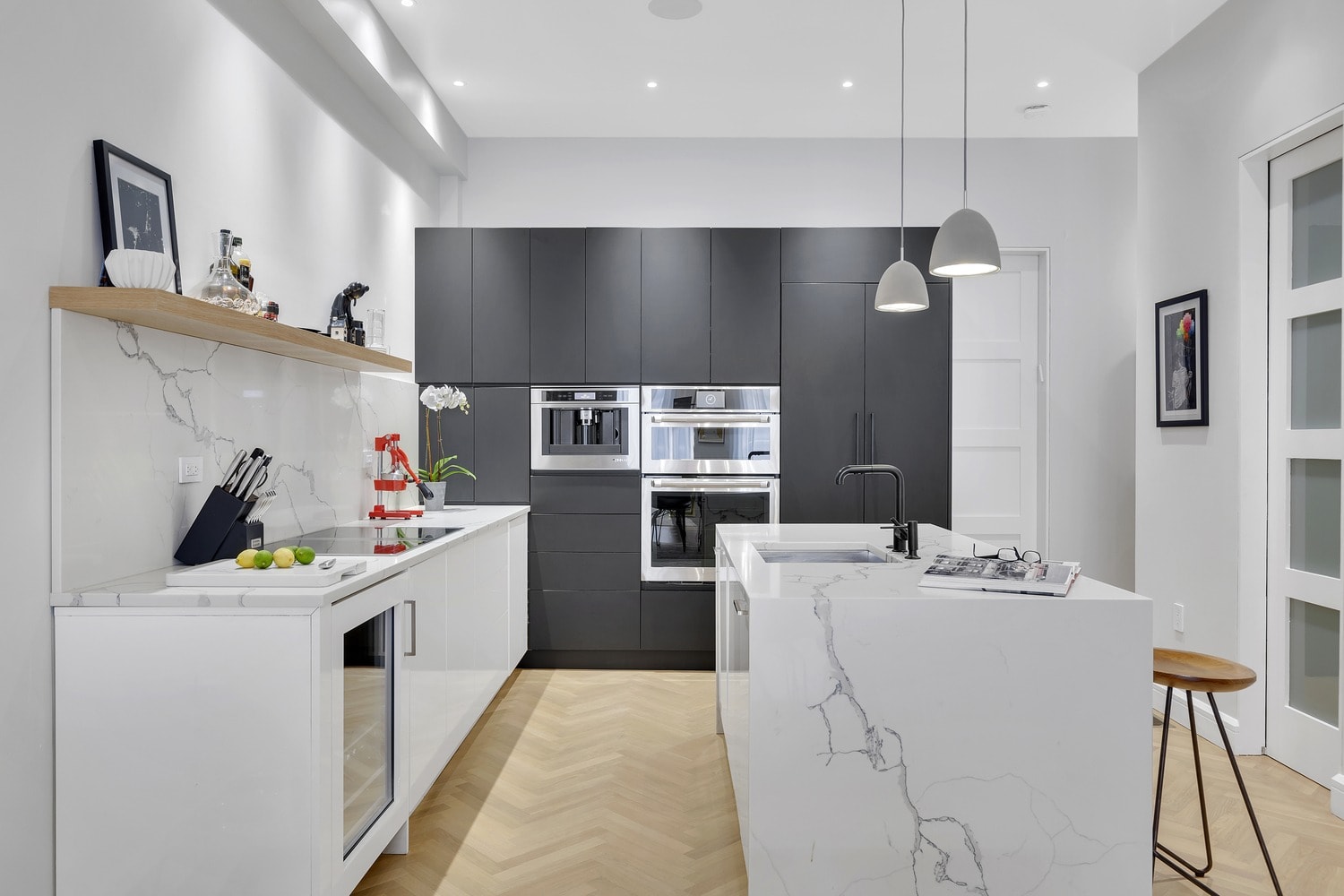
[#cost]Seven Factors That Drive Kitchen Renovation Cost[#cost]
Within the size and finish tier framework above, seven specific factors determine where a given project lands in its range:
Cabinetry & Millwork
The single biggest line item in nearly every kitchen renovation. Stock cabinetry runs the lowest. Semi-custom (most Gallery projects) runs $25,000 to $80,000+ depending on finish and quantity. Fully custom cabinetry can run 3x to 5x stock pricing. Material choice (paint-grade vs walnut vs rift-cut oak) compounds the difference further. Custom inset cabinetry with hand-applied finishes is the highest tier.
Layout Changes
Moving the sink, stove, or refrigerator triggers electrical and plumbing relocation, board approval requirements, and DOB filings. Adds $15,000 to $50,000+ depending on relocation scope. In co-op buildings, wet-over-dry restrictions can prohibit certain relocations entirely. Confirm building rules before committing to a layout change.
Appliance Package
Standard package (mid-tier brands) runs $8,000 to $20,000. Premium package (Sub-Zero, Wolf, Miele) runs $30,000 to $80,000+. Pro-grade ranges (La Cornue, Lacanche, Bertazzoni heritage line) push above $100,000 for the appliances alone. The appliance choice often defines the kitchen's overall tier more than any other single decision.
Considering a Renovation in NYC?
Click to schedule a consultation with one of the principle partners at Gallery, who will hear out your renovation plans and let you know the best way to proceed - whether we end up working together or not.
Schedule Your Consultation
Countertops And Backsplash
Quartz starts at $80 per square foot installed and performs nearly identically to natural stone in daily use. Premium marble and exotic stone (Calacatta, Taj Mahal, specialty veining) runs $200 to $600+ per square foot. Specialty backsplash treatments like hand-painted zellige or marble slab add another $4,000 to $15,000+ in materials and labor beyond the countertop itself.
Board And DOB Approvals
Co-op and condo boards add 60 to 120 days to the project timeline through alteration agreement review. Many buildings impose mandated vendor lists or restricted work hours (typically 9am to 4pm weekdays). DOB permit filing fees add $3,000 to $10,000+ to the project total. A full-service contractor handles board and DOB filings as part of project scope.
Pre-War Building Premiums
Pre-war kitchens add scope that does not exist in newer buildings: full plumbing replacement to the building riser, cloth wiring removal and full electrical rewire, ACP-5 asbestos clearance before DOB permit filing, and plaster wall restoration. Add $20,000 to $50,000+ above post-war pricing for pre-war kitchen scope.
Hardware, Lighting & Fixtures
Designer hardware and lighting add $5,000 to $25,000+ but offer significant aesthetic value per dollar spent. Faucets and pulls are the easiest places to upgrade or save without affecting overall project scope. Pendant lights over an island deliver the most visible design impact relative to cost.
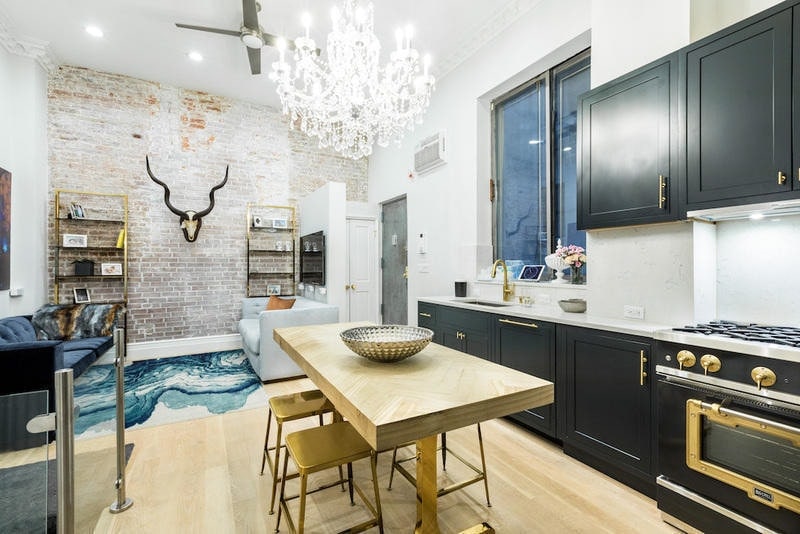
[#where]Where To Save Vs Where To Splurge In A NYC Kitchen[#where]
Not every line item in a kitchen renovation deserves the same investment. After hundreds of NYC kitchen projects, the categories where smart spending decisions deliver the biggest difference:
Where To Save
- Cabinetry boxes: Semi-custom cabinetry in standard sizes with high-quality paint-grade finish delivers nearly identical visual and functional value as fully custom for 40 to 60 percent less. Reserve fully custom builds for islands and signature pieces only.
- Countertop perimeter runs: Quartz in solid colors for perimeter surfaces. Engineered quartz is more durable than most natural stone and performs identically in daily use at half the cost.
- Dishwasher and microwave: Performance differences across price tiers are marginal in these categories. Standard-line products from established brands work fine.
- Subway tile backsplash for perimeter walls: Timeless aesthetic at $5 to $15 per sqft installed. Ages well and never reads as cheap.
- Recessed lighting: Code-compliant, functional, and visually clean. Save the design budget for statement pendants.
- Mid-tier hardware finish: Brushed nickel or matte black pulls from mid-tier brands are durable and hide wear over time.
Where To Splurge
- Soft-close hardware and full-extension drawer slides: Quality of internal cabinet mechanisms determines daily user experience for 20+ years. Worth the upgrade on every cabinet, not just feature pieces.
- Statement stone slab for the island: One dramatic island stone (Calacatta, Taj Mahal, or specialty veining) delivers more visual impact than upgrading all surfaces. The island is the kitchen's focal point.
- Refrigerator and range: Sub-Zero, Wolf, and Miele deliver real performance, longevity, and resale advantage. Pro-grade ranges make a daily difference in cooking quality.
- Hand-painted zellige, marble slab, or designer accent backsplash: Concentrated splurge moments behind the range or sink outperform whole-room upgrades.
- Pendant lights over the island or breakfast bar: The most visible fixtures in the kitchen. Highest-leverage design moment in the room.
- Unlacquered brass or solid bronze hardware on one accent zone: Patina improves over time and reads as bespoke. Limit to one zone (typically the island) for impact without overspending.
- Articulated arm faucet or pot filler: Functionality you actually use every day justifies the cost.
- Heated floors: If the kitchen is large or the building runs cold, radiant heat is a one-time install with permanent comfort upgrade.
.webp)
[#total]How Project Execution Affects Total Cost[#total]
Beyond materials, permits, and labor, the structure of how the project is delivered affects the bottom line significantly. Two biggest financial factors are labor and quality of finishes used throughout the project. How much of those costs clients incur depends on how they want to execute the project.
Design-Bid-Build (Traditional Model)
In this model, a single contractor operates on a labor-only model, charging for labor and raw material only. This approach typically leaves residents taking on more of the project management than anticipated. Beyond managing multiple contractors, filing for every necessary permit and bouncing between retail shops to choose cabinets, tiles, and fixtures is costly and time-consuming. Read more: Design-Build vs Design-Bid-Build: What's The Difference.
Design-Build Firm
A design-build firm bundles design, architecture, project management, material procurement, permit procurement, and board approval under one contract with one price. The standalone path stacks separate fees and markups at each handoff: architect at 8 to 15 percent of construction, GC markup of 15 to 25 percent on subs, procurement markup of 20 to 35 percent on furnishings, plus a 5 to 10 percent change order buffer for coordination gaps. For most full kitchen renovations, design-build is meaningfully cheaper in total. Compare services and not just price.
Standalone Designer Or Architect
Working with a designer or architect to design the space alone adds cost and requires management and coordination with the contractor. Both of those services are included within the full-service design-build approach. Read more: Pros And Cons Of Design-Build Vs Architectural Firms.
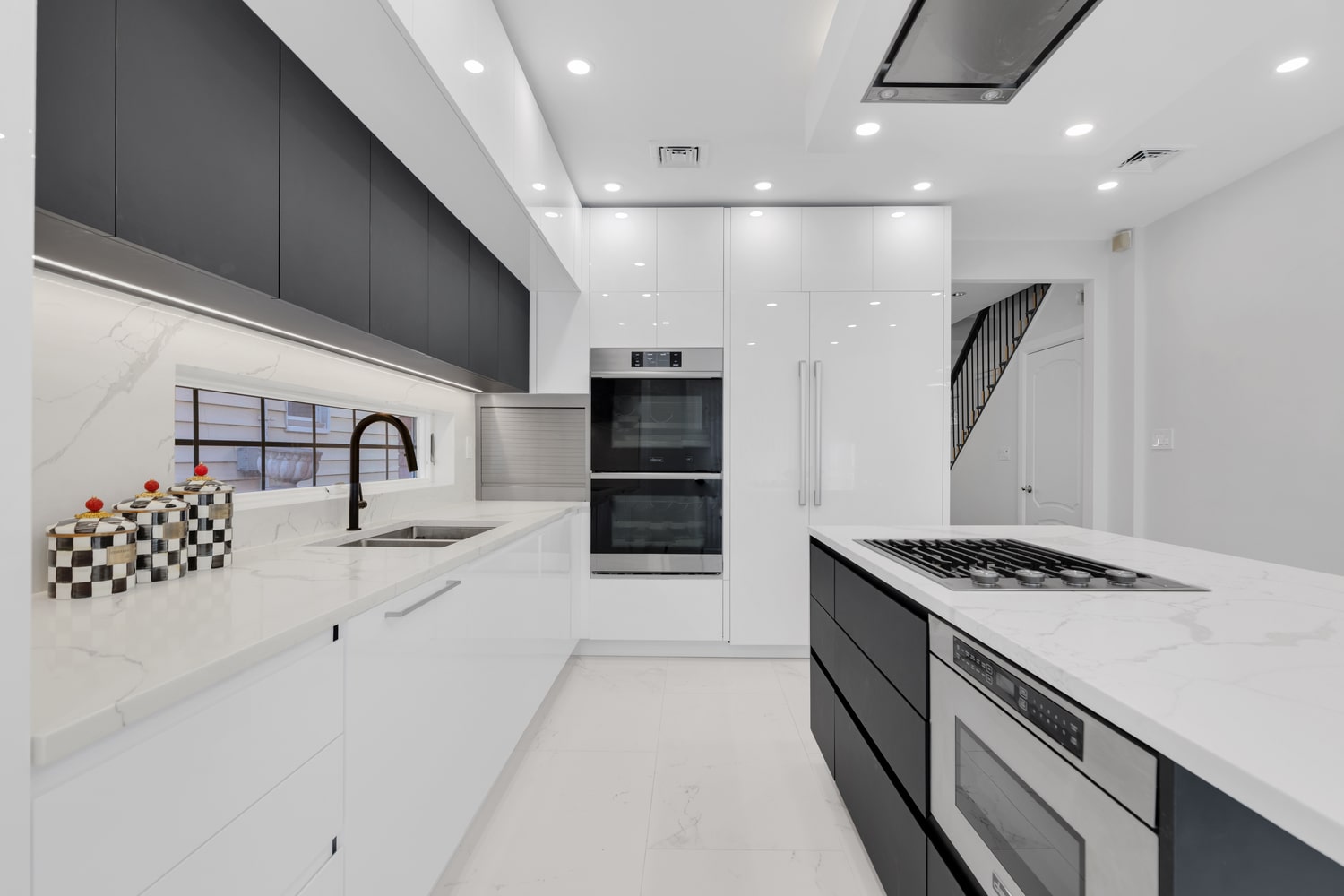
[#kitchen]How Gallery Handles A NYC Kitchen Renovation[#kitchen]
We are a full-service design-build firm in Manhattan and Brooklyn. Kitchen renovations are one of our most common project types, and we run them under an integrated model that handles design, architecture, permits, board approvals, procurement, and construction under one contract.
What that means in practice:
One Comprehensive Price Across All Kitchen Scope
No separate designer fee, no separate architect bill, no GC markup on subs, no procurement markup on cabinetry or appliances. Our 2026 pricing follows the canonical framework above.
Trade Discounts Pass Through Directly
As a dealer for several high-end lines of cabinetry, we offer semi-custom and fully custom fixtures at significantly lower prices than Manhattan showroom retail. When we buy a $40,000 sofa at our trade rate of $26,000, you pay $26,000. Same logic applies to cabinetry, appliances, stone, and fixtures.
Board Approvals And DOB Filings Included
Alteration agreements, board submission packages, DOB permits, managing agent coordination. Not billed separately, not referred out to an expediter.
Pre-Construction Due Diligence Catches Problems Early
Electrical and plumbing capacity confirmed before the kitchen design is finalized. ACP-5 asbestos testing for pre-war buildings before permits issue. Wet-over-dry restrictions reviewed against the alteration agreement before any layout change is committed.
No-Change-Order Model On Unforeseen Conditions
Kitchen renovations surface surprises, especially in pre-war buildings. When something turns up that nobody could have predicted, we solve it internally rather than negotiating change orders with separate firms in real time. For examples of completed work, view our full portfolio of NYC kitchen renovations.
Thinking of renovating a condo/co-op, loft, brownstone/townhouse, or pre-war apartment in NYC? Learn more about Gallery, browse our Before + After portfolio, then see What Our Clients Are Saying. Ready to renovate? Contact us to set-up your initial consultation and see why our New York City apartment renovation and remodeling services are the most mindful choice when considering a residential renovation in Manhattan or Brooklyn.
Gallery KBNY is a full-service design-build firm featured in The New York Times, specializing in the architecture, interior design, and renovation of apartments, co-ops, condominiums, townhomes, and lofts across Manhattan and Brooklyn. Our integrated team of architects, designers, contractors, and project managers manages every phase from board approvals and DOB permitting through design and construction. A founding partner is involved in every project, start to finish. Because architecture, design, permitting, and construction are coordinated under one roof, the process remains streamlined, accountable, and transparent from start to finish. Our work has also appeared in Forbes, Architectural Digest, and Inc., and is backed by 100+ five-star client reviews.
[#FAQ]Frequently Asked Questions About NYC Kitchen Renovation Costs [#FAQ]
How much does a kitchen remodel cost in NYC in 2026?
Cost tracks closely to kitchen size and finish tier. A small galley kitchen of 80 to 120 square feet, common in pre-war one-bedrooms, runs $45,000 to $70,000 at upper mid-tier and $70,000 to $145,000 or more for ultra-custom work. A standard 150 to 200 square foot kitchen, the most common size across Manhattan and Brooklyn, runs $64,000 to $110,000 at upper mid-tier and up to $190,000 or more ultra-custom. Open-concept kitchens of 200 to 300 square feet range from $90,000 to $345,000 or more, and large or brownstone kitchens above 300 square feet reach $160,000 to $550,000 or more at the top. Total project cost is the reliable anchor for a kitchen rather than a per-square-foot figure, because a kitchen carries fixed line items regardless of its size.
Why do NYC kitchens cost more per square foot than a full apartment renovation?
A kitchen always requires a sink, dishwasher, range, refrigerator, exhaust, and full electrical no matter how large it is, and those fixed costs and trade minimums do not shrink with the room. When they are spread across a smaller footprint, the per-square-foot number rises, which is why a galley kitchen can price higher per square foot than a large one. Full apartment renovations run $400 to $850 or more per square foot, while kitchens typically land at $425 to $1,200 or more. For budgeting a kitchen specifically, the total project range is far more reliable than a per-square-foot estimate.
What are the biggest factors that drive kitchen renovation cost?
Seven factors determine where a project lands within its range. Cabinetry and millwork is the single largest line item, with semi-custom running $25,000 to $80,000 or more and fully custom reaching three to five times stock pricing. Layout changes that relocate the sink, stove, or refrigerator add electrical, plumbing, and filing scope. The appliance package can swing the budget widely. Countertops and backsplash, board and DOB approvals, pre-war building premiums, and hardware and lighting round out the list. Understanding which of these apply to a given kitchen is what makes an estimate meaningful rather than generic.
How much does moving the sink, stove, or refrigerator add?
Relocating a primary fixture adds roughly $15,000 to $50,000 or more, because it triggers electrical and plumbing relocation, board approval, and DOB filings. In co-op buildings, wet-over-dry restrictions can prohibit certain relocations outright, since moving a water source over a neighbor's dry space is generally not permitted. Confirming the building's rules in writing before committing to a layout change is essential, because a plan that assumes a relocation the board will reject forces a redesign. Where a relocation is allowed, budgeting for the filing and approval time alongside the construction keeps the schedule realistic.
What do appliances cost, and how much do they set the kitchen's tier?
The appliance package often defines a kitchen's overall tier more than any other single decision. A standard package from mid-tier brands runs $8,000 to $20,000. A premium package from Sub-Zero, Wolf, and Miele runs $30,000 to $80,000 or more. Pro-grade ranges from makers such as La Cornue and Lacanche can exceed $100,000 for the appliances alone. Because the appliances are both a visible and a daily-use element, they carry outsized weight in how the finished kitchen reads and performs, which is why the package deserves early attention in the budget.
What premium does a pre-war kitchen carry?
Pre-war kitchens add scope that newer buildings do not require, typically $20,000 to $50,000 or more above post-war pricing. The added work includes full plumbing replacement out to the building riser, removal of cloth wiring and a complete electrical rewire, ACP-5 asbestos clearance before the DOB permit can be filed, and plaster wall restoration. None of these are optional once the conditions are present, so a pre-war kitchen budget should carry them from the outset. Testing for asbestos and confirming the wiring and plumbing condition during pre-construction is what turns these items from surprises into planned line items.
Where should I save versus splurge in a NYC kitchen?
The strongest returns come from concentrating the budget where daily experience and visual impact are highest. Sensible places to save include semi-custom cabinet boxes, quartz for perimeter counters, standard-line dishwashers and microwaves, subway tile for perimeter backsplash, recessed lighting, and mid-tier hardware finishes. The upgrades worth the spend include soft-close hinges and full-extension drawer slides on every cabinet, a statement stone slab for the island, the refrigerator and range, a concentrated accent backsplash behind the range, pendant lights over the island, an unlacquered brass or bronze accent zone, an articulated faucet or pot filler, and radiant heated floors where the kitchen runs cold. Spending heavily on internal mechanisms and focal points outperforms spreading the budget evenly.
How does the project delivery model affect total cost?
The structure of the project affects the bottom line as much as the materials do. In a design-bid-build model, a contractor works on a labor-only basis and the homeowner absorbs much of the project management, filing every permit and sourcing cabinets, tile, and fixtures across separate vendors, which is both costly and time-consuming. A full-service design-build firm carries design, procurement, permits, board approvals, and construction under one contract, which consolidates the markups and coordination that a separated model spreads across multiple parties. For a kitchen that involves filing, board review, or a layout change, the consolidated model tends to control the total more effectively.
Manhattan Design-Build
Evaluate Your Manhattan Apartment
Before You Buy
Buying an apartment you plan to renovate? A founding partner walks it with you during the contract period and maps the scope, cost, and timeline, so you know exactly what you're taking on before you sign.
As seen in
Pre-Purchase Assessment
Walk the apartment with us first and understand the full scope, cost, and timeline before you close.
or call us directly
let’s
Design-Build
together