.avif)


.png)
.png)


How Cove Lighting Can Enhance Your NYC Apartment Renovation
Discover why cove lighting is a top choice for illuminating small spaces in Manhattan and Brooklyn renovations.
September 10, 2026
|

How Cove Lighting Can Enhance Your NYC Apartment Renovation
Sometimes the situation calls for cove lighting.
TABLE OF CONTENTS
- What Is Cove Lighting?
- How Cove Lighting Affects How You Perceive A Room
- Cove Lighting In New York City Apartment Renovations
- Cove Lighting Cost Reference For NYC Renovations
- Where To Use Cove Lighting In Your NYC Apartment
- How Gallery Handles Cove Lighting In A NYC Renovation
- Frequently Asked Questions On Cove Lighting In NYC Renovations
In NYC apartment renovations with limited square footage, lighting challenges become more obvious than ever. In many of those tricky instances, the situation calls for cove lighting.
The reason cove lighting works so well is because the thoughtful approach provides a soft alternative to harsh overhead lighting, which in turn makes compact rooms feel larger, and adds architectural depth without taking up any floor or wall surface. For NYC apartments where every square foot counts, that combination is hard to beat.
Below is what cove lighting actually is, the types that work in NYC apartment renovations, what it costs in 2026, where to use it room by room, and how we handle lighting design within a full renovation.
[#What]What Is Cove Lighting?[#What]
Cove lighting is a lighting technique where lights are installed in a recessed space, typically near the ceiling, to create a soft, indirect illumination that washes over the surrounding area.
There are several types of cove lighting, but two commonly used types are:
Indirect Cove Lighting
This type of cove lighting involves installing light fixtures in a recessed space or ledge, typically located near the ceiling or upper part of the wall. The light fixtures are aimed towards the ceiling or wall, causing the light to be reflected and diffused, creating a soft, indirect illumination. This technique is often used to provide general ambient lighting or to create a sense of uniform illumination throughout the space.
Grazing Cove Lighting
Grazing cove lighting is achieved by placing light fixtures close to a surface, such as a wall or textured architectural feature, with the light directed at an angle. The light grazes across the surface, accentuating its texture, patterns, or contours. This type of cove lighting is commonly used to enhance the visual impact of specific architectural elements, such as stone walls, decorative moldings, or artwork.
Both types of cove lighting can be combined and used in various combinations to achieve different lighting effects and create a desired ambiance within a space.
Cove Lighting Types And Best Applications In NYC
| Cove Lighting Type | Best Used For | Installation Method | Renovation Stage |
|---|---|---|---|
| Indirect Cove Ambient Wash | General room illumination, expanding the apparent size of compact rooms, layering ambient light beneath ceiling fixtures. | LED strips installed in a recessed ledge near ceiling height, directed upward. Light bounces off the ceiling and diffuses across the room. | Built during rough-in. Requires framing for the cove ledge and a circuit dedicated to the lighting. |
| Grazing Cove Surface Accent | Highlighting textured walls, brick exposures, decorative moldings, stone slabs, or featured artwork in pre-war and modern apartments. | LED strips placed close to the surface at an angle. Light grazes across the texture, accentuating depth and pattern. | Built during rough-in. Custom millwork or trim often required to conceal fixtures while directing the angle. |
| Perimeter Cove Visual Boundary | Defining the edge of a room or open-plan space. Useful in lofts and combined apartments where zones need visual separation without walls. | Continuous LED strip along the full perimeter of the ceiling. Often paired with crown molding or stepped ceiling detail. | Built during rough-in. Best designed alongside the architectural plan rather than retrofitted. |
| Tunable White Cove Variable Color Temperature | Spaces that serve multiple functions throughout the day: living rooms used for both work and relaxation, primary bedrooms, multi-purpose areas. | Tunable white LED strips (2700K to 5000K range) on a dimmer with color temperature control. Smart home integration available. | Built during rough-in. Requires upgraded dimmer and smart home controller wiring. |
| RGB / Color-Changing Cove Mood & Statement Lighting | Media rooms, home theaters, entertaining spaces, kids\' rooms, and projects where dynamic mood lighting adds value. | RGB LED strips with smart home or DMX controller. Programmable for scenes, schedules, and event-driven lighting. | Built during rough-in. Requires controller wiring and integration with the smart home system if applicable. |
Source: Gallery KBNY lighting design framework, Manhattan and Brooklyn (2026). Application recommendations reflect typical residential renovation considerations; specific cove lighting design varies by room size, ceiling height, and overall lighting plan.

[#Optical]How Cove Lighting Affects How You Perceive A Room[#Optical]
Cove lighting changes how a room reads, not because of any optical illusion but because of how indirect light interacts with architectural features and human visual perception. Four perceptual effects worth understanding before specifying cove lighting for a renovation:
Shadow Play
Cove lighting fixtures are often positioned to direct light upward, causing it to bounce off the ceiling and create a diffused glow. This produces subtle variations in light and shadow, which can give the impression of depth or texture on the ceiling or walls.
Accentuating Architectural Features
Cove lighting is frequently used to highlight architectural details like molding, trims, and textured surfaces. Strategic illumination of these elements creates the perception of depth or dimensionality, enhancing the overall visual impact of the space.
Visual Boundaries
When cove lighting is installed along the perimeter of a room, it creates a visual boundary or frame for the space. This defined edge can make the room appear larger or smaller depending on the design. By manipulating the perception of boundaries, cove lighting influences how the size and proportions of a room read.
Ambience & Mood
Cove lighting is often used to create a specific ambience or mood. Warm vs cool lighting tones, intensity adjustments, and color-changing capabilities all evoke different emotions and alter the perceived atmosphere of a room.
How strongly these effects land depends on the design, placement, and characteristics of the lighting fixtures, plus the overall context and visual cues present in the room.
Cove Lighting Cost Reference For NYC Renovations (2026)
| Scope | Cost Range | What\'s Included |
|---|---|---|
| Standalone Cove Lighting (Per Room) | ||
| Single-Room Indirect Cove Standard Apartment Room | $1,500 – $4,000 | LED strip, dimmer-compatible driver, cove ledge framing, and dedicated electrical circuit. Most common single-room installation. |
| Grazing Cove Accent Single Feature Wall | $2,500 – $6,000 | LED strip, angled bracket or millwork detail, custom installation for accentuating texture, brick exposure, or architectural feature. |
| Perimeter Cove (Full Room) Continuous Ceiling Edge | $3,500 – $10,000+ | Full perimeter LED installation with stepped ceiling or crown molding integration. Common in living rooms, primary bedrooms, and lofts. |
| Cove Lighting Premiums | ||
| Tunable White Upgrade Color Temperature Control | +$500 – $1,500 per room | Premium LED strips with 2700K to 5000K range, upgraded driver and dimmer, smart home controller integration. |
| RGB / Color-Changing Upgrade Dynamic Mood Lighting | +$1,000 – $3,000 per room | RGB or RGBW LED strips, programmable controller, smart home or DMX integration for scene control. |
| Smart Home Integration Lutron, Crestron, Or Equivalent | +$2,500 – $8,000+ | Integration with broader smart home system. Allows cove lighting to participate in scenes, schedules, and voice control alongside other room systems. |
| Cove Lighting Within Full Renovation | ||
| Multi-Room Cove Plan Full Apartment Renovation | $8,000 – $30,000+ | Coordinated cove lighting across multiple rooms (living, primary bedroom, bath, hallway) integrated into the overall lighting plan during full renovation. |
| Pre-War Building Premium Plaster Ceilings & Limited Access | +15% – 25% over baseline | Pre-war plaster ceilings require careful cove construction. Limited overhead space and existing structural conditions add scope to installation. |
Source: Gallery KBNY lighting design and renovation project data, Manhattan and Brooklyn (2026). Cost ranges reflect typical installations within full-service design-build engagements; specific pricing depends on linear footage, fixture quality, smart home integration, and building conditions. Standalone installations outside a full renovation typically cost more per unit due to fixed labor minimums.
[#Cove]Cove Lighting In New York City Apartment Renovations[#Cove]
Cove lighting is often considered desirable in New York City renovations for several reasons:
Space Enhancement
New York City apartments and buildings often have limited space, and cove lighting can help create an illusion of a larger and more open space. By illuminating the ceiling or upper walls, cove lighting draws the eyes upward, making the room feel more expansive and less confined.
Architectural Enhancement
Many buildings in New York City have unique architectural features, such as exposed brick walls, decorative moldings, or textured surfaces. Cove lighting can be used to highlight these features and enhance their visual appeal. By strategically placing lights near these architectural elements, cove lighting can create depth, shadows, and accentuate the textures, adding character and charm to the space.
Ambient Lighting
In densely populated urban areas like New York City, it's common for buildings to be surrounded by other structures, which can limit the amount of natural light that enters the space. Cove lighting provides a soft and indirect illumination that helps to create a pleasant and inviting atmosphere. It can be used to provide general ambient lighting throughout the space without creating harsh shadows or glare.
Versatility
Cove lighting is a versatile lighting solution that can be customized to suit various design styles and preferences. It offers flexibility in terms of the type of lighting fixtures used, the color temperature of the light, and the ability to incorporate dimming or color-changing capabilities. This versatility allows designers and homeowners to create different moods and ambiance within the space, catering to specific needs or preferences.
Energy Efficiency
With increasing emphasis on energy efficiency and sustainability, cove lighting can be designed using energy-efficient LED light fixtures. LED lights consume less energy compared to traditional lighting sources, helping to reduce electricity costs and minimize environmental impact.
Cove Lighting: Room-By-Room Decision Guide
Source: Gallery KBNY lighting design framework, Manhattan and Brooklyn (2026). Room-by-room recommendations reflect typical residential renovation considerations; specific cove lighting design depends on room dimensions, ceiling height, existing lighting plan, and personal preferences.
[#cost]Cove Lighting Cost Reference For NYC Renovations[#cost]
Cove lighting cost varies meaningfully by scope, fixture choice, and whether the installation is happening within a full renovation (best timing) or as a retrofit. 2026 ranges:
Standalone Cove Lighting (Per Room)
- Single-Room Indirect Cove: $1,500 to $4,000 including LED strip, dimmer-compatible driver, cove ledge framing, and a dedicated electrical circuit. Most common single-room installation.
- Grazing Cove Accent (Single Feature Wall): $2,500 to $6,000 including LED strip, angled bracket or millwork detail, and custom installation for accentuating texture, brick exposure, or an architectural feature.
- Perimeter Cove (Full Room): $3,500 to $10,000+ for full perimeter LED installation with stepped ceiling or crown molding integration. Common in living rooms, primary bedrooms, and lofts.
Premium Cove Lighting Upgrades
- Tunable White Upgrade: Add $500 to $1,500 per room for premium LED strips with 2700K to 5000K range, upgraded driver and dimmer, and smart home controller integration.
- RGB Or Color-Changing Upgrade: Add $1,000 to $3,000 per room for RGB or RGBW LED strips, programmable controller, and smart home or DMX integration for scene control.
- Full Smart Home Integration: Add $2,500 to $8,000+ for integration with a broader smart home system (Lutron, Crestron, or equivalent). Allows cove lighting to participate in scenes, schedules, and voice control alongside other room systems.
Cove Lighting Within A Full Apartment Renovation
- Multi-Room Cove Plan: $8,000 to $30,000+ for coordinated cove lighting across multiple rooms (living, primary bedroom, bath, hallway) integrated into the overall lighting plan during full renovation.
- Pre-War Building Premium: Add 15 to 25 percent over baseline for pre-war buildings. Plaster ceilings require careful cove construction, and limited overhead space or existing structural conditions add scope to installation.
Cove lighting is significantly more cost-effective when installed during a full renovation while walls and ceilings are already opened. Retrofit cove installations on already-finished surfaces typically run 30 to 50 percent more due to demo and patch labor.
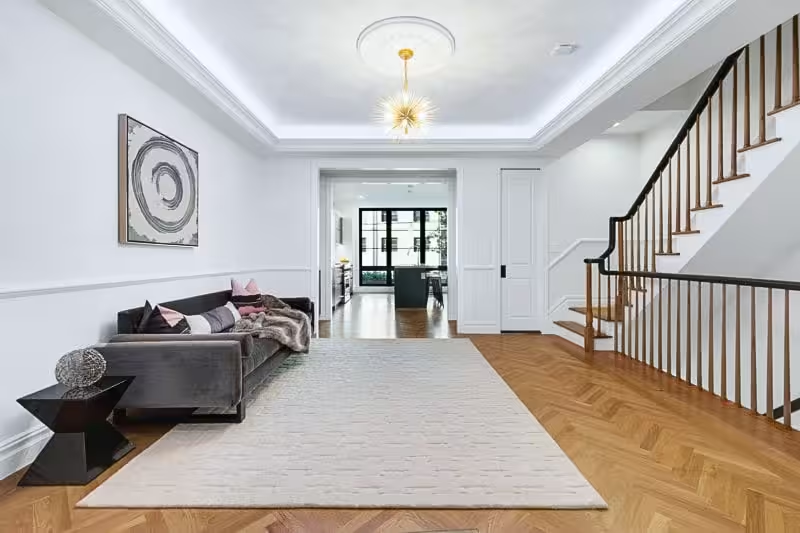
[#your]Where To Use Cove Lighting In Your NYC Apartment[#your]
Cove lighting works in nearly every room of a NYC apartment, but it works hardest in some and adds the most value in others. Room-by-room recommendations:
Living Room (Highest Value)
Living rooms benefit the most from cove lighting. A perimeter cove with tunable white defines the room, adds depth, layers under primary lighting fixtures, and adapts to both entertainment and relaxation modes. The common mistake is over-relying on cove lighting as the primary light source. Cove works best as an ambient layer alongside pendants, sconces, or recessed lighting.
Primary Bedroom (Highest Value)
Primary bedrooms benefit nearly as much. Indirect cove on a dimmer provides a soft ambient wash from the ceiling that supports both daytime activity and pre-sleep low-light mode without overhead glare. Common mistake: placing cove on the same circuit as overhead lights. A separate circuit allows independent dimming for true bedside-friendly ambient light.
Bathroom (Strong Fit)
Bathrooms (especially windowless interior bathrooms common in NYC) benefit from indirect cove with warm-to-cool tunable LED. It provides an ambient wash that complements vanity task lighting. Always specify IP-rated, damp-rated fixtures for bathroom installations. Non-damp-rated LEDs in or near wet zones fail quickly.
Home Office (Strong Fit)
Home offices benefit from tunable white indirect cove that runs cool during focused work hours and warmer for evening calls and video conferences. The common mistake is skipping task lighting. Cove provides the ambient layer; the desk still needs proper task lighting for screen and document work.
Kitchen (Strong Fit)
Kitchens work well with grazing cove over upper cabinetry or above a coffered ceiling. It highlights cabinet detail and adds an ambient layer beyond under-cabinet lighting. The mistake to avoid: replacing functional under-cabinet lighting with cove only. Cove is ambient; under-cabinet lighting is task. Both serve different roles in a functional kitchen.
Hallway And Foyer (Strong Fit)
Long pre-war NYC apartment hallways often feel like dark tunnels. Indirect or perimeter cove eliminates that feeling without harsh overhead lighting. Common mistake: over-bright cove design. Hallways benefit from soft ambient; harsh light creates eye fatigue moving between rooms.
Dining Room (Selective)
Dining rooms can benefit from perimeter cove behind the primary chandelier. It adds ambient depth without competing with the dining fixture as the focal point. Common mistake: using cove as the only source. Dining requires direct light over the table for food presentation; cove supplements rather than replaces.
Powder Room (Selective)
Powder rooms work well with a grazing cove on a textured accent wall (marble, tile, or wallcovering). Powder rooms are showpieces and cove drama is part of the design. Common mistake: insufficient task light at the vanity. Cove sets the mood; vanity lighting is still needed for functional use.
.webp)
[#gal]How Gallery Handles Cove Lighting In A NYC Renovation[#gal]
We are a full-service design-build firm in Manhattan and Brooklyn. Cove lighting is one of the design moves we use most frequently in NYC apartment renovations, and we run it under the same integrated model that handles design, architecture, permits, board approvals, procurement, and construction under one contract.
What that means in practice:
Cove Lighting Designed During The Architectural Phase
Cove ledges, ceiling steps, and millwork details are drawn into the architectural plan from the start rather than added later. This avoids the scope creep and cost premium of retrofitting cove into finished rooms.
Lighting Plan Coordinated With Electrical Rough-In
Dedicated circuits, dimmer compatibility, and smart home controller wiring are specified before walls close up. The single most expensive cove lighting mistake is missing a circuit during rough-in.
Trade Discounts Pass Through Directly
High-end LED fixtures, drivers, and smart home controllers are sourced through our trade accounts at meaningfully lower prices than retail showrooms. When we buy a $40,000 sofa at our trade rate of $26,000, you pay $26,000. The same logic applies to lighting fixtures and controllers.
Board Approvals And DOB Filings Handled Internally
Lighting plans are part of the alteration agreement and DOB permit package. Not billed separately, not referred out to an expediter.
No-Change-Order Model On Lighting Design
When something changes during construction, like a millwork adjustment that affects cove placement or a smart home upgrade decided mid-project, we solve it internally rather than negotiating change orders with separate firms.
-min.webp)
A Carnegie Hill Case Study: When The Ceiling Can't Move
At a pre-war residence on 1065 Lexington Avenue in Carnegie Hill, our team encountered a constraint common to Upper East Side buildings: the ceilings were structural slab, so channeling them for standard overhead lighting wasn't possible. Many owners in this situation choose to drop the ceiling to make room for recessed fixtures, giving up height and pre-war character for convenience. Our design-build team took a different path, working with a cove ceiling that already existed in the space. As Avi explains below, we framed ceiling with cove molding and ran LED lighting along the curve to wash it in soft, even light, then paired the effect with a wallpaper selection that picked up tones carried through from the adjoining green kitchen. The cove became the most distinctive element in the room, proof that understanding a space's real constraints can turn them into some of a renovation's best features.
Cove Lighting As Part Of Full Home Renovations In NYC
Cove lighting enhances New York City renovations because it provides an effective and eye-pleasing way to enhance the appearance, functionality, and ambiance of the space, especially in environments where space is limited, and charming architectural features are ready to be shown off.
Considering a renovation in NYC? View our full portfolio of New York City renovation before and afters, learn more about Gallery KBNY, or simply contact us today to find out why our full-service approach makes most sense when choosing a contractor in NYC.
We are a New York Times-featured design-build firm in New York City with a full-service approach to residential renovations in Manhattan and Brooklyn that includes everything from interior design and architecture services to filing permits and construction. We’re experts in renovating pre-war homes, kitchens, bathrooms, flooring, sourcing custom pieces, building entirely new rooms, millwork, and all that falls in between. Let Gallery bring your dream home to life.
Gallery KBNY is a full-service design-build firm featured in The New York Times, specializing in the architecture, interior design, and renovation of apartments, co-ops, condominiums, townhomes, and lofts across Manhattan and Brooklyn. Our integrated team of architects, designers, contractors, and project managers manages every phase from board approvals and DOB permitting through design and construction. A founding partner is involved in every project, start to finish. Because architecture, design, permitting, and construction are coordinated under one roof, the process remains streamlined, accountable, and transparent from start to finish. Our work has also appeared in Forbes, Architectural Digest, and Inc., and is backed by 100+ five-star client reviews.
[#FAQ]Frequently Asked Questions On Cove Lighting In NYC Renovations[#FAQ]
What is cove lighting?
Cove lighting is a technique where light fixtures are set into a recessed space, usually near the ceiling, to produce a soft, indirect illumination that washes over the surrounding surfaces. Rather than casting a hard beam downward, the light reflects off the ceiling or upper wall and diffuses across the room. That indirect quality is what makes it valuable in apartments, since it softens the overall light, adds a sense of architectural depth, and occupies no floor or wall surface. In a compact NYC apartment where every square foot is accounted for, that combination is difficult to match with conventional fixtures.
What is the difference between indirect and grazing cove lighting?
The two types serve different purposes. Indirect cove lighting places fixtures in a recessed ledge near the ceiling and aims the light upward, so it reflects and diffuses into a soft, even ambient glow across the space. Grazing cove lighting sets the fixtures close to a surface such as a wall or a textured feature and directs the light across it at an angle, so the beam rakes the surface and accentuates its texture, pattern, or contours. Indirect lighting suits general ambient illumination, while grazing lighting highlights a specific architectural element such as a stone wall or decorative moulding. The two are frequently combined within one room.
Why is cove lighting especially suited to NYC apartments?
Several conditions common to New York City apartments make cove lighting a strong fit. Limited square footage benefits from illumination that draws the eye upward and makes a room feel more open, which cove lighting achieves by washing the ceiling and upper walls. Buildings surrounded by other structures often receive limited natural light, and the soft, indirect glow provides a pleasant ambient layer without harsh shadows or glare. Distinctive architectural features such as exposed brick and decorative moulding gain depth and character when grazed with light. The technique also adds no floor or wall footprint, which preserves usable space in an apartment that has little to spare.
How does cove lighting change how a room reads?
Cove lighting shapes perception through the way indirect light interacts with a room's surfaces. Light bounced off the ceiling produces subtle variation between light and shadow that reads as depth and texture overhead. Directed toward moulding, trim, or a textured wall, it creates the impression of dimensionality and pulls those details forward. Run along the perimeter, it frames the space with a defined edge that can make a room feel larger or more contained depending on the design. Warm or cool tone, intensity, and color-changing capability further set the mood. How strongly each effect lands depends on the placement, the fixtures, and the surrounding context.
How much does cove lighting cost in NYC in 2026?
Pricing depends on scope, fixtures, and whether the work happens during a full renovation or as a retrofit. A single-room indirect cove runs $1,500 to $4,000, including the LED strip, a dimmer-compatible driver, cove ledge framing, and a dedicated circuit. A grazing accent on a single feature wall runs $2,500 to $6,000. A full perimeter cove runs $3,500 to $10,000 or more with stepped ceiling or crown moulding integration. Within a full apartment renovation, a coordinated multi-room plan across living areas, bedrooms, bath, and hallway runs $8,000 to $30,000 or more. Installing during a renovation is the most cost-effective timing, since a retrofit carries higher per-unit labor.
What cove lighting upgrades are available?
Three upgrade tiers extend the baseline system. A tunable white upgrade adds $500 to $1,500 per room for LED strips spanning roughly 2700K to 5000K, an upgraded driver and dimmer, and smart-controller integration, which allows the light to shift from warm to cool through the day. An RGB or color-changing upgrade adds $1,000 to $3,000 per room for programmable color and scene control. Full smart-home integration adds $2,500 to $8,000 or more, tying the cove lighting into a broader system such as Lutron or Crestron so it participates in scenes, schedules, and voice control alongside the room's other systems. The right tier depends on how much control and flexibility the design calls for.
Why does cove lighting cost more in a pre-war building?
Pre-war buildings carry a premium of roughly 15 to 25 percent over baseline cove lighting pricing. Plaster ceilings require careful construction to build the cove cleanly, since plaster behaves differently from modern drywall and is less forgiving of rough work. Limited overhead space and existing structural conditions can also add scope, because the recessed ledge that houses the fixtures needs room that a pre-war ceiling assembly does not always offer. Planning the cove detail around the building's actual ceiling construction is what keeps the installation clean and the result seamless.
When is the best time to install cove lighting?
The most cost-effective and cleanest time to install cove lighting is during a full renovation, while ceilings and walls are already open and the electrical plan is being set. Building the cove ledge, running a dedicated circuit, and integrating the fixtures into the overall lighting plan is straightforward when the work is coordinated with the rest of the project. A retrofit into a finished space is possible, though it carries higher per-unit labor because of the fixed minimums involved in opening and closing a ceiling for a single scope. Folding cove lighting into the renovation from the design phase captures the best pricing and the most integrated result.
Manhattan Design-Build
Evaluate Your Manhattan Apartment
Before You Buy
Buying an apartment you plan to renovate? A founding partner walks it with you during the contract period and maps the scope, cost, and timeline, so you know exactly what you're taking on before you sign.
As seen in
Pre-Purchase Assessment
Walk the apartment with us first and understand the full scope, cost, and timeline before you close.
or call us directly
let’s
Design-Build
together